Introduction
No more worrying about selecting submersible pumps; clear and targeted positioning helps you meet your current needs.Quickly and effectively learn about submersible pumps to save you time and effort when purchasing.
What Is a Submersible Pump?
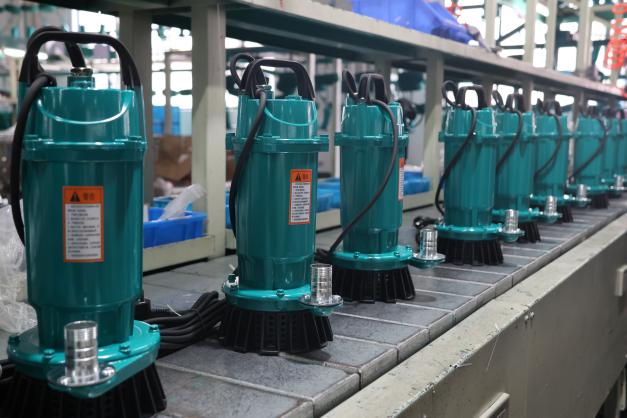
A submersible pump is a water pump that integrates the motor and pump body and operates by immersion in liquid. Submersible pumps consist of two main parts: the submersible motor and the pump section, connected by a sealing system. Submersible pumps are typically made of materials such as stainless steel, cast iron, and aluminum.
How Does a Submersible Pump Work?
When immersed in water and plugged in, the motor starts and drives the impeller to rotate at high speed. Centrifugal force is used to draw in liquid and discharge it from the outlet, thus achieving continuous water pumping.
Unlike other water pumps, which are still struggling to pull water up. Submersible pumps can pull water up from underwater. With less loss of friction, more energy savings.
Structure and Main Components
- Motor: Waterproof and sealed design, like an oil- or water-filled, ensures normal underwater operation.
- Impeller: Using aluminum, plastic, and iron, etc, providing centrifugal force at high-speed rotation.
- Pump casing/housing: Adopting stainless, cast iron, or aluminum, etc, to achieve the functions of diversion and protection.
- Suction inlet /strainer: Responsible for water intake and filtering impurities
- Discharge outlet: Connect the pipe to deliver liquid.
- Check valve: Ensure the flow is directed in a fixed direction and automatically prevents backflow.
- Cable and waterproof connector: Made of insulating materials, ensuring the normal operation and sealing of the water pump.
- Bearings and shaft seal: Bearings support the rotating shaft and reduce friction, while oil seals prevent foreign objects from entering and ensure normal operation.
- Cooling jacket: Optional or for large power models, prevents equipment overheating damage and protects water pumps by dissipating heat.
Types of Submersible Pumps
Deep Well Submersible Pump is specially designed for deep water, applicable to the well depth over 20m.Different size of diameters suits different sizes well. Usually used for farmland irrigation, household water, industrial water, etc.
Sump Pump is a submersible pump that pumps and drains sewage from a sinkhole or low-lying water hole. Installed at the bottom of the sump, the discharge sewage containing solids and grease is conveniently.
Sewage Pump is used for discharging sewage mixed with silt, solid particles, or impurities in domestic sewage. In order to operate in sewage for a long time, it is particularly resistant to wear and corrosion.
Drainage Pump is a sort of submersible pump, which is small in size and very easy to install to remove stagnant water, rainwater, or lightly polluted water, etc. Suitable for temporary drainage or mobile use.
The Utility Pump has multiple functions. Such as water supply, drainage, and circulation.Suitable for small systems and mostly used for household purposes.
Irrigation Submersible Pump is a special submersible pump for agriculture and gardening, etc.Pumping water from surrounding water sources for irrigation. Have the characteristics of large flow and stable water supply.
Aquarium/pond Pump is designed for low power to provide water circulation or oxygen supply for fish tanks, water features, ponds, and other systems.
Solar Submersible Pump powered by solar energy, pumping water from a water source to supply. It can be used in areas that lack electricity but have sufficient sunlight-both energy-saving and environmentally friendly.
Advantages of Submersible Pumps
High efficiency
With low suction resistance and higher energy transfer efficiency, the motor can be naturally cooled in water, maintaining stable output, resulting in lower energy consumption and more efficient performance.
Quiet operation
Without fan noise or machine friction sounds, it produces no vibration and is virtually silent, making it ideal for noise-sensitive environments and providing a quiet, comfortable experience.
Space-saving design
The integrated structure eliminates unnecessary components and the need for a pump house and complex piping system, allowing submersible pumps to be installed in confined spaces and maximizing space utilization.
Easy installation
Designed for plug-and-play operation and vertical installation, it only requires connecting the water outlet pipe and plugging in the power, and can be used immediately without complicated installation, saving construction time.
Self-priming nature under water immersion
No additional priming or venting is required during start-up; the entire process is automatic and continuous, requiring no human intervention, reducing human error and ensuring the pump’s immediate response capability.
Wide range of applications
It covers almost all scenarios related to water pumping, water supply, and drainage, and applies to agricultural irrigation, industrial applications, and residential use, meeting diverse needs.
Limitations of Submersible Pumps
More difficult to access for maintenance or repair
Needed to be completely removed from the water and disassembled for repair, which is time-consuming and labor-intensive
Seal failure risk leading to motor damage
The sealing requirements are extremely high; seal failure will allow liquid to enter the motor and cause pump damage.
Limited to vertical installations
Proper alignment must be maintained. Improper installation or imbalance during operation can lead to vibration, wear, and even bearing damage.
Must be fully submerged for cooling (in most designs)
Relying on the surrounding water for heat dissipation, low water levels or poor flow can easily cause the motor to overheat. If the pump body is exposed, the heat dissipation efficiency will decrease.
Applications of Submersible Pumps
From a small-scale household to large municipal projects, submersible pumps have applications in various fields, playing a vital role in daily life, improving the quality of life, and production.
Residential use
In daily life, submersible pumps are used in wells, tanks to supply what for family life, garden sprinklers, and lawn watering. Meet daily water needs.
Agricultural
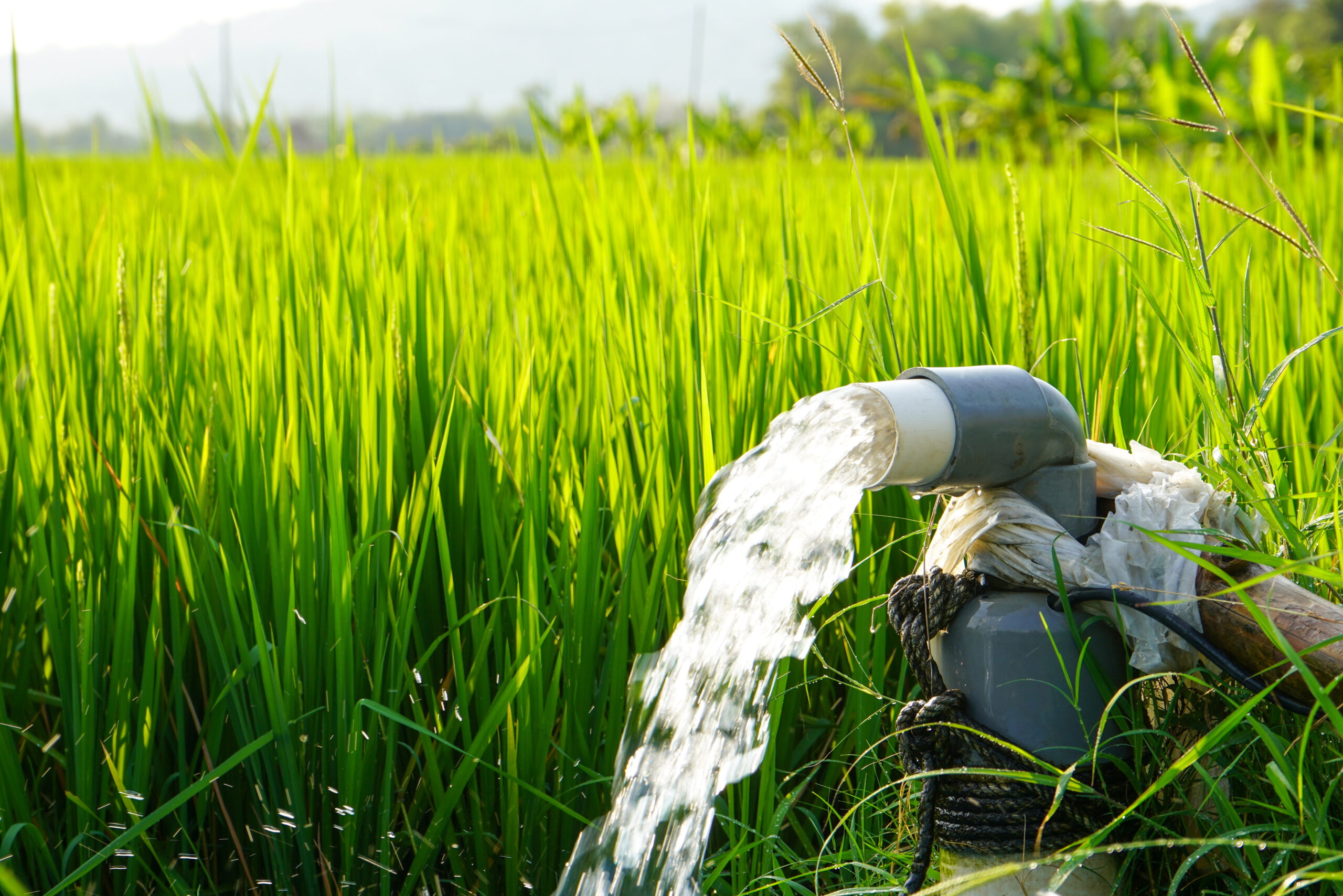
Application in agriculture, submersible pumps extract groundwater or river water, and are used with farmland irrigation systems to provide moisture to crops.
Industrial
In the industrial field, submersible pumps act on a factory‘s production water,water-cooling systems to provide stable water, or hand wastewater transfers with solid particles or chemicals。
Commercial buildings
Can be used for drainage systems in depressed areas, like basements, car parks. When the rainy season comes, submersible pumps can drain water in a short time to prevent waterlogging.
Municipal
Used in municipal tap water supply and pipe networks to ensure a stable water supply for residents and public facilities, flood control, and domestic sewage treatment.
Construction sites
During construction, submersible pumps drain the accumulated water in foundations and tunnels to keep the ground dry. It can also transport water or discharge mud and granular sewage.
Key Factors You Need to Consider When Buying a Submersible Pump
When selecting a submersible pump, you need to consider many elements. There are several important key points you need, which can help you judge whether it is the submersible pump you need. And help you choose the most suitable submersible pump. When it’s really hard to choose, you can also consult the supplier or professional team.
Application requirements
Clear what you want to use the submersible pump for, and apply it in what work scenarios. Different scenarios require different structural designs.
The flow and head
Depending on the place you actually install and your requirements, you’d better clear the flow and head. With clear data standards, choosing the right submersible pump will be easier.
Materials
Being immersed in different liquids also requires different materials for submersible pumps. If it encounters seawater or chemical water, you should select friction-resistant and corrosion-resistant materials.
Functions
You need a submersible pump that can pump mud, pump liquids with solids, or just deliver clean water? Find out the true functions, find the submersible pump you really need.
Brand
Brand is a huge factor. Usually, a well-known big brand is accompanied by high quality and excellent service.
Installation Tips
Proper depth and positioning
Ensure the correct depth of liquid and a reasonable location for running normally.
Check valve installation
Submersible pump installs a check valve, no more concern about the liquid countercurrent.
Secure the power cable and discharge pipe.
Layout cable and discharge properly, reduce skin wear, thus leading to a fault.
Use of a safety rope or chain
With the help of safe ropes or chains, place the submersible pump smoothly.
Electrical safety and grounding
Pay attention to match the right voltage and wiring to prevent circuit errors that cause accidents.
Priming and air removal (if applicable)
Part of the submersible pump should note the priming and air removal. Everything needs to be prepared.
Avoid running dry
Need a promise submersible pump, totally immersion, avoid running dry to burn out the motor .
How to Maintain a Submersible Pump
After proper installation, regular maintenance is equally important to ensure long-term operation.
Regular inspection and cleaning
Check if the inlet has accumulated impurities and clean regularly, keep the normal head and rate.
Checking seals and cables for wear
Check the seal condition, observe for leaks and cable wear, and solve the problems timely manner.
Avoiding dry running
To avoid dry running, check the water source and pump condition once in a while.
Removing sediment buildup
Remove the sediment from the impeller, water inlet, etc, and ensure smooth water flow.
Troubleshooting
Although troubles rarely occur when using machinery normally, occasionally something unexpected happens. To help you avoid being at a loss when encountering troubles, we have given some causes of problems below, which may be helpful.
The pump doesn’t start
Work in an over- or low-head for a long time
The voltage does not match or is unstable
Low water output
The voltage is too low
The impeller is experiencing severe wear and tear
Already reached the usage time limit
Overheating
An impeller stock by a foreign body or exposed to water causes running dry.
Unusual noise
Mechanical failure
Work condition unusual
Not installed well or vertically
Motor trips the circuit breaker
Motor internal short circuit or wiring short circuit.
The pump clogged, causing it to run dry.
Conclusion
In various applications, corresponding submersible pumps can reach the reason why you need submersible pumps. Select the correct submersible pumps can release the maximum performance of the pumps. When applied in actual scenarios, submersible pumps can work high-efficiently and guarantee water supply efficiency. Extend the life of water pumps and motors, no longer concerned about repairing or replacing scattered parts regularly. At the same time, avoid the bad conditions, such as running dry, tripping, etc. Assure the safety of the user and the submersible pump.If needed, please feel free to contact Hungerät. We are a professional water pump manufacturer and supplier with 25 years of experience.
FAQ
Q: What’s the difference between a submersible and a sump pump?
A: A submersible is a general term for water pumps with integrated structures that work underwater. The sump pump is a type of submersible pump, specialized for sewage discharge.
Q: Can I use a submersible pump for drinking water?
A: Using a submersible pump for drinking water is feasible, but it is necessary to select one specially designed for clean drinking water. And the material must be food-grade or safe.
Q: How long can a submersible pump run continuously?
A: It depends on the type, power, and operating environment. Usually can reach 6-12hours of non-stop operation.
Q: What happens if it runs dry?
A: The motor will overheat or even burn out, and other accessories will be damaged accordingly. The submersible pump will reduce its efficiency and shorten its life.
Q: How deep can a submersible pump go?
A: The depth also depends on the model of the submersible pump. Like deep well submersible pumps can reach depths of 100-300meters, even more. The pond pump can only work under water of less than 5 meters.