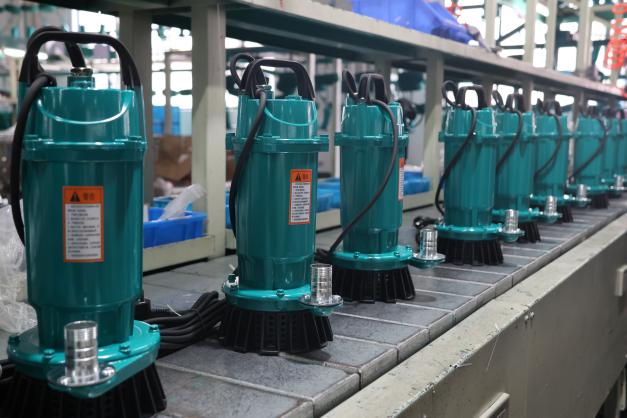
This article is about how to use a submersible pump. As a professional guide, help you use a submersible pump correctly. Greatly reduce the damage caused by improper manipulation.
Introduction
Before you use any equipment, you should know what it is. Let us have a brief understanding of a submersible pump.
What is a submersible pump
A submersible pump is a water pump that combines a motor and a pump and is totally immersed in the liquid for total operation.
Why learning correct operation matters
For using submersible pumps safely and releasing the water pump to its best performance, learning how to use a submersible pump plays an important role. Especially, submersible pumps are always applied in deep wells, sewage, ponds, etc, they really need to cost money and time for maintenance. Thus, for the submersible pumps’ stable and long-term operation, learning the correct usage method is necessary.
Understand the Type of Submersible Pump You Are Using
Submersible pumps are divided into many types by their specific functions. There are several main types of submersible pumps. The performance of different types has its own advantages and disadvantages in different aspects, such as the head, the flow, etc. The right water pump will achieve its maximum performance when used in the right field.
Clean Water Submersible Pump
Used for clean water with no impurities or only tiny particles. Small in size and light in weight, it is often used for pumping water from clear water tanks and for temporary household water pumping.
Dirty Water / Drainage Pump
With its large flow channels, it can allow solid particles of a certain size to pass through, and is therefore often used to treat rainwater, domestic sewage, and other lightly impure water.
Sewage Submersible Pump
The sewage submersible pump is designed as a large-channel impeller or a cutting impeller. Therefore, it is possible to reduce the clogging of the pump and keep the water flow.
Borehole Submersible Pump
The borehole submersible pump has features with high head and can be used in wells at depths of 20-300 meters, usually used for deep well water extraction.
Solar Submersible pump
A solar submersible pump operates using solar energy without a power supply, making it suitable for use in remote but sunny areas.
Utility Pump
A utility pump is a versatile pump that is typically used for the extraction, discharge, or circulation of clean water or lightly polluted water.
Safety Precautions Before Using a Submersible Pump
Any proper preparation is key to reducing the incidence of accidents. If you want to own a durable submersible pump, you can refer to the following precautions regarding water pumps. Due to the nature of submersible pumps operating in water, the precautions required are different from those for other water pumps.
User’s Precautions
- Check electrical standards and grounding
Ensure the submersible pump can connect with the local electrical system and the connection of the ground wire.
- Dry-running
Pay attention to the water source and flow, avoiding the water pump from running dry, as this can easily cause it to overheat and be damaged.
- Ensure power is disconnected when inspection and repair
If inspection or repair of the water pump is required, ensure the pump is powered off.
- Personal protective equipment (gloves, boots)
It is best to wear protective equipment, such as gloves and boots that are made of insulating materials, during maintenance to prevent accidents.
- Avoid using damaged cables or cracked housings
When moving the submersible pumps, you’d better avoid pulling the cable or dragging the pumps on the ground. If the cable or housings are damaged, stop continuing to use the submersible pump.
- Trial run inspection
During the initial startup, observe for any abnormal vibrations or sounds, and check if the water flow is normal. If any abnormalities are found, disconnect the power immediately.
Pre-Use Preparation
- Check the Power Supply
Before using the submersible pump, check if it matches the local voltage and frequency. Then see if the cable is intact and undamaged, and guarantee proper grounding wire is grounded.
- Inspect the Pump
For the submersible pump, you’d better inspect if the pump body has cracks, and if the impeller is rotating normally. Also, check the pump seal.
- Prepare the Site
Clear debris near the installation point to prevent the submersible pump from sucking in stones and sand. Ensure the submersible pump is stable and that the pump can operate normally.
- Prepare Pipes and Check
Prepare suitable and intact connecting pipes, ensuring connections are secure and leak-proof. Check that the filters and valves are correctly and securely installed.
How to Install a Submersible Pump
After knowing the safety precautions, you’ll likely become interested in how to install the water pump; next, you’ll see the correct steps for installing the water pump.
- Preparations before placement
Connect the outlet pipe with the submersible pump, check all waterproof connections and the float. If you need a hoisting rope for assistance, don’t forget to check its strength.
- Entering the water
Hold the handle or rope to keep the submersible upright, then lower the submersible pump slowly, avoiding collision or scrape. It is worth noting that keep the cable, sling, and pipe tangle-free.
- Place the pump
Place the submersible pump on a secure brick or support to prevent clogging from sediment.
Secure the top of the outlet hose, ensuring the pump is vertical and stable.
- Electrical connection
Connect the live wire, neutral wire, and capacitor wire according to the wiring diagram. If it is a three-phase submersible pump, you also need to ensure that the ground wire is connected.
Operating the Submersible Pump
The same precautions should be taken when starting to use the water pump, and some problems that may occur during operation can be avoided as much as possible.
- Turning On the Pump
Submersible pumps can now be equipped with automatic switches, such as float switches, to automatically start and stop the pump based on water level. Or still use the traditional switches. Note that three-phase pumps must be equipped with a controller.
- Monitoring Performance
After starting operation, monitor whether the flow rate and head are within the normal range, any abnormal vibrations or noises, a nd the pump temperature. If any abnormalities are found, please immediately disconnect the power. Different pumps require different monitoring points.
- Points to note for different types
- For Well Pumps
Check for rapid cycling
Check the pressure tank and pressure switch
Ensure stable voltage
Observe recovery rate of the well (avoid over-pumping)
- For Drainage Pumps
Monitor water level
Clear debris if the intake is blocked
Check the float switch movement space
- For Sewage Pumps
Do not pump corrosive chemicals (unless a corrosion-resistant model)
Do not pump large fibrous materials
Inspect cutting mechanism (if cutter pump)
- Common Misuses to Avoid
- Dry-running
- Wrong voltage
- Mismatched pipes
- Used in unsuitable liquids
- Blocking the discharge outlet
- Installed in extremely high or low temperature environments
Troubleshooting While Using the Pump
When you encounter problems, you might not be sure what caused them and how to solve them. Here are some common submersible pump problems and their causes, which might be helpful.
- Pump Doesn’t Start
Insufficient voltage or incorrect power wiring: Check the power supply and power line.
Damaged capacitor: Replace the capacitor.
Motor jammed or impeller stuck: Clean foreign objects from the impeller.
- Low Water Flow
Insufficient water supply: Make sure the water completely submerges the submersible pump.
Pump not fully filled: Check and refill with water to remove air.
Impeller clogged or worn: Clean foreign objects from the impeller.
Insufficient motor speed: Check voltage.
- Pump Overheating
Pump internal blockage: Clean the blockages inside the pumps.
Prolonged overload operation: Avoid dry-running or overloading.
Incomplete immersion, poor cooling: Ensure the submersible pump is completely submerged in water.
- Water leakage
Aging or damaged seals: The mechanical seal might need to be replaced.
Loose pump head connection: Give the connection a firm retightening.
Cracked pump body: Requires replacing the pump housing or the whole unit.
- Excessive vibration and noise
Impeller wear: Replace the impeller.
Loose installation: Strengthen the mounting.
Damaged bearing: Replace bearing.
When to Replace Your Submersible Pump
After prolonged use, the water pump also needs to be replaced. If you are unsure when this should be replaced, you can refer to the following situations.
Significant performance degradation
Reduced water output, lower head, and a significant drop in pump efficiency, failing to meet design requirements. The aging of the impeller and motor has already been observed.
Corrosion or severe wear
Long-time operation can cause severe corrosion or wear to pump components and the pump body due to liquids or particles, leading to leaks and damage to the pump.
Motor failure
Overheating of the pump motor or automatic tripping usually means the performance of the winding degrades. Continued use in this condition can easily lead to burnout or electrical leakage.
Seal leakage is causing water ingress
Prolonged operation causes wear, resulting in the entry of mud, sand, and impurities. Water may get into the motor, causing a short circuit and potentially burning it out, which could result in security risks.
Reaching the end of service life
As the pump approaches or reaches the end of its service life, various phenomena such as decreased pump performance, abnormal noise, frequent malfunctions, and motor overheating may occur. Timely replacement can maintain a stable water supply, and it can ensure safety.
Conclusion
Proper use of a submersible pump requires full pre-preparation work and correct operation. Selecting the correct pumps and following the steps will allow the submersible pump to achieve optimal performance and ensure safety. If you are interested in submersibles or have further questions, HunGerät will provide helpful advice, and all our submersible pumps come with detailed instruction manuals.
FAQ
Q: Can I use a submersible pump in a fish pond?
A: Yes, submersible pumps have many functions; they can change water and add oxygen to fish ponds.
Q: Why does my pump make noise but not pump water?
A: Main reasons may be the inlet was not fully submerged in water, insufficient voltage, an air leak, a water leak, a clogged water inlet, etc.
Q: Can I place the submersible pump horizontally?
A: Some submersible pump types can be used horizontally, such as small plastic housing submersible pumps. You can refer to the instructions for use or the nameplate to confirm.
Q: What is the difference between drainage, sewage, and deep well pumps?
A: Drainage pumps are used to discharge clean water containing slight impurities. Sewage pumps are specially designed for extracting wastewater containing solid impurities, fibers, and pollutants. Deep well pumps extract clean water from deep wells, making them particularly suitable for depths ranging from tens to hundreds of meters.
Q: Should the pump be fully submerged?
A: Yes, it can greatly reduce the occurrence of water pump dry running, and heat dissipation can be achieved through water flow.