Introduction
When a home relies on well water, the well pump becomes an important part of daily life. It sits somewhere between the house and the ground below, moving water whenever the family needs it. Many users only notice it when the water pressure feels different, but the system is doing small tasks in the background every day.
A well pump works like the main part of a home water system. It pulls water from deep in the ground and pushes it through the pipes until it reaches the tap. When you know a little about how it works, it becomes easier to understand why the water pressure changes or why the pump starts more often on some days. It also helps you pick a pump that matches your well depth and daily water use.
The Basic Idea: How a Well Pump Pulls or Pushes Water
Water in a well comes from an underground aquifer, which is a layer of soil and rock that holds water like a natural sponge. The pump’s job is simple: it moves this water up the well and sends it into a house or a farm. How it does this depends on the type of pump.
Some pumps use suction. A jet pump sits on the ground, and it creates a low-pressure area inside the pipe. The higher outside air pressure then pushes the water upward. People often think the pump “pulls” the water, but in reality, it is the air pressure around us that does most of the work. This is why pump suction only works for shallow wells. Air pressure can push water only to a certain height, so it cannot lift water from very deep places.
Other pumps work by pushing from below. A submersible pump goes down into the well and sits under the water. Its motor spins an impeller that pushes water upward through the pipe. This submersible pump working principle avoids the limits of air pressure, so it can move water from much deeper wells and keep stable water pressure even when the well is long.
The Two Main Types of Well Pumps and How Each Works
Jet Pumps — How They Work
A jet pump sits on the surface instead of going down into the well. Its impeller spins fast and sends water through a small nozzle, and this flow creates a low-pressure zone inside the venturi. That is the basic jet pump working principle. The outside air pressure then pushes water up the pipe, which is why people call it a shallow well pump when it is used for short depths.
The suction limit is easy to understand if you think about drinking through a long straw. At some point, no matter how hard you try, the drink will not rise because the air pressure can only lift the liquid so high. The same rule applies to a shallow well pump.
A deep well jet pump works a bit differently. It uses two pipes and an injector placed lower in the well. The water that goes down the first pipe helps create stronger suction at the injector, and this extra force brings water up the second pipe. This design helps the deep well jet pump reach greater depths than a surface suction system alone.
Submersible Pumps — How They Work
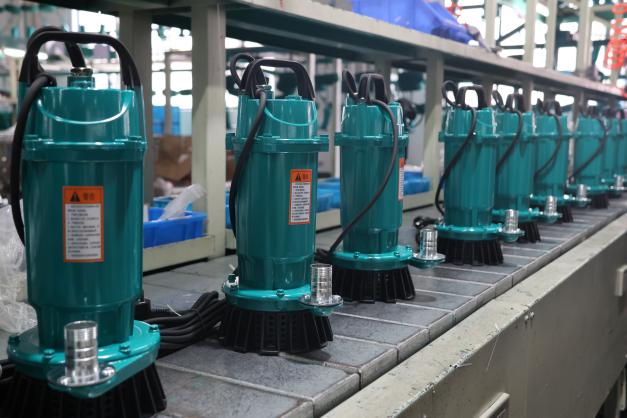
A submersible well pump sits underwater, deep inside the well. Instead of pulling water up, it pushes water from below, so it does not rely on air pressure at all. This is the core idea behind how submersible pumps work.
Inside the pump, several impellers are stacked in a row. Water moves from one stage to the next, almost like an elevator that sends people upward floor by floor. This simple idea explains the multistage design found in most deep well pump systems.
Because the pump stays under the water, it works quietly and loses less energy. It does not fight against suction limits and does not draw air, so the flow stays stable even in deeper wells. This makes a submersible well pump both efficient and reliable for long-term use.
How the Pressure System Controls the Pump
The pressure system usually includes two parts: pressure tank and pressure. They form a complete pressure system, enabling the water pump to operate more intelligently.
- Pressure Tank
- The pressure tank stores a small amount of water for daily use.
- It keeps the water pressure stable, so the flow does not jump up and down.
- It stops the pump from turning on and off too often, which helps the pump last longer.
- Pressure Switch — the “brain” of the well pump pressure system
- The pressure switch controls when the pump starts and stops.
- The cut-in pressure is the point where the pump turns ON.
- The cut-out pressure is the point where the pump turns OFF.
You can think of it like a gas pump at a station. When the tank is full, the nozzle stops by itself. The cut-out point works in the same simple way.
Step-by-Step: What Happens When You Open a Faucet
- The tap opens → pressure falls
- When the faucet opens, water leaves the pressure tank.
- The pressure inside the tank falls, and the well pump cycle begins.
- The pressure switch reacts
- Once the pressure reaches the cut-in point, the pressure switch closes.
- This small action tells the pump to start running.
- The pump starts moving water
- The pump pulls or pushes water from the well.
- The water moves from the well through the pipe and reaches the home
- The tank refills → pressure rises → pump stops
- As the pump keeps running, it refills the pressure tank.
- The pressure slowly increases until it reaches the cut-out point.
- The pressure switch turns the pump off, and one full well pump cycle ends.
What Affects How Well a Well Pump Works
- Well depth
- A deeper well often needs a stronger motor to keep good pump performance.
- Static water level
- A low water level means the pump must move water a longer distance, which affects water pressure factors.
- Pump horsepower
- Higher horsepower gives the pump more strength to handle long pipes and higher pressure.
- The right horsepower helps keep steady flow without wasting energy.
- Pipe diameter and friction loss
- A narrow pipe creates more friction loss, so the pump must push harder.
- A wider pipe reduces resistance and helps improve pump performance.
- Pressure switch settings
- Higher cut-in and cut-out pressures require the pump to build more pressure.
- These settings directly change how strong the water flow feels in the home.
- Voltage supply
- A steady voltage supply helps the pump run smoothly.
- Low voltage makes the motor weaker and reduces water pressure factors.
Conclusion
The well pump simply moves water from the ground to where people need it,and each part plays its own part in keeping water moving. When someone understands how their pump, tank, and switch work together, they can choose a model that fits their well depth and daily water needs more confidently. If you want a pump that runs steady and lasts long,Hungerat offers several models that fit different wells and home setups.
FAQ
- How does a well pump know when to start?
It starts when the pressure falls to the cut-in point. The pressure switch senses this drop and closes the circuit, so the pump begins to run.
- Why can’t a shallow well pump lift water from deep wells?
A shallow well pump depends on suction, and suction only works within a short height, the deep wells over its limit.
- What’s the difference between a jet pump and a submersible pump?
The jet pump works from the surface, using suction.But the submersible pump stays in the water and pushes from below.
- Does a well pump run all the time?
No. It runs only when the pressure falls and stops when the tank fills.
- What is the normal pressure setting for a home well pump?
Many homes use a 40/60 PSI setup, the pump starting at 40 PSI and stopping at 60PSI.