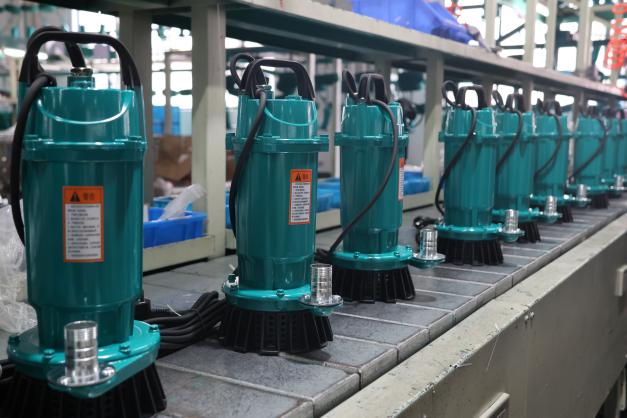
Introduction
Booster pumps, as effective devices for increasing water pressure, have been widely used in household and small building water supply systems. However, various problems often arise, the root cause of improper installation. If you need to install it yourself or receive installation guidance, this article will help you install a booster pump correctly, avoid common installation mistakes, and truly improve your daily water usage experience.
Types of Home Booster Pumps
Not all booster pumps are the same; booster pumps also have several types, divided according to installation position, control method, and self-priming ability.
By work methods
Must be installed with full water; dry running is strictly prohibited.
A stable water source (tap water or water tank) must be maintained at the inlet.
It is recommended to install a check valve/filter at the inlet.
Not suitable for environments with high drops or frequent water outages.
- Variable frequency constant pressure booster pump
Higher power requirements are needed, requiring stable voltage and proper grounding.
The piping layout must be reasonable to avoid false readings from pressure sensors.
Space must be reserved for the control box/inverter, and this space must be well-ventilated for heat dissipation.
By structural form
Installed on a straight pipe section, with a certain length of straight pipe remaining before and after.
High requirements for inlet and outlet coaxiality.
Flexible connections are needed for vibration damping.
- Centrifugal booster pump
Centrifugal booster pumps occupy a relatively large space.
They require a separate base or mounting bracket, and the pump body must be securely fixed.
The suction head significantly impacts installation.
By use environment
- Home Silent Booster Pump
For applications requiring high vibration damping and sound insulation, rubber pads must be added to the walls or floor.
The installation location directly impacts the user experience; avoid installation in bedrooms or above ceilings.
- High head/high power booster pump
Cable specifications and circuit breakers must be compatible.
The start-up and shutdown impacts are significant, placing high demands on conduits.
Electrical protection (overload and residual current devices) is mandatory.
Pre-Installation Checklist
Before installation, preparing enough is important. Check the application can help you choose the right booster pump, and prepare all necessary accessories.
Confirm the Installation Environment
- The installation surface should be flat and firm.
- Ensure the environment is dry.
- Confirm the location will not be exposed to high temperatures, direct sunlight, or rain.
- Keep sufficient space for future maintenance.
Check the Pipe System
- Select a matching pipe diameter; the inlet and outlet pipe diameters should be larger than the pump interface pipe diameter.
- Prepare the necessary pipe fittings, equip the inlet with a filter, and install a check valve at the outlet if necessary.
- Prepare sealant to ensure the pipe is sealed.
Electrical Basics
- Power supply capacity matches the water pump.
- Sockets and power cords are free from aging or damage; wire specifications meet requirements.
- Prepare a residual current device (RCD) and ensure reliable grounding.
Product and accessory inspection
- Inspect the appearance, the pump, and accessories for damage.
- Inspect the pump body for impacts, cracks, or deformation.
- Test the impeller, and check if it’s being stuck.
- Check that all standard accessories are present.
Location to Install a Home Booster Pump
The installation location has a significant impact on household booster pumps, even directly determining whether the water pressure is sufficient and affecting the pump’s performance. Furthermore, when installed indoors, noise and vibration are paramount, affecting the user experience.
Best location
- Main water supply line to the house
After the water meter and main valve, but before the main indoor pipe.
The water pressure boost is most even throughout the house. At this point, the pipes leading to each water point are shortest, efficiency is highest, and water pressure remains stable even when used simultaneously at all points. This is suitable for whole-house pressurization in multi-bathroom, multi-story residences.
- Before the water heater
Installed before the inlet of a gas/electric water heater
Significantly improves shower water pressure; low cost, simple installation, and minimal impact on other water usage areas. Only addresses low shower water pressure; not suitable for whole-house pressure boosting.
Unsuitable position
- Bedrooms and living rooms:
The motor will make noise and vibration, and will disturb rest. Even silent pumps have a starting sound.
- Damp or water-prone locations:
Like bathroom floors, basement flooded areas, and unprotected outdoor areas, these locations pose a risk of electric shock.
- Locations too far from water sources:
Being too far from water sources results in excessively long pipework, poor pressurization, and increased noise and air resistance.
Step-by-Step Home Booster Pump Installation Guide
Once everything is ready, installation can begin. Follow the steps for installing booster pumps. You can install a booster pump easily and safely.
- Step 1: Turn off the water and power
Close the main water valve and disconnect the power supply to ensure safety and prevent disruption during installation.
- Step 2: Install the inlet pipe
Connect the inlet pipe in the direction of the arrow on the pump body. First, install the filter at the inlet, then connect the pump.
Pumps with suction lift require an additional check valve or foot valve.
The connection must be airtight; the inlet must not leak.
- Step 3: Secure the pump
Ground installation: Secure with expansion bolts.
Wall installation: Requires installation on a load-bearing wall with a sturdy bracket.
Add rubber shock-absorbing pads to the bottom of the pump.
- Step 4: Connect the outlet pipe
Connect the outlet to the water pipe. But not to let the weight of the pipe press on the pump body.
- Step 5: Air vent and fill with water
Open the air vent or the highest water point. Then fill the pump body and pipe with water until water flows continuously without air bubbles.
- Step 6: Connect the power supply
Confirm the voltage is correct and compatible with the water pump. And use a grounded socket.
- Step 7: Trial run and debugging
Turn on the tap and then start the water pump.
Observe whether the water pump starts and stops normally, whether there are any leaks, and whether there is any abnormal noise or vibration.
Controller / Pressure Switch Installation Notes
The controller or pressure switch is core in the system, which can control the pump’s start and stop automatically, like the brain of the pumps. And the controller can protect the pump when a runtime exception occurs
Orientation considerations
- The control box for a household booster pump must be installed after the water pump outlet.
- The control box must be installed vertically.
- The arrow should point in the same direction as the water flow.
- It must not be installed upside down or horizontally.
Common installation errors
- Frequent pump starts
- The pipe is not properly sealed and is leaking.
- Control box pressure setting too low
- Lack the pressure tank
- No start
- The air in the pipeline
- The water inlet direction of the control box is reversed.
The water pump may have entered a water shortage protection state
- Unstable pressure
- Large fluctuations in water consumption
- Inappropriate sensitivity of the control box
First Start-Up and Testing
After installing the booster pump and all the accessories, don’t forget that inspection and testing should be conducted before formal use.
Pre-start inspection
- Ensure the water supply is on and water can enter the pump.
- All piping connections are complete, and there are no obvious leaks.
- The pump body and control box are filled with water, and all air has been purged.
- The control box is installed in the correct position and with the correct arrow.
- The connected power supply voltage is correct and compatible with the water pump.
start-up steps
- Only turn on the power switch and observe for 10-20 seconds. Normally, the water pump will not start.
- Turn on any tap and observe the water pump’s response. Commonly, the water pump will start within 1-2 seconds, and the water flow will be stable and quiet.
- Turn off the tap and observe the water pump’s shutdown.
Under normal circumstances, the water pump will automatically stop after a delay of 2–10 seconds, stopping cleanly without repeated actions.
Noise and vibration check
- Touch the pump body and piping to check for excessive or abnormal vibration.
- Listen for noticeable noises such as resonance, knocking, or metallic friction sounds.
Common Installation Mistakes to Avoid
Many customers make installation mistakes, which can damage the pump and lead to a crisis of trust in manufacturers. In there, we posted some common installation mistakes to help you avoid.
Position and direction errors
- Installing the control box at the water pump inlet will cause the pump to fail to start or respond slowly with incorrect feedback.
Correct: The control box must be installed after the water pump outlet.
- Reversed direction will cause the water pump to malfunction or even stop pumping altogether.
Correct: During installation, the arrow should be aligned with the actual water flow direction.
- Horizontal/inverted installation of the control box can cause sensor malfunctions, leading to frequent pump start-stop cycles.
Correct: The booster pump must be installed vertically.
Piping and sealing errors
- Pipe damage leading to air/water leaks can cause water pumps to stop operating or frequently start and stop.
Correct: Use tape on all threaded connections to ensure no leaks.
- Incorrect direction connection will cause the pump lose pressure, easily leading to overload.
Correct: Verify the pump body markings before installation and connect correctly.
- 3. A thin pipe diameter will reduce water flow.
Correct: Ensure the connected pipe diameter is bigger than the pump’s inlet.
Electrical and Control Errors
- Connecting the water pump directly to the power supply without going through the control box will prevent the control box from protecting the water pump.
Correct: Connect the controller between the pump and the power supply
- The lack of grounding or protective devices can easily damage the control box and lead to the risk of electric shock.
Correct: Ensure grounding and equip with protective devices
Usage and Debugging Errors
- Starting the pump without filling water will cause it to run dry, and the pump will be damaged within minutes.
Correct: The pump must be filled with water before starting.
- Without the filter, it will easily cause the impeller to be stuck, leading to pump damage.
Correct: Install a filter before the pump.
- Setting the pressure too high will cause leaks in the pipes and damage to faucets, water heaters, etc.
Correct: Adjust to an appropriate pressure range.
Safety Precautions During Installation
Safe installation can effectively prevent accidents from occurring. There are aspects to consider, from the installation environment to the water pump itself, to ensure the safety of equipment and personnel.
Electrical safety
- The booster pump must be effectively grounded; the grounding wire must not be connected to the neutral wire.
- A residual current device (RCD/RCD) must be installed.
3 . Confirm the voltage and frequency are matched. In areas with unstable voltage, it is recommended to add a voltage regulator.
Machine and pipeline safety
- Before installation, ensure the pump is purged and primed during the initial startup, avoiding dry-running.
- Ensure that the inlet and outlet water pipes are firmly secured.
- A filter must be installed at the water inlet to prevent sand and gravel impurities from damaging the pump.
Water proof
- The control box and power wiring points must be above the ground, and the junction box must be waterproof.
- Avoid installation in locations exposed to water, water accumulation, or rain.
- In damp, enclosed spaces, protective installation is required to prevent electric shock.
Troubleshooting After Installation
After installation, a trial run is required to check the water pump and installation condition. Faults may occur during this process. Understanding the specific issues will allow for easy troubleshooting after you install the water pump.
The pump does not start
- Power not connected: Check the power supply, voltage, and switch.
- Control box damaged or wiring loose: Check the control box wiring.
- Automatic mode not triggered: Turning on the water tap and testing.
Low pressure
- Air in the pump or pipeline: Re-priming and venting the pump.
- Air leak: Checking and sealing the inlet connection.
- Clogged filter: Clean the impurities attached to the filter.
Frequent on/off cycling
- Leaking pipes or valves: Inspect and repair leaks.
- Pressure switch too sensitive: Adjust or replace the pressure controller.
- Check valve loose: Replace a more suitable check valve.
Abnormal noise or vibration
- Not securely fixed: Re-secure the water pump and add vibration-damping pads.
- No shock absorption measures: Choose shock-absorbing materials for installation.
- Air entering the pump: Purge air from the pump.
Conclusion
Proper installation can support stable water pressure and prolong the pump’s life. Incorrect installation will bring many problems. Understanding basic installation principles helps prevent common issues, extend service life, and improve user experience. For advice or installation support, HunGerät provides professional booster pump solutions and technical assistance.
FAQ
Q1: Is higher pressure always better for home booster pumps?
A1: No. Higher pressure from a household booster pump isn’t always better. The purpose of a household booster pump is to supplement insufficient water pressure. Household water systems have a designed pressure range; exceeding this range can damage water equipment, cause frequent pressure switch activation, and shorten the pump’s lifespan. Appropriate pressure is best.
Q2: Is it necessary to install a filter when installing a booster pump?
A2: While a filter is not mandatory, we strongly recommend installing one. Booster pumps are highly sensitive to impurities, and a filter prevents impurity and seal wear, protects pressure switches and valves, and prevents impurities from clogging control components. and is practically essential in poor water quality conditions to ensure water quality and pump safety.
Q3:Can the booster pump be installed upside down or sideways?
A3: Most household booster pumps cannot be installed upside down or on their side. This can affect the lifespan of bearings and mechanical seals, leading to abnormal stress and accelerated wear. Air can easily enter the pump chamber, causing it to run dry and preventing proper water filling. Heat dissipation will also be affected, leading to overheating and potential failure of safety devices.
Q4:Can a booster pump supply water to many faucets?
A4: Yes. The booster pump’s flow rate and head need to meet the requirements to supply water to multiple water points simultaneously, providing sufficient and stable water flow. The pipe diameter also needs to be appropriate; too small a diameter will limit the flow rate. A well-designed pipe diameter is especially important for multiple water points.
Q5:Does a booster pump require regular maintenance?
A5: Regular maintenance is necessary. Although household booster pumps have a relatively simple structure, regular maintenance is crucial to ensuring stable water pressure and extending their lifespan. In particular, the filter needs to be cleaned or replaced regularly to prevent sand and rust from entering the pump body. Neglecting maintenance will lead to unstable water pressure, increased noise, and a shortened pump lifespan.