Introduction
Centrifugal pumps are the most commonly used water pumps in many fields. They achieve water transport by generating centrifugal force through the high-speed rotation of an impeller. Different types of centrifugal water pumps differ in structure and performance. A correct understanding of the types and applications helps in selecting the most suitable pump, ensuring stable system operation, and reducing operating costs.
How Centrifugal Pumps Are Commonly Classified
Centrifugal water pumps can be classified into several types based on different criteria. The centrifugal pump types and applications are closely related; like, centrifugal irrigation pumps directly reflect their applications. Identify the type of water pump you need to select the correct one for your application. Differences in centrifugal pump components also result in different types of centrifugal pumps. Below are the main categories, based on the main classification criteria of water pump design, internal structure, and medium.; you can use this classification to find the type you need.
Types of Centrifugal Pumps by Installation Design
Horizontal Centrifugal Pump
Typical structure: The motor and pump body are installed horizontally. The pump body is usually fixed through the base. The inlet and outlet are mostly side-in and side-out.
Common applications: Usually used in factory water supply systems, agricultural irrigation, and industrial circulating water systems
Advantages: The horizontal centrifugal pump operates stably, has good heat dissipation, and is suitable for continuous operation. And easy to disassemble and maintain
limitations: Horizontal pumps require a large installation space and need to be primed before starting.
Vertical Centrifugal Pump
When vertical design is preferred: Mainly used in building water supply systems, high-rise building pressurization, air conditioning, and HVAC systems, or deep well water collection.
Space-saving scenarios: Vertical pumps save space and are flexible to install
Typical industries: Primarily used for pressurizing or supplying water to high-rise residential buildings, fire protection systems, underground pump rooms, or small equipment rooms, effectively saving ground space.
Limitations: Maintenance requires complete disassembly, which is more troublesome. High requirements for installation verticality during installation.
Inline Centrifugal Pump
Main features: The inlet and outlet are on the same horizontal straight line and can be directly installed in the pipeline in series without the need for a separate pump base.
Application: Inline pumps can be directly connected in series in pipelines to provide a secondary water supply for high-rise residential and commercial buildings or to pressurize building pipe networks. They can also be used in HVAC systems to handle water circulation and transportation, as well as in industrial applications to transport liquids.
Advantages: The easiest to install and takes up the smallest space in comparison
Limitations: It is not suitable for frequent disassembly and maintenance. It is necessary to cut the pipe first before repairing and maintaining the water pump.
There are high requirements for pipeline support, and pipelines are required to bear all the load.
Types of Centrifugal Pumps by Suction Design
End Suction Centrifugal Pump
Structure: End Suction Centrifugal Pump‘s suction inlet is located at one end of the pump, while the outlet is typically radially upward or side-discharge. Typically, these are compact, single-suction centrifugal pumps, and it is easy to install and maintain. The most common and widely used type is the horizontal, end-suction centrifugal pump.
Application: End-suction centrifugal pumps are mainly used in building water supply systems, industrial cooling water systems, agricultural irrigation, or general industrial liquid transportation.
Double Suction Centrifugal Pump
Structure: A double-suction centrifugal pump draws water from both sides of the impeller simultaneously. It typically has a double-suction structure, with a double-suction impeller, and a split-case design.
Application: Double-suction centrifugal pumps are particularly suitable for high-flow, continuous operation conditions. Like urban water supply pumping stations,, large-scale industrial circulating water systems, drainage and water diversion projects, and large-scale irrigation systems.
Types of Centrifugal Pumps by Number of Impellers
Single-Stage Centrifugal Pump
Definition: Centrifugal pump with only one impeller
Typical head and flow range: Single-stage centrifugal pumps have a relatively simple structure, provide a stable flow rate and moderate head, and have low manufacturing and maintenance costs.
Multistage Centrifugal Pump
Definition: A centrifugal pump consisting of two or more impellers connected in series
Feature: A single impeller can only provide a limited head at its design speed. When multiple impellers work in series, each impeller pressurizes the liquid, thus achieving a higher head.
Common use cases: High-rise building water supply / deep well water supply/boiler feedwater system / industrial high-pressure water supply system
Typical: Each additional impeller stage increases the head, thus providing higher head and higher pressure. The structure is relatively complex and requires high manufacturing precision.
Types of Centrifugal Pumps by Casing Design
Volute Casing Centrifugal Pump
Structural features: The pump casing is spiral-shaped (volute-shaped) with a cross-sectional area that gradually increases along the water flow direction, converting the kinetic energy of the liquid into pressure energy.
Performance characteristics: simple structure, low manufacturing cost, high efficiency, wide range of applications, and continuous and stable water output.
Application: Centrifugal pumps for clean water/Domestic and industrial water supply
/Agricultural irrigation/Inline pumps
Double Volute Pump
Structure: It has two symmetrical volute channels, which can effectively balance the radial force of the impeller.
Performance: Smoother operation, lower vibration, and noise
Application: Large-scale industrial water supply systems/Municipal water supply
/Power plant circulating water systems
Diffuser Casing Centrifugal Pump
The impeller has fixed guide vanes on its outer side, which convert velocity energy into pressure energy.
Higher efficiency: Suitable for high head operation; stable operation
More common in multistage pumps: More common in multistage centrifugal pumps, they are used more often for high-lift, high-pressure applications.
Types of Centrifugal Pumps by Connection Method
Close-Coupled Centrifugal Pump
A close-coupled centrifugal pump is a pump where the shaft is directly connected to the motor shaft, and the impeller is directly mounted on the motor shaft without the need for a coupling.
Structure design: No coupling required, compact structure, motor and pump body directly connected.
Light-duty and domestic use
Advantages:
Application: Small in size, it takes up little space and is easy to install; it is mainly used in small booster systems such as domestic water supply and pipeline pumps.
Long-Coupled Centrifugal Pump
A long-coupled centrifugal pump refers to a pump shaft and a motor shaft connected by a coupling, with the motor and pump body installed separately, usually on the same base.
Structural features: Employing flexible or rigid couplings, the pump and motor are separate units, with independent bearings and mechanical seals.
Industrial and heavy-duty applications
Maintenance advantages
Types of Centrifugal Pumps by Application
Clean Water Centrifugal Pump
Suitable for liquids with no impurities or containing only a small amount of fine impurities.
Domestic and irrigation use
Medium characteristics: Pure water or a liquid with physical and chemical properties similar to pure water, low corrosiveness, and low viscosity.
Application: Commonly used in domestic water supply/building water supply/agricultural irrigation/recirculating water systems
Sewage / Wastewater Centrifugal Pump
Used for conveying liquids containing solid particles or fibers.
Medium characteristics: The medium contains silt, impurities, fibers, and relatively large solid particles.
Structural features: Wide impeller channels, anti-clogging design, and typically equipped with wear-resistant seals.
Typically used in sewage treatment plants, municipal sewage discharge, or industrial wastewater discharge.
Chemical Centrifugal Pump
Mainly used for conveying corrosive or chemically reactive liquids.
Media characteristics: Acids, alkalis, salt solutions, etc., are highly corrosive to metals.
Corrosion resistance: The water pump is made of corrosion-resistant materials and fluoroplastics and has high sealing requirements.
Mainly used in the chemical industry, the electroplating industry, and the pharmaceutical and fine chemical industry.
Slurry Centrifugal Pump
Centrifugal pumps are used to transport materials containing a large number of solid particles, such as slurries, slag, and powders.
Structure: The pump casing and impeller are made of high-chromium alloy or wear-resistant cast iron, which can withstand long-term wear. Wide impeller channels, often semi-open or open, reduce clogging.
Classic applications include mining and ore dressing plants, metallurgy, power plant ash and slag transportation, river dredging, and construction site sludge removal, among others.
Special Types of Centrifugal Pumps
Self-Priming Centrifugal Pump
A self-priming centrifugal pump includes a self-priming chamber and a reflux channel. It can self-priming and retain liquid in the pump body to achieve water intake through gas-liquid mixing and exhaust.
Suitable for applications like water tank/pool pumping, agricultural irrigation, and temporary drainage.
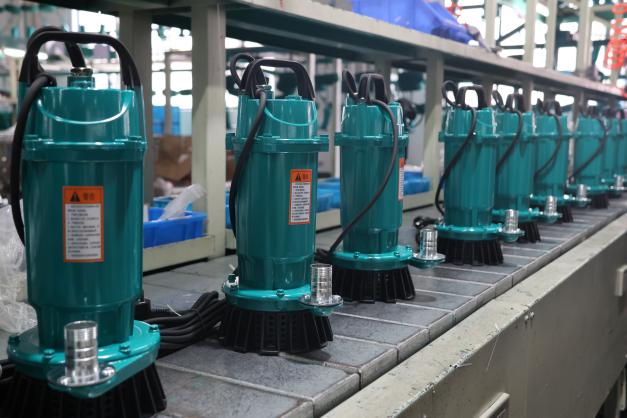
Submersible Centrifugal Pump
A centrifugal pump that integrates the pump and motor and operates entirely submerged in the liquid.
Because it is submerged in liquid, no priming pump is required. It is commonly used for deep well water extraction, drainage of underground pools and pits, and mine drainage.
Booster Centrifugal Pump
Booster centrifugal pumps are a general term for centrifugal pumps used to increase system pressure. Booster pumps do not have a self-priming function; they can only increase the existing water pressure.
Typically used in home water pressurization, high-rise building water supply, and mid-pipe pressurization, as well as in hot water systems that can supply water within the province but have insufficient pressure, to increase pressure.
How to Choose the Right Type of Centrifugal Pump
Choosing the right centrifugal pump type essentially means matching the actual operating conditions and needs with the pump’s structural characteristics. Understanding the key factors will help you complete the selection process quickly and professionally.
Flow rate requirement
Flow rate is the volume of liquid transported per unit time.
You can calculate based on the maximum simultaneous water consumption. Generally, choosing a flow rate slightly larger than the projected flow rate is best. Blindly choosing a large flow rate may lead to decreased efficiency and increased energy consumption.
Head requirement
The head is the ability of a water pump to lift water to a certain height.
When selecting a water pump, you need to consider the approximate water loss. If there are many bends in the pipeline, it is recommended to use a higher head centrifugal pump.
Medium type
The characteristics of the medium directly determine whether a water pump can be used, and also select the pump’s materials and internal structure.
The selection of types depends on the liquid medium. For corrosive liquids, you can use centrifugal pumps made of corrosion-resistant materials, such as centrifugal stainless steel pumps. For conveying large particles, choosing materials with good wear resistance is the best option.
Conclusion
Different pump types are designed for different operating conditions. The type of pump determines whether it is suitable for use. Understanding the types of centrifugal pumps can help effectively avoid problems like low efficiency, frequent malfunctions, and short lifespans. If you still have questions about the type of water pump, please consult HunGerät, a professional centrifugal pump manufacturer and centrifugal pump supplier. We will provide you with a professional and suitable solution and high-quality centrifugal pumps.
FAQ
Q1. What are the common types of centrifugal pumps?
A1.The most common types include horizontal single-stage, vertical, submersible, and self-priming centrifugal pumps. Their different features make them suitable for a wide range of applications, effectively meeting diverse needs and solving water-related problems.
Q2. How can centrifugal pumps be classified?
A2. According to their structural design, installation method, number of impellers, and application medium. You can choose based on your core needs, like easy installation or being able to transport slurry. Determining the type of water pump will help you quickly and efficiently select the right centrifugal pump.
Q3. What are the main differences between single-stage centrifugal pumps and multi-stage c centrifugal pumps?
A3.The main difference is the number of impellers. It will affect performance, structure, and installation status. With more impellers, resulting in Multi-stage centrifugal pumps have higher head and pressure, making them suitable for high-rise or high-pressure water supply systems.
Q4.When is it better to choose a vertical centrifugal pump?
A4. A large space requires a high-power, high-flow pump that operates continuously for extended periods; a horizontal centrifugal pump is an excellent choice. If you want to save space and flexible installation, a vertical centrifugal pump can effectively solve your problems.
Q5. What type of centrifugal pump is an end-suction centrifugal pump?
A5. The end-suction centrifugal pump is a horizontal single-stage pump with stable performance and easy maintenance. Whether it’s an industrial water supply system, agricultural irrigation, or a municipal water supply system, you can directly choose it.
Q6. What are the suitable applications for a double-suction centrifugal pump?
A6.For applications such as urban water supply and waterworks, industrial circulating water systems, building and municipal engineering, irrigation, and large-scale agricultural water use, double-suction centrifugal pumps can effectively meet the needs of high flow rates and stable operation over long periods.
Q7. Is the noise level of a centrifugal pump related to its type?
A7. Yes. Small centrifugal pumps have low power and produce less noise; submersible centrifugal pumps operate in water and are even quieter. Horizontal centrifugal pumps will produce more noise, but this can be improved through vibration reduction and proper installation.
Q8. What happens if you choose the wrong type of centrifugal pump?
A8. Improper pump selection will result in the actual flow rate and head, make it not matching the required operating conditions, leading to insufficient water output, increased energy consumption, frequent malfunctions, and even damage to the pump, thus shortening its service life.
Q9. Are submersible centrifugal pumps also considered centrifugal pumps?
A9.Yes, submersible centrifugal pumps are a type of centrifugal pump. Submersible centrifugal pumps still use a centrifugal impeller internally; water gains centrifugal force as the impeller rotates. Submersible pumps that rely on centrifugal force to transport liquids are all classified as centrifugal pumps.
Q10. Does the type of centrifugal pump affect its flow rate and head performance?
A10.The flow rate and head of a centrifugal pump are mainly determined by its structure, such as impeller design and number of stages, as well as inlet design and installation method. Different types of centrifugal pumps will differ in various aspects, and their flow rate and head will vary accordingly.
Q11. What types of centrifugal pumps are there based on flow direction?
A11.Based on the flow direction, pumps are mainly divided into three categories: radial flow pumps, whose flow direction is basically perpendicular to the axis; axial flow pumps, in which the liquid flows almost along the axis; and mixed flow pumps, which have both radial and axial components, with their outlets at a certain angle.
Q12. In which operating conditions are radial flow water pumps suitable?
A12.Radial flow pumps can generally achieve high heads and transport medium flow rates of liquids, and are mainly used in applications requiring pressure build-up. They are commonly found in building water supply and booster systems, industrial process water and pressurized transport, and deep well pumping.
Q13.What are the differences between inline centrifugal pumps and end-suction centrifugal pumps?
A13.Inline pumps have their inlet and outlet on the same axis, and are commonly vertical in design, allowing for direct installation in pipelines and saving space. End-suction centrifugal pumps have their inlet at one end of the pump, and their outlet is usually located above or on the side; they are mostly horizontal in design.
Q14. Does the casing structure of a centrifugal pump affect the type of pump?
A14.The volute’s function is to collect the liquid ejected by the impeller, converting velocity energy into pressure energy and guiding the fluid towards the outlet. Different volute structures affect the flow pattern, pressure distribution, efficiency, and stability, thus altering the pump’s performance.
Q15. What are the suitable applications for closed-coupled centrifugal pumps?
A15.Closed-coupled centrifugal pumps, directly connected to the motor, are more suitable for applications with limited space, low to medium power requirements, and easy maintenance. They are recommended for small water supply systems, such as building water supply and booster systems, agricultural irrigation, and general residential water use.
Q16. Long-coupled centrifugal pumps are mainly used in which applications?
A16.The water pump and motor are connected by a coupling. It is more suitable for medium to high power applications requiring continuous operation and high stability and lifespan, such as urban water supply, industrial water supply, large-scale projects, or irrigation.
Q17. Does the medium affect the type of centrifugal pump?
A17.Yes, different types of pumps have differences in flow channel structure, impeller design, materials, etc. These designs directly determine the types of liquid media that can use water pumps.
Q18. Why are sewage centrifugal pumps structurally different from clean water centrifugal pumps?
A18.The fundamental difference lies in the completely different transport media. If a clean water pump is used to transport sewage, blockage and damage are almost inevitable. Impurities in the sewage will clog the impeller and wear down the pump body. Sewage pumps, on the other hand, have a large-channel structure and are made of wear-resistant materials, specifically designed for sewage containing impurities.
Q19. What are the most critical factors when choosing a centrifugal pump type?
A19.The pump head helps you decide whether to choose a multistage or single-stage pump. Flow rate, installation conditions, and the medium being pumped are also important factors, affecting whether the pump can be used. If priming is not possible, we recommend a self-priming centrifugal pump.
Q20. How does understanding centrifugal pump type help with selection?
A20.This can help you avoid problems such as choosing the wrong pump head, installation failure, startup failure, and water quality incompatibility, ensuring you select the right pump from the start. Understanding the different types of pumps makes the selection process very clear, allowing you to choose the most suitable one for your needs.