Introduction
Some friends said, when doing laundry or taking a shower, the water flow is sometimes strong and sometimes weak, which is very annoying.
A weak flow is no big deal, but it can turn showering or laundry into a waiting game. It’s the moment when a booster pump suddenly looks like a lifesaver.
This guide explains the main types of booster pumps along with their features and typical applications.
What Is a Water Booster Pump?
A booster pump adds force to your home’s water, making sure each tap gets a consistent flow. Many people think a booster pump works like a regular pump, but it doesn’t pull water from a tank. Instead, it just pushes what’s already in your pipes.
With a booster pump, water keeps flowing strongly, no matter how far or high it needs to go.
Types of Booster Pumps
- Single-Stage Booster Pump
The single-stage booster pump uses one impeller to increase water pressure. It is simple in design and works well for light or medium pressure needs.
For a small house with one bathroom, this pump can offer enough pressure for the taps and the shower head. The simple structure and easy maintenance make it popular in small homes. They can’t handle heavy pressure demand, so you wouldn’t use them for multi-floor supply.
Applications:
- Homes and apartments
- Small commercial shops
- Domestic showers and taps
- Small garden or lawn irrigation
- Boosting municipal supply pressure
- Multi-Stage Booster Pump
This pump has several impellers that add pressure step by step. It can deliver much higher pressure for long pipelines or tall buildings.
When water has to climb several floors or travel far across a building, the water pressure naturally drops. This is where multi-stage pumps come in—they push water through several impellers, providing a stronger, steadier flow. You’ll need more room for the pump, and the price will be on the higher side.
Applications:
- High-rise buildings and tower blocks
- Hotels, hospitals, and large office buildings
- Industrial cooling and processing lines
- Long-distance water delivery pipelines
- Large irrigation systems
- Centrifugal Booster Pump
It uses a fast-spinning impeller to push water outward and boost pressure. It runs smoothly and is usually suitable for clean water systems.
Most homeowners use centrifugal pumps for clean water lines or easy daily tasks. General upkeep is simple, though you shouldn’t use them for wells or for situations that require strong suction.
Applications:
- Domestic water boosting
- Garden irrigation and landscaping
- HVAC and circulation systems
- Cooling water loops in light industries
- General water transfer
- Inline Booster Pump
It uses a fast-spinning impeller to push water outward and build pressure. It runs smoothly and is usually suitable for clean water systems.
People often use them when they want more water volume—for example, at kitchen taps. When installing, check that the inlet and outlet line up with your pipe.
Applications:
- Building water supply pipelines
- HVAC circulation and chilled water systems
- Commercial water distribution networks
- Small industrial lines
- Pressure boosting for multiple outlets
- Jet Booster Pump
Jet booster pumps can boost the pressure highly. It works well when the water source is below ground level.
If the tank or water source is lower than the pump, a jet pump usually handles the lift better. The jet mechanism gives the pump extra lifting strength, which is why it works well for shallow wells.
Applications:
- Rural homes using shallow wells
- Garden and farm irrigation
- Transferring water from tanks, ponds, or underground sources
- Household water supply in countryside areas
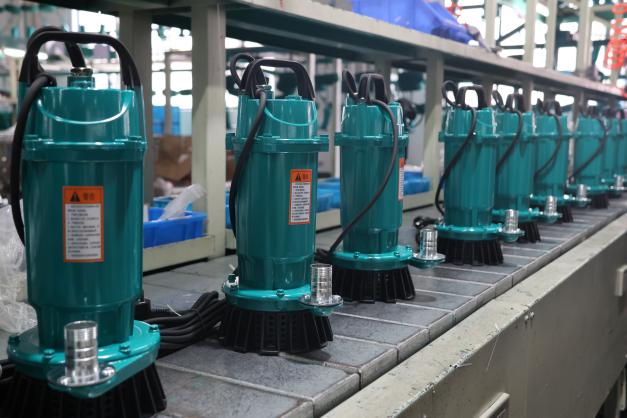
- Submersible Booster Pump
It works underwater and pushes water upward from inside the source. It is quiet and ideal for wells, tanks, or deep water areas.
Submersible booster pumps operate underwater, eliminating noise and suction limitations. They are suitable for deep water sources, narrow wells, and tanks where traditional pumps may not work efficiently. Their waterproof design enables long-term stable performance.
Applications:
- Water tanks, reservoirs, and cisterns
- Deep or narrow wells
- Irrigation and agricultural water supply
- Basement or low-level water boosting
- Applications where silent operation is preferred
- Intelligent Booster Pump
It helps to keep a stable pressure with the intelligent control inside. It saves energy and offers simple, user-friendly control.
An internal controller monitors the pressure and adjusts the pump as the demand changes. It also stops the pump when there’s no water, avoiding motor burnout. They’re easier to set up and require less maintenance, although they are more expensive. If you want stable pressure and don’t want to tweak switches or valves, this type is convenient.
Applications:
- Residential villas or apartments with fluctuating water demand
- Commercial buildings with peak and off-peak usage
- Precision industrial equipment requires constant pressure
- Smart home water boosting systems
- Energy-saving building installations
Booster Pump Types Comparison Table
| Booster Pump Type | Best For | Key Features | Limitations |
| Single-Stage Booster Pump | Small houses, one-bathroom homes | Simple design, easy maintenance, affordable | Not suitable for high-pressure or multi-floor supply |
| Multi-Stage Booster Pump | Tall buildings, long-distance lines | Multiple impellers, strong & stable pressure | Higher cost, needs more installation space |
| Centrifugal Booster Pump | Clean water, general household use | Reliable, easy to service | Cannot handle strong suction or well applications |
| Inline Booster Pump | Tight spaces, kitchen taps, long horizontal pipes | Installed directly on the pipeline, boosts volume | Must match pipe size & direction |
| Jet Booster Pump | Shallow wells, underground tanks | Good suction lift, stable for changing water levels | Lower efficiency for high-pressure needs |
| Submersible Booster Pump | Deep wells, water tanks, silent operation | Operates underwater, quiet, avoids suction limits | Requires submersion, higher installation/maintenance complexity |
| Intelligent Booster Pump | Homes needing stable pressure without adjustments | Automatic pressure control, dry-run protection | Higher initial cost |
How to Choose the Right Booster Pump Type
- Small homes / Apartments / Single bathroom
- Single-Stage Booster Pump: It offers enough pressure boost for 1-2 taps or showers, very convenient to use.
- Multi-floor buildings / Hotels / Large offices
- Multi-Stage Booster Pump: Provides strong and steady pressure across many floors.
- Domestic water lines / Garden irrigation / Light industrial loops
- Centrifugal Booster Pump: Reliable and easy to maintain, it works for everyday water boosting and circulation.
- Tight installation spaces / Multiple taps requiring a large water volume
- Inline Booster Pump: Directly installed in the pipeline, it can save space and offer higher flow rather than high pressure.
- Shallow wells / Rural water sources / Tank lifting
- Jet Booster Pump: Handles low source levels efficiently.
- Deep wells / Water tanks / Silent operation needed
- Submersible Booster Pump: Operates underwater, avoids suction limits, quiet, suitable for narrow/deep sources.
- Fluctuating water demand / Smart buildings / Industrial precision
- Intelligent Booster Pump: Automatic pressure adjustment, dry-run protection, energy-saving, minimal manual intervention.
Conclusion
Many homeowners only realize how weak their pressure was after installing a booster pump. Hungerät pumps are known for running quietly and handling daily use well; we test every unit carefully before shipping it. If you need a trusted solution for low water pressure, Hungerät is always ready to help you get better water flow and peace of mind.
FAQ
- Which booster pump type gives the highest pressure?
Multi-stage pumps usually deliver the strongest pressure output. - Can a booster pump run dry?
It shouldn’t run without water, since that can damage the inside parts. - How long can a booster pump last?
With normal use and basic care, a booster pump can last many years, though the exact lifespan depends on the water quality and workload. - Is a booster pump noisy?
Most models run fairly quietly, so if you hear a loud noise, it usually means something needs checking. - Do I need a pressure tank with a booster pump?
Some systems include a pressure tank, but many modern booster pumps can work smoothly even without one.