In areas with unstable power supply or no grid connection, a stable water supply remains a major challenge. Solar pumps effectively solve this problem, but how do they work to supply water? This article will help you understand its working principle and answer your questions.
Introduction
A solar pump is a discharge equipment that uses solar energy. Solar water pumps use solar panels to convert sunlight into electricity. It converts sunlight into electricity using solar panels, which then drives a water pump to pump groundwater, river water, or pond water to where it is needed. Different from traditional water pumps that rely on the power grid or diesel fuel, solar water pumps trans sunlight into operation. Solar pumps are more suitable for remote areas without power grids, and save on electricity or diesel fuel costs.
Basic Components of a Solar Pump System
Different from other water pumps, solar water pumps have a very special structure. Multiple components work together to pump water stably and efficiently.
Solar Panels
Solar panels convert sunlight into direct current to power the entire system. They can be connected in series and parallel to meet different power needs.
Controller / Inverter
Controller equipped with MPPT (Maximum Power Point Tracking), allowing the pump to work efficiently under different light conditions, and also providing overheat protection and dry-run protection.
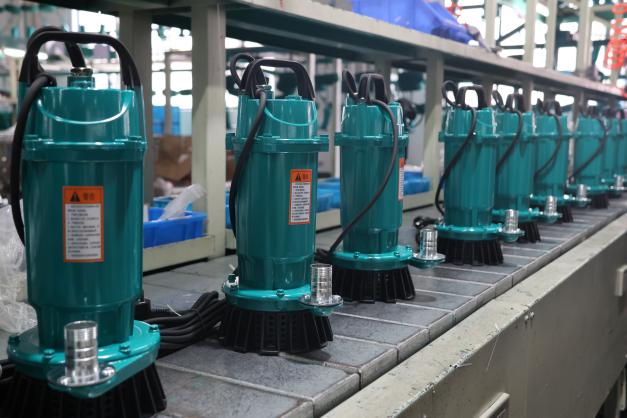
The water pump is an important step in the entire system. It can directly discharge water from the source and deliver water to the water tank or other system.
Cables & Connectors
Cables and connectors connect the solar panels, water pump, and control unit to work together. They are made of waterproof and UV-resistant materials, suitable for long-term outdoor use in sunlight.
Optional Components
Water level sensor: Detect changes in water level and prevent the engine from running idle due to low water level.
Battery: Provides power at night or on cloudy days when there is no sunlight.
Water tower/storage tank: Enables water supply at night when there is no electricity.
Float switch: The main function of a float (level switch) is to control the automatic start and stop of the water pump.
Mounting structures for solar panels
Use galvanized steel or aluminum alloy to fix the solar panels and ensure the optimal angle of sunlight reception. The stand can also be adjusted to maximize the use of light and achieve maximum efficiency.
How Solar Pumps Work: Step-by-Step Process
After knowing the basic components of a solar pump System, you may already have a general understanding of how solar water pumps work. More detailed steps will give you a clearer understanding of how solar water pumps operate.
- Sunlight hits the solar panels. Solar panels generate direct current when exposed to sunlight.
- The generated direct current first enters the solar controller, which intelligently regulates the voltage and current.MPPT intelligently adjusts based on light intensity.
- The controller delivers a stable supply of electrical energy. The motor starts rotating, driving the impeller to spin at high speed to creating suction.
- After the pump starts pumping water, the impeller rotates at high speed to create power to lift the water to the water tank, water tower, or irrigation system.
- The system automatically adjusts to adapt to changes in sunlight and water level, stopping operation when sunlight and water level are insufficient, and maximizing pump efficiency when sufficient.
Solar Pump Controller Functions
The controller can intelligently adjust the unstable power output of the solar panel and integrate a variety of protection functions, allowing the water pump to operate safely and efficiently under different light conditions
- MPPT tracking
MPPT monitors the solar panel output in real time and automatically adjusts it to ensure maximum power under different lighting conditions.
- Soft start
The controller provides a smooth start for the motor, reducing the starting current and thus minimizing the impact on the motor and impeller.
- Over-voltage protection
Automatic power-off protection for the water pump in case of excessive voltage.
- Over-temperature protection
It can effectively prevent the controller or motor from overheating.
- Dry-run protection
The machine automatically shuts down when no water is detected to prevent pump burnout and other issues.
- Stable voltage and current
The most basic function of a controller is voltage and current stabilization, converting unstable electrical current into voltage and current suitable for the water pump motor.
Understanding Pump Parameters in Solar Systems
Specific parameters can help you make the right judgment when making a selection, and at the same time, better understand the product itself.
Head
This refers to the height at which the water is lifted. The selection process involves calculating the vertical height, pipe losses, and the height of the water tower.
Flow rate
Flow rate is the amount of water pumped per unit time. You can choose a suitable model based on your water demand.
Power
The power of the solar pump will change according to the actual sunshine. Choosing according to the actual situation will be better.
Peak Sun Hours
Peak sun hours are a critical parameter in the design of the entire solar water pump system.
The solar irradiance intensity at different times of the day can be converted into equivalent full-power hours, allowing for the calculation of solar panel requirements, daily water pumping volume, and assessment of system feasibility.
Water pump output power
The output power of a water pump is not constant. Solar radiation intensity itself is constantly changing, and temperature variations also affect voltage. This causes the pump’s flow rate and head to vary throughout the day.
Solar panels
Rated Power: The maximum output power under standard test conditions (STC), used to calculate the required number of solar panels.
Maximum Power Point Voltage: The operating voltage at which the solar panel outputs maximum power.
Conversion Efficiency: The efficiency of converting solar energy into electrical energy.
Operating Voltage Range: Matched to the water pump voltage and controller.
Operation under different working conditions
Sufficient sunlight
The output power of the solar panel is close to the maximum, the motor keeps high speed, and the water pump runs stably and continuously.
The flow rate and head are close to rated values, and the system efficiency reaches its maximum, making it suitable for continuous irrigation or centralized water supply.
Normal lighting
At this time, the solar panel’s output power decreases, and the controller automatically reduces the frequency and voltage, causing the water pump to run at low speed or intermittently.
The water pump output decreases, and the head drops slightly, but the system can still operate safely.
Insufficient light
If the voltage falls below the startup or operating threshold, the controller enters protection or standby mode, and the water pump stops or starts intermittently to prevent the motor from burning out due to low voltage. It will automatically restart after sunlight returns.
No light at night
When there is no sunlight at night, there is no photovoltaic output, and the system automatically shuts down. The water pump, equipped with a battery system, will operate according to a set schedule.
Installation Basics
Since solar water pumps and solar panels are independent systems, initial installation requires a certain cost. We can offer suggestions on how to maximize the efficiency of the water pump.
- Explicit parameter matching
Before installation, it is essential to confirm that the key parameters are compatible with the water pump and solar system. The voltage and current range of the solar panel must fall within the allowable range of the controller or water pump.
- Best angle for solar panels
The recommended tilt angle for installing a solar water pump is based on local latitude plus or minus 10 degrees. There will be differences between winter and summer; it is recommended to prioritize ensuring the overall annual power generation.
- Orientation
If installed in the Northern Hemisphere, face due south; if installed in the Southern Hemisphere, face due north. This avoids being blocked by trees, walls, etc., in the early morning, late afternoon, or at noon. Partial shading can significantly reduce the output power of the entire series of components.
- Wiring considerations
Use UV-resistant, waterproof DC cables and connect them strictly according to the controller or water pump requirements. Secure the cable to prevent wind damage.
Common Problems & Troubleshooting
The pump is not running
- Insufficient sunlight results in inadequate solar panel output voltage.
- Incorrect wiring of the solar panel or controller.
- Controller undervoltage/overvoltage protection.
- Open the cable or the loose connector.
- Damaged motor.
The pump stops frequently
- Unstable sunlight, insufficient power output
- Solar panel configuration is too small
- Controller overload/overtemperature protection
- Dry running protection is frequently triggered
Low flow / low pressure
- Actual head exceeds pump capacity.
- Pump not fully submerged.
- Air leak in the pipeline or blockage at the inlet.
- Impeller stuck in silt.
- Check valve malfunction.
Loud noise and noticeable vibration
- Bearing wear
- Impeller imbalance or sand ingress
- Pump not installed vertically
Maintenance Tips
- Cleaning solar panels
Regularly clean the surface of solar panels to remove dust, dirt to ensure sufficient sunlight absorption.
- Checking cables and connectors
Check cables and connectors to ensure they are secure and free from leaks or burning to prevent voltage drops or intermittent system failures.
- Inspecting pump filters
Regularly clean the inlet filter to avoid insufficient water intake, reduced flow. This is especially important when using well water or river water of poor quality.
- Check the brackets for looseness or rust.
Check the solar panel brackets and fixing bolts for tightness, looseness, deformation, or corrosion. When installed in coastal, high-humidity, or desert areas, pay particular attention to the corrosion protection of the brackets to ensure long-term stable system operation.
- Signs of pump wear or malfunction
Observe the water pump for abnormal noise, vibration, decreased flow, or frequent shutdowns during operation if significant wear is found on the impeller, bearings, or mechanical seal, repair or replace them promptly to prevent the problem from escalating.
Conclusion
Solar pumps are the most attractive water supply method in areas with abundant sunshine, especially in remote areas lacking or without electricity. The system requires no personnel supervision, and maintenance workload can be minimized, combining economy, reliability, and environmental friendliness. If you need or are interested in solar water pumps, please contact HunGerät, a water pump supplier with 25 years of experience. We will provide you with a customized solar water pump solution.
FAQs
Q1:How should I choose a solar water pump?
A1:Solar water pumps come in various types, such as DC or AC, submersible or surface models. Selection should be based on water depth, required flow rate, and power supply conditions.
Q2: Where are solar pumps used?
A2: Solar pumps are widely used in agricultural irrigation, livestock watering, and water supply for remote or off-grid areas, providing a reliable solution for areas remote or without a power grid to supply water.
Q3: What are the advantages of solar water pumps?
A3: Solar pumps use free solar energy to operate, have low operating costs.Easy to maintain and environmentally friendly, especially suitable for remote or off-grid areas.
Q4: What are the limitations of solar water pumps?
A4: The performance of the solar water pump is very dependent on weather and light. In winter or cloudy weather, the operating efficiency is low. And the panels require a large space, the initial investment cost is high.
Q5: Do solar water pumps always need batteries?
A5: Batteries are not necessary. Choosing based on your specific needs. If you need a pump to operate at night, you can choose a type with batteries.