Introduction
In low-lying areas, underground spaces, or complex terrain, traditional gravity drainage is often ineffective, resulting in drainage problems, system overload, and high operating costs. This guide aims to help you understand wastewater pumping stations, avoid common malfunctions such as blockages and pump damage, and provide cost-effective and reliable wastewater management systems for municipal, commercial, and industrial applications.
What Exactly is a Wastewater Pumping Station?
A wastewater pumping station is a complete system used to collect, lift, and transport domestic sewage or industrial wastewater. The key to the design of a wastewater lifting pump station is its ability to forcefully lift sewage, enabling it to be discharged even in low-lying areas. Wastewater pumping stations are widely used in locations where gravity-fed sewage cannot be effectively discharged, such as basements, underground parking lots, municipal drainage and stormwater/sewage systems, and industrial park wastewater discharge.
How Does It Work? A Step-by-Step Breakdown
The working principle of a wastewater pumping station follows a clear and orderly process: collection, lifting, and discharge, ensuring stable and efficient operation.
- Collection
The sewage and industrial wastewater flows into the collection well through the inlet pipe under the influence of gravity.
- Monitor
As the water level in the collection well gradually rises, a water level float or sensor monitors the changes and transmits the signal to the control system.
- Start up
When the water level reaches the set start-up level, the control cabinet sends a start command to the sewage pump.
- Lifting and conveying
Sewage pumps lift sewage to higher ground and transport it through sewage pipes to municipal sewage networks or sewage treatment plants. The check valves effectively prevent sewage backflow.
- Stop
When the water level in the collection well drops to the set stop level, the control system will automatically stop, effectively avoiding idling and unnecessary energy consumption.
Two of the Most Common Types of Pumping Stations
Different types of pumping stations are the most basic content in pumping station selection and scheme comparison.
Traditional sewage pumping station
Traditional sewage pumping stations refer to sewage lifting facilities constructed using on-site civil engineering methods. If your project requires a customized layout or needs to handle complex operating conditions, this type is often considered. It typically consists of a sump, pump house, pump, motor, pipelines, valves, and control system.
Structure and features
Traditional sewage pumping stations mostly adopt dry or semi-dry installation structures. For your large-scale or technically demanding projects, these systems offer mature technology, reliable operation, and strong adaptability to high flow rates, high heads, and complex wastewater conditions. They are particularly suitable when your application involves sewage containing solid particles or heavy impurities, ensuring stable long-term operation.
Limit
Traditional sewage pumping stations typically have long construction periods and large land areas due to the need for extensive civil engineering work. In addition, your operation and maintenance costs may be higher, as these systems rely heavily on skilled management personnel.
Application
Due to their high stability and long service life, they remain a common and reliable choice for long-term, large-scale municipal projects. They are widely used in urban municipal drainage, industrial wastewater treatment, and other large drainage projects where your priority is durability and system robustness.
Integrated sewage pumping station
An integrated sewage pumping station is a type of sewage lifting equipment that is designed and prefabricated in a factory. If you require fast installation, limited site work, or predictable quality, this type offers advantages. It integrates various systems and facilities into a single structure, which can be directly installed and used after being transported to the site. The pre-packaged pump stations’ cost will also be lower.
Features
Integrated sewage pumping stations are usually installed underground, require minimal space, and have little impact on the surrounding environment. This makes them ideal for your projects in urban areas or locations with limited land availability. Equipped with automated control systems to achieve efficient operation and management.
Application
Integrated sewage pumping stations are widely used in modern municipal drainage systems for the collection and lifting of sewage and rainwater. Their high automation level and low operating and maintenance costs make them suitable for your sewage and rainwater collection and lifting projects.
Core Components That Define a Reliable System
The components of a sewage pumping station together form a system. The core components directly determine the performance of the wastewater pump stations.
The Pump
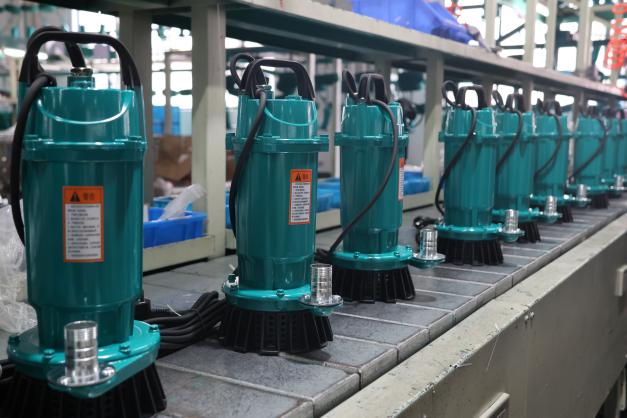
Common types include submersible sewage pumps and dry sewage pumps. The core function is to lift and transport wastewater. When you choose, you need to pay attention to whether the pump parameters and materials meet the working conditions.
The Control Panel
The control panel is the central control unit of the sewage pumping station and is responsible for controlling the start and stop. At the same time, the water pump is monitored and protected to ensure efficient and stable operation of the system. The PLC system provides smarter control and supervision for control panels, further improving automation
The water collection well
A water collection well is used to collect, temporarily store, and regulate the volume of sewage. It is typically located at the very beginning of the pumping station. Its main function is to balance the influent and effluent flow rates, stabilize pump operating conditions, and prevent frequent pump start-ups and shutdowns, thereby improving the overall reliability and service life of the pumping station.
Traditional sewage pumping stations are mostly constructed of reinforced concrete, while integrated sewage pumping stations often use fiberglass reinforced plastic (FRP) or stainless steel, which offer better corrosion resistance.
The Valve Pit
Valve wells are essential but often overlooked components that control, shut off, and regulate sewage flow. Check valves prevent backflow into pumping stations or upstream pipelines during maintenance or failures to support safe repairs and emergency operations.
Common Challenges and How to Maintain
Wastewater pumping stations can also experience malfunctions during long-term operation, the main ones being blockages, corrosion, and odor. Understanding these problems and learning how to solve them will allow you to respond efficiently when facing breakdowns.
Clogging
If thewell is too small or the wastewater contains a lot of fibers and debris, the water pump is prone to frequent blockages. So, how to prevent pump clogging? You can optimize the sump or choose a “non-clogging impeller” to solve the blockages caused by debris such as wet wipes and cloths.
Corrosion
Wastewater pumping stations operate in environments with high humidity, corrosive gases, and complex water quality for extended periods. Corrosion is often not an instantaneous problem, but rather a gradual accumulation that eventually leads to structural or equipment failure. Wastewater contains sulfides, chlorides, and acidic or alkaline substances that can easily corrode pumps and pipelines.
When selecting materials for key components, you can choose stainless steel, ductile iron, or corrosion-resistant alloys. You can also choose anti-corrosion coatings and design proper ventilation and deodorization systems.
Odor Control
If wastewater remains in the collection well for too long, or if ventilation is poor or a deodorization system is not installed, unpleasant odors will be produced, especially hydrogen sulfide gas. These odors can affect nearby residents and the environment, and exacerbate equipment corrosion.
You can optimize the system, control the volume of the collection well, and reduce sewage retention and sedimentation. Improving ventilation and installing a deodorization system to control odors are good ways.
Strategic Planning: What to Consider Before Buying?
After understanding wastewater pumping stations, we can provide necessary assistance in the selection process. Here are some influencing factors that can help you determine.
Operating conditions and parameters
You need to consider not only the average flow rate, but also peak and minimum flow rates. Selecting a model solely based on average flow rate may result in frequent start-stop cycles at low flow rates and overflow at high flow rates.
Water collection well (cylinder) design
When selecting a water collection well, you need to determine if its effective volume is sufficient. Specifically, you need to identify any dead zones or sedimentation areas and ensure they are compatible with the pump’s start-stop logic.
Pump selection and anti-clogging capability
When selecting a pump, the most important consideration is its anti-clogging performance. It’s necessary to choose a pump with a channel design that allows wastewater particles to pass through smoothly and has an anti-winding function.
Conclusion: Choosing a Partner for Long-Term Efficiency
Wastewater pumping stations are not simply a matter of “one pump,” but a complex system engineering project integrating hydraulic design, pump selection, sump volume calculation, control logic, and anti-clogging solutions. Focusing solely on the pump itself often leads to common problems such as frequent blockages, excessive energy consumption, and operational instability.HunGerät, a pump manufacturer with over 20 years of experience, provides you with appropriate system selection and professional pumping station design, helping you effectively reduce energy consumption.
FAQ
Q1.What is the main function of a wastewater pumping station?
A1.Wastewater pumping stations are mainly used to lift wastewater from low-altitude areas to high-altitude areas. They can ensure wastewater can be smoothly transported to municipal treatment plants or discharge points.
Q2. What is the difference between a “Lift Station” and a “Pumping Station”?
A2.Lift stations typically have a lower head and rely primarily on pumps to lift water into the next gravity pipe; pumping stations usually involve more complex pressure piping networks and require a higher head.
Q3. What are the key components of a packaged pumping station?
A3.The key components include a collection well, a sewage pump, a piping system, check valves/gate valves, level sensors, a control cabinet, and a bar screen filter. The most crucial component is the sewage pump, which is responsible for lifting sewage from a low level and transporting it to the discharge pipe network; it is the heart of the pumping station.
Q4. How do I determine the right size (capacity) for my pump station?
A4.Pump station capacity is not necessarily “the bigger the better.” A balance must be struck between meeting sewage discharge needs, minimizing start-ups and shutdowns, and controlling costs. First, the maximum sewage volume the pump station needs to handle must be determined. The pump station dimensions must be matched to the pumps, and the impact of different types of sewage on the pump station’s volume must also be considered.
Q5. Why choose a Packaged Pumping Station (PPS) over a traditional concrete one?
A5.Integrated pumping stations are prefabricated in the factory, resulting in shorter construction cycles and faster deployment. They have a more compact structure, are better suited for complex sites, and have better leak-proof and corrosion-resistant properties.
Q6. Why must check valves be installed in pumping stations?
A6.A check valve is not an accessory, but a safety device that prevents sewage backflow or pump reversal that could damage internal components, and is a crucial component for ensuring the safe operation of the system.
Q7. Can a sewage pumping station operate continuously?
A7.If the pumping station can meet the conditions for continuous operation, it can operate continuously. Furthermore, in practical projects, multiple pumps are often used in rotation to reduce the load on individual units and extend their lifespan.
Q8. What are the requirements for the installation location of a sewage pumping station?
A8.Sewage pumping stations should be located at the lowest or lowest point in the service area, allowing upstream sewage to flow into the collection well by gravity, reducing the number of pumping operations. The foundation should be stable and have sufficient bearing capacity.
Q9. How do I prevent clogs in my wastewater pump?
A9.To prevent logging, install a grille/filter at the inlet, select the appropriate impeller type based on the medium being drained, and avoid disposing of non-biodegradable items such as wet wipes and plastics into the sewer.
Q10. How long does a typical wastewater pumping station last?
A10.Typical sewage pumping stations can last 10-15 years, while high-quality ones can even last 20-50 years. The lifespan depends primarily on the working environment, frequency of use, and maintenance.
Q11. Can a pumping station handle odorous gases?
A11.It is unavoidable that sewage treatment will produce odors. Pumping stations themselves cannot directly treat malodorous gases such as hydrogen sulfide (H₂S), but they can be combined with odor treatment systems for collection and treatment.
Q12. What are the consequences of a power outage?
A12. Power outages may stop pump station operation, causing sewage backflow, rising water levels, equipment damage, and safety or environmental risks. Proper emergency and protection measures are therefore essential.
Q13. How often should a pumping station be inspected?
A13.Ideally, you should inspect the well once a day to check for any abnormalities. You should check the voltage, blockages, and wear conditions every month or quarter, and perform a deep cleaning once a year to remove sludge and grease buildup at the bottom of the well.