Introduction
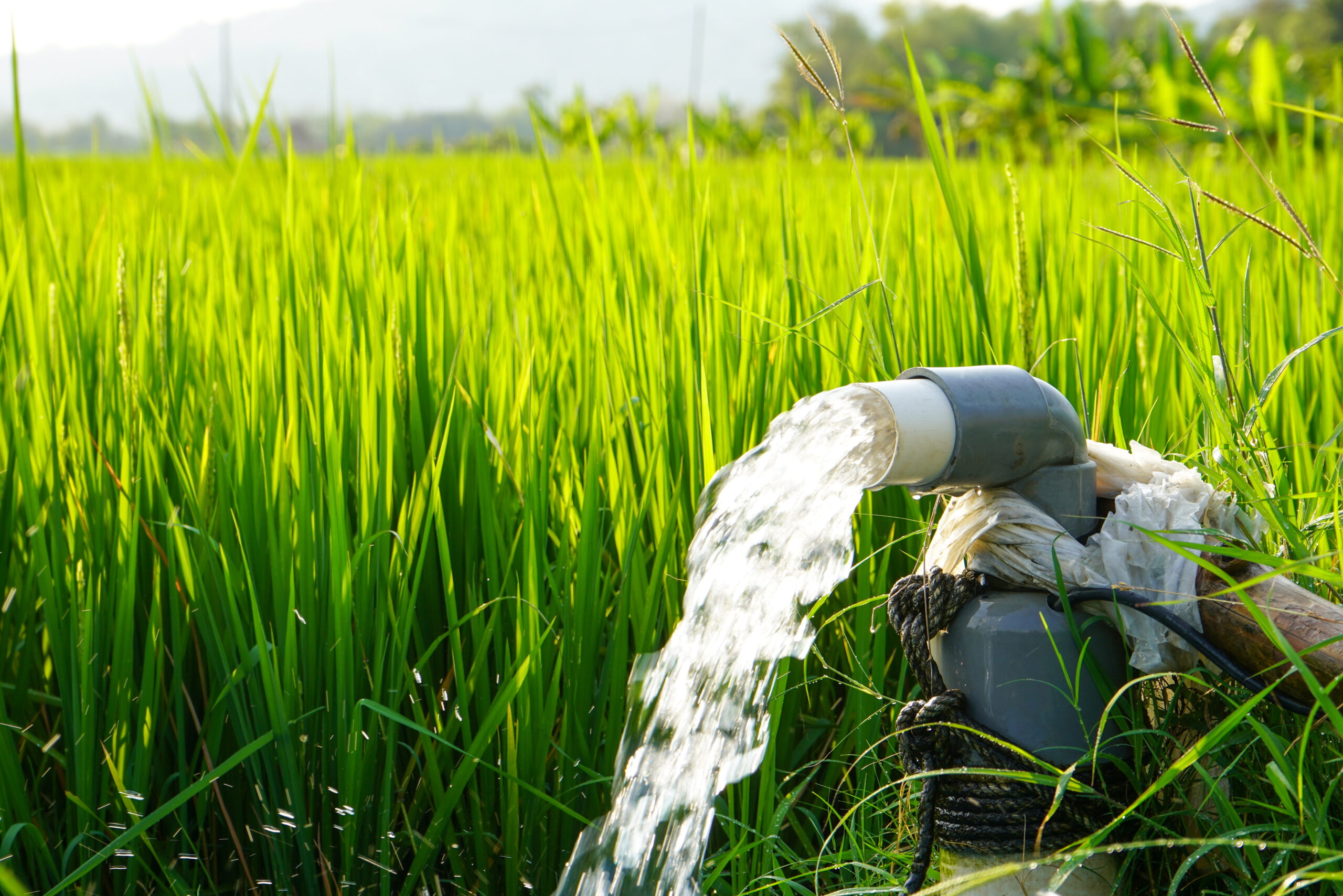
In some areas where there is no stable electricity supply, but a stable water source is still needed, solar pumping is a widely used method of water pumping that utilizes solar energy to pump and supply water. For projects that need water every day—but cannot rely on electricity—solar pumping is often the most practical and economical choice. This article will help you understand solar pumping from multiple perspectives and determine whether solar pumping is the right solution for your needs.
What Is Solar Pumping?
Solar pumping refers to a water supply method that uses solar energy as a power source, converting sunlight into electrical energy through solar panels to directly or indirectly drive a water pump to transport groundwater or surface water.
Solar pumping is not just a water pump, but a system designed around the question of “how to reliably obtain water in areas with power shortages or high electricity costs”.
Solar pumping is mainly used for agricultural irrigation, livestock farming, rural domestic water supply, and government projects. It is especially suitable for areas with unstable power supply, no power grid coverage, or high electricity costs, as it can reduce dependence on the power grid and fuel.
How Does Solar Pumping Work?
The principle of solar pumping is that solar panels convert solar energy into electrical energy, which drives the water pump to start pumping water.
Solar power generation
When there is sunlight, the solar panels absorb sunlight and convert it into direct current (DC) to provide energy for the entire system.
Control and Regulation
Electrical energy enters the solar pump controller/inverter, which adjusts the voltage and current to match the water pump and outputs commands to start the pump.
Water pump operation
The regulated electrical energy drives the water pump, drawing water from the water source and delivering it to the designated location.
Water conveyance and storage
The pumped water is usually transported to water towers, storage tanks, or directly into irrigation and drinking water systems.
Main Components of a Solar Pumping System
As a whole, solar pumping relies on the crucial role and coordinated operation of each component.
Solar Panels
It converts solar energy into electrical energy to provide power for the entire system, and can convert solar energy and output it in the form of direct current without the need for an external power grid.
Solar Water Pump
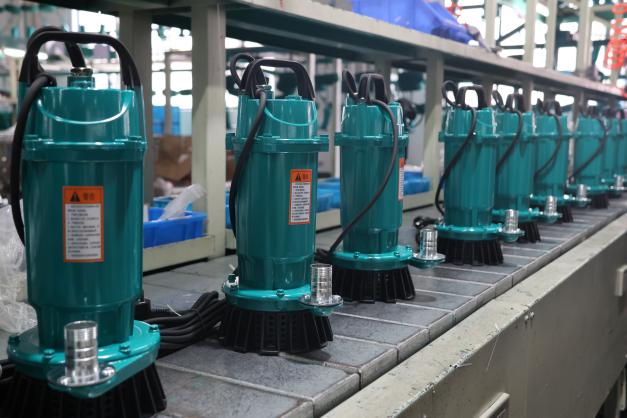
The pump is the core component of the system, extracting and transporting water from the source. Common types include submersible pumps for deep wells and surface pumps for rivers and pools.
Controller or Inverter
Connecting the solar panel to the water pump regulates voltage and current, thus protecting the pump’s stable operation. The MPPT (Maximum Power Point Tracking) feature allows the water pump to operate at its most efficient.
Optional Accessories
The included accessories can help you use water more reliably.
- Water tower/water tank: Store the water pumped during the day and continue supplying water at night or on cloudy days.
- Float switch: The safety switch that controls the water pump can prevent the water tank from overflowing and the water pump from running dry.
- Battery: Stores electricity, allowing the system to pump water even on rainy days or at night.
Types of Solar Pumping Systems
Different solar pumping solutions can be adapted to different usage needs and vary in their use and operation.
Direct solar pumping system
It is the simplest type in terms of structure, has the lowest cost, and requires almost no maintenance. No battery is provided; water tanks/towers are typically used for water storage. But it can only pump water when there is sunlight.
Solar pumping system with battery
Battery-powered solar pumping can operate at night and is more stable on cloudy or rainy days. However, because batteries are consumables, they require more precise maintenance. If you require a continuous water supply, a battery-powered solar pump is ideal.
Hybrid system
The hybrid system combines solar power and mains/generator power, prioritizing solar energy and automatically switching to mains/diesel power when insufficient. It is virtually unaffected by weather and provides the most stable water supply. If a stable water supply is required for large buildings or projects, you can choose a hybrid system.
Common Applications of Solar Pumping
In many regions, solar pumping is widely used in water supply projects. Ideal for applications requiring daytime pumping, water storage, and long-term use.
Agriculture
- Farmland can be irrigated by pumping water from wells/ponds and combining it with a sprinkler system.
- Timed water supply for greenhouses/orchards
Animal husbandry
- Providing drinking water sources for livestock at scattered watering points in pastoral areas and grasslands.
Remote and unpowered areas
- It can provide a small-scale water supply to rural households, remote villages, and mountainous areas.
- Water supply for temporary settlements, such as construction sites, camps, and border posts.
Municipal and public facilities
- Providing daily water use or supplementary water supply systems in schools, clinics, and communities.
- It can replenish water to the pool or pressurize the water supply.
Advantages and Limitations
As a rather unique pumping solution, solar pumping also has very obvious advantages and disadvantages.
Advantages
- Operates solely on solar energy, without relying on the power grid or fuel.
- With low operating costs, unlike electric/fuel pumps, which incur additional expenses later on.
- Features a simple structure, making daily operation quick and convenient.
- Has a long service life, suitable for long-term use.
Limitations
- Highly dependent on sunlight conditions; performance is affected by light intensity.
- Initial system investment is high; equipment configuration and installation will incur high costs.
- Pumping capacity is affected by design, sometimes requiring additional, optimized design.
Key Factors That Affect Solar Pumping Performance
Solar water pumping needs to take into account local conditions, as multiple factors can affect its actual performance. You can combine the following main factors for careful consideration.
Sunlight conditions
Sunlight conditions directly determine how much water can be pumped each day; both the duration and intensity of sunlight directly affect efficiency. Theperformance differs drastically between sunny and rainy days. Actual water demand must be considered first.
System Configuration
Solar pumping is not a single device; the components within the system must be properly matched, and power and voltage must be compatible. Ideally, the controller should be equipped with protection functions to reduce the risk of malfunctions.
Head
The head includes vertical height, pipe resistance, and water level fluctuations; it cannot be calculated solely based on water depth.
Environment
In windy, dusty environments, solar panels may be obstructed and worn, affecting efficiency. Impurities in the water can enter the water pump and wear down its parts.
Is Solar Pumping Right for Your Project?
Still wondering if solar pumping is right for your needs? Here are some tips to help you quickly decide. You can compare them according to your own actual situation.
Stable power supply
If there is no power supply or the power supply is very unstable, solar pumping can be used, allowing the system to operate solely on solar energy, effectively solving the problem of power shortages.
Remote areas
Remote areas often lack electricity or have an unstable power supply, resulting in extremely high costs. Solar pumping provides a stable water supply, and solar systems are simple in structure and require minimal maintenance.
Water continuity
Solar pumping is suitable for projects requiring long-term water use. For temporary or short-term projects, solar energy is too expensive and cannot meet the demand for high flow rates in a short period of time.
Budget
Solar pumping has a relatively high initial investment, but it’s designed for long-term service and won’t incur additional fuel or electricity costs during long-term use. A comprehensive assessment is necessary.
Basic Installation and Maintenance Overview
Installation requires basic planning to ensure solar water pumping reaches its maximum efficiency. Subsequent maintenance can also extend the system’s lifespan and avoid malfunction.
Installation
- Solar panels: The orientation should face the sun, and the tilt angle can be adjusted to maximize sunlight absorption and avoid shadows or tree obstruction.
- Water pump: Submersible pumps need to be fully submerged in water, while surface pumps need to be securely fixed to ensure that the suction head is within the allowable range.
- Controller: The controller should be placed in a dry, well-ventilated location, avoiding direct sunlight and rain.
Maintenance
- Solar panels: Depending on the environment, wipe them with clean water and a soft cloth every few months.
- Water pump: Regularly listen to the sound and check the water flow. If the water flow is significantly reduced, check the filter or its wear.
Common Misunderstandings About Solar Pumping
Solar pumping differs from a traditional electric pumping solution; it is easy to fall into a misunderstanding. Understanding the facts about solar water pumping will help you gain a clear and comprehensive understanding of it.
Won’t it work on cloudy days?
On cloudy days, the system is not completely unusable; the solar panels will still work, but the overall efficiency will decrease, the water output will be less, and it will not reach its maximum efficiency.
Are batteries required?
Most agricultural and irrigation projects don’t require batteries at all; they simply use water tanks for storage, which is cheaper and more durable than using electricity, reducing maintenance frequency and costs.
Not cost-effective?
Solar energy requires an initial investment but incurs no subsequent fuel or electricity costs. This initial investment is for long-term preparation; the longer it’s used, the more pronounced its cost advantages become.
Is the system very complex?
Solar-powered water pumps have no engine, no gearbox, and no fuel system, resulting in significantly fewer complex mechanical structures compared to diesel pumps, thus greatly reducing maintenance.
Conclusion
Solarpumping can effectively solve water supply problems in areas without mains power or with unstable power supply, achieving a low-cost, sustainable water supply solution. Solar pumping is often the most cost-effective option for long-term use. For any solar pumping needs, please feel free to contact HunGerät. We will provide you with the perfect solar-powered water pumping solutions and products.
FAQ
Q1:Can solar panels be added later?
A1: Yes, you can add solar panels, but you need to confirm that the controller, voltage range, and pump are compatible; otherwise, they may not work properly. They must be compatible within the system to function properly; otherwise, malfunctions may occur.
Q2. Can a pressure tank be added to a solar pumping system?
A2:Yes, pressure tanks can store water during the day and continue to supply water at night, but they are typically used in small household systems. Water tanks or towers are more commonly used in agricultural and livestock projects.
Q3. Does a solar pumping system require professional design?
A3:This is absolutely necessary. Properly matching the water pump, solar panel, and head is crucial to ensuring system efficiency and lifespan; incorrect matching can lead to malfunctions.
Q4. Do solar water pumps always need batteries?
A4:Not necessarily; it depends on the usage scenario.
Solar pumping systems can have batteries or not at all. If you need to continue operating when there is no sunlight, you can equip them with batteries to store energy.
Q5. Does solar pumping work at night?
A5:Since there is no sunlight at night, solar-powered water pumping cannot operate directly. If you need a nighttime water supply, you can use a water tank or battery to ensure a stable water supply during nighttime or rainy days.
Q6. What are the main components of a solar pumping system?
A6:In a solar pumping system, the most crucial components are the solar panel, water pump, and the controller or inverter. The core components work together in the system to achieve solar-powered water pumping.
Q7. What types of pumps are used in solar pumping?
A7:In solar pumping systems, the choice depends on the type of water source. Submersible pumps are commonly used for well water and deep water, and surface pumps are used for river water.
Q8. What factors affect solar pumping performance?
A8:The main influencing factors include the intensity and duration of sunlight, the pumping height, the depth of the water source, and the rationality of the system design, all of which affect the pump’s flow rate and head.
Q9. How much water can a solar pumping system deliver per day?
A9:It’s difficult to give a specific figure; the actual water volume depends on the amount of sunlight, and the pump power will also be affected. More water will be discharged on sunny days than on cloudy days.
Q10. Is solar pumping suitable for deep wells?
A10:.Solar pumping is well-suited for deep wells, especially in remote areas without reliable electricity, as solar power provides an independent energy source. In addition, solar-powered deep well pumps are simple in structure and highly reliable.
Q11. Is solar pumping reliable in cloudy or rainy weather?
A11:On cloudy days, solar panels still generate power, but pump speed and water output decrease. During heavy rain, power may be insufficient, causing the pump to stop or run intermittently.
Q12. Does solar pumping require frequent maintenance?
A12.The solar pumping has a simple structure and no complex mechanics. Normally, you only need to clean the solar panels and check the water pump periodically, depending on the actual situation.
Q13. How long do solar pumping systems last?
A13.Solar pumping typically operates for 10-25 years. The solar panels have a longer lifespan. The pumps and controllers are affected by environmental factors. Regular inspections can extend their overall lifespan.
Q14. Can solar pumping replace diesel pumps?
A14.Under suitable conditions, solar water pumps can replace diesel water pumps and offer better returns. However, in high-power, all-weather, temporary, or emergency situations, solar-powered water pumping cannot replace diesel pumps.
Q15. What is the difference between solar pumping and electric pumping?
A15.Solar-powered water pumping is a complete system, not just a single pump, and its power source is solar energy. Solar-powered water pumping operates using solar energy, making it significantly cheaper than electric pumps that use mains power.
Q16. What is the difference between solar pumping and diesel pumping?
A16.Solar pumps do not require fuel; they operate using solar energy, while diesel pumps do. Solar pumping generates less noise and requires less maintenance, making it more suitable for long-term use.
Q17. Is solar pumping suitable for household water supply?
A17.Solar pumping is particularly suitable for families in remote areas with unreliable power supplies, providing a long-term, stable water supply during power shortages. For off-grid projects in particular, solar pumping is the best solution.
Q18. Is solar pumping expensive?
A18:While the initial investment in solar pumping is relatively high, it operates on solar energy, resulting in low long-term operating costs and eliminating electricity and fuel expenses.
Q19. Do solar pumping systems need professional installation?
A19:It is recommended that the installation be performed by experienced personnel. Installation requires consideration of factors such as the site conditions. System planning is more important than the installation itself; proper installation will affect long-term operational performance.
Q20. Is solar pumping environmentally friendly?
A20:Solar pumping is very environmentally friendly. They generate electricity from solar energy and do not produce emissions that pollute the environment during operation. This reduces the use of fossil fuels to a certain extent and meets the requirements of sustainable development.