
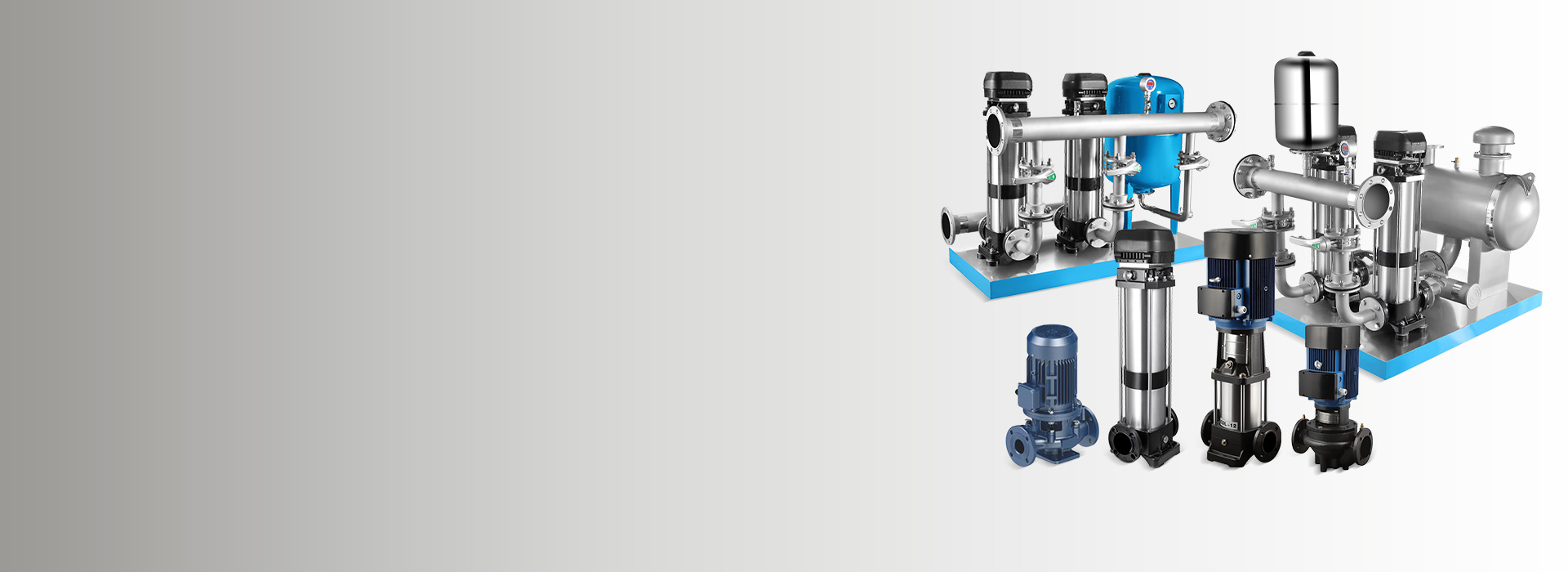
What Is a Vertical Inline Pump?
For HVAC circulation, industrial water transfer, water supply boosting, and building services where steady operation and small installation are crucial, HunGerät vertical inline pumps are made. With continuous-duty operation, IP55 protection motors, and inline pipeline connections, they offer dependable performance and contribute to the preservation of important equipment room space.
HunGerät pumps are designed for long service life and reliable everyday operation. They are constructed with cast iron or AISI 304 stainless steel hydraulic components, stainless steel shafts, and wear-resistant mechanical seals. They are appropriate for a variety of hot water, chilled water, and clean water circulation applications since they can operate at temperatures between -10°C and 120°C and pressures up to 16 bar. Both standard installations and project-based requirements can be supported by a variety of specifications.
Vertical Inline Pumps by System Design
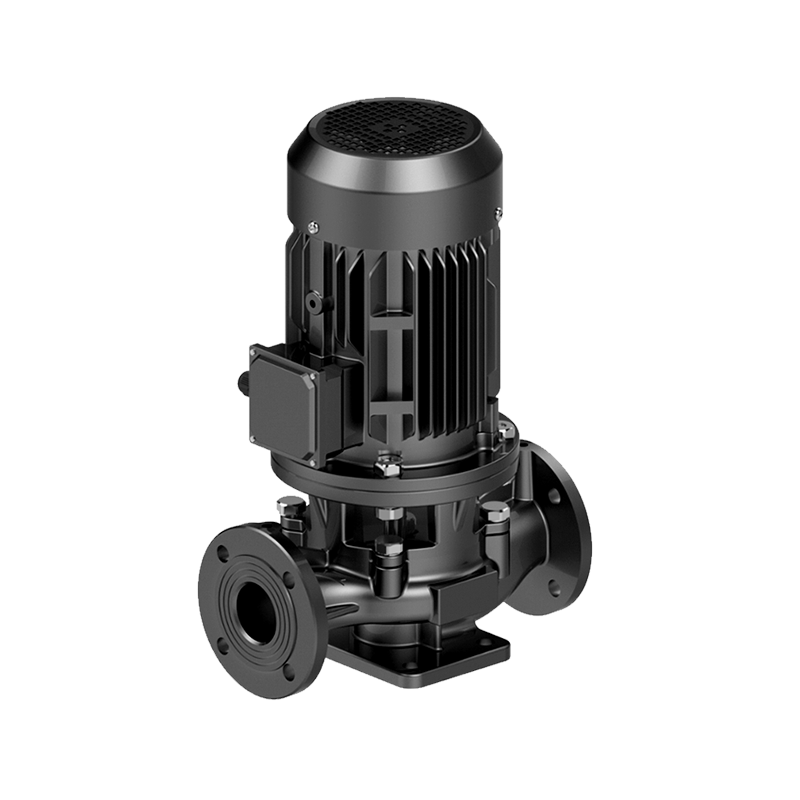 Single-Stage Inline Pumps
Intended to maintain a steady flow and work well every day. A good option for HVAC circulation, increasing water flow, and general water transfer systems.
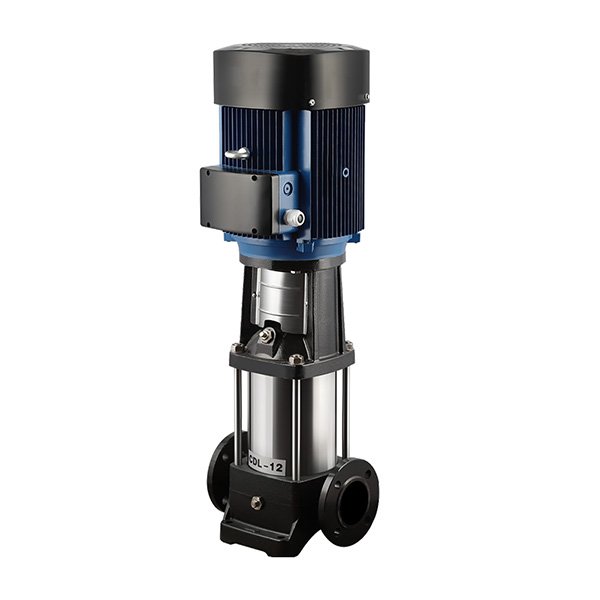 Multi-Stage Inline Pumps
With multiple impellers, it was made to give more pressure. Fits tall buildings, long pipelines, and other uses that need better pressure performance.
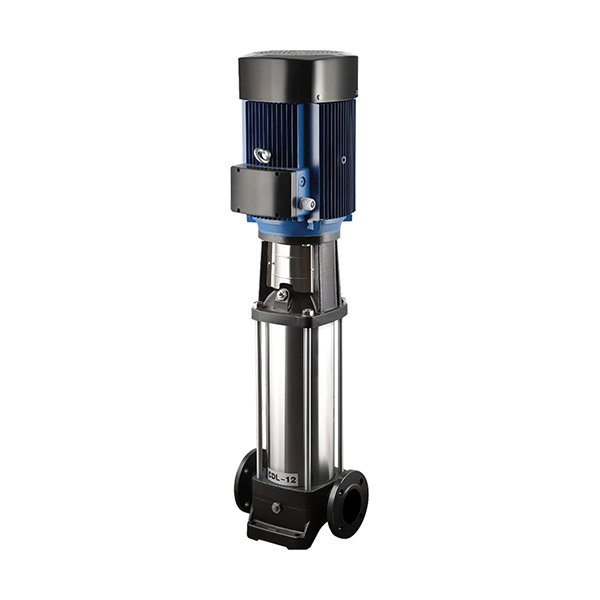
Vertical Inline Pump Solutions by System Design
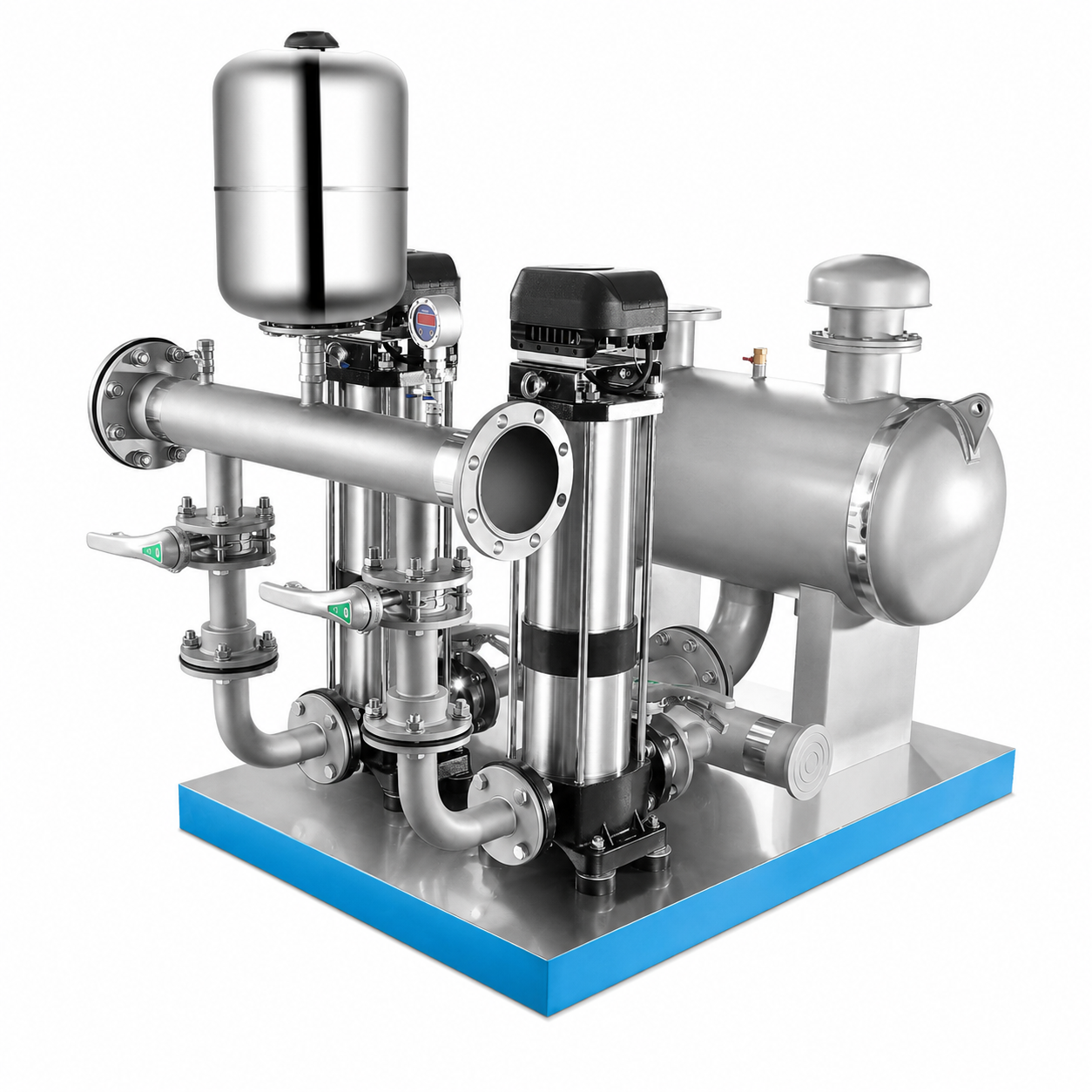 Variable Frequency Inline Pump System
Suitable for complete pressure boosting systems with pumps, pressure tank, manifold, valves, and control components.
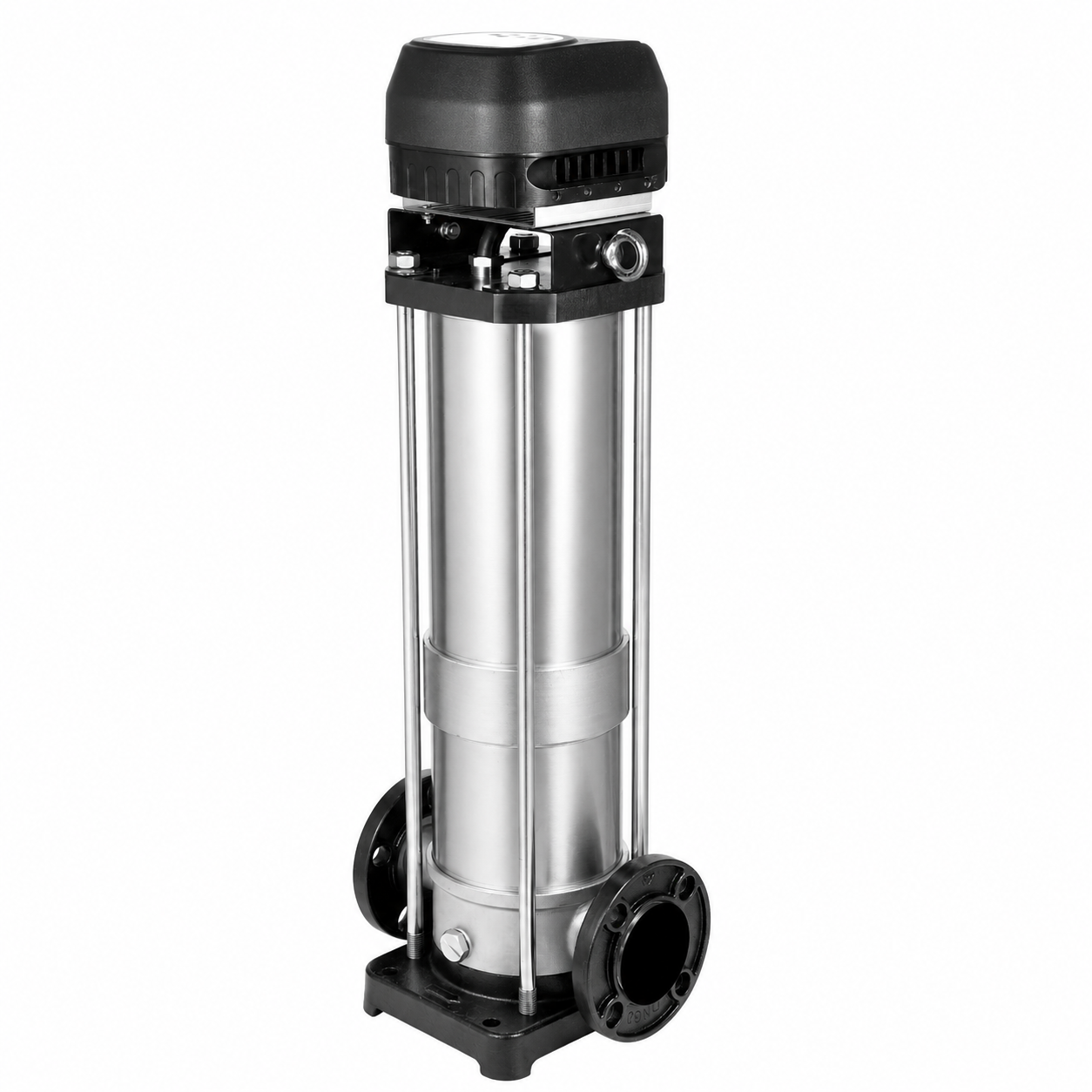 Vertical Multistage Inline Pump
A vertical multistage pump with inline inlet and outlet connection, suitable for pipeline pressure boosting systems.
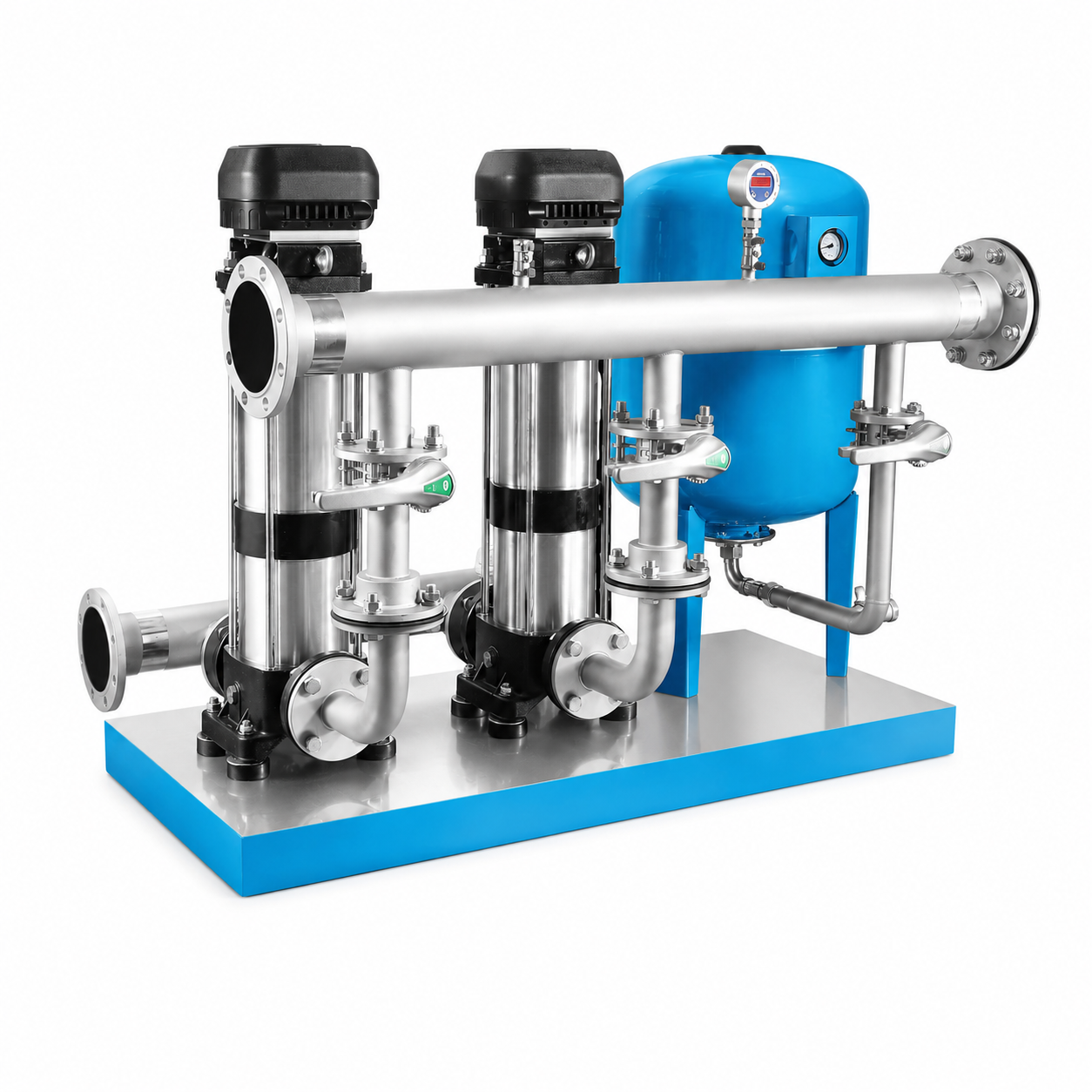 Duplex Inline Pump System
A two-pump vertical inline pump system with pressure tank and manifold, suitable for stable water pressure supply in larger building systems.
Why Choose HunGerät as Your Vertical Inline Pump Supplier
We assist distributors and brands in creating their own pump product lines by providing unique nameplates, packaging, product specs, and manuals.
We may modify voltage, frequency, flange standards, and configurations to meet local market demands for both conventional models and project-specific requirements.
Various voltage options, flange standards, and 50Hz or 60Hz motors are available to satisfy the needs of clients in various nations and areas.
Collaborate closely with our production team to expedite technical conversations, clarify project specifications, and improve order processing efficiency.
HunGerät production method can accommodate varying order amounts without compromising delivery reliability, whether you require a small trial order, an OEM branding project, or large-volume procurement.
Before placing an order, our staff assists in assessing the needs of the application, suggests appropriate models, and offers specification support.
Stainless Steel Shaft Construction
Standard carbon steel shafts are replaced with AISI 304 stainless steel shafts in our HunGerät Vertical Inline Pumps. This helps lessen shaft wear brought on by moisture and continuous operation and improves corrosion resistance in long-term water circulation systems. Over time, this will result in fewer unforeseen maintenance problems and more consistent pump performance for you.
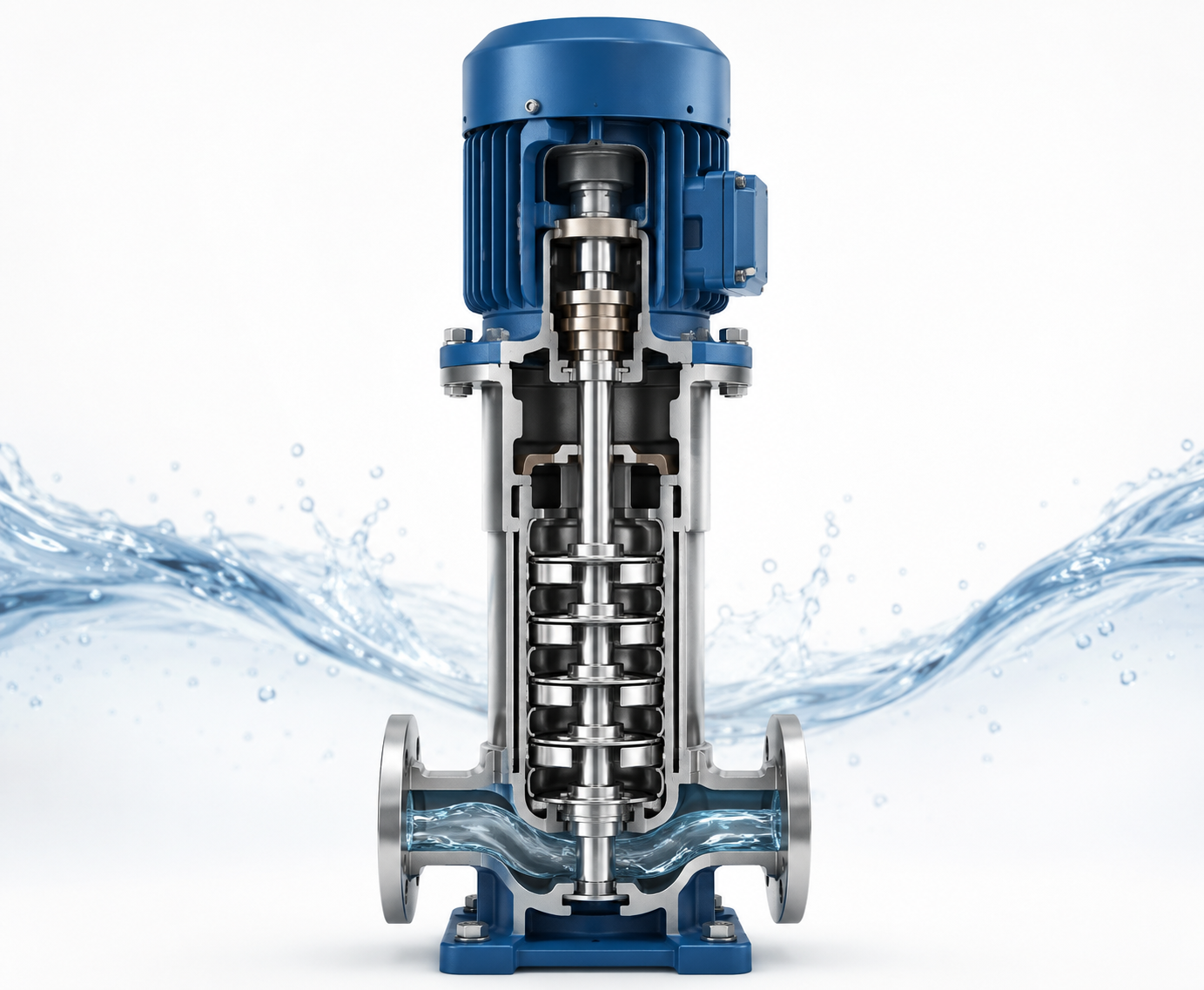
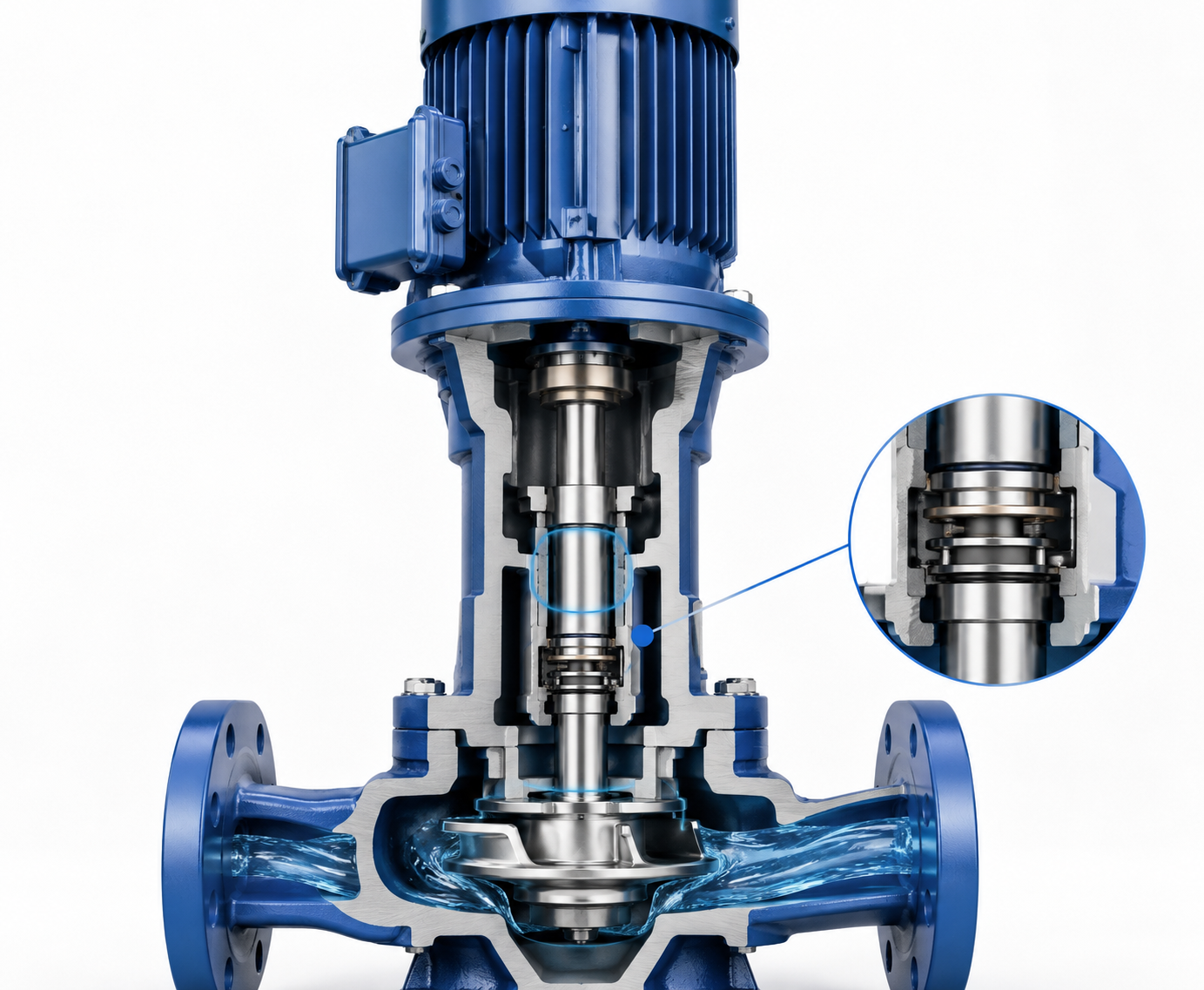
Wear-Resistant Mechanical Seal
High-quality mechanical seals designed for continuous-duty operation are a feature of our HunGerät Vertical Inline Pumps. The seal faces are made to endure pressure changes, friction, and extended operating times without sacrificing dependable sealing function. This keeps your system operating with minimal downtime, prolongs maintenance intervals, and lowers the chance of leaks.
Precision-Balanced Impeller
To minimize rotational imbalance at operating speed, every impeller in a HunGerät Vertical Inline Pump is dynamically balanced during production. The impeller, which comes in cast iron or stainless steel, is made to minimize shaft load and vibration while producing smoother flow. This implies longer component life, better hydraulic efficiency, and quieter operation for you.
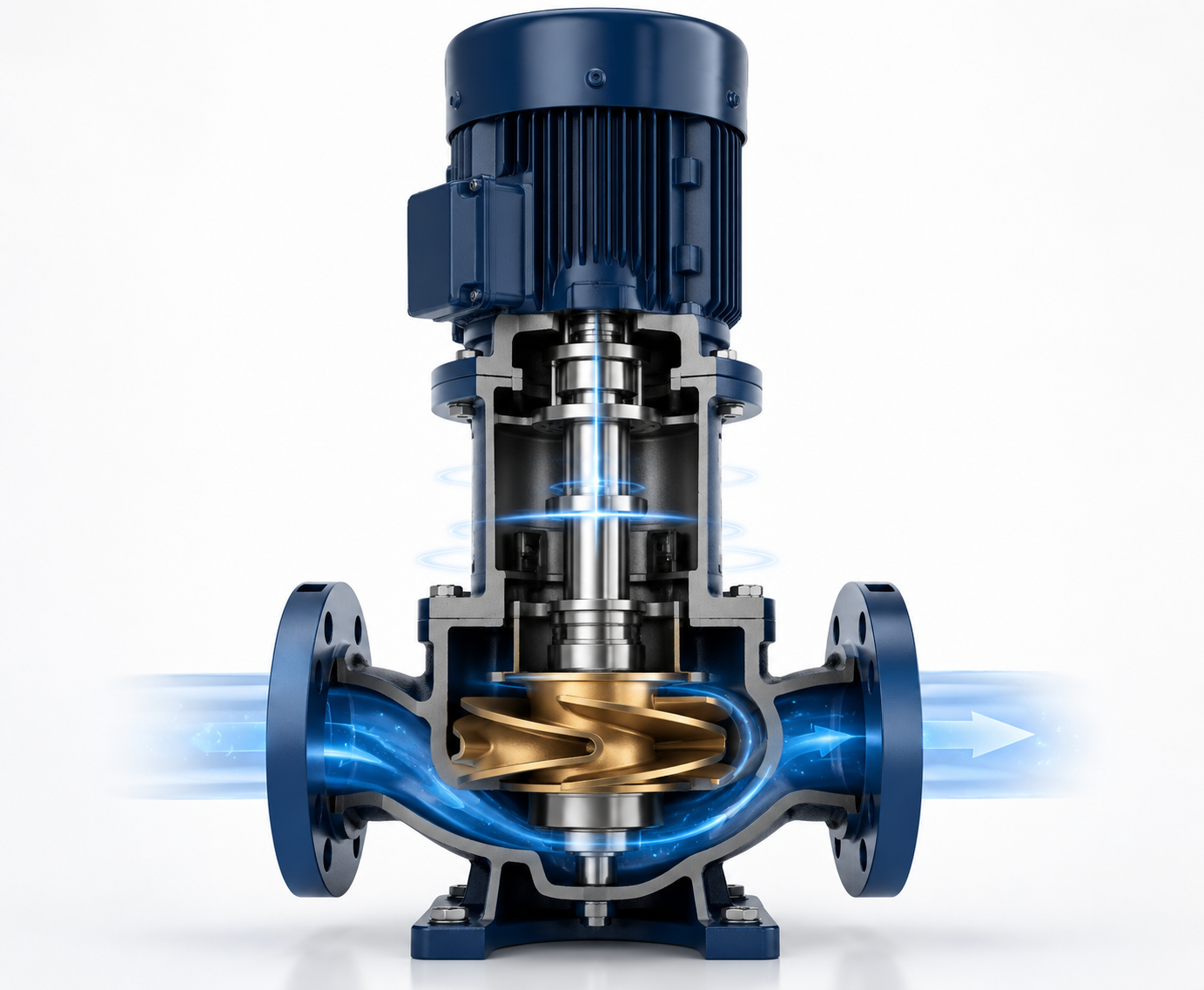
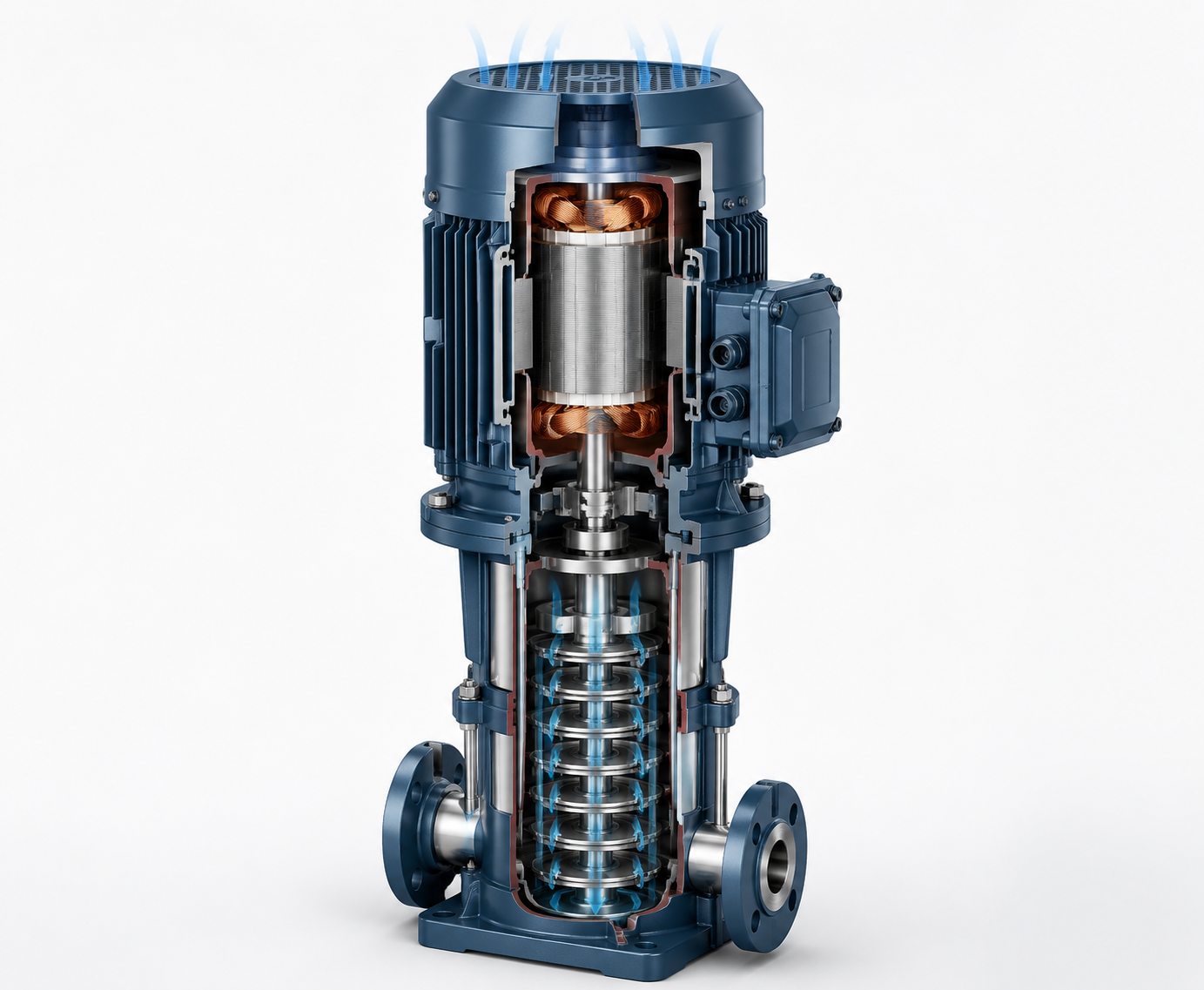
Continuous Duty Motor Design
S1 continuous-duty motors, which are made to run for long stretches of time without frequent start-stop cycles, power our HunGerät Vertical Inline Pumps. The motor is designed to manage demanding HVAC circulation, pressure boosting, and water transfer applications with Class F insulation and IP55 protection. This enhances overall system reliability and provides you with dependable performance over extended operation hours.
Your Reliable Factory for Vertical Inline Pumps
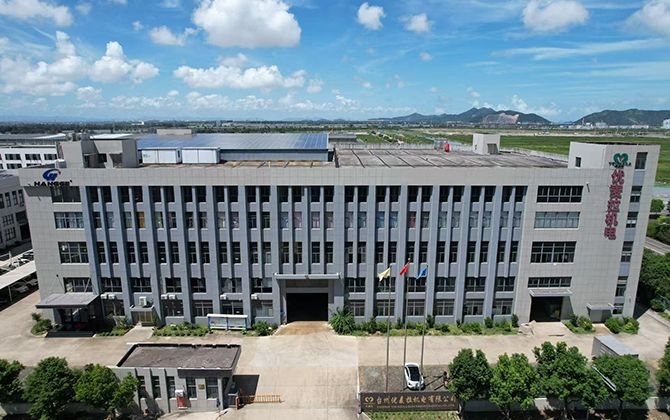
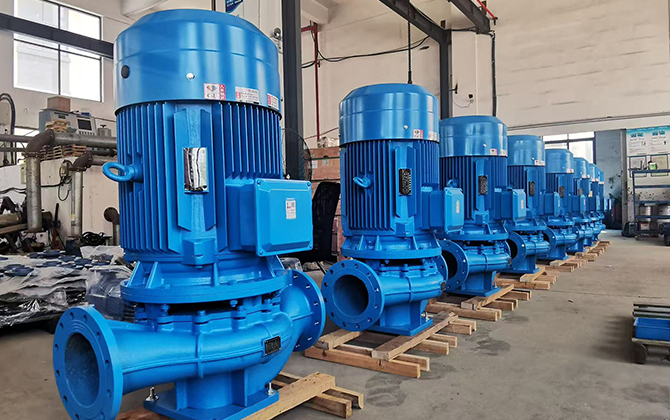
Stable pump quality comes from details you can check. HunGerät focuses on accurate inlet and outlet alignment, strong pump body structure, balanced impeller operation, copper motor winding, and reliable mechanical sealing. These details help reduce vibration, leakage risk, motor stress, and unexpected service problems after installation.
With 25 years of manufacturing experience, we understand the importance of repeat order consistency and stable production quality. Our 15,000 m² factory floor area supports batch production, regular stock preparation, and container order handling. Service coverage in 3,000+ areas helps support different market needs, while 24-hour online support helps buyers get faster feedback for model selection, quotation, order updates, and after-sales questions.
Vertical Inline Pump Application Areas
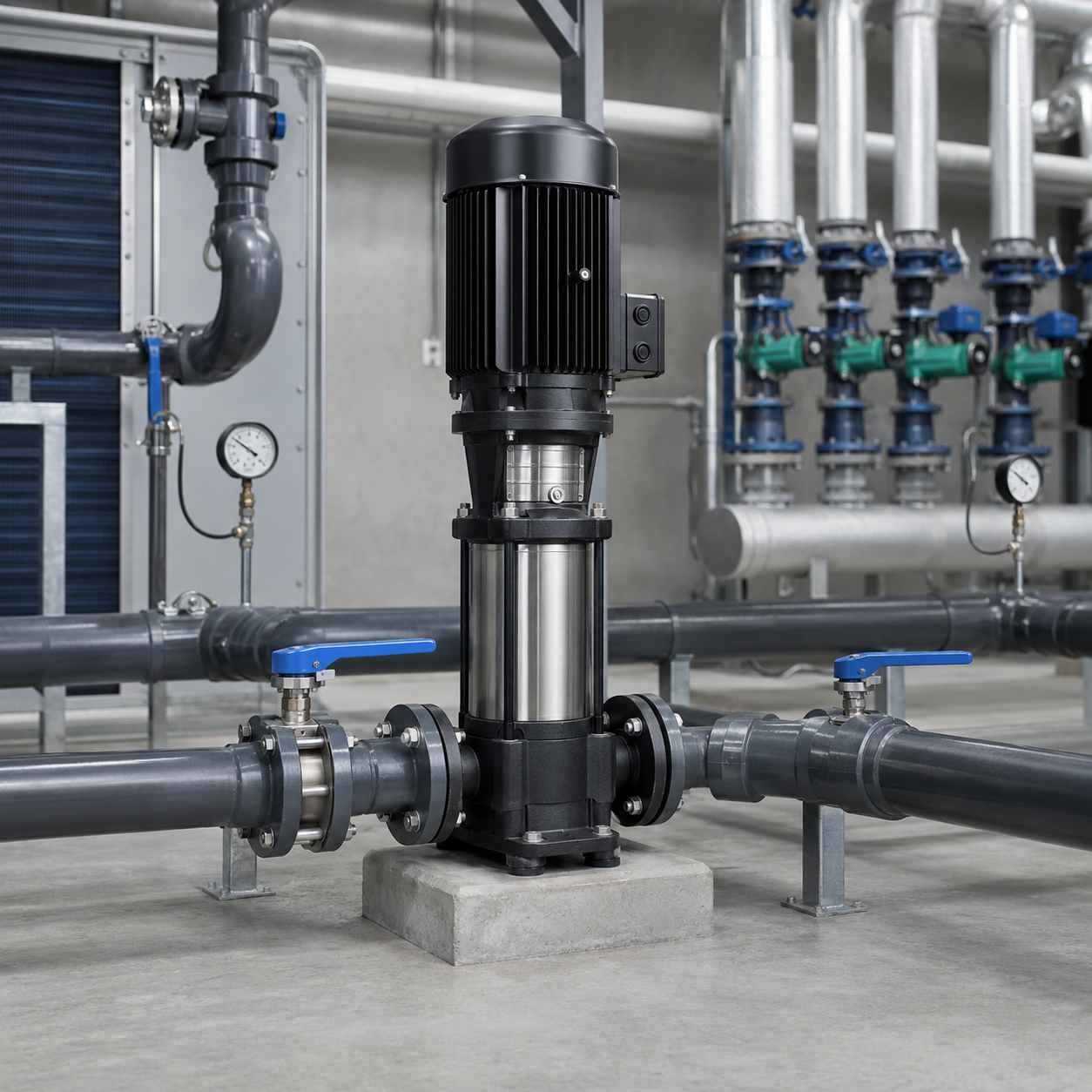
Rooms for machines are often crowded, and big pump sets take up important space. Vertical inline pumps are installed directly into the pipeline. This makes the system structure cleaner and keeps the hot or cold water moving efficiently through the HVAC system.
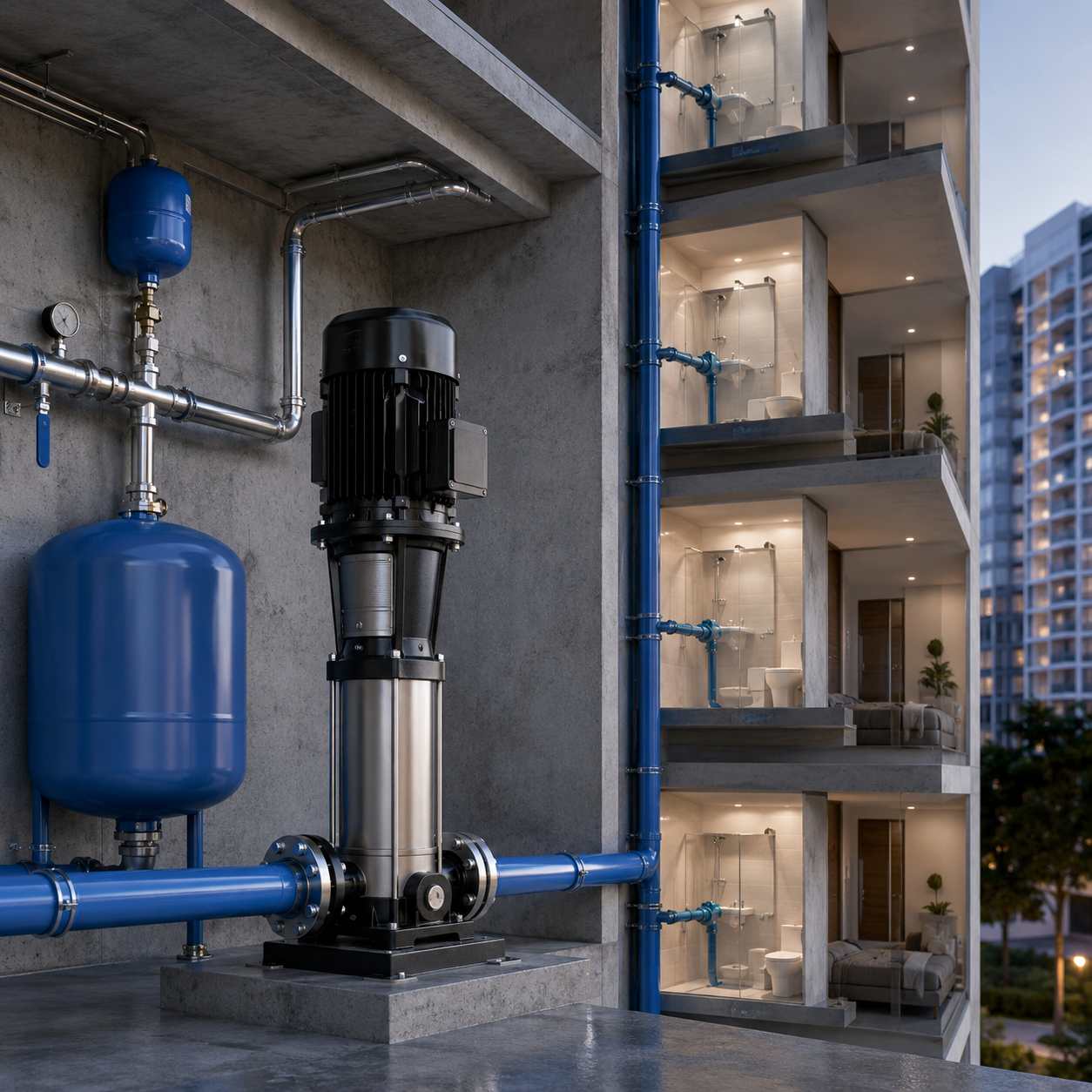
In buildings with more than one floor, unstable pressure often means that the water flow on the upper floors is weak. Vertical inline pumps help keep the pressure even throughout the system, which makes it easier for apartments, hotels, offices, and other business buildings to get water.
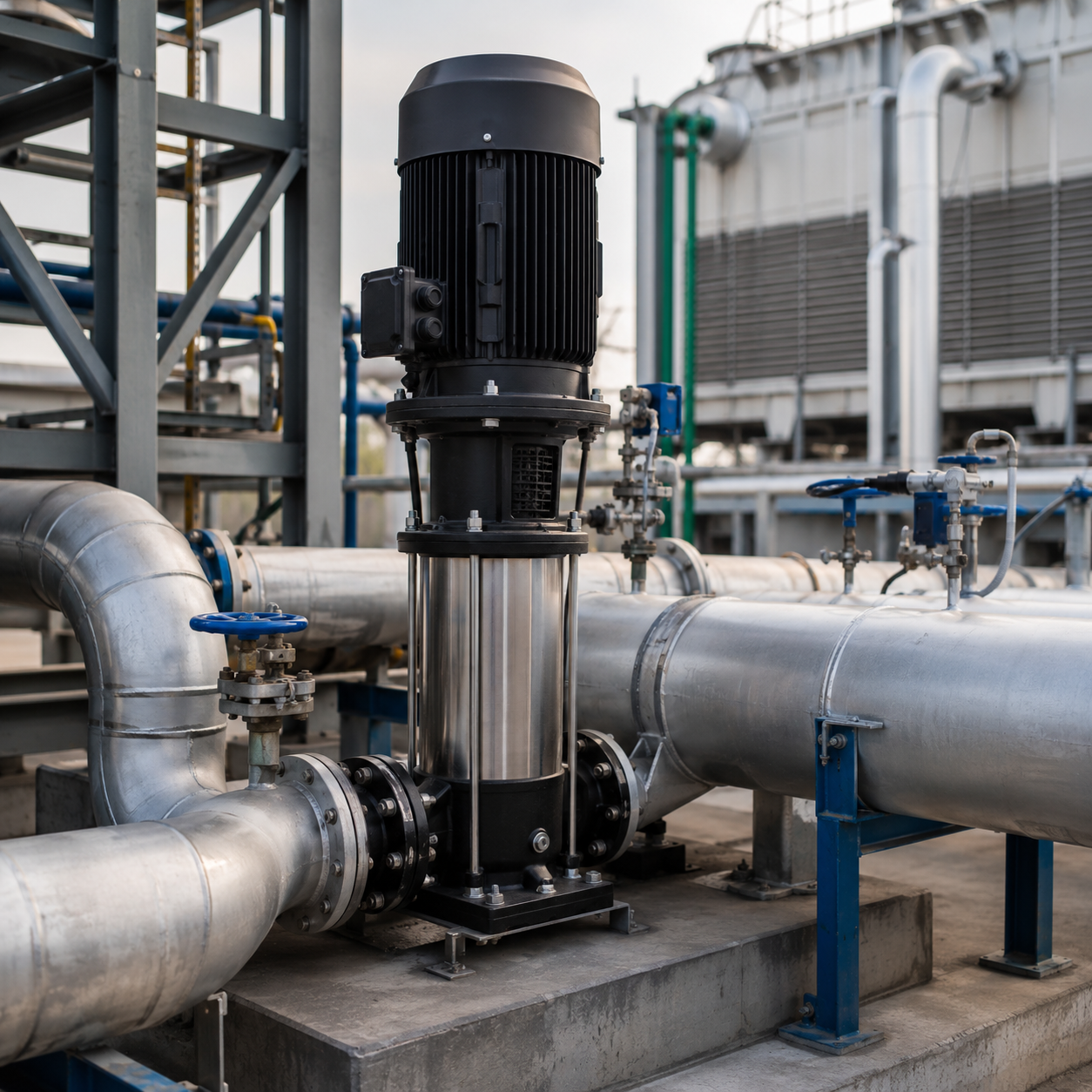
Industrial systems need to be able to reliably move water without having to stop and start up a lot of the time. When operating stability is important, vertical inline pumps are great for transferring cooling water, keeping things moving, and providing water to equipment.
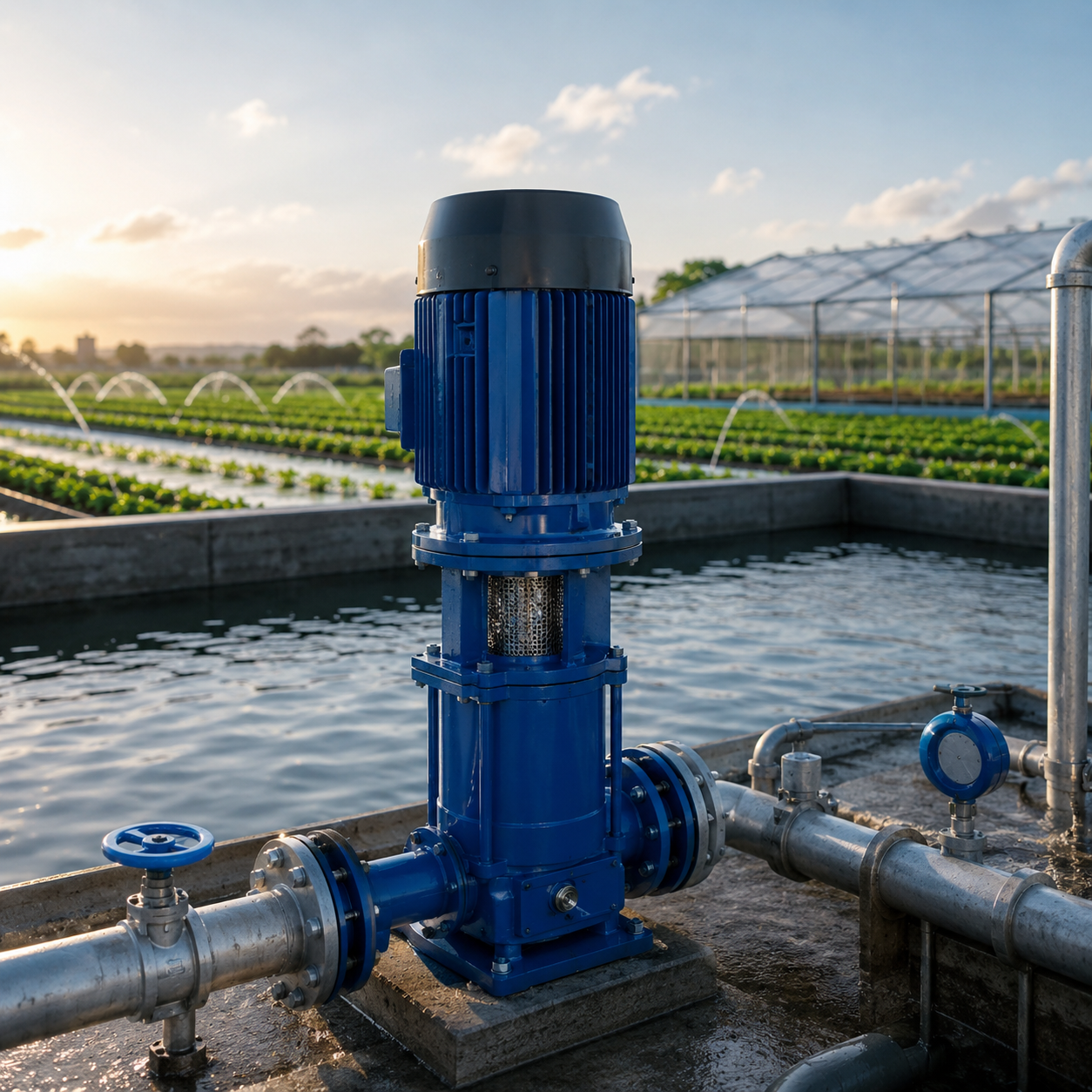
For water supply projects, it’s usually best to use equipment that is simple to set up and keep up in different places. Vertical inline pumps are a small and useful way to move clean water in irrigation networks, city distribution systems, and other systems.
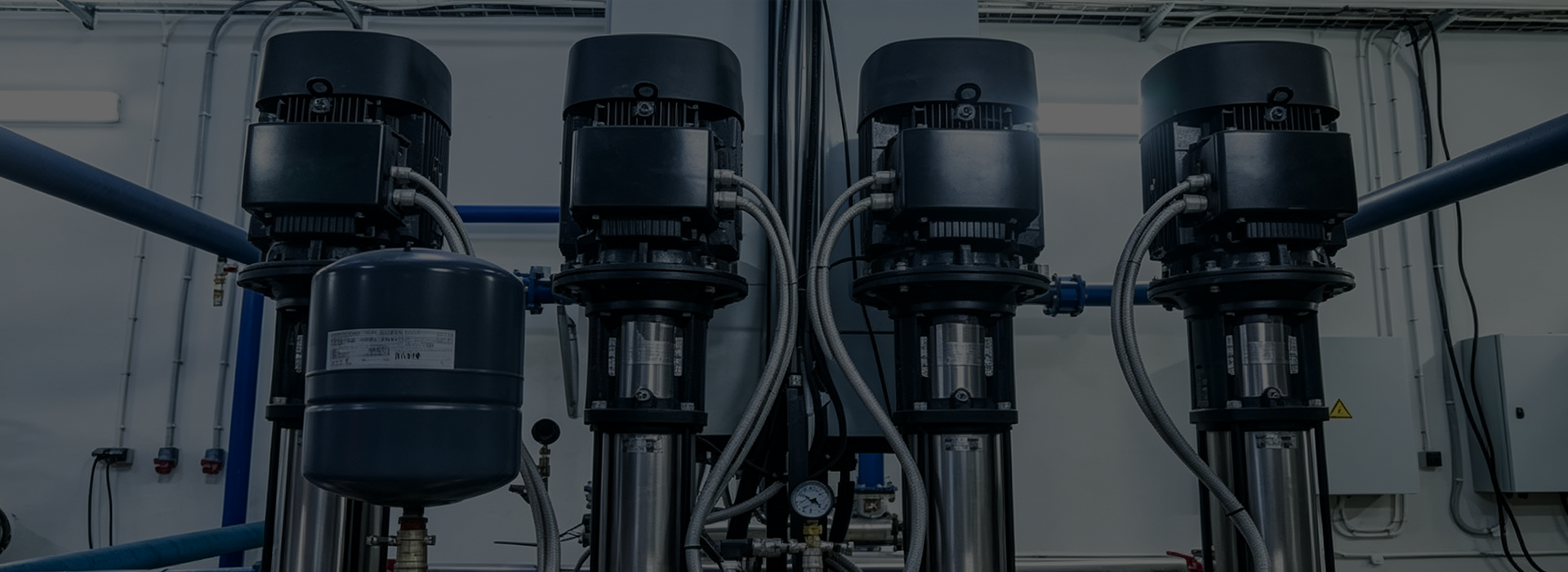
To make centrifugal force, a vertical inline pump has an impeller that spins inside the pump case. This force keeps the flow and pressure of the water in the pipes steady.
The installation layout is the main change. A vertical inline pump is put right into the pipeline, with the inlet and exit on the same centerline. An end suction pump, on the other hand, usually needs a base and a different pipe alignment. When the installation room is limited, inline pumps are the best choice.
The majority of vertical inline pumps don’t prime themselves. To guarantee correct performance and prevent dry running, they often require the pump casing to be filled with liquid prior to beginning.
Yes. There are many vertical inline pumps that can move hot water, mostly in heating, boiler, and air conditioning systems. The working temperature should guide the choice of material and seal type.
Yes, vertical inline pumps are commonly used in systems that move cool water because they offer steady flow, are easy to install, and work reliably all the time.
Yes, but installing something outside usually needs to be protected from the weather. A pump cover, waterproof motor protection, and the right climate can all help the service life go longer.
Under typical working conditions, the majority of vertical inline pumps have a service life of eight to fifteen years. Usually, the first parts to deteriorate, mechanical seals and bearings, may require replacement before the pump itself.
Based on your system’s real water demand, select the flow rate. For instance, a building booster system depends on the amount of fixtures and users, but an HVAC circulation system can need 20–100 m³/h. While excessive flow raises energy consumption and operating costs, insufficient flow prevents a pump from meeting system requirements. Always choose a pump whose best efficiency point (BEP) is around the flow rate you need.
Add pressure losses from pipes, valves, fittings, and filters after determining the vertical height the water must reach. For example, if water must be delivered 20 meters upward and the pipeline creates about 10 meters of resistance, the required pump head is approximately 30 meters. Providing pipe length, pipe size, flow rate, and elevation difference will help determine the correct pump head more accurately.
Depending on the needs of the project, common choices include single-phase or three-phase motors, voltage ranges of different lengths, frequencies of 50Hz or 60Hz, and IE2 or IE3 high-efficiency motors.
Cast iron, stainless steel, bronze impellers, stainless steel shafts, and mechanical seals made for water movement and transfer are all common materials.
Yes, as long as the pump is made of materials that are safe for food or won’t rust. For devices that carry potable water, vertical inline pumps made of stainless steel are often chosen.
Yes. Modern vertical inline centrifugal pumps are made to work well with hydraulics, which means they use less power in systems that move water and raise pressure.
Noise can come from cavitation, trapped air, bad alignment, worn bearings, an unreliable water supply, or a pump that is the wrong size. Usually, the problem can be fixed by installing and maintaining it correctly.
Vibrations in a pump can be caused by an uneven shaft, damaged bearings, air in the system, a loose installation, or bad working conditions.
Low pressure can happen because the impeller is worn out, the pipes are clogged, air is leaking, the pump is rotating in the wrong direction, the inlet pressure is too low, or you chose the wrong type of pump.
A monthly visual checkup and a comprehensive maintenance check every six to twelve months are advised for the majority of applications. In order to maintain dependable performance, systems operating around the clock or under high loads may require more frequent servicing.
Most vertical inline pumps use maintenance-free sealed bearings and do not require routine lubrication. However, some heavy-duty industrial models may need periodic bearing lubrication according to the maintenance manual.
Most of the time, yes. When the pipeline layout, flow rate, and head needs are right, vertical inline pumps are often used instead of older horizontal pumps.
Depending on the size and purpose of the pump, common connections include threaded connections, flange connections, and special pipe interfaces.
No. Seals, bearings, and other internal parts can be damaged by running dry. There should always be enough water in the frame for a vertical inline water pump to work.
Yes. A VFD can be used in conjunction with many vertical inline pumps to modify motor speed in response to system demand. This lowers energy use, minimizes pump cycling, maintains steady pressure, and increases system efficiency.
Delivery for the majority of standard vertical inline pump models can be scheduled within 3–7 working days; bulk production orders normally take 15–25 working days; OEM/ODM projects may take 30–45 working days, depending on motor specifications, testing procedures, and customization requirements; early confirmation of quantities and specifications helps ensure faster delivery.
Flow rate, pump head, liquid temperature, required pressure, pipe size, voltage, working environment, installation space, and material compatibility are all important things to think about.