Introduction
Submersible pumps, operating entirely underwater, offer advantages such as high efficiency and low noise. Due to these advantages, they are widely used in various fields. This article will help you understand whether a submersible pump meets your application needs and solve any problems you encounter.
Domestic Water Supply Applications
The most typical application of submersible pumps is deep well water extraction. If your home relies on groundwater, you can install a submersible pump directly in the well to ensure a stable water supply.
Household Well Water Supply
Many families rely on groundwater, and submersible pumps can directly draw water from deep wells or underground and supply it directly to the water supply point:
- Kitchen water
- Bath water
- Laundry water
- Daily cleaning
Community or small-scale centralized water supply
In remote villages or mountainous areas, h submersible pumps can provide centralized domestic water for multiple households.
This system enables centralized water pumping, transporting water to water tanks, and then distributing it to individual households through a pipeline network.
Benefits
- Stable: Submersible pumps have no suction head limitation, stable operation, and are less prone to cavitation.
- Low noise: Submersible pumps operate underwater with extremely low noise, causing no disturbance to family or community life, making them suitable for residential environments.
- Small footprint: The submersible pump is completely placed inside the well, taking up no ground space and not affecting the building’s appearance.
Agricultural and Irrigation Uses
Submersible pumps are one of the essential pieces of equipment in modern agricultural water systems, playing a vital role in agricultural irrigation and livestock farming.
Farm Irrigation Systems
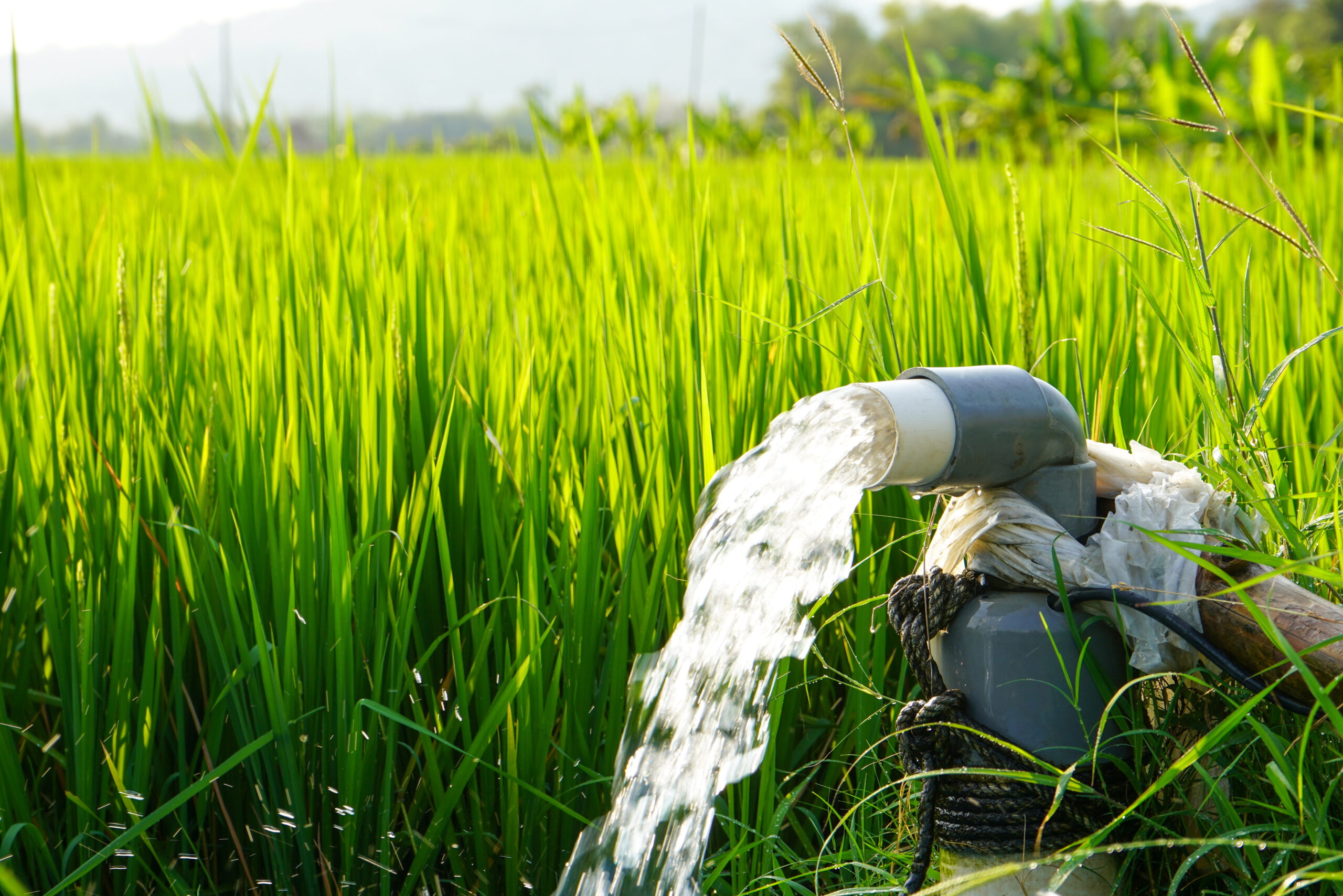
Submersible pumps typically draw water from groundwater, rivers, lakes, or reservoirs to provide a stable water source for crops.
- Irrigation of field crops
- Orchards and cash crops
- Vegetable growing bases
- Arid zone agriculture
Submersible pumps provide stable water pressure and can be used with various drip and sprinkler irrigation systems to improve water and fertilizer utilization. You can maintain stable water pressure even when the water level fluctuates.
In low-lying farmland or rainy season areas, submersible pumps are also used for agricultural drainage to prevent waterlogging that can lead to crop root rot.
Livestock Water Supply
Submersible pumps are widely used in livestock farming, providing animals with clean and stable drinking water and ensuring their health.
- Drinking water supply
Mainly used to extract groundwater or surface water, providing a continuous water supply to drinking troughs or automatic drinking systems, ensuring a stable source of drinking water for animals and poultry.
- Farm cleaning and rinsing
Livestock farms require a large amount of water for cleaning pens and flushing manure, thereby improving hygiene management and reducing the risk of bacterial and disease outbreaks.
- Ranch grassland management
Provide water for pasture cultivation, increase pasture yield, ensure feed supply, and reduce feed costs.
Industrial Applications of Submersible Pumps
Submersible pumps can adapt to complex environments and are essential equipment in many industrial systems.
Industrial Water
Submersible pumps are used in industrial water supply and circulation systems, such as chemical, power, steel, and manufacturing industries.
In systems, submersible pumps, you can experience the application of submersible pumps in the following scenarios.
- Production water
- Cooling water circulation
- Boiler feedwater
- Chemical and corrosive liquid handling
Process and Circulation Support
In a circulating water system, water needs to circulate continuously between different devices, and submersible pumps can serve as circulating pumps or auxiliary pumps.
- Transport circulating water
- Maintain system pressure
- Ensure stable flow rate
Submersible pumps offer stable operation, reducing water pressure fluctuations and enabling continuous operation for extended periods, thus improving system reliability.
Construction and Mining Uses
Submersible pumps are essential equipment in the construction and mining industries. If you are troubled by drainage problems in construction and mining, submersible pumps can effectively help you solve the problem.
Construction Site Dewatering
- Dewatering of the foundation pit
Dewatering of foundation pits is the most critical application of submersible pumps in the construction industry. It can continuously lower the groundwater level, prevent foundation pit collapse, and ensure construction safety . Like, basement construction, subway projects, deep foundation pit projects, and underground parking lots.
- Tunnels and Underground Engineering
Submersible pumps can operate continuously for extended periods in humid, muddy environments, meeting extremely high stability requirements. Whether it’s solving water seepage during tunnel excavation or waterproofing in underground engineering, submersible pumps can provide a perfect solution.
- Temporary drainage at the construction site
Submersible pumps are easy to move, can be used immediately, and can be deployed quickly. They can help you drain water from construction sites in a timely and efficient manner, avoiding economic losses caused by material damage and project delays.
Mining and Quarry Applications
Submersible pumps are highly resistant to harsh environments, can transport silt and sand, are wear-resistant, and can continuously drain water during mining operations.
- Underground mine drainage
- Open-pit mine drainage
- Mine slurry and muddy water transport
- Emergency mine drainage
Submersible pumps provide high lift and high reliability in mining operations, protecting equipment and personnel safety in the event of emergencies. It is an essential safety and insurance device
Sewage and Wastewater Applications
Different types of submersible pumps have different functions; they can also solve your problems with sewage and wastewater.
Residential Sewage Pumping
- Submersible pumps can handle drainage and sewage discharge in low-lying areas such as basements.
2 . Submersible sewage pumps, with their cutting function and anti-clogging design, can also handle fibers and particles commonly found in domestic sewage.
- Combining water level control and PLC systems can achieve automation, reducing personnel contact with sewage and making it safer.
Flood Control and Emergency Drainage
In the event of heavy rain and extreme weather, cities are prone to flooding. Submersible pumps can be quickly deployed and operated for rapid rescue operations.
- Road drainage
While conventional drainage systems may malfunction, submersible pumps can operate normally, ensuring road safety and reducing the probability of accidents due to their high flow rate.
- Rainwater harvesting
Rainwater is collected and stored in underground tanks or reservoirs via submersible pumps, promoting energy conservation and water resource utilization. This is crucial in water-scarce areas.
- Underground drainage
Underground parking garages, subway tunnels, etc., are prone to flooding in extreme weather conditions; submersible pumps can quickly drain the water.
Marine and Aquaculture Uses
In addition to some engineering projects, submersible pumps also perform excellently in small systems. For example, pond fish farming or professional aquaculture
Aquaculture and Fish Farming
Many modern aquaculture projects use submersible pumps in recirculating aquaculture systems, such as the following:
- Fishpond water supply
- Marine aquaculture water supply
- Freshwater aquaculture
- Oxygenation and water quality improvement
- Pond drainage and cleaning
- Water circulation
Submersible pumps can provide stable water quality, improving survival rates. They operate with low noise, causing no harm to farmed organisms, and simultaneously increase production while automating labor costs and boosting yields.
Marine and Dock Applications
Submersible pumps can be made of stainless steel, with anti-corrosion coatings, or special materials to make them corrosion-resistant and suitable for seawater environments.
- Seawater extraction
- Cooling system water supply
- Ship repair water supply
- Seawater flushing
Submersible pumps are needed not only when the ship is in use, but also during maintenance to drain water from dry docks. Submersible pumps are ideal for use in marine and dock environments.
Why Submersible Pumps Are Preferred in These Uses
Submersible pumps can be widely used in various scenarios and fields, which can be attributed to several main reasons.
Operating conditions
Submersible pumps, which operate underwater at low or fluctuating water levels and frequently change with the seasons or operating conditions, are not dependent on suction head and always function underwater, making them far more stable than surface pumps.
Media and Environment
Submersible sewage pumps typically use large-channel impellers to operate directly in water containing impurities, solids, or silt, allowing for incomplete filtration. Submersible pumps are generally more adaptable to fluctuations in water quality.
Economic factors
Submersible pumps have a lower initial investment, a shorter installation period, lower labor costs, and lower failure risk, reducing hidden economic losses caused by production stoppages, water outages, and accidents.
Conclusion
Submersible pumps are widely used in many fields due to their compact structure, strong adaptability, and stable operation. They can provide efficient and reliable solutions for various working conditions. Different application scenarios and uses determine their type and configuration; proper selection is key to ensuring the long-term reliable operation of the system. If you are unsure how to choose the right model, please contact HunGerät, a professional submersible pump supplier.
FAQ
Q1.Are submersible pumps suitable for high-lift, long-distance water delivery?
A1.Multistage deep well submersible pumps can provide high head and are suitable for water supply in mountainous areas. For long-distance water transmission, submersible pumps can solve the problem.
Q2. Can submersible pumps be used in situations where water resources are lacking?
A2. You can choose a solar-powered submersible pump to achieve a sustainable water supply with low operating costs, which is very suitable for areas with power and water shortages.
Q3.What material is best for corrosive water?
A3. The pump body can be made of stainless steel or other engineering materials, and other components should ideally also be made of corrosion-resistant materials. It can operate normally in highly corrosive liquids such as seawater.
Q4.Can I use a submersible pump to transport hot liquids??
A4. Some specially designed submersible pumps can be used for high-temperature water or industrial liquids; the appropriate model needs to be selected based on specific requirements.
Q5. Can submersible pumps be used in drinking water projects?
A5. Submersible pumps are less likely to cause pollution and are highly safe. They can be used directly after selecting materials that meet drinking water hygiene standards, ensuring a stable water supply.
Q6. How to determine if a submersible pump is reliable?
A6. Considering factors such as materials, structure, and brand certification, high-quality submersible pumps use superior materials and structures, typically resulting in longer lifespans, lower failure rates, and greater reliability.
Q7.Are submersible pumps expensive to maintain?
A7. Maintenance costs are relatively low, mainly including regular inspection of cables and seals, cleaning of impurities, and replacement of wear parts. Compared to other pumps, submersible pumps are simpler to maintain.
Q8. Can a submersible pump handle dirty or muddy water?
A8. Submersible pumps can be used for treating dirty or muddy water, but a dedicated submersible sewage pump or a wear-resistant submersible pump must be used.
Q9. What is the difference between a submersible pump and a surface pump in use?
A9. Submersible pumps operate underwater without priming and can run directly, while surface pumps are installed on the ground. Submersible pumps are more advantageous when the water source is deep or the water level is unstable.
Q10.How to prevent submersible pump clogging?
A10.Choosing a large-channel impeller, installing a filter, and performing regular cleaning, along with selecting a wastewater pump based on water quality, can all effectively reduce the risk of malfunction.
Q11.Is a backup pump needed?
A11. If you are going to use submersible pumps in critical water supply or industrial systems, we recommend configuring a backup pump to prevent production losses due to water outages caused by unexpected events.
Q12.What are the key points when purchasing submersible pumps?
A12.First, you need to determine the intended use of the water pump. Second, you need to look at the submersible pump’s parameters, such as flow rate and head. You also need to consider the materials used in the pump.
Q13. Are submersible pumps suitable for continuous operation?
A13. Submersible pumps are designed for long-term operation, requiring adequate cooling. They rely on surrounding liquid to cool the motor, and the underwater environment aids in motor heat dissipation, making them suitable for systems requiring a stable water supply.
Q14.Can submersible pumps be managed remotely or automatically?
A14.Submersible pumps can be paired with intelligent control systems to achieve intelligent management, which not only reduces the management burden but also enables better management through data.
Q15.Why are there such large price differences among different submersible pumps?
A15.The materials used in a submersible pump are the most direct factor affecting its price. The pump’s performance, different designs, and manufacturing processes all influence its price.
Q16.Can I repair my submersible pump myself if it malfunctions?
A16.First, you need to determine the type of fault. If it’s a simple electrical or external problem, you can repair it yourself. If it’s a problem with the motor or sealing system, you’ll need to seek professional help.
Q17.Can I install the submersible pump myself after receiving it?
A17.Submersible pumps have a simple structure. Small submersible pumps can be installed by the user upon receipt. However, for high-power pumps, it is recommended to have a professional install them to prevent errors.
Q18. What are the limitations of submersible pump applications?
A18.The limitations of submersible pumps lie in their cumbersome maintenance. Submersible pumps are an integrated structure located underwater, and their unsuitability for extreme environments.
Q19. How do I know if a submersible pump is right for my application?
A19. First, you need to define the application scenario and water source conditions, confirm the required head and flow rate, and select the appropriate pump type based on the specific circumstances. If the water source is a deep well or groundwater, a submersible pump is usually a more reliable choice.
Q20. Can one submersible pump be used for different purposes?
A20.We do not recommend using one pump for multiple purposes. Different uses and operating environments have different requirements for structure and materials. Misuse may damage the water pump and shorten its lifespan.