I. Introduction
Diesel and gasoline water pumps can both be useful when the power goes out or is unstable. But for you, the main difference is not engine type. The real issue is a pump that is suitable for the work, market pricing, or the needs of the customer. Before you make your purchase plan, this article will help you to compare the main differences.
II. What Is a Diesel Water Pump?
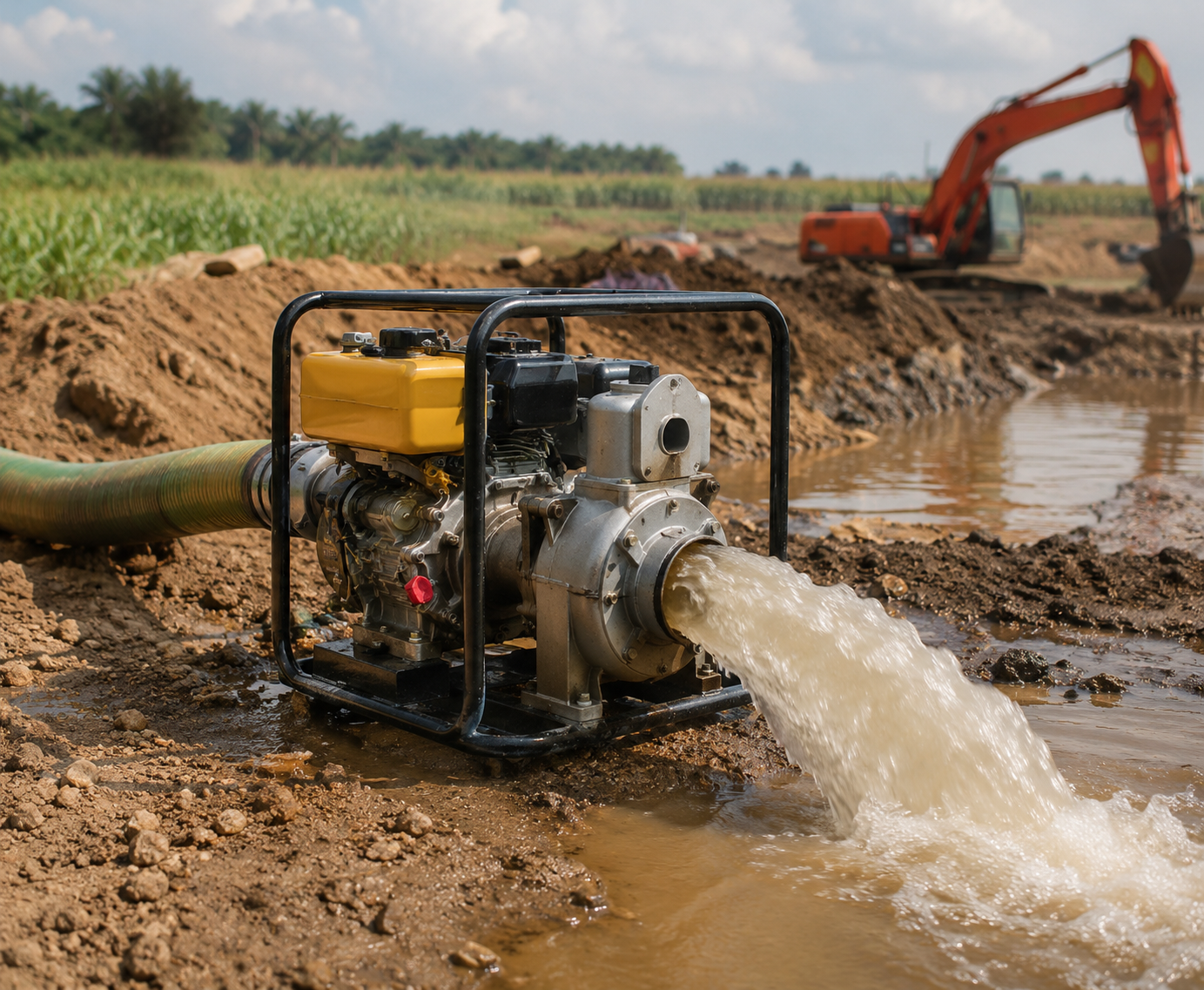
A diesel water pump is a pump that uses a diesel engine to drive the pump head to move water without electricity. It is better for heavy-duty, longer run times, and more harsh outdoor environments. Diesel pumps give you better performance when you need higher performance, better fuel efficiency, and longer service life. These include major agricultural irrigation, construction drainage, flood control, and various water transmission.
III. What Is a Gasoline Water Pump?
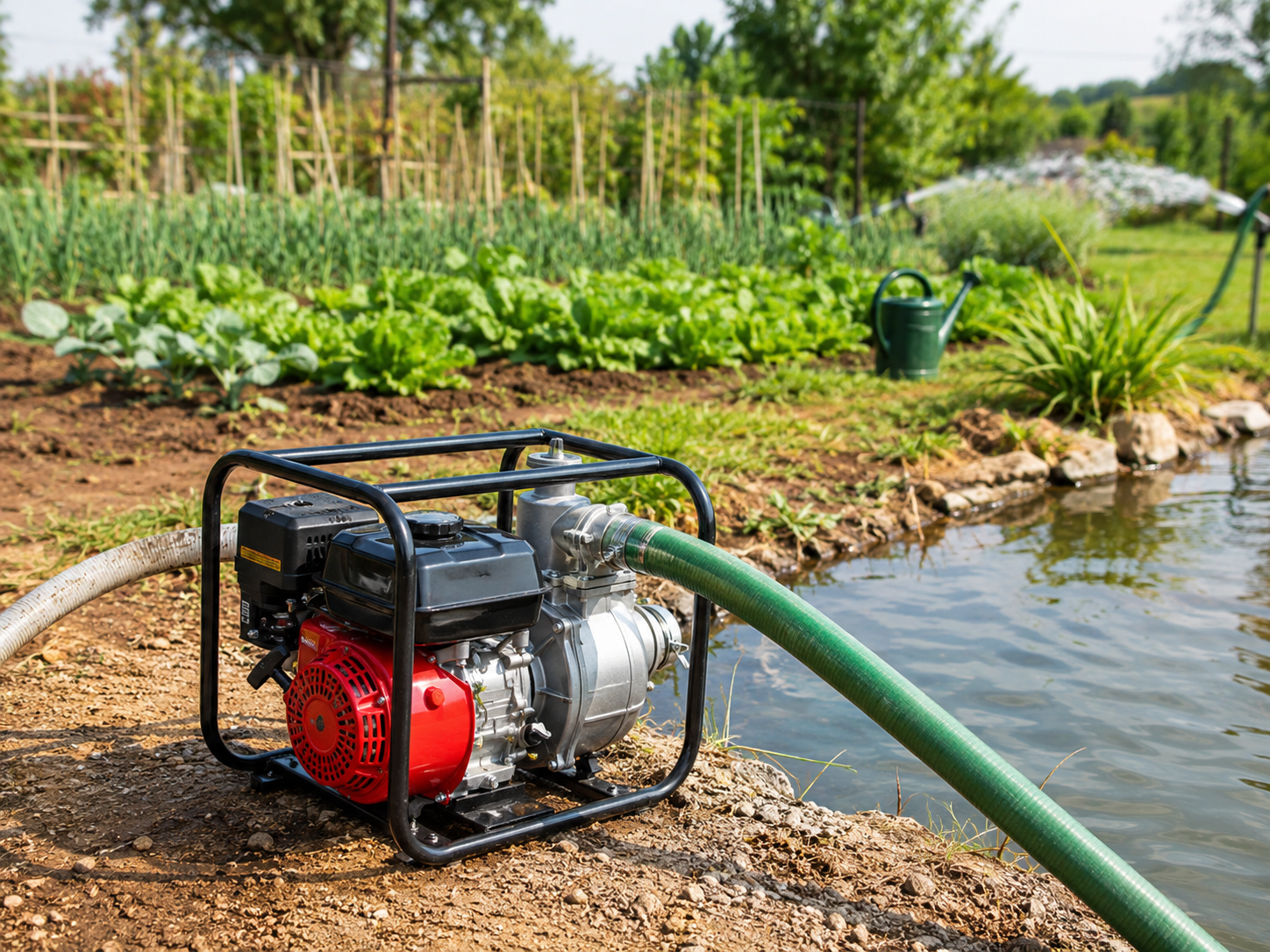
A gasoline Water Pump is a water pump that is powered by a gasoline engine and does not require electricity to pump water. Diesel pumps are usually heavier, more difficult to move, and harder to start. This makes the gasoline pump suitable for little jobs like gardening, moving water from one pond to another, short-term jobs, and emergencies. Gasoline water pumps are also easy to sell at retailers.
IV. Diesel vs Gasoline Water Pump: Main Differences
1. Working Load
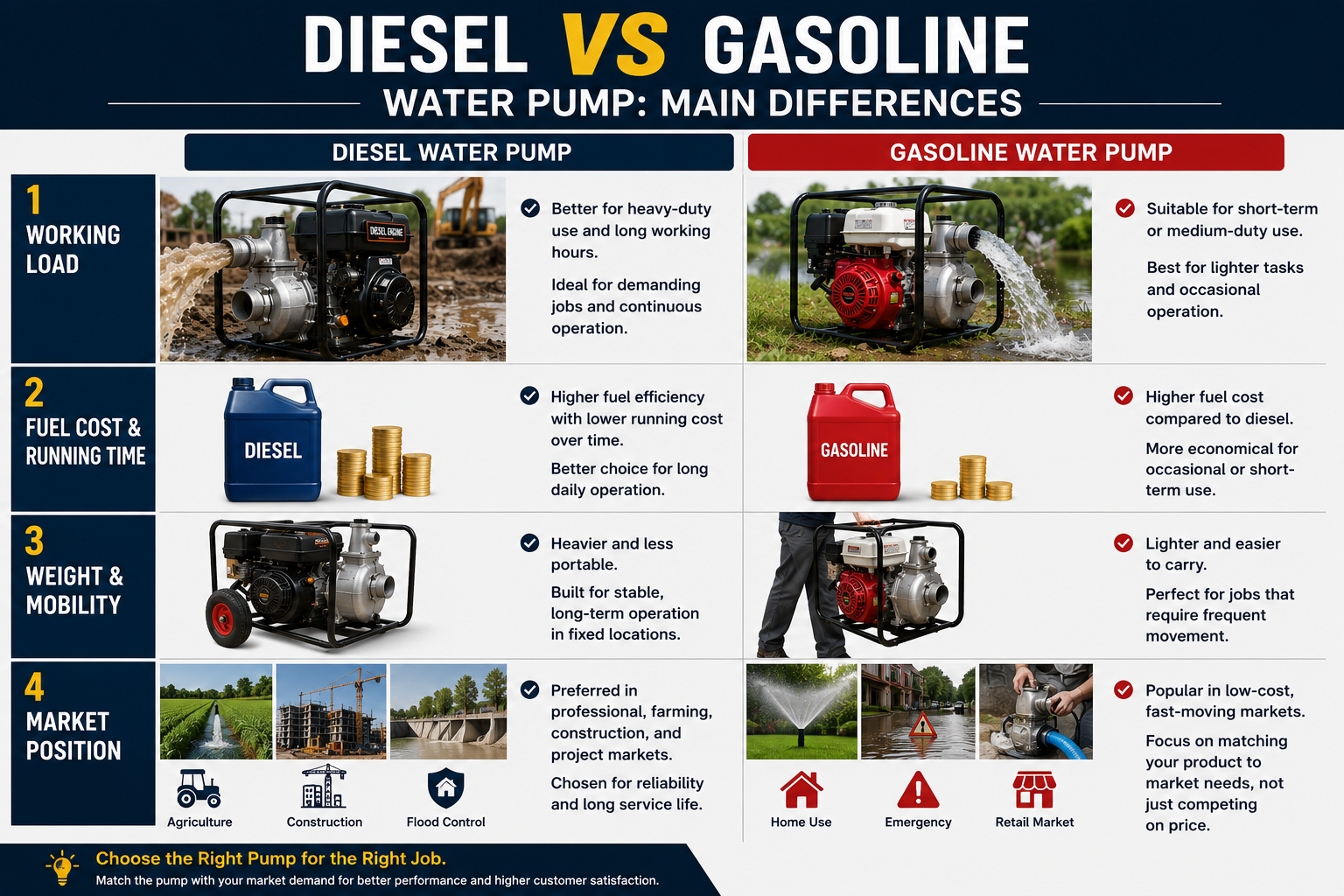
The main difference between diesel and Gasoline water pumps is how much work they are designed to do. In general, diesel pumps are better for high-duty and longer hours of working; gasoline pumps are suitable for short-term or medium-duty use. Choosing the pump for the actual work can help you avoid a pump that is too large or one that can’t do the job.
2. Fuel Cost and Running Time
The price of the product is only a small part of the total cost. A diesel type can often save you money on fuel over time if the pump is used for a long time every day. A gasoline pump is better if the pump will only be used occasionally, since it costs less.
3. Weight and Mobility
Gasoline water pumps are usually lighter and more portable. This makes them more suitable for operations that need a lot of moving. Diesel pumps are heavier but are usually chosen for long-term operations where stability and constant usage are more important than mobility.
4. Market Position
Different markets prefer different types of engines. Diesel pumps are more common in the professional, farming, building, and project markets. Gasoline pumps are better for a cheap, fast-moving job. Price alone isn’t always the best way to compete. Instead, focus on making your products fit the needs of people in your market.
V. Application Selection: Where Each Pump Fits Better
1. Farm Irrigation
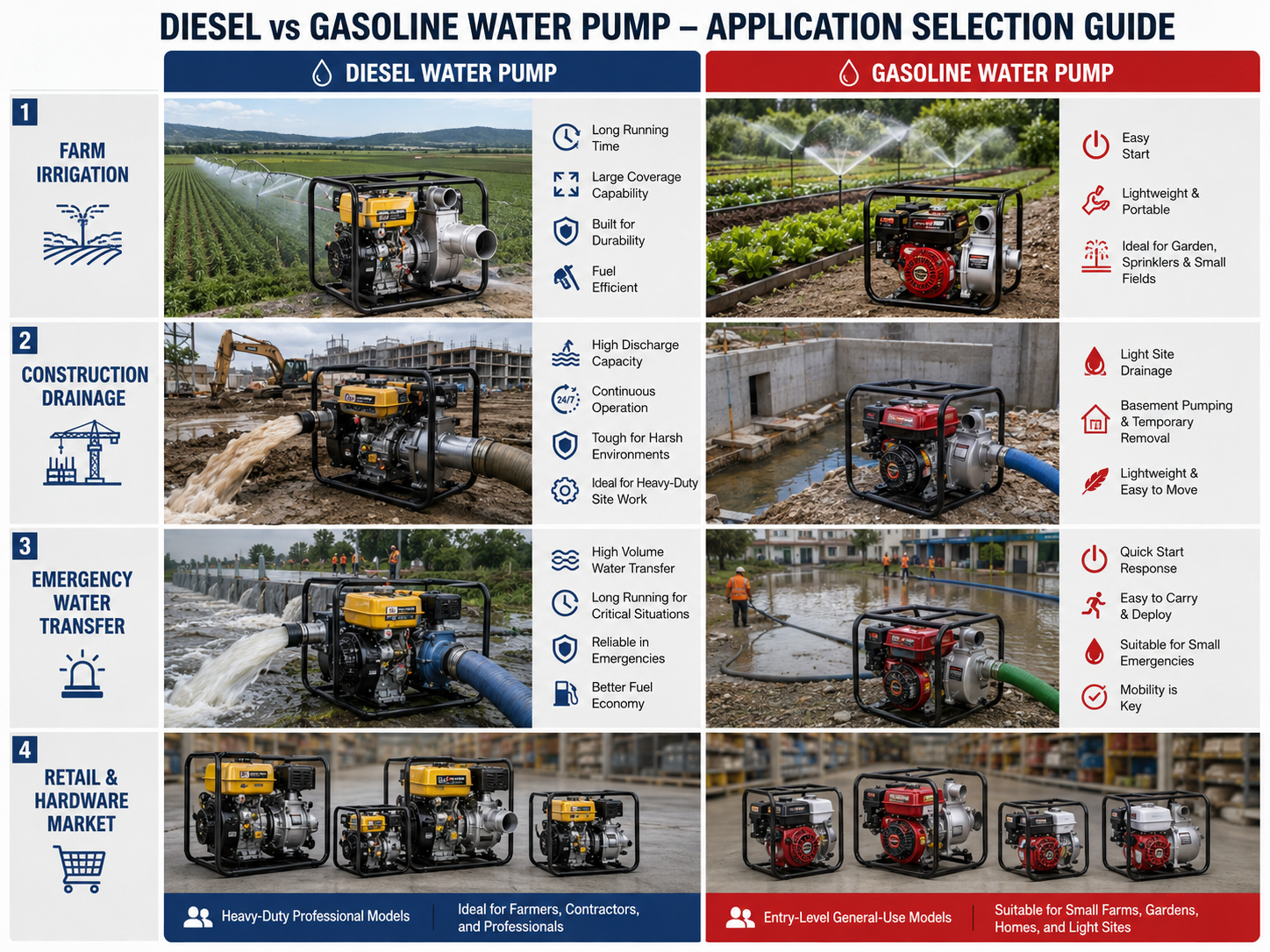
Diesel water pumps are better for farming when the pump needs to run for a long time, cover a large area, or be used where durability and fuel efficiency are more important than weight.
Gasoline water pumps work better for small irrigation jobs, watering gardens, supporting sprinklers, or short-term use in fields where needs an easy-to-start pump that costs less up front and is easy to move from one water point to another.
2. Construction Drainage
Diesel water pumps are better for construction drainage when the site needs to be dewatered continuously, when it needs to discharge more water, or when it needs to work better in muddy and difficult conditions.
It is better to use gasoline water pumps for light site draining, short-term water removal, basement pumping, or temporary jobs where you need a pump that is easy to move and carry.
3. Emergency Water Transfer
Diesel water pumps can be used to move huge quantities of water quickly when stable power output and long working times are needed, like during flood control or continuous drainage.
When getting the job done quickly is important, gasoline water pumps are useful. This is especially true for smaller emergencies, water points, or situations where the pump needs to be moved and turned on quickly.
4. Retail and Hardware Market
Diesel water pumps do better in hardware and retail stores when they are heavy-duty models for farmers, contractors, and professionals who care about running time, fuel cost, and long service life.
Gasoline water pumps are easier to sell as entry-level or general-use models because they are cheaper to buy, easier to use, and in higher demand by small farms, gardens, homes, and light building sites.
VI. Buying Checks That Decide Quality and Price
1. Check Flow, Head, and Outlet Size
When you compare gasoline and diesel water pumps, don’t just look at the type of engine. It can move enough water if it has the right flow rate, head, suction lift, and outlet size. It doesn’t matter how strong the engine looks if the site doesn’t have a pump range that works.
2. Check the Real Pump Head Size
A lot of pumps are sold as 3-inch water pumps, but the head of the pump might not be that big. The smaller the pump head, the less it may cost, but it may have less performance, get as much water out, or last as long. This is very important to keep in mind when you look at quotes that look like they are the same.
3. Check Oil Alert Function
An oil alert is a small thing that can keep the engine safe when the oil level is too low. If this feature isn’t there, careless use of the engine could damage it faster. People who buy pumps from you may not take good care of them. Oil Alert can help you stay out of a lot of trouble after the sale.
4. Check Manual Start or Electric Start
Costs stay low when you use a manual starter for simple models. An electric start can be used on bigger gasoline or diesel pumps, or if you start the pump up a lot. This function changes how much the item costs, how much it goes for, and how the first user feels about the pump.
5. Check Accessory Material
Accessories can also change the quality level of the pump. Some models use aluminum accessories, while lower-cost versions may use plastic parts. Plastic parts can reduce the price, but aluminum parts usually look stronger and are more suitable for rougher working conditions.
6. Check Crankshaft Type
Engines that look a lot alike can have different types of crankshafts. Some have crankshafts that are only partly iron, while better ones have crankshafts that are iron all the way through. One reason why two pumps that look the same might have different prices is that a full-iron bearing is often stronger and lasts longer.
7. Check Frame, Base, and Spare Parts
The frame and base of the pump affect how well it works when it’s being moved, vibrated, or used on a rough site. A cheap frame may look weak and be more likely to break, but it can also make the pump look weaker. Also, check to see if it’s easy to get common spare parts like seals, impellers, starters, filters, and connectors.
VII. Conclusion
For heavy work and long hours at the office, a diesel water pump is better. Gasoline water pumps are more suitable for who want to save money and do light work.
Don’t just compare models by the type of fuel they use or their output size. How well the frame is made, how the pump starts, how many extra parts are available, and how often the oil alert goes off can all change how much the pump is really worth.
You can buy or sell a lot of diesel or petrol water pumps. HunGerät can help you choose the best ones for your budget and the way you work. Get in touch with us if you need help with a product, a price, or details about your next order.
VIII. FAQ
1. Is a diesel water pump better than a gasoline water pump?
Not all the time. Diesel pumps are better for longer and harder jobs, while gasoline pumps are better for short and easy jobs. Not just the type of fuel, but also how much work needs to be done.
2. Which pump is better for large farm irrigation?
Most of the time, diesel water pumps are the best way to water big farms. They work better when the pump is far from a stable power source and needs to run for a longer time or give off more water.
3. Which pump is easier for small users to operate?
It’s easier for small people to use gasoline water pumps. It’s easier to start, move, and carry them. Because of this, they can be used in fields, small farms, for temporary drainage, and in stores.
4. Why do two 3-inch water pumps have different prices?
Even if two pumps are both called “3-inch pumps,” they may have different pump heads, frames, accessories, and parts inside. These small things can have an effect on both price and performance.
5. Does a larger outlet size always mean better performance?
No. Outlet size isn’t the only thing that affects how well a pump works. It depends on the flow rate, the head, the design of the pump body, the size of the impeller, and how well the engine matches the pump.
6. What is the difference between a high-flow pump and a high-pressure pump?
It takes less time for a high-flow pump to move more water. A high-pressure pump moves water up or farther. You should check to see if the job calls for volume, pressure, or a mix of the two.
7. Can diesel and gasoline water pumps handle dirty water?
Not all of them can, but some can. Mud, sand, and solids are not what clean water pumps are made for. If you need to use dirty water, you should pick a trash pump or an impeller design that works well with dirty water.
8. What should you check if the pump is used for muddy water?
Check the pump body, the type of motor, the quality of the seals, and the largest solid that can fit inside. A clean water pump might break down quickly if it is used for a long time in dirty water.
9. Is electric start necessary for a water pump?
Electric start isn’t always needed, but it’s helpful for bigger pumps or people who start the pump a lot. It makes things easier, but it costs more and needs more batteries.
10. Is manual start enough for daily use?
Many small and simple gasoline pumps only need to be started by hand. Electric start may be easier to use for bigger diesel pumps, people who use them a lot, or people who aren’t very good at using diesel pumps.
11. What does oil alert do on an engine water pump?
When the oil level is too low, Oil Alert helps protect the engine. This feature can lower the damage to the engine that comes from not taking care of it or using it carefully every day.
12. Should you keep oil alert for low-price markets?
It depends on your market level. Getting rid of the oil alert can save you money, but it also makes engine damage more likely. Keeping it can lower the pressure after a sale for long-term sales.
13. Are aluminum accessories better than plastic accessories?
Accessories made of aluminium usually look stronger and work better when they’re used roughly. Plastic items may be cheaper, but they might not be right for heavy-duty markets or people who carefully compare the quality of different products.
14. Why does crankshaft quality matter in engine water pumps?
The crankshaft affects how strong and long-lasting the engine is. One reason why pumps that look the same can have different prices is that a better crankshaft can handle more work stress.
15. What is the difference between a semi-iron and a full-iron crankshaft?
Most of the time, a full-iron crankshaft is stronger and lasts longer than a semi-iron crankshaft. If the people in your market care about how long something lasts, you should check this before you buy.
16. What spare parts should you prepare for diesel or gasoline water pumps?
Seals, impellers, filters, starters, connectors, recoil starters, and gaskets are some of the most common parts that you should get ready. Having good assistance for spare parts makes it easier to do maintenance and handle repeat orders.
17. What should you check in a sample before bulk ordering?
You should check the output of the pump, how well it starts, how much vibration it makes, the strength of the frame, the size of the pump head, the materials used for accessories, the oil alert, and the packing. Performance level and product level should both be shown in a sample.
18. Why does pump frame quality matter?
The frame keeps the pump safe while it’s being moved or used in the field. A weak frame may save money, but it can cause the pump to bend, shake, or look cheap.
19. What information should you provide before asking for a quotation?
You should list the type of fuel, outlet size, flow rate, head, application, water condition, starting method, amount needed, goal price, and packaging needs. This helps the seller suggest a model that will work better.
20. How can you reduce after-sales problems when buying engine water pumps?
You can cut down on problems after the sale by making sure you know how the pump is really set up before you place your order. Check the pump head size, oil alert, starting method, accessory material, crankshaft type, availability of spare parts and quality of packing.