
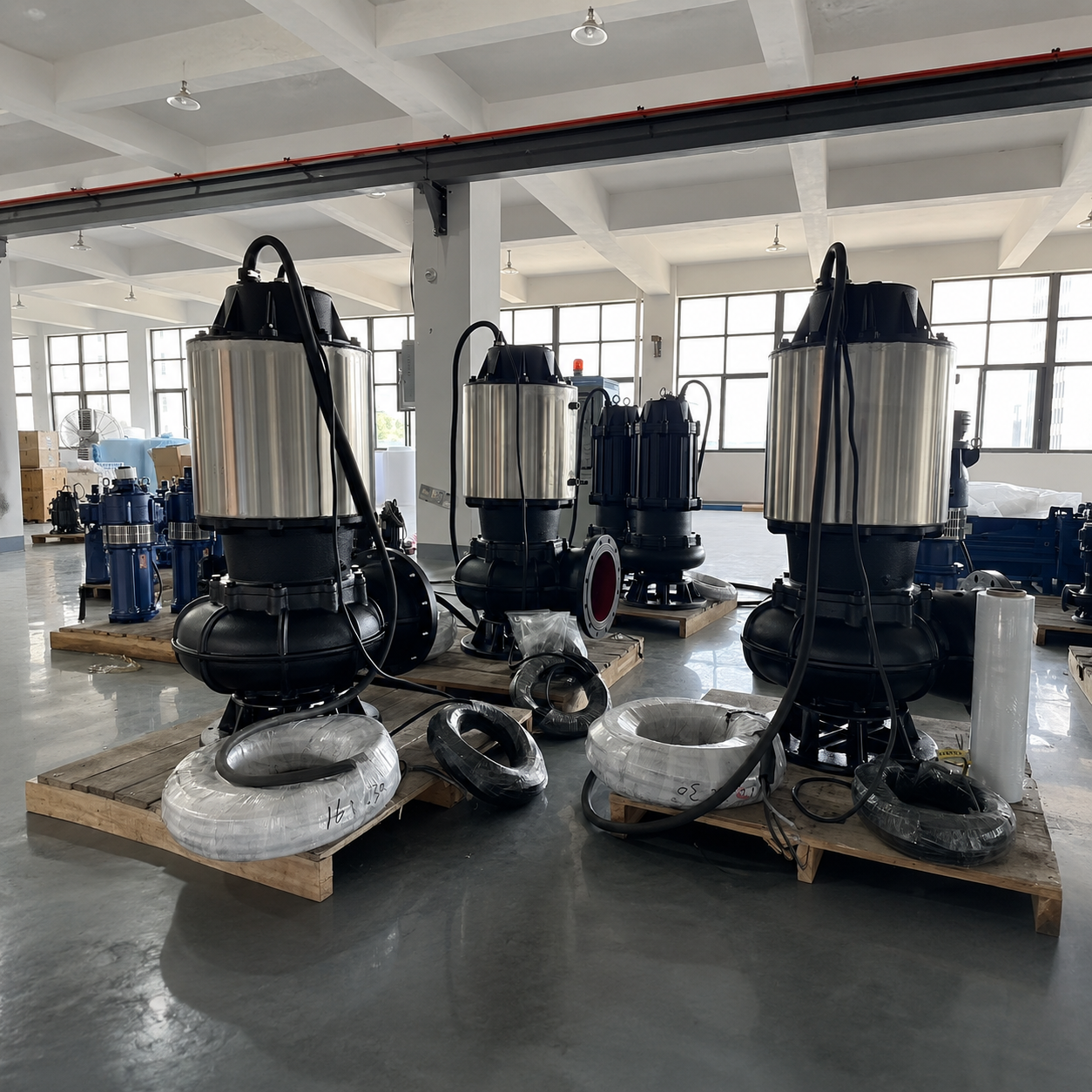
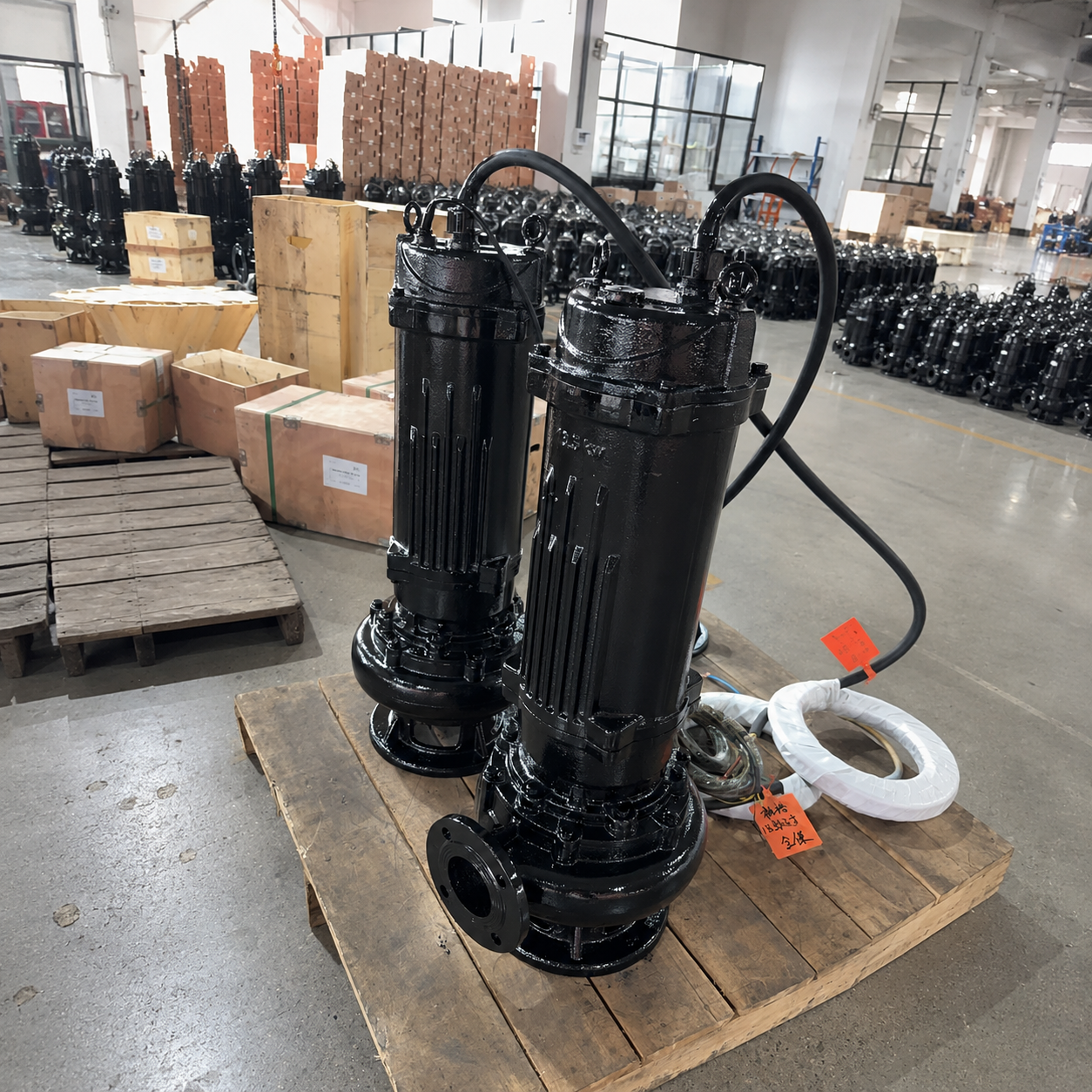
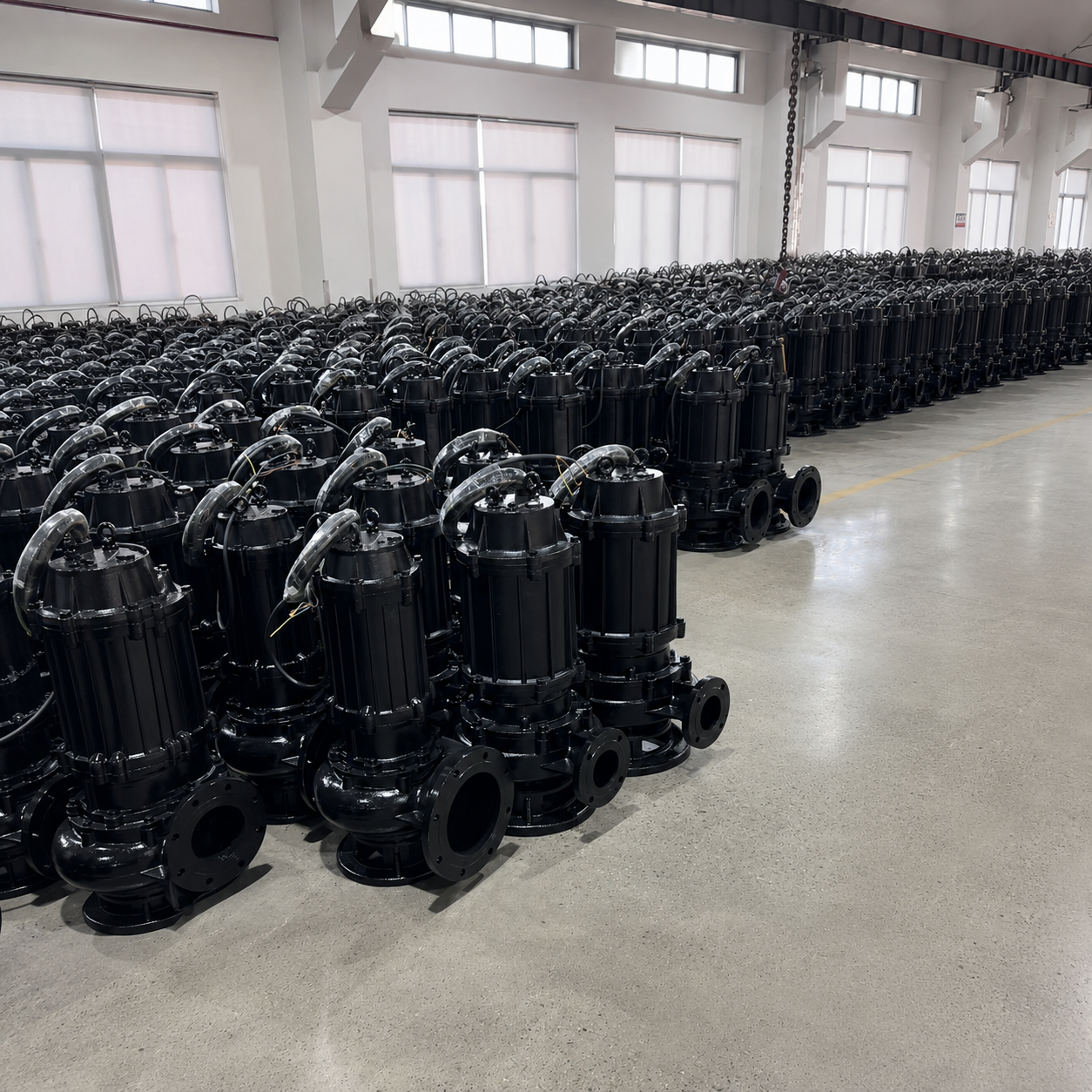
Effluent Pumps Product Highlights
- Handles Small Suspended Solids: Made for cleaned wastewater that still has small particles in it, like what you’d find after separating septic tanks.
- Non-Clog Hydraulic Design: Wide flow pathways help keep things from getting clogged and make the transfer of wastewater smoother.
- Automatic Float Switch Options: It can be bought with automatic level control so that it can work in septic and sewage systems without being watched.
- Continuous-Duty Performance: Built to handle a lot of cycling and long hours of use in both home and commercial effluent situations.
- Corrosion-Resistant Construction: There are models made of cast iron and stainless steel to fit different types of garbage.
- Multiple Discharge Sizes Available: Different outlet shapes make fitting easier for a range of tank and pipe systems.
Effluent Pumps Supplier for Bulk Wastewater System Orders
Effluent pumps from HunGerät are made to move cleaned wastewater from septic tanks, dosing chambers, and wastewater treatment systems. This wastewater has small solids suspended in it. This line offers dependable solids-handling performance, stable discharge capacity, and a range of model choices to meet the needs of homeowners, businesses, and light industries.
Our HunGerät Effluent Pumps have bigger hydraulic openings than regular clean water pumps. This makes it easier for wastewater to flow and lowers the chance of getting clogged. We have types made of durable cast iron and stainless steel to fit a range of wastewater conditions and installation sites. With the optional float switches, your Effluent Pump can start and stop itself based on the level of the liquid. This makes our HunGerät Effluent Pumps a safe choice for long-term wastewater transfer jobs.
Effluent Pumps by Series
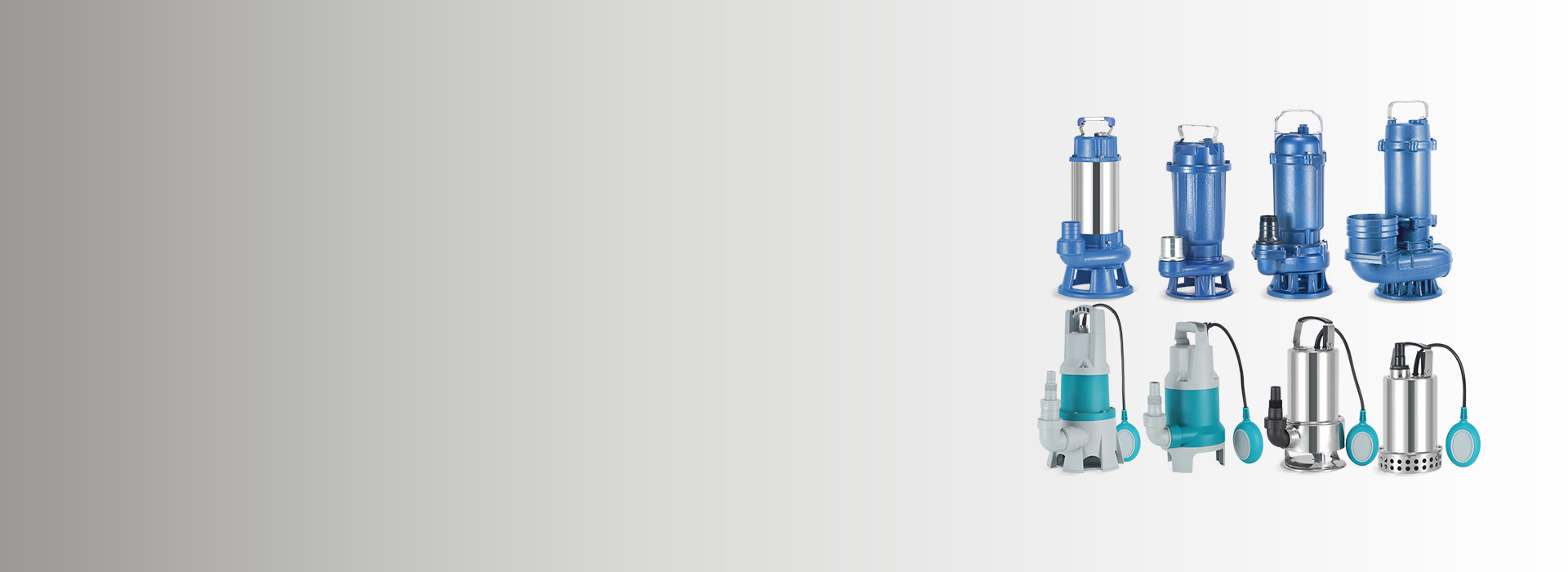
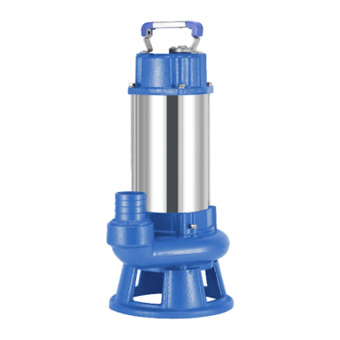 WQDK Clean & Dirty Water Submersible Pump
The WQDK line is made for clean water and wastewater that has small solids or particles suspended in it. It can handle flow rates of up to 15 m³/h and can be used for home drainage, agricultural wastewater transfer, septic system discharge, and other general effluent handling tasks.
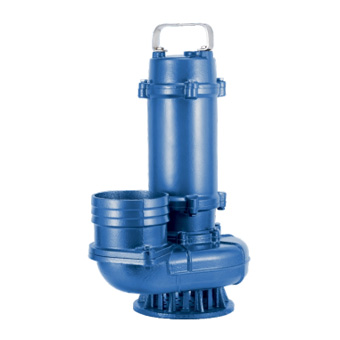 WQDX Large Outlet Clean & Dirty Water Submersible Pump
The WQDX series has a big output outlet and can handle up to 140 m³/h of flow. This design makes it easier to move larger amounts of wastewater, and it can be used in wastewater pits, drainage systems, and high-flow effluent transfer situations.
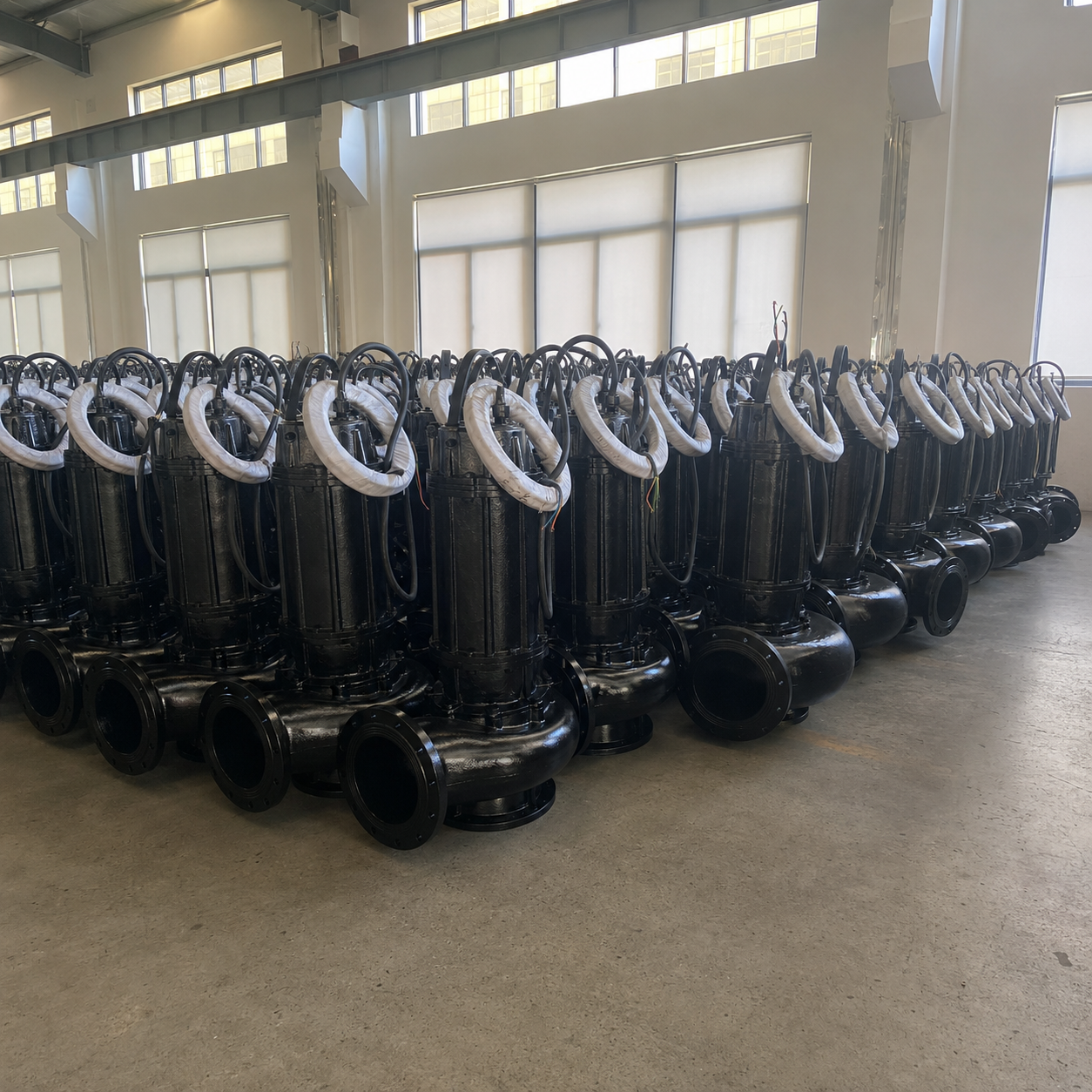
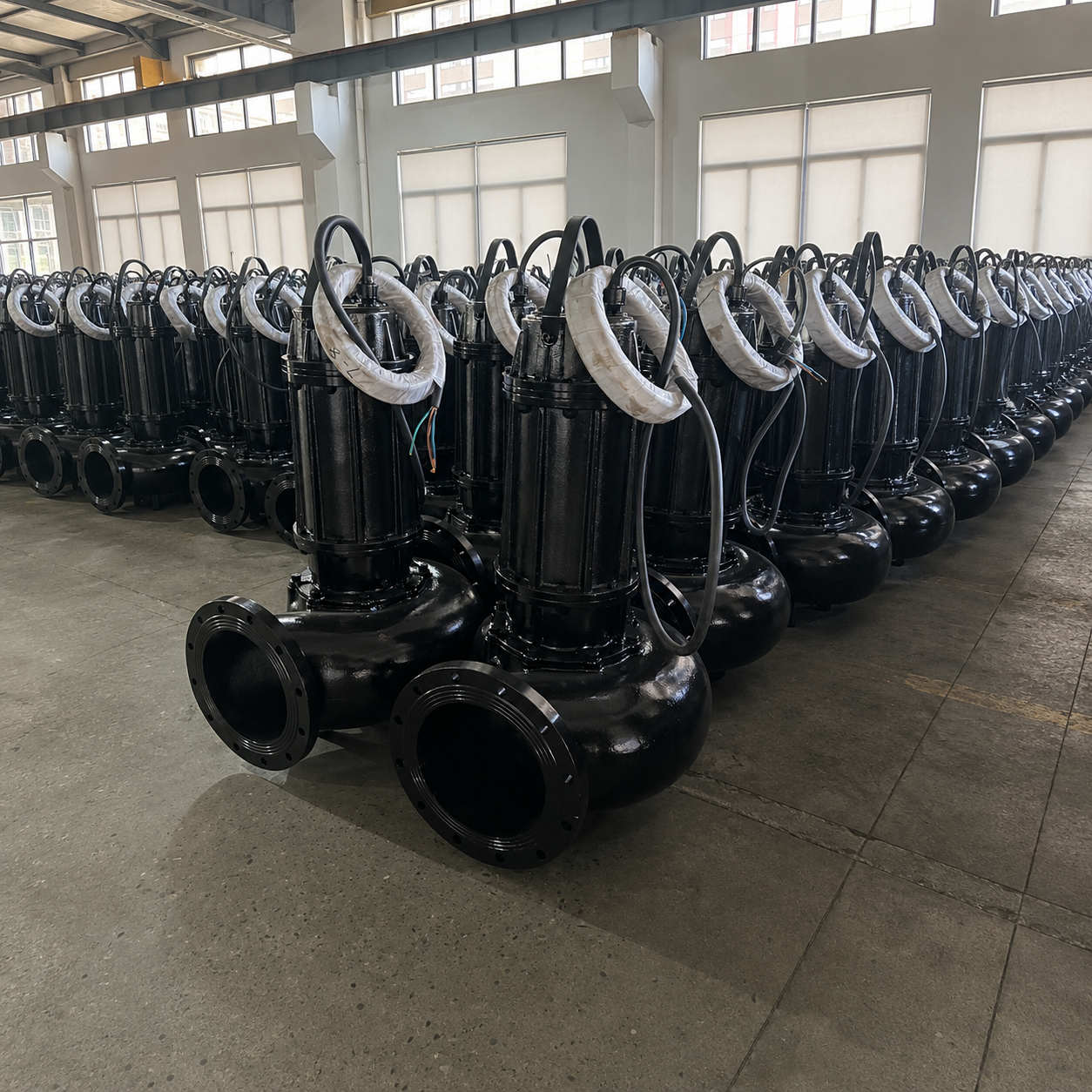
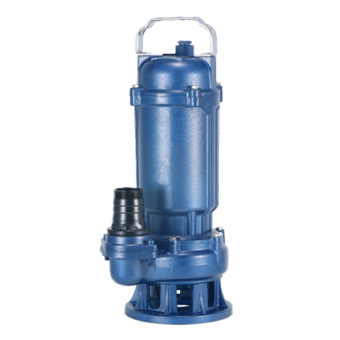 WQD Cast Iron Sewage Pump
Built with a cast iron impeller and pump body, the WQD model is made for tough wastewater environments. It can be used for sewage systems in homes, drainage systems in farms, and garbage with particles in it.
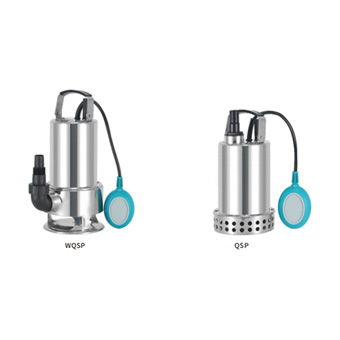 WQSP/QSP Stainless Steel Seawater Sewage Pump
The WQSP/QSP line is made of stainless steel and works with an automatic float switch. It can be used for small treatment systems, collection tanks, wastewater drainage, and other places where better corrosion protection is needed.
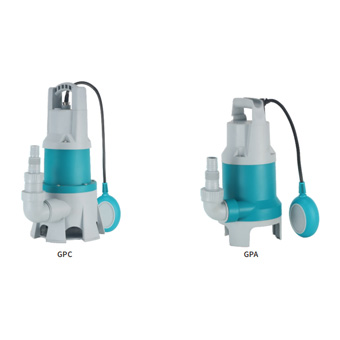 GPC/GPA Plastic Seawater Sewage Pump
The GPC/GPA line is made of plastic that doesn’t rust and is controlled automatically by a float switch. People often use these pumps to drain garbage, clean out pits and basements, and move water that has small solids suspended in it.
Why Choose HunGerät as Your Effluent Pump Factory
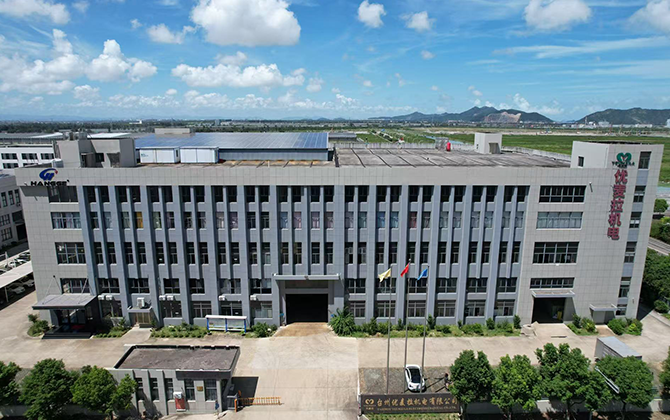
HunGerät has been making pumps for 25 years, so they know what performance needs wastewater transfer systems have. Our production methods are set up to give buyers of effluent pumps constant quality, stable specifications, and a steady supply.
HunGerät makes many types of wastewater pumps, such as effluent, sewage, cutter, and drainage pumps. This knowledge helps us make the best hydraulic designs to handle cleaned wastewater with small solids in it while lowering the risk of blockages.
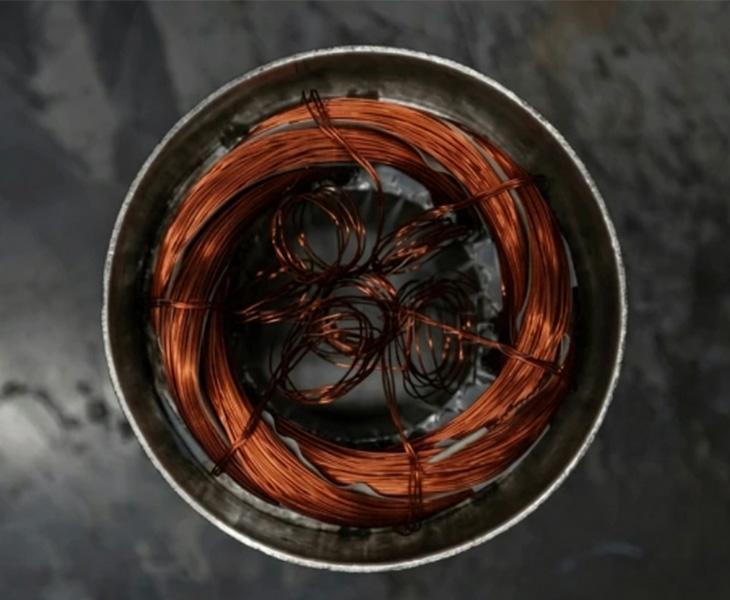
We do our own copper motor winding, which gives us better control over the quality of the motor, its stability while running, and the regularity of our production. This helps make sure that the pump works reliably in continuous-duty sewage pumping situations.
We have different discharge sizes, flow rates, material choices, and float switch setups. This helps choose the correct discharge pump for septic systems, wastewater treatment plants, and drainage systems.
HunGerät lets you change things like logos, packaging, voltage, frequency, cable lengths, materials, and product specs. These OEM services help importers and sellers make product lines that meet the needs of the local market.
Our team keeps you informed at all times during the order process, from model selection and quotes to production updates and after-sales support. This helps support large sales and long-term supply plans, especially when combined with stable production capacity.
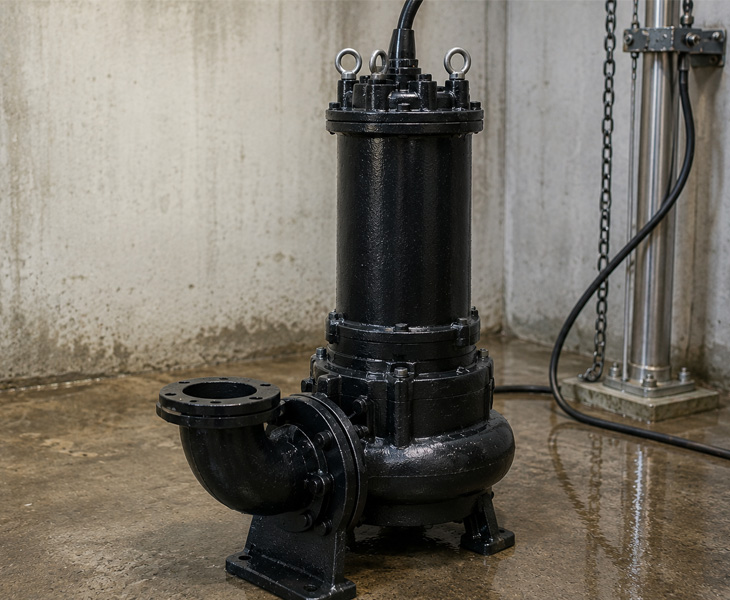
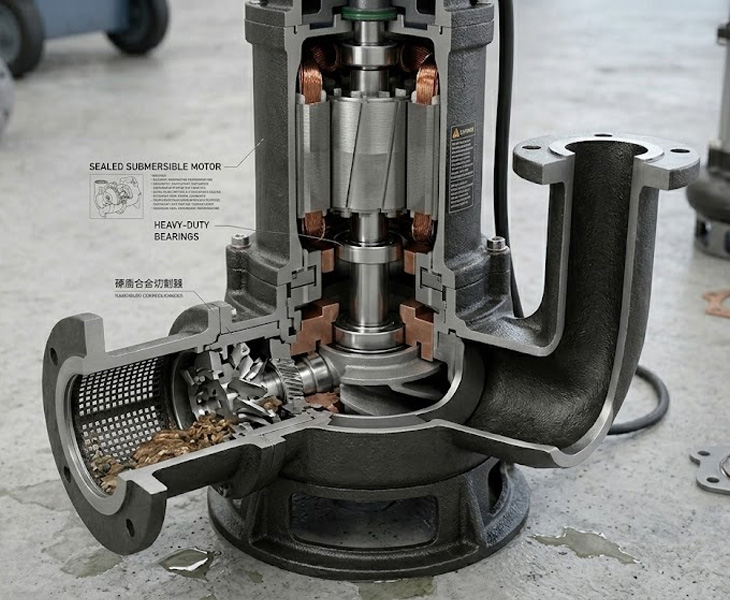
Large Free-Passage Hydraulic Design
HunGerät Effluent Pumps are made to handle cleaned wastewater that has small solids suspended in it. The hydraulic tubes let wastewater move smoothly through the pump at up to 15 m³/h. They also help lower the risk of blockages caused by particles that are common in septic effluent.
Cast Iron Impeller Construction
Some HunGerät Effluent Pumps have impellers made of cast iron, which is stronger and less likely to wear out than lighter options. This design helps keep the hydraulic performance stable during long-term wastewater transfer uses and frequent start-stop cycles.
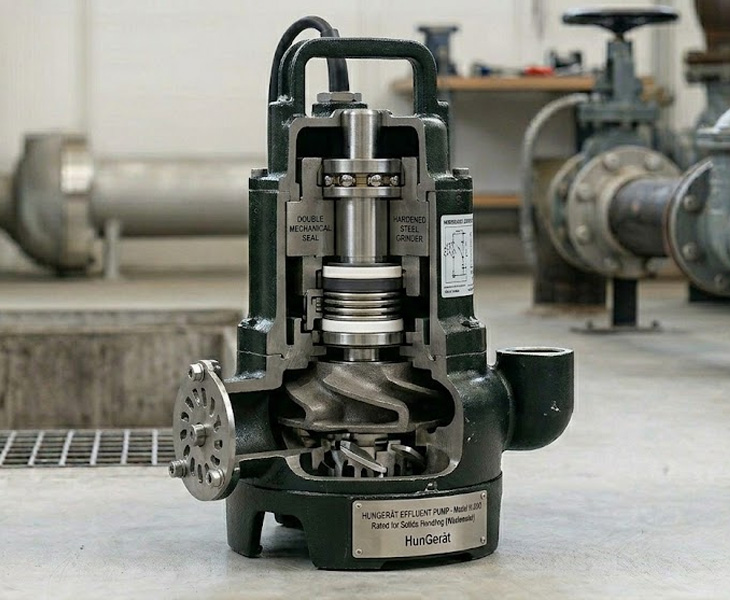
Ceramic-Graphite Mechanical Seal System
HunGerät Effluent Pumps have mechanical plugs made of ceramic, graphite, and ceramic. This sealing combination lowers the chance of leaks, makes sealing more reliable, and supports longer service life in settings where wastewater is pumped continuously.
IPX8 Waterproof Motor Protection
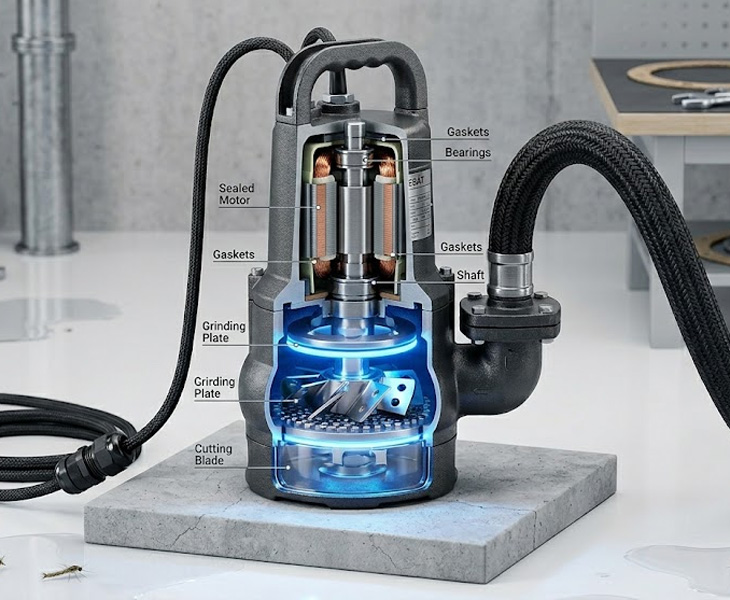
All of HunGerät’s effluent pumps are protected by IPX8 and can work underwater up to 5 meters deep. This lets your effluent pump work safely in places like septic tanks, wastewater pits, and drainage rooms where it needs to work reliably underwater.
Copper Motor Winding
Copper motor windings in HunGerät Effluent Pumps make the power flow stable and help the heat escape better. This helps the motor keep working at the same level of efficiency even when it’s running for long amounts of time or being pumped many times.
Effluent Pump Application Areas

HunGerät Effluent Pumps are made to move cleaned wastewater from septic tanks to other places after the solids have settled. These pumps help move waste water quickly to drain fields, treatment units, or release systems, and they can handle small particles that are in the water.

Automatic drainage is often needed to keep collection pits and chambers for keeping wastewater from overflowing. Effluent pumps are a reliable way to move wastewater, and they can be fitted with a float switch that lets them run automatically based on the level of the liquid.
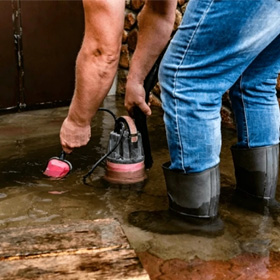
Homes, villas, and other residential properties with septic systems need reliable flow between treatment steps for the waste water. HunGerät Effluent Pumps can easily work at depths of up to 5 meters and transfer wastewater all the time.
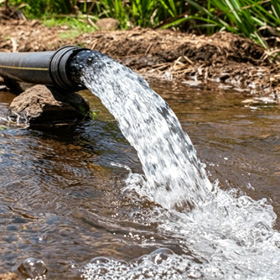
Animal farms and other agricultural sites often produce wastewater that has small solids suspended in it. Effluent pumps help move cleaned wastewater so that it can be stored, thrown away, or used again, all while keeping the flow steady during normal operation.
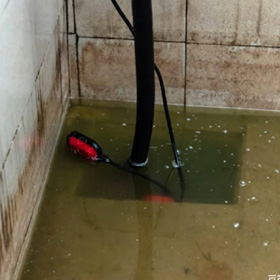
Small treatment systems need pumps that can move water that has only been partly treated without touching big solids. HunGerät Effluent Pumps can move wastewater that has been cleaned between tanks, filtration units, and places where it is dumped.
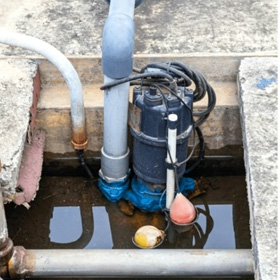
Effluent pumps are a useful way to move water that has small particles suspended in it in places like wastewater pits, drainage tanks, and public water systems. Copper motor winding, IPX8 security, and a strong build all help make it work reliably for a long time.
A sewage pump is made to handle heavier wastewater with bigger solids, while an effluent pump is made for treated wastewater with small solids suspended in it.
No. Effluent pumps are used for garbage that has been cleaned up by separating the solids. A sewage pump should take care of raw sewage.
Most effluent pumps are made to handle small solids that are floating in water. Before making a choice, you should always check the maximum solids-handling standard.
Depending on how it is used, how long it runs, and the quality of the wastewater, a sewage pump that is the right size and is well taken care of should last between 5 and 15 years.
Some of the most common reasons are dry runs, voltage changes, clogged impellers, broken float switches, worn seals, and the wrong size pump.
A lot of heavy-duty effluent pumps are made to work continuously, but the duty cycle should always be the same as what the maker says.
The pump may not be able to handle the load if it cycles too often, empties slowly, overflows, or runs for too long of a time.
Most submersible sewage pumps are made to be mounted vertically. Installing something horizontally should only be done if the maker says it’s okay.
Cast iron lasts a long time and doesn’t cost much, but stainless steel is better at resisting corrosion in harsh wastewater conditions.
Yes. When the pump stops, a check valve helps keep trash from going back into the tank.
Every 6 to 12 months, most systems should be checked to make sure the pump is working, the float switch is working, and the outflow line is in good shape.
Most of the time, short cycling is caused by float switches that are not set correctly, pools that are too small, or pumps that can’t handle the load on the system.
Running the pump dry can hurt the mechanical parts, make the motor too hot, and cut the pump’s useful life by a large amount.
Yes. Gray water from sinks, showers, and laundry systems, as well as partly treated wastewater, are often pumped out using effluent pumps.
Most effluent pumps come in voltages of 110V, 220V, 380V, 415V, and others based on where they are used.
Power Consumption (kW) × Operating Hours × Electricity Rate can be used to get an idea of the cost of running a business.
The basin should be the right size to keep the number of start-stop processes to a minimum while still holding enough wastewater between pumping events.
Things like dirt around the impeller, worn bearings, cavitation, mounting parts that aren’t tight enough, or problems with the motor could be to blame.
Yes, as long as the needed flow rate, head, and volume of wastewater stay within the pump’s helpful range.
Duplex pump systems, standby pumps, engine backups, and battery-powered alarm systems are all common types of backups.
Vertical float switches are often used in pump pools that aren’t very wide, while tethered floats need more room to work.
Maintenance needs can be cut down by making sure the system is the right size, checking it regularly, using automatic level controls, and keeping big things out of the system.
Yes. Many businesses, schools, restaurants, and light industrial sites use effluent pumps to move wastewater from one place to another.
Buyers may look for CE, ISO, UL, CSA, or other safety and compliance approvals, depending on the market.
Before choosing an effluent pump manufacturer, you should look at their manufacturing experience, production capacity, quality control systems, ability to customize, wait times, technical help, and the reliability of their long-term supply.
How to Pick the Right Effluent Pump for Your System
First, make sure you know how much garbage needs to be moved. Use the formula: Flow Rate (m³/h) = Wastewater Volume (m³) ÷ Discharge Time (h) to find the flow rate that you need. For example, the flow rate needs to be 12 m³/h if 6 m³ of garbage needs to be dumped in 30 minutes. This is how much the chosen HunGerät Effluent Pump should be able to handle. Different models in our range have flow rates between 10 and 15 m³/h. For higher volume needs, bigger models can reach up to 140 m³/h.
Next, figure out the total flow head. Add the height of the vertical lift and the expected friction losses in the pipe. To give you an idea, if the wastewater needs to be lifted 5 meters and the pipeline causes a friction loss of about 2 meters, then the pump head needs to be 7 meters. The Effluent Pump needs to be able to set the flow rate at this working head as well as at zero head.
Then, check the state of the wastewater. Effluent pumps are made to handle cleaned wastewater that has small solids suspended in it. A sewer pump might work better if there are bigger solids, sludge, or fibrous materials in the water. Choosing the right type of pump can help keep it from getting clogged and cause upkeep issues.
You should also look at the installation conditions, such as the depth of the tank, the diameter of the pipes, the distance of the discharge, and the power source. HunGerät submersible sewer pumps can be installed up to 5 m deep and are protected by IPX8 so they can work reliably underwater.
Finally, pick the right material and way of control. Most sewer systems can use cast iron models, but stainless steel models are better at resisting corrosion. If automatic operation is needed, a float switch type lets the Effluent Pump start and stop itself based on the level of the wastewater.