


Whole House Booster Pump Product Highlights
- Permanent Magnet Motor with High Efficiency Output
● Variable Frequency Control for Stable Whole House Pressure
● Smart Pressure Sensor for Real-Time Flow Adjustment
● Low Noise Operation for Indoor Installation
● Automatic Start-Stop System for Daily Water Use
● OEM Branding and Bulk Supply Support
Whole House Booster Pump Supplier for Residential Pressure Systems
HunGerät whole-house booster pumps are made for home and light business water systems that need stable pressure across multiple water outlets. They can be used with showers, cooking sinks, faucets, washing machines, and water heaters as part of a single, connected home water supply system.
For your product line, this series lets you meet the needs for water pressure at multiple points with a single pump instead of several single-point pumps. It makes it easier for you to choose products, save space for your warehouses, and make it easier for international importing.
Whole House Booster Pumps by Type
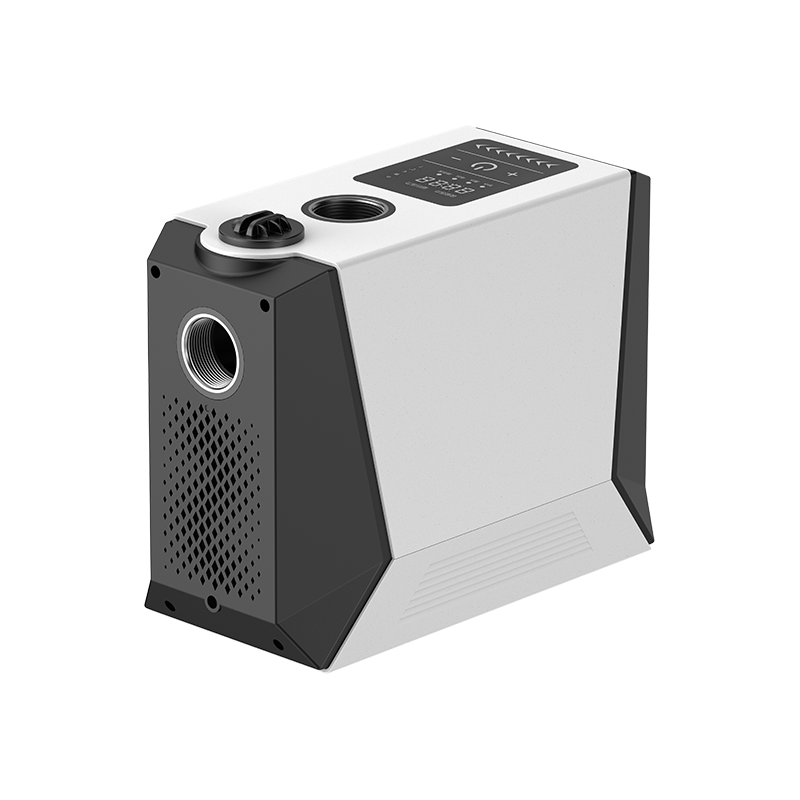 Smart Variable Frequency Whole House Booster Pump
Designed for real-time pressure adjustment across multiple water points with energy-saving operation.
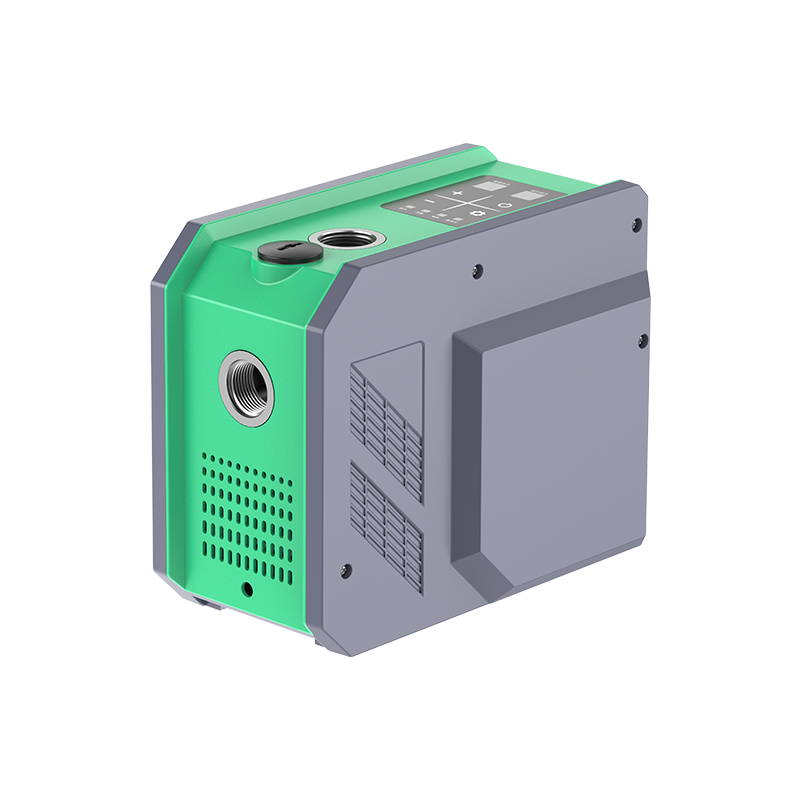 Permanent Magnet Whole House Booster Pump
High-efficiency pump for stable pressure output, reduced energy consumption, and stronger performance.
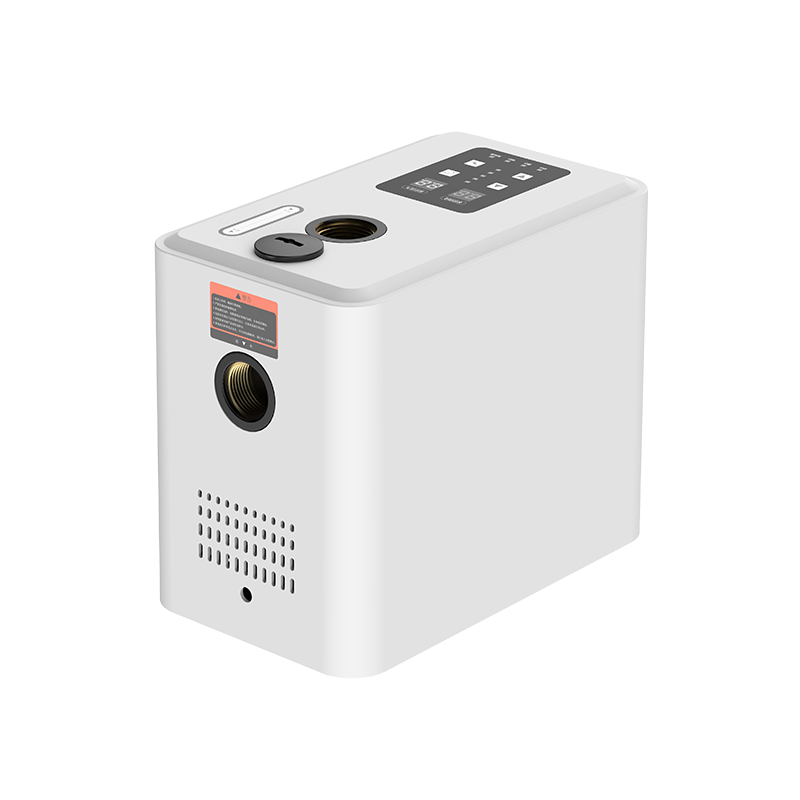 Residential Whole House Pressure System Pump
Suitable for villas, apartments, and multi-floor homes requiring consistent water pressure distribution.
Why Choose HunGerät as Your Smart Booster Pump Factory
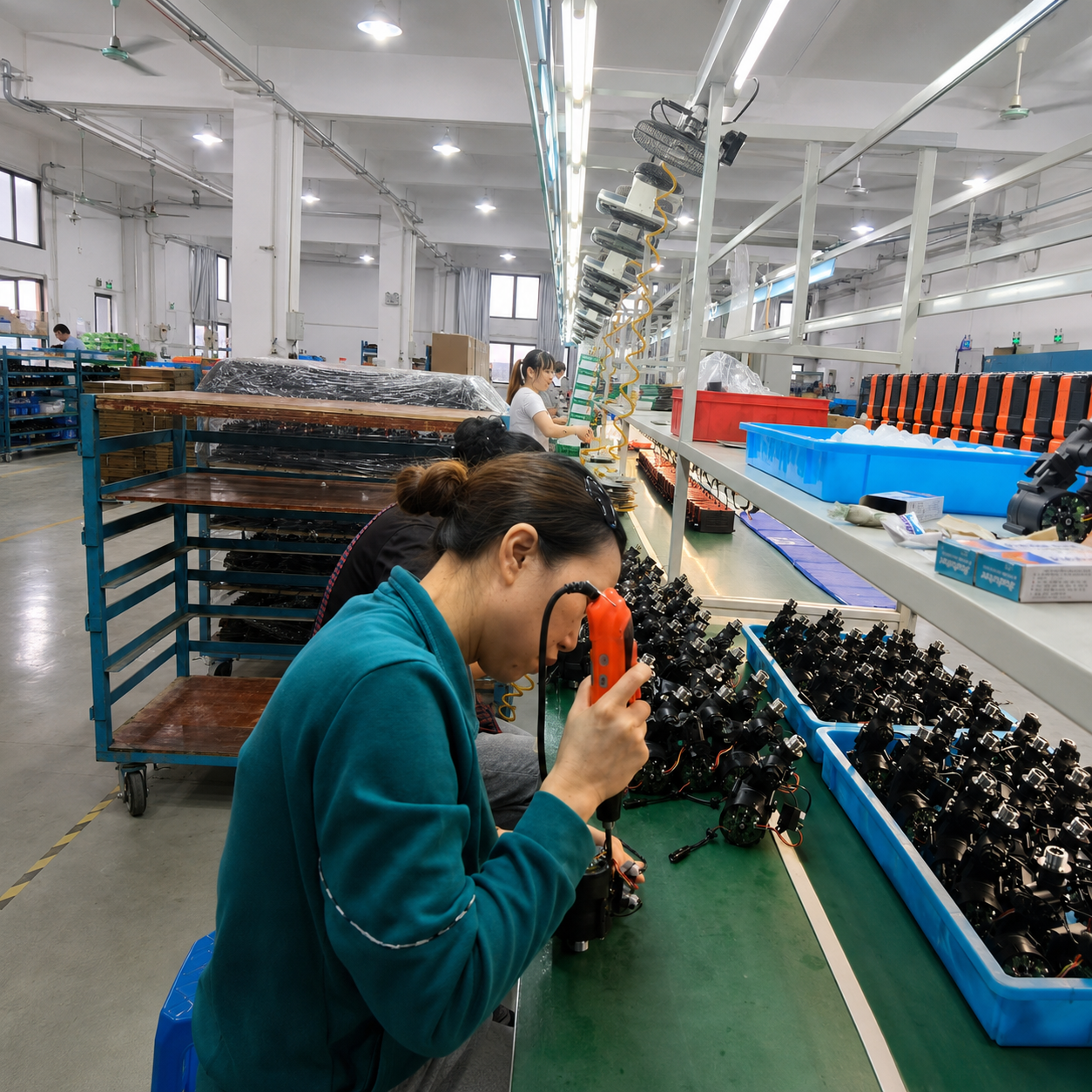
HunGerät has been making water pumps and motor systems for more than 25 years. We focus on stable production techniques, reliable performance, and high-quality products that can be used consistently. We have a better understanding of long-term supply consistency, installation conditions, and the real needs of water pressure systems in homes and small businesses.
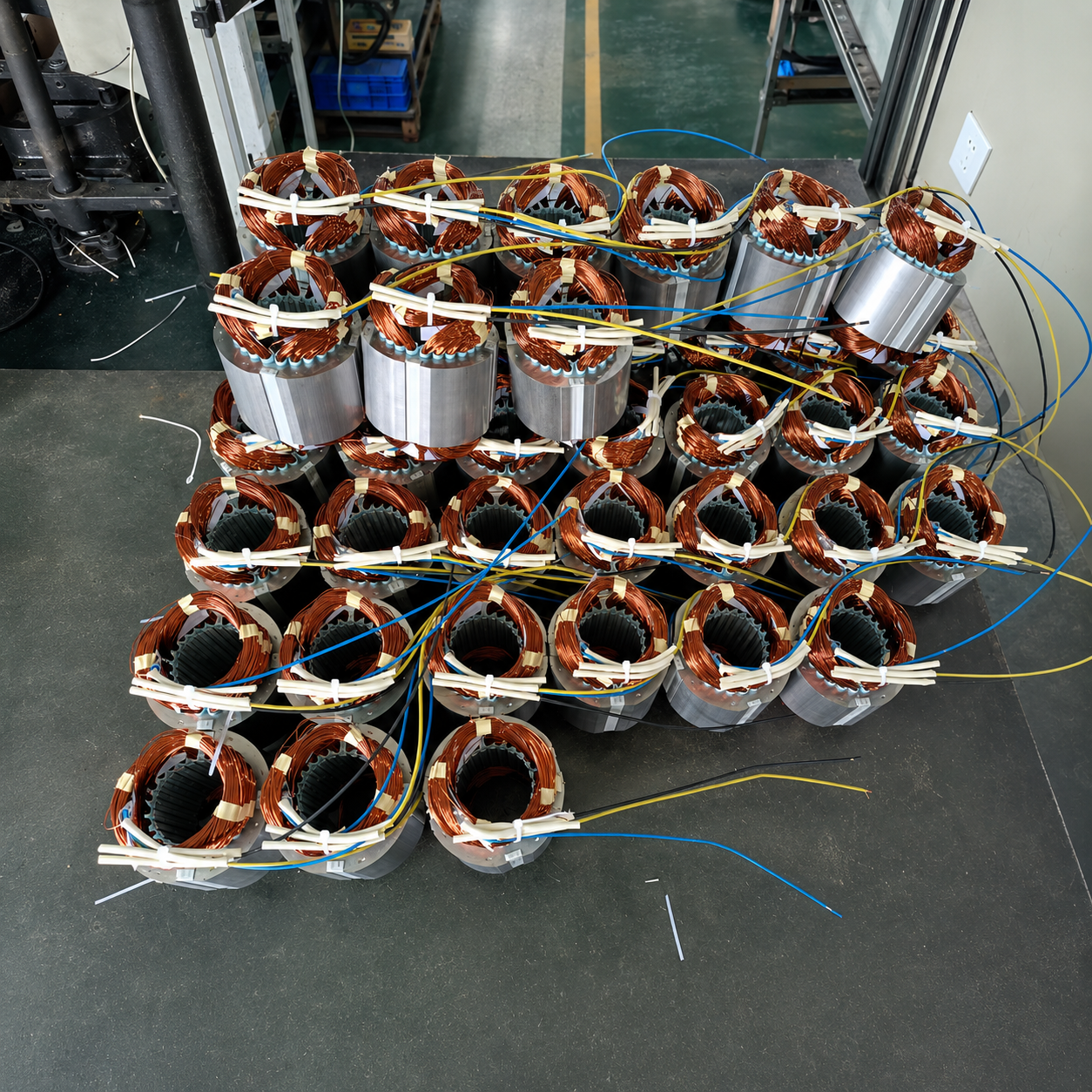
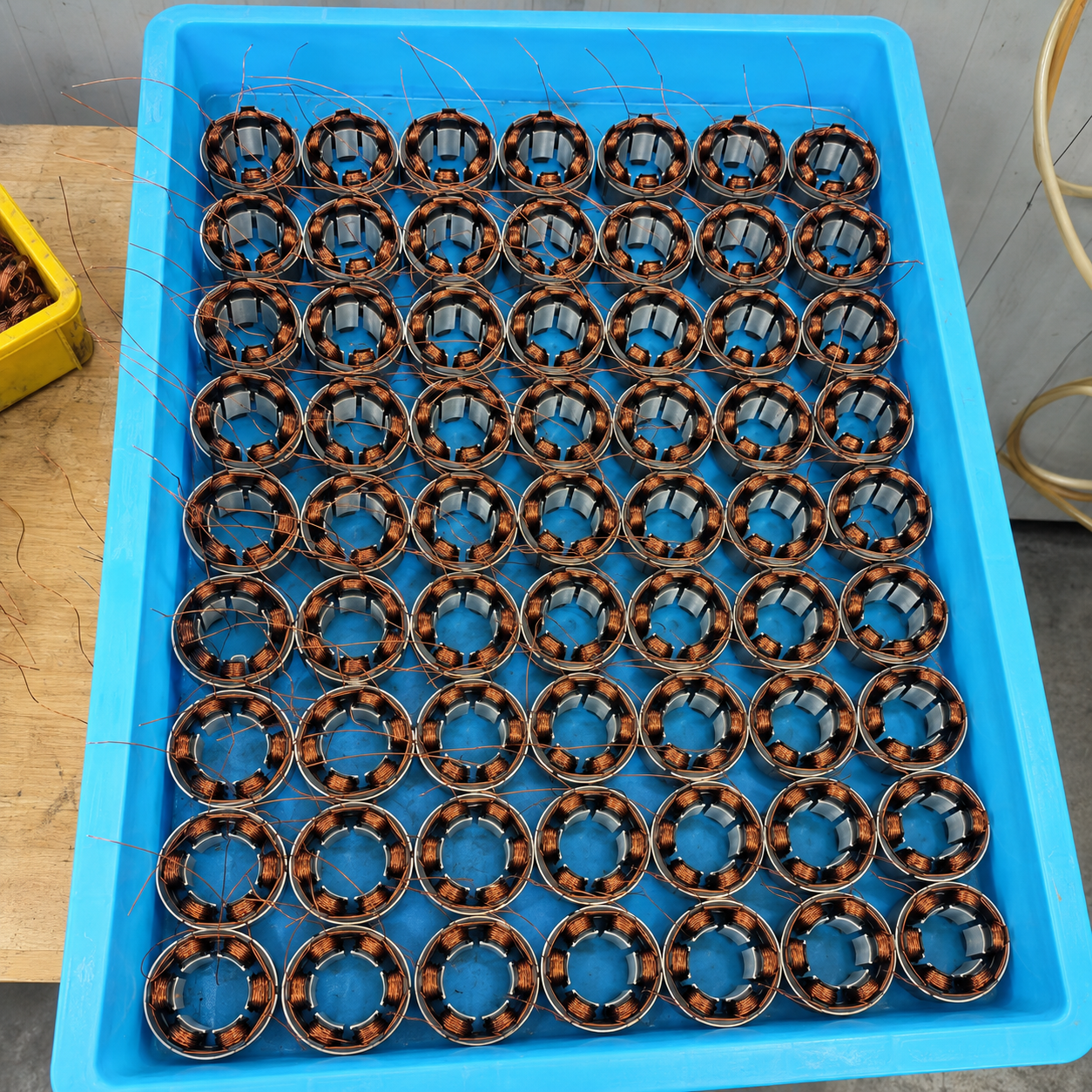
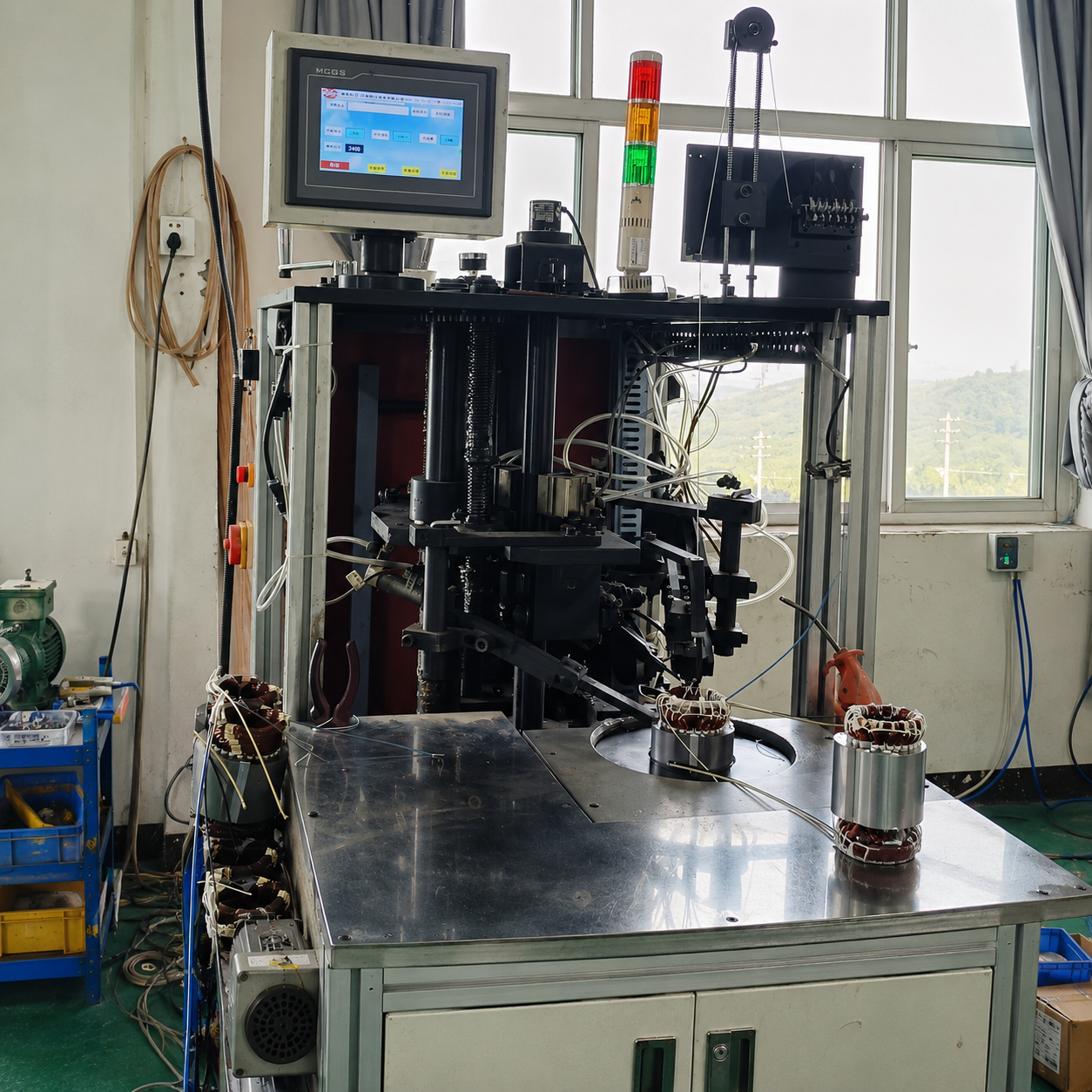
HunGerät makes our own copper windings and motors, which gives us full control over how well the motors work, how well they handle heat, and how stable they are over time. This makes sure that the power output is more stable and that the pump lasts longer, especially for whole-house booster pumps that need to work well even when the amount of water used in the home changes.
HunGerät accepts full OEM customisation, which includes voltage configuration, branding, colour, packing, nameplate, and manuals. With this information, you can easily build a brand for a whole-house booster pump.
HunGerät responds quickly to requests for quotes, technical advice, order confirmation, production reports, and help with shipping. This cuts down on communication delays and makes sure that the project goes more smoothly from the initial question to mass production, especially for orders that are placed in bulk or more than once.
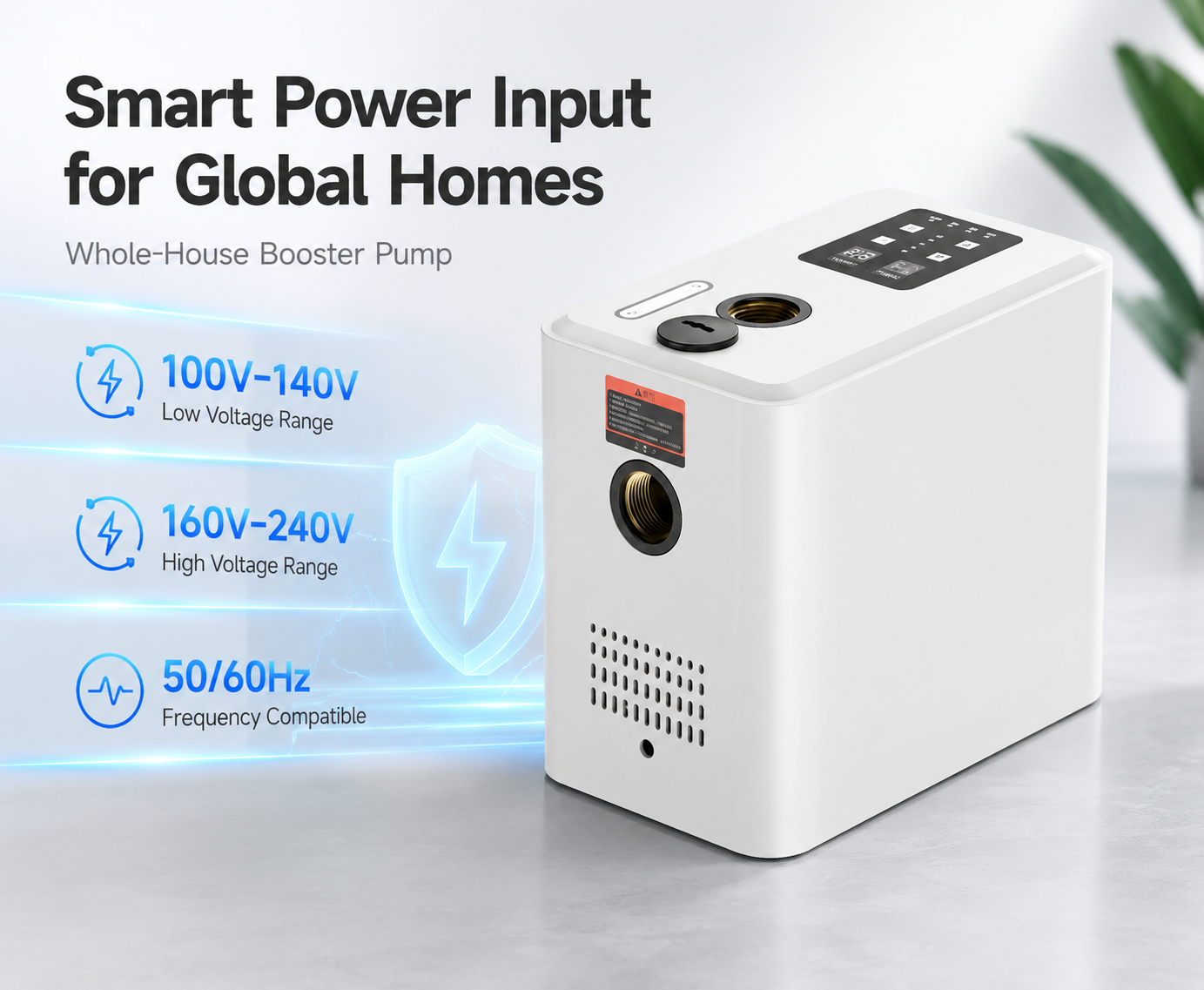
Smart Power Input
HunGerät whole house booster pumps can work with a wide range of voltages, from 100V to 140V and 160V to 240V (50/60Hz). They can also convert to stable DC low-voltage operation, so the same type can be used in places with different power standards. This means that there is less need to make and keep multiple voltage-specific versions. This makes it easier to manage SKUs, lowers inventory pressure, and speeds up ordering for distribution and wholesale chains that work in more than one country, all while keeping system performance stable under different grid conditions.
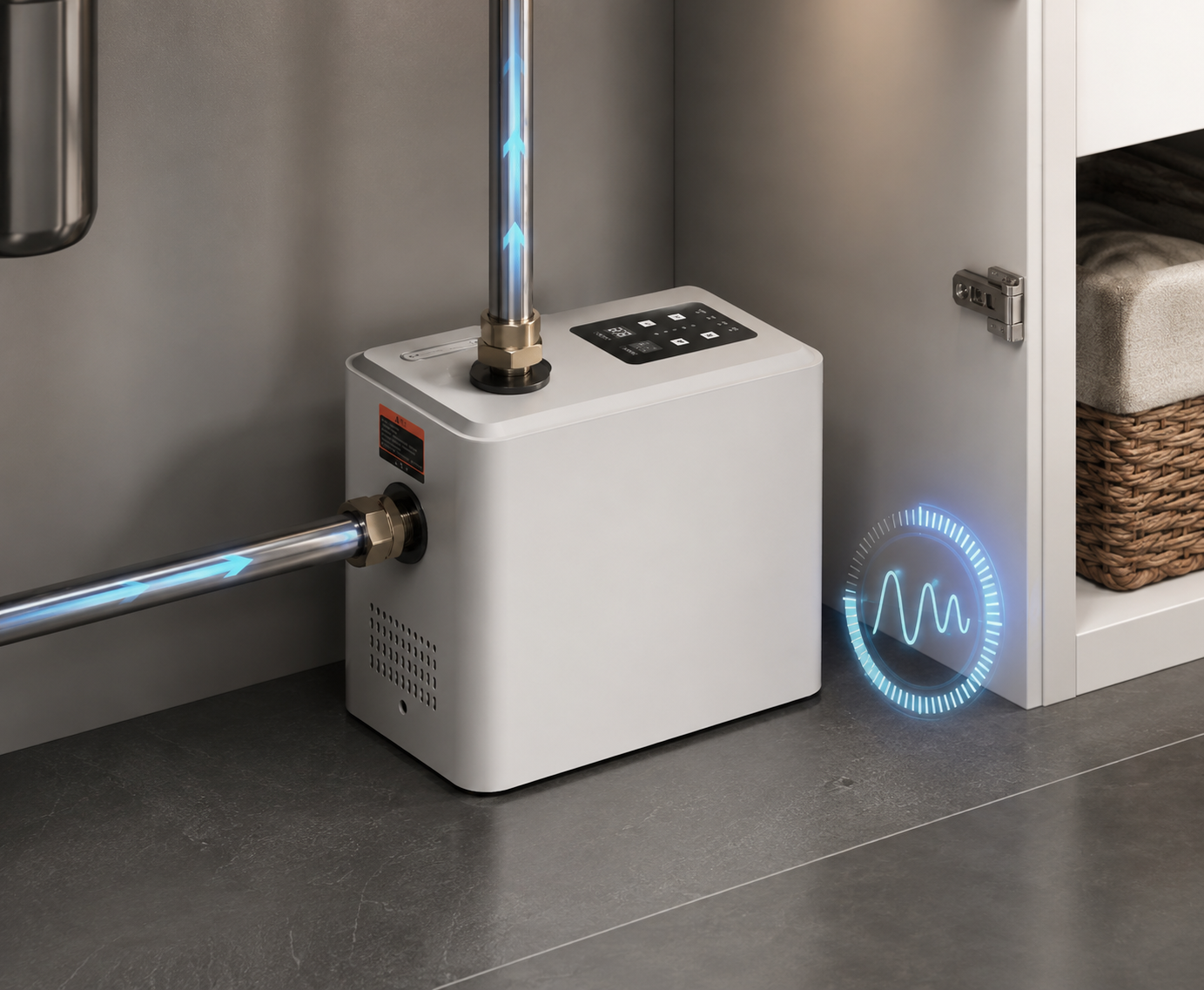
Variable Frequency Drive
The motor speed of the HunGerät whole-house booster pump changes based on how much water is being used. The system doesn’t run at full speed all the time; instead, it changes the output power based on the conditions of the pipeline. This cuts down on wasted energy use while keeping pressure fixed in whole house booster pump systems. Compared to regular fixed-speed pumps, it makes the system more efficient, regulates pressure more smoothly across the whole home’s water network, and saves up to 80% of energy in whole-house booster pump use.
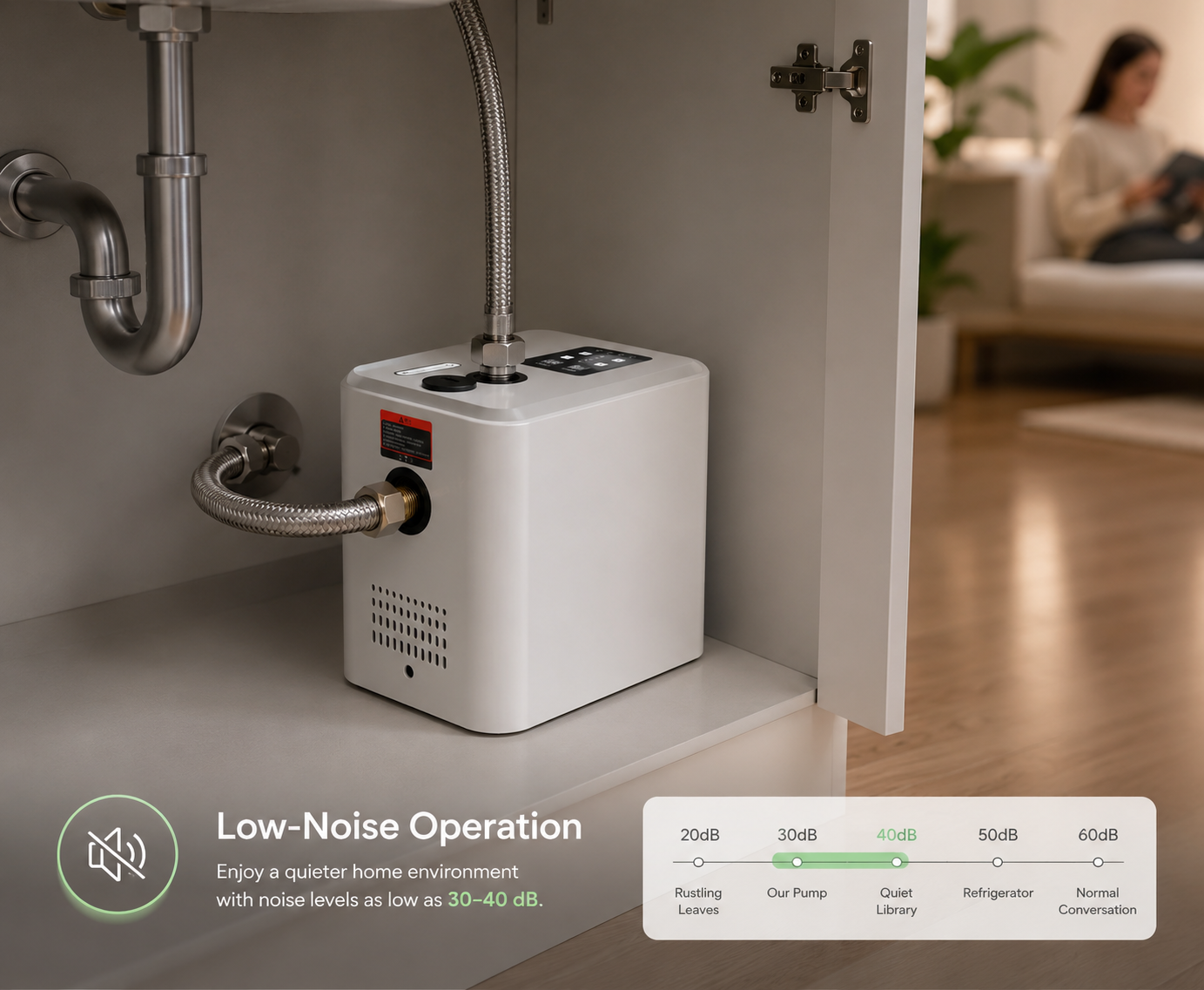
Low Noise Operation
The HunGerät whole house booster pump has an engineering plastic housing, a permanent magnet motor, and a smart, changeable frequency system that makes it run more quietly while increasing the water pressure every day. The motor runs more smoothly, the variable frequency system changes the output instead of keeping the pump running at full speed, and the plastic housing makes the operation quieter compared to metal pump structures. This whole-house booster pump makes about 30–40dB of noise when it’s running.
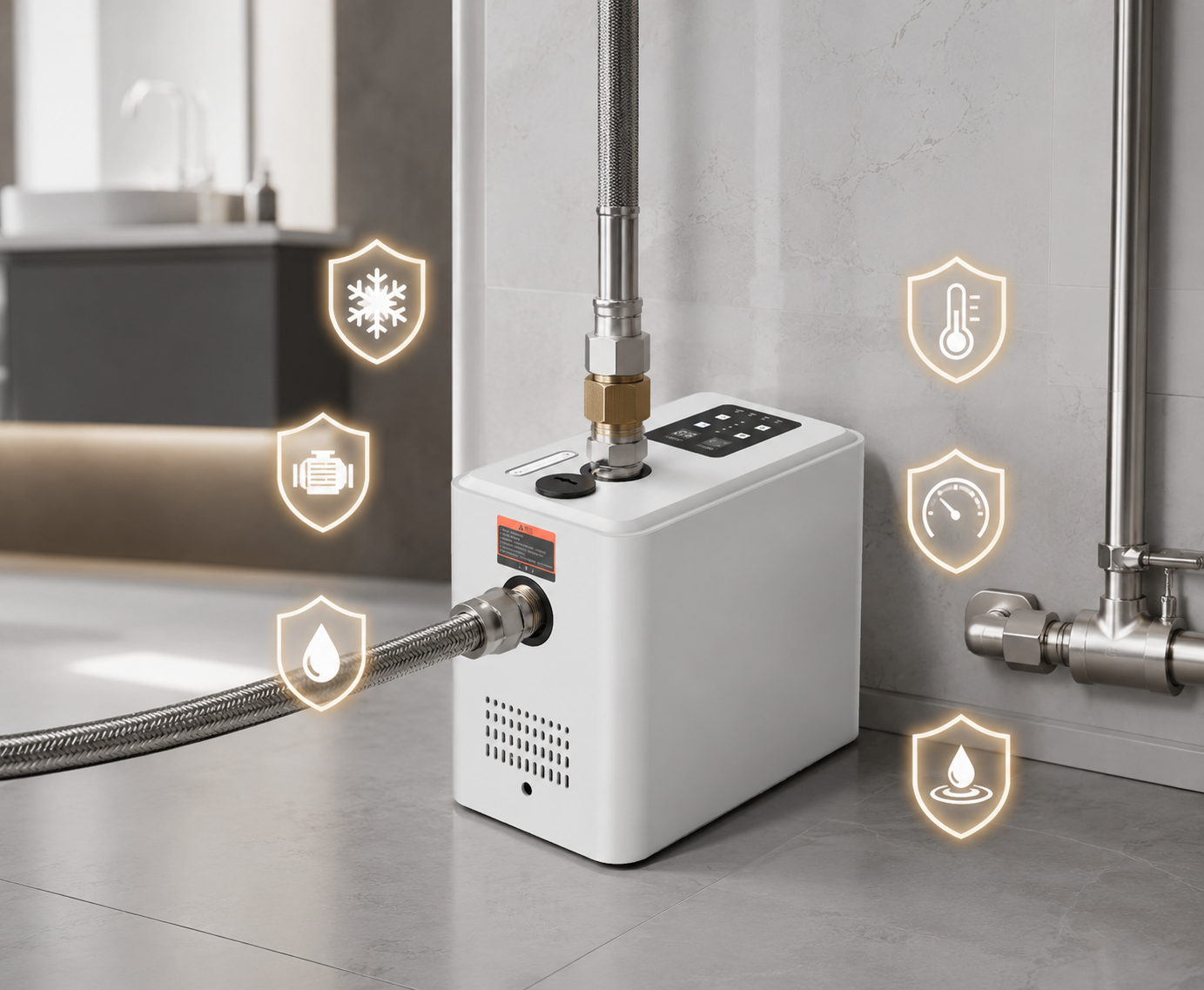
Intelligent Protection System
The HunGerät whole house booster pump is equipped with an intelligent protection system to help maintain a safer and more stable water supply operation. The pump is equipped with anti-freezing protection, overload protection, over-current protection, dry-run protection, high and low temperature protection, high-pressure protection, under-voltage protection, phase loss protection, pipeline leakage warning, and remote fault diagnosis. Such functions allow the whole house booster pump to timely detect abnormal operating circumstances, reduce the risks of system failure, and increase long-term reliability for the home water pressure system.
Reliable Factory Support for Whole House Booster Pumps

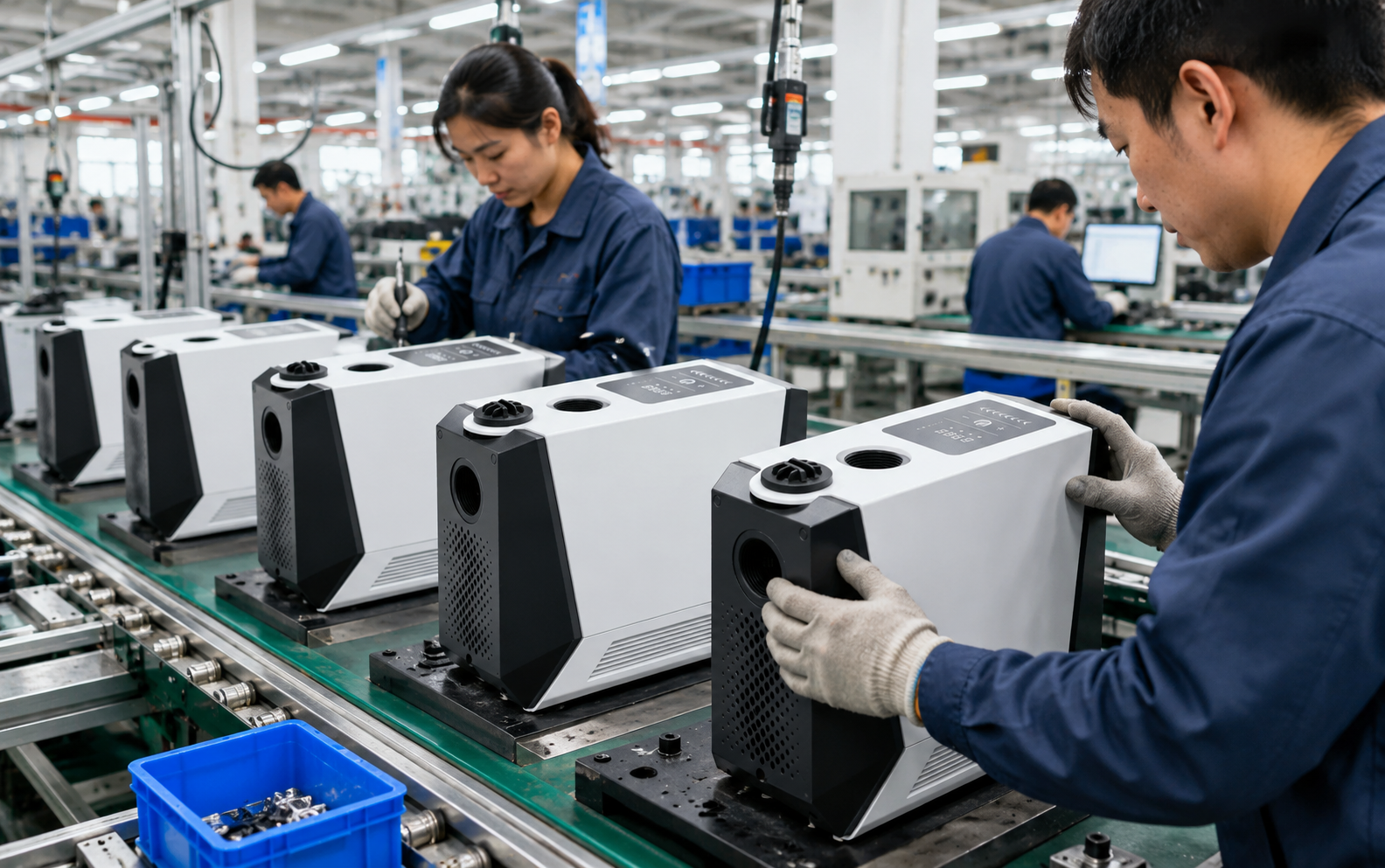
Whole-house booster pumps need stable system performance. Small problems with pressure control, sensor reaction, or motor stability can have an effect on more than one water point at the same time.
Whole-house booster pumps from HunGerät are made with a self-developed intelligent control system and high-quality imported Sensata pressure sensors. This makes the system more accurate at detecting pressure and stable in its reaction. The control system, motor, and sensor are all matched and tested before they are shipped. This helps the whole house booster pump keep stable pressure control over time and reduces problems that can happen after the sale because of bad sensing, unstable control, or inconsistent batch performance.
Whole House Booster Pump Application Areas

HunGerät whole-house booster pumps can be used in villas with multiple bathrooms, kitchens, laundry rooms, and outdoor water points that need stable pressure. The system helps keep water delivery more consistent across bigger pipe networks and lowers pressure drops when water is used at more than one point.

A whole house booster pump helps make up for the pressure loss that comes from higher floors and longer pipelines in apartment buildings. It helps the building’s water system keep pressure more even from lower levels to higher levels by ensuring stable water delivery across all floors.
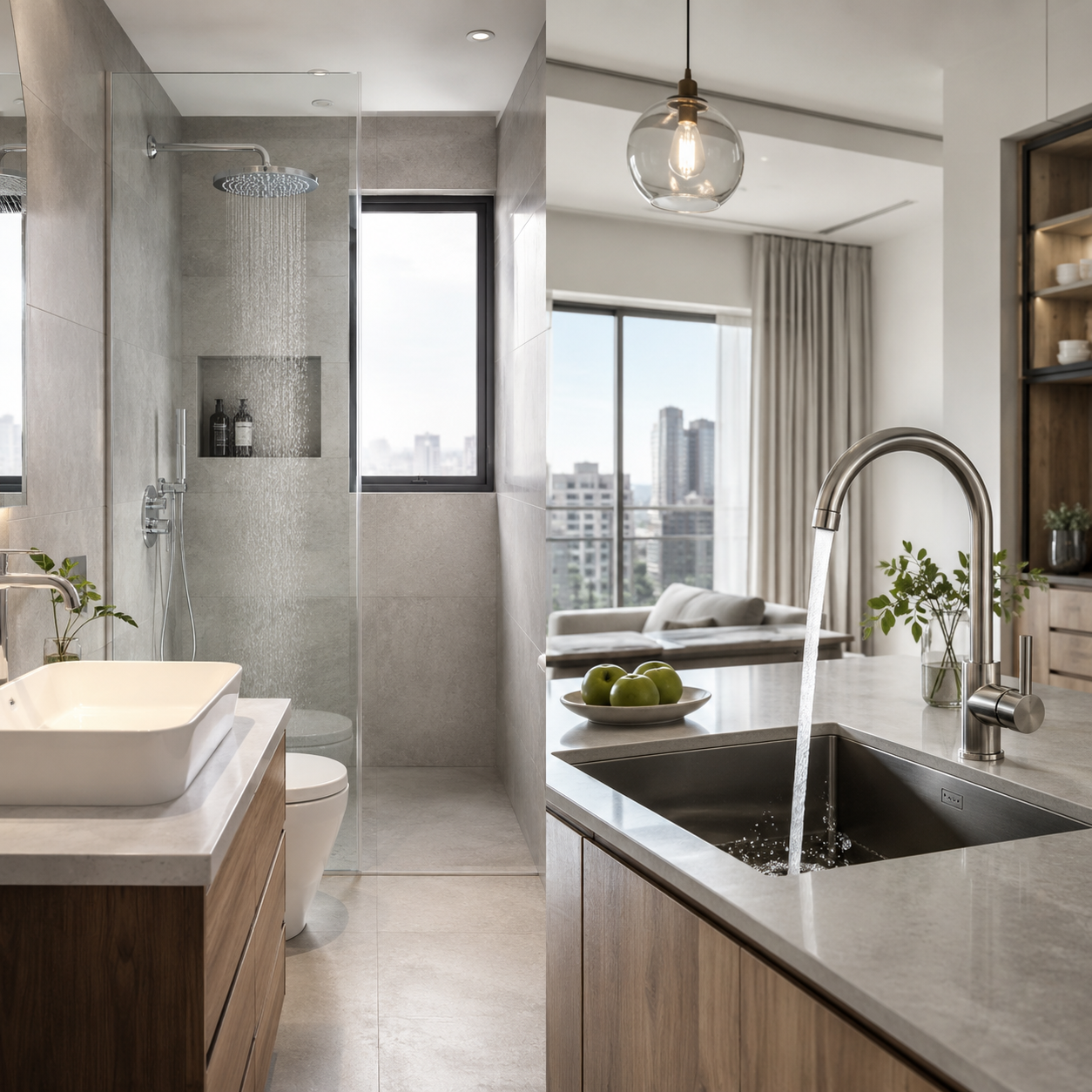
The whole house booster pump adds extra pressure to the daily water supply in flats where the municipal inlet pressure is low or unstable. It helps keep the pressure stable when the pressure isn’t enough to meet the normal water needs of a home.
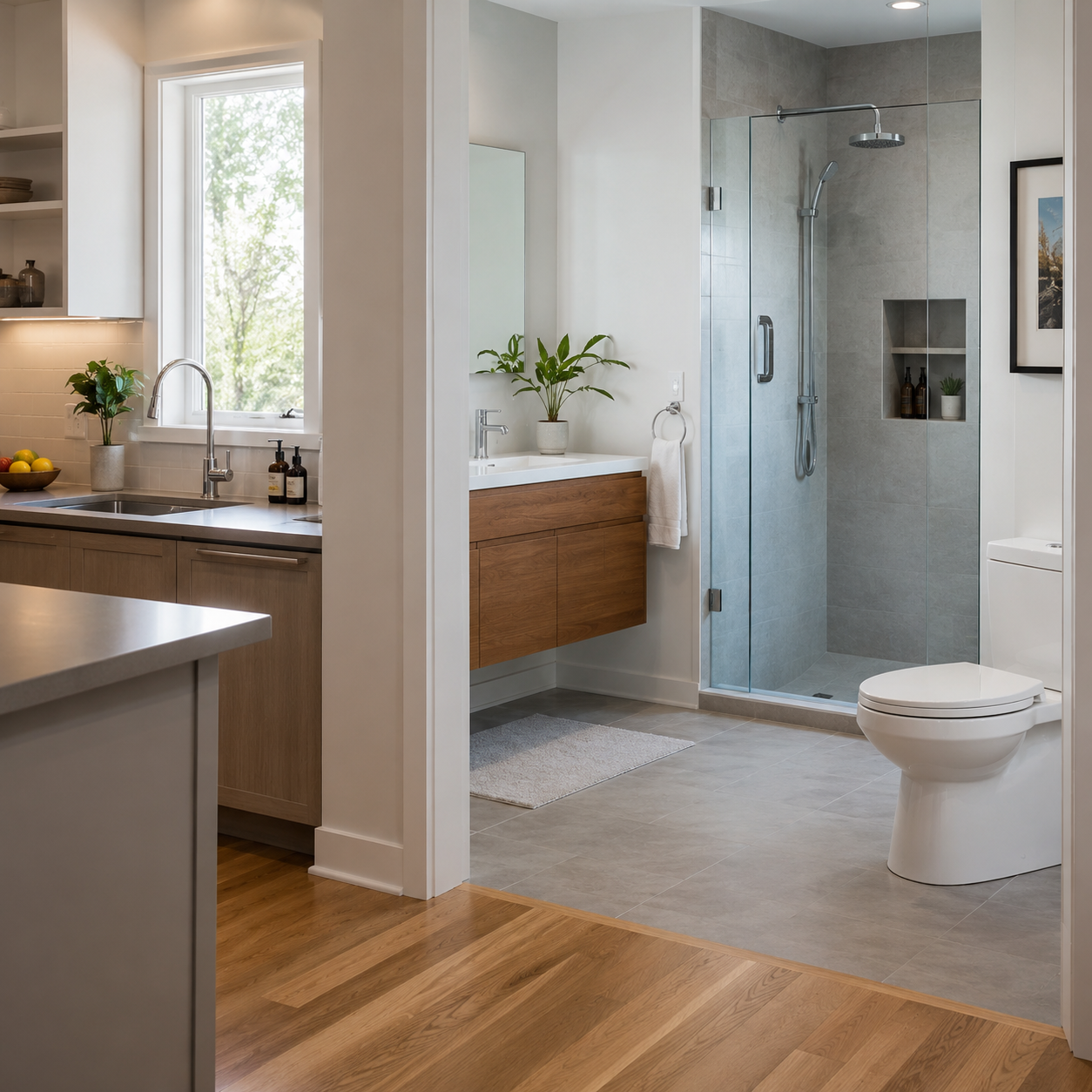
Whole-house booster pumps from HunGerät help keep the water supply system more stable by lowering the pressure changes that happen between faucets, showers, and toilets.
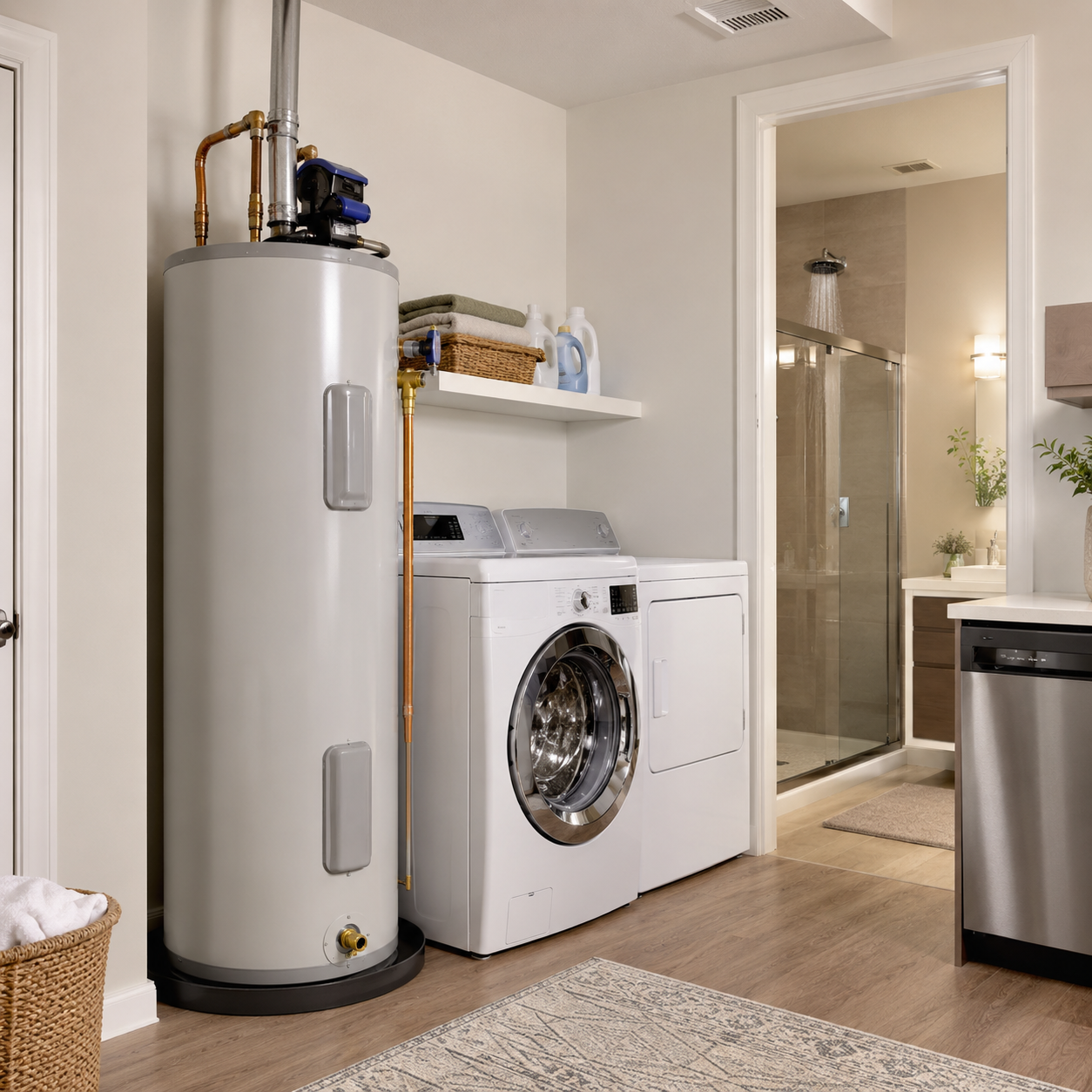
Whole-house booster pumps can keep the water flow steady with electric and gas water heaters, washing machines, and other home appliances. Having stable pressure support makes these products work better and stops problems that happen when water pressure is too low or changes too much.

The building height, pipe distance, and outlet pressure demand should all be taken into account when choosing the pressure. One bar is equal to about ten meters of water head. For different home pressure needs, HunGerät whole-house booster pumps can handle up to 10 bar.
Flow rate should be based on how much water is being used at the same time, not on how many taps there are. As a guide, 40–60 L/min is good for small homes, 60–100 L/min is good for standard homes, and 100 L/min or more is good for villas or bigger systems.
Both should be checked. Pressure tells you how much water is coming out, and head tells you how high it can go. Pump pressure should be matched to building height, pipe loss, and needed outlet pressure. And remember, 1 bar of head is equal to 10 meters of head.
Important details include the building’s height, the width of the pipes, the type of water source, the power supply, and the amount of water that is expected to be used at the same time.
Yes. Instead of using several separate point-of-use pumps, a whole house booster pump can be used for centralised pressure boosting.
It is not suitable when the inlet water source is unstable, heavily contaminated, or unable to provide enough supply for the selected pump capacity.
A pressure tank is optional, but sometimes it can help cut down on the number of starts, improve pressure buffering, and make operation easier.
How big the tank is depends on how much the system holds, how often the pump starts and stops, and how it is used. Small to medium-sized pressure tanks are often used in home setups.
Yes, but first you should check the inlet pressure and area installation rules to make sure the pump works safely and doesn’t break any water supply rules.
Yes, if the inlet pipe, water level, and suction conditions are right for the type of pump you choose, it can pump water from a storage tank.
The pipe size should match the size of the pump’s inlet and outlet. Pipes that are too small can block flow, make more noise, and lower pressure, all of which can hurt efficiency.
Outdoor installation depends on enclosure protection, ventilation, rain protection, temperature conditions, and electrical safety. HunGerät whole house booster pumps have IP65 weather-proof, can be installed outdoors.
Common reasons are choosing the wrong model, having lines that are too small, having unstable inlet pressure, having air in the pipeline, having filters that are clogged, or having the wrong system settings.
A small leak, not enough tank capacity, the wrong start pressure, an unstable inlet supply, or too much pressure loss can all lead to the machine starting up a lot.
A self-priming pump is made to pull water from smaller or non-pressurized sources, while a whole-house booster pump’s main job is to keep the pressure stable.
You can use it, but hard water might make scaling more likely. Filtration, regular checking, and choosing the right materials all help make something more reliable over time.
Importers should check the voltage, plug standard, pressure range, packaging, licensing needs, availability of spare parts, labelling, and what the local installation standards are.
Different markets have different certification needs. Electrical safety, EMC, material compliance, energy standards, and local water system needs are some of the most common checks that are done.
Compare model range, production consistency, testing process, spare parts support, technical documentation, customization capability, communication speed, and repeat order stability.
A good product line should have stable specs, clear model placement, consistent quality, packaging that is easy for the market to use, support for spare parts, and the ability to increase or decrease supply capacity.