I. Introduction
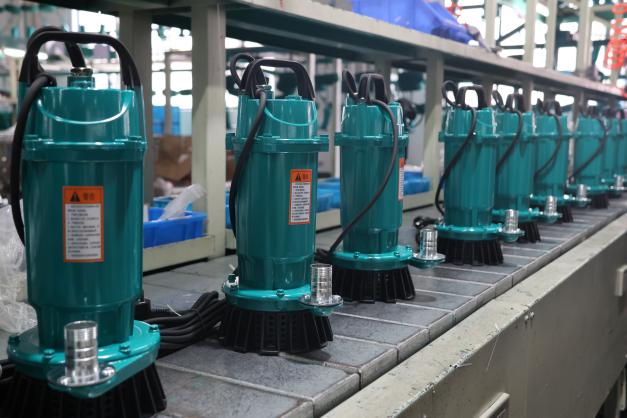
If they are not installed properly, even high-quality sewage ejector pumps can have problems like blockages, leaks, or system failures before they should. Standardised installation cuts down on the number of upkeep and emergency repairs that need to be done. This guide will explain the usual way to install sewage lift pump systems so that they work in a way that is safe, effective, and reliable.
II. Basin Deployment and Submerged Architecture
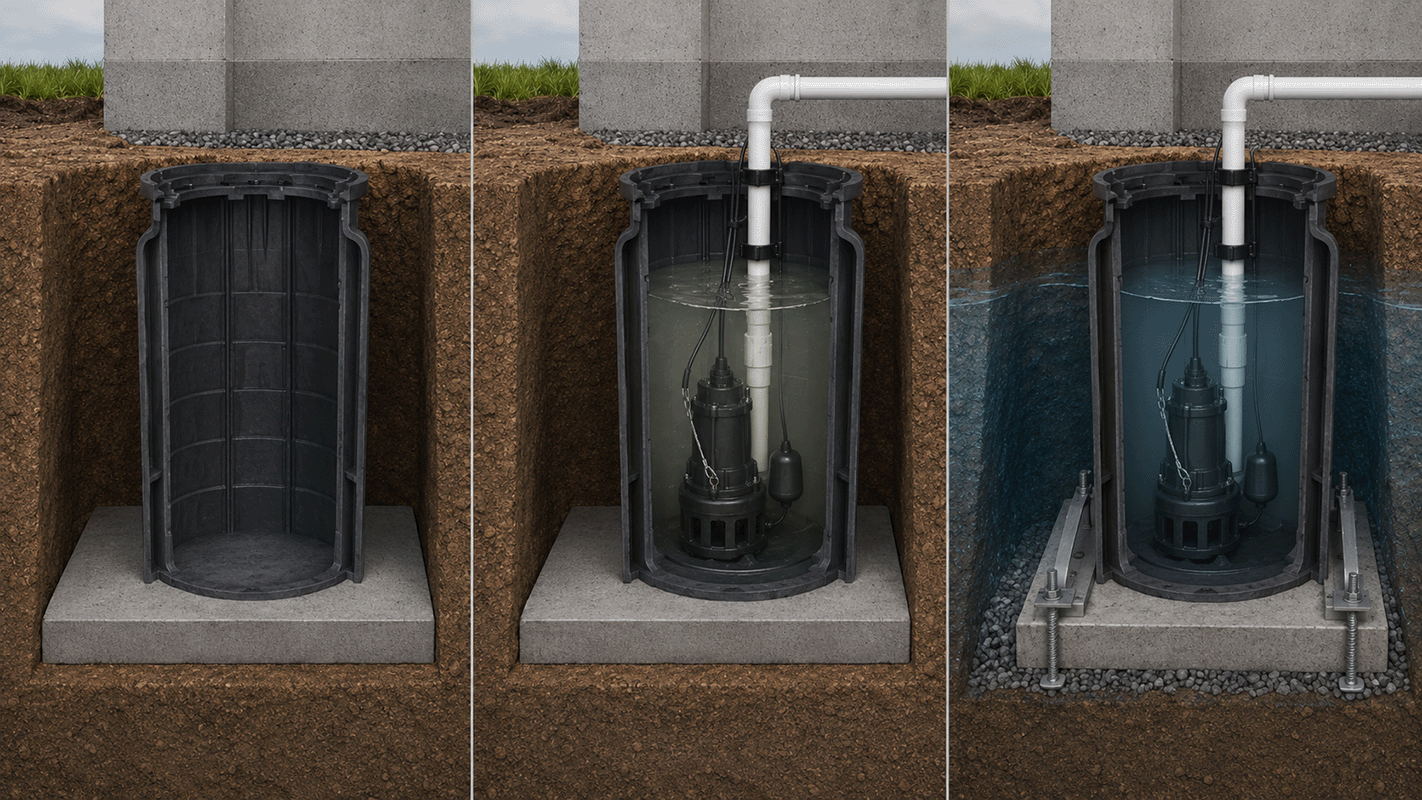
- Excavation and Structural Bedding
Make sure your pit and base are ready before you put in the sewage ejector pump system. The pit you choose should have enough room for building and upkeep.
From what we’ve seen many times, an uneven base can easily make something tilt and sink, which can cause pipes to bend and crack. A solid foundation will make the whole system more stable, so we suggest using one.
- Fully Submerged Configuration
Most of the time, sewage ejector pumps are put in place completely buried in water. The motor relies on the liquid around it to cool it down and get rid of heat. When installing the pump, it’s important to make sure that the working liquid level always covers the pump body.
This system doesn’t need any outside mechanical cooling equipment, so it takes up less room and is easier to maintain. It is important to make sure that the pump body is securely put at the bottom of the water tank during installation. It should not be swayed, tilted, or hit.
- Anti-Flotation Measures
Groundwater can get into wastewater lifting systems very easily in places with high groundwater levels or that often flood badly during the rainy season. This can cause pumps to move, pipes to burst, cables to get damaged, and eventually the system to fail.
Before building, you should check out the conditions and take strong steps to keep the structure from moving, like attaching the water pump to a base made of reinforced concrete. An anti-floating device can protect the sewage pump and keep you from having to fix major structural issues in the future.
III. Hydraulic Routing and Hermetic Sealing
- The 50mm Discharge Standard
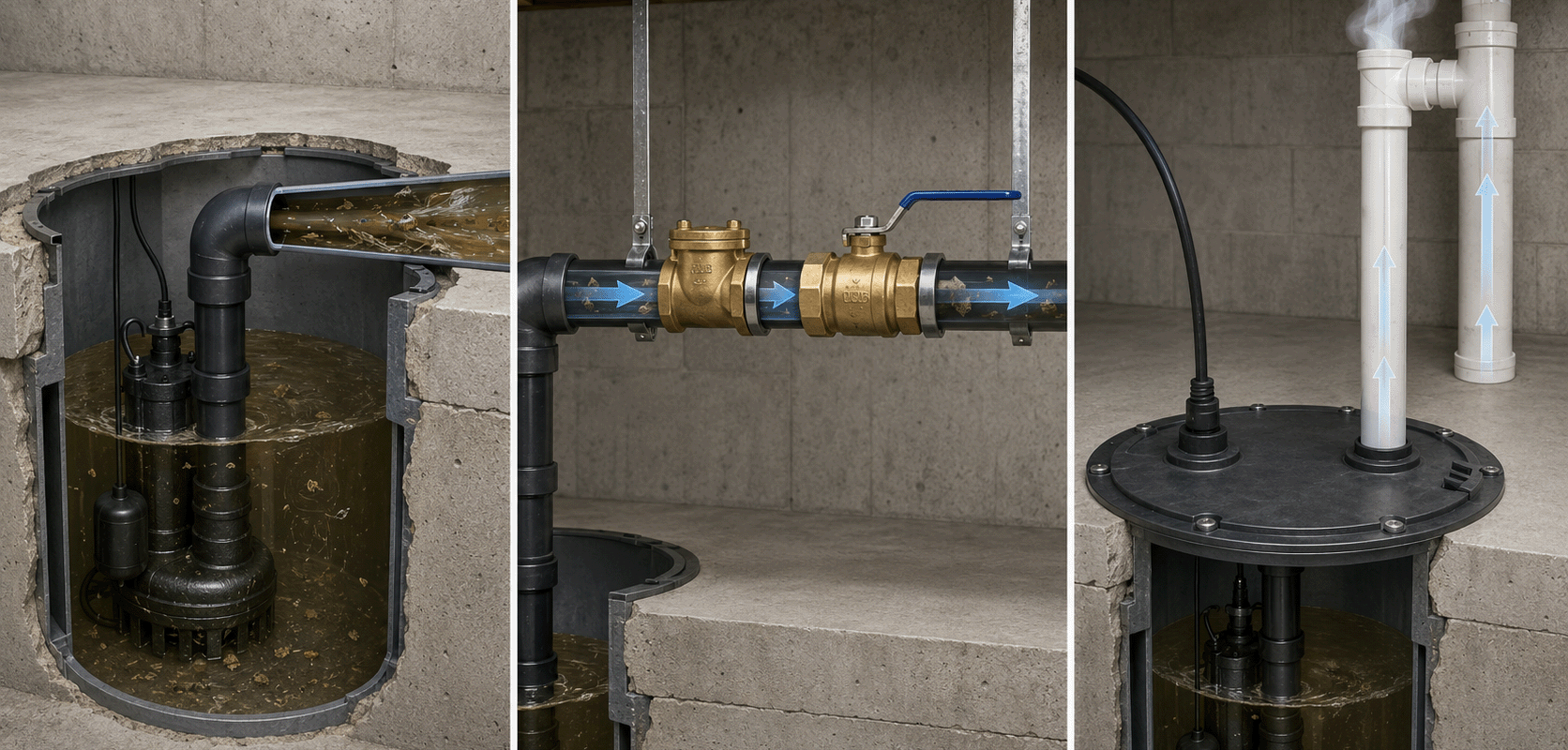
For moving impurities, the pipe’s inside width should be more than 2 inches (50 mm). If the inside width is too small, fibres, particles, or other debris in the sewage can easily get stuck in the pipe.
- Check Valve and Isolation Valve Placement
Check valves and isolation valves should be put in the right order on discharge pipes. It is best to put in the check valve first, then the isolation ball valve, making sure that the direction of the valve matches the direction of the media flow. The isolation valve can close off a section of the pipeline, making repair easier, and the check valve stops sewage from flowing backwards.
- Atmospheric Venting and Gas-Tight Seals
When they work, sewage ejector pump devices release harmful and corrosive gases. Bad sealing or not enough air flow can lead to smells, rust, and even safety risks. To get rid of harmful gases quickly, sewage ejector systems need to have their own ventilation ducts and be linked to the main ventilation system in the right way.
IV. Electrical Integration and Control Calibration
- Dedicated Circuitry
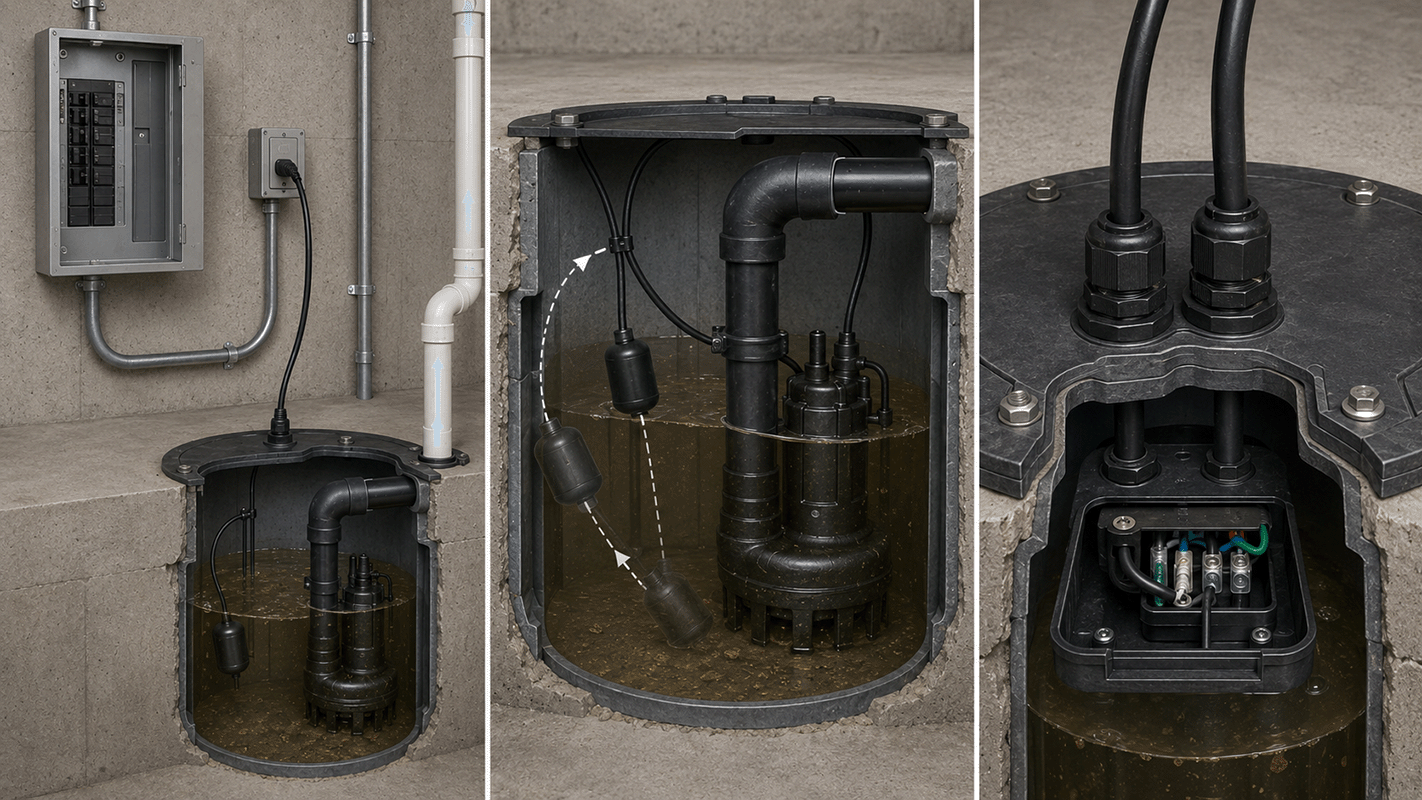
To keep the sewage ejector pump systems from sharing power with other high-power devices, they need to be linked to a separate circuit. A designated circuit makes the startup process more stable by stopping voltage drops, circuit breakers from tripping, and motors from overheating. This lowers the risk of motor burnout.
- Float Switch Geometry and Tether Sizing
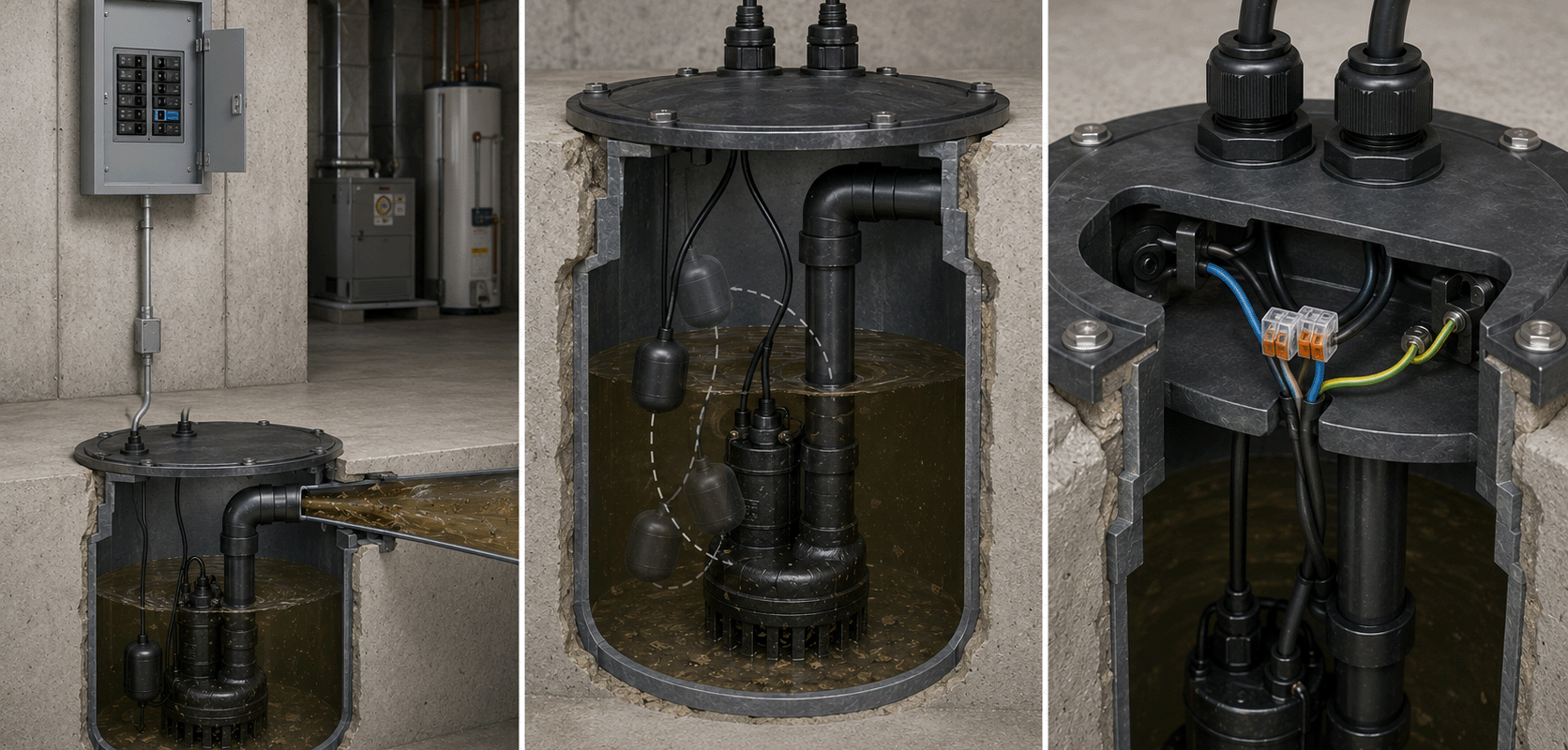
The length of the float switch’s cord and where it will be installed are also important things to think about. What if the cable is too short? The water pump might start and stop a lot. Make sure the float has enough space to move so it doesn’t hit any pipes or wires. It could make your whole system more stable and reliable.
- Hermetic Cable Gland Routing
All power cables should be kept in place and sealed with sealed cable connectors or airtight rubber gaskets.
If the opening for the cable isn’t properly covered, sulfiding gases and moisture will slowly eat away at the terminals, cables, and control parts, which can cause short circuits, bad contact, or the failure of the control system. When wire is properly sealed, it makes the system safer and lasts longer.
V. System Commissioning and Site Handover
- Clear Water Testing
The whole sewage ejector system should be tried before the plumbing fixtures are hooked up, and the system is put to use. It is important to make sure that the pump can start and stop properly according to the set and that the discharge pipeline doesn’t have any leaks or strange vibrations.
At the same time, the check valve should be checked to make sure it is installed properly and can stop backflow. It shouldn’t be attached to the real sewage ejector system until it has been tested and found to work properly.
- Inspection Checklist
We have made a shortened list of things to do. Before handing over the job site, it’s usually important to make sure that the following key things meet the requirements:
- Does the system keep air out?
- Is the system properly linked and free of any obstacles?
- Does the width of the pipe that drains the water meet the minimum requirement of 2 inches (50 mm)?
- Have you put in the check valve and the isolation valve correctly?
- Does the electricity wiring and control system work properly?
The system can be properly put into use once the above checks are done.
VI. Conclusion
Standardised installation keeps sewage ejector systems running smoothly, makes the most of the equipment’s performance, cuts down on breakdowns and upkeep costs, and increases the system’s useful life.
As a skilled company, HunGerät focuses on making dependable sewage ejector pump systems that make installation easier and make projects safer.
VII. Frequently Asked Questions
- What is the difference between a sewage ejector pump and a grinder pump?
A sewage ejector pump can move raw sewage and solid waste up to 2 inches in diameter without cutting it. A grinder pump has a macerating blade that turns trash into a fine slurry. It is usually used for systems with high head pressure or small-diameter output pipes.
- Do you need a GFCI breaker for a sewage ejector pump?
No. It is strongly suggested that you connect a sewage pump to standard dedicated breaker. A GFCI breaker may trip by accident when a heavy-duty underwater motor starts up because of the high electrical inrush current. This can cause the system to shut down without warning and flood.
- Should you drill a weep hole in the sewage pump discharge pipe?
Yes, installers should make a 3/16-inch weep hole in the PVC pipe that goes out of the basin, right below the check valve. This stops an airlock and makes sure that when the motor starts, the fan can physically push the water column.
- What schedule PVC pipe is required for sewage pump discharge?
The lines for both the discharge and air vent must be made of at least Schedule 40 PVC. Because it can handle the physical shock better, Schedule 80 PVC is best for industrial uses that have higher hydraulic pressure and a lot of cycling.
- Can you use a horizontal check valve on a sewage ejector pump?
No, you need to use a full-flow vertical swing check valve. When installed horizontally, solid waste can get stuck in the hinge of the valve. This stops the flapper from closing all the way, letting water keep flowing back into the basin.
- What is the required vent pipe size for a sewage ejector basin?
All plumbing codes need a special vent pipe, usually 2 or 3 inches in diameter depending on the code, to be connected directly to the sink lid. This pipe is used to safely send dangerous gases like methane and hydrogen sulphide outside the building.
- Can a sewage ejector pump run during a power outage?
Standard AC-powered submersible ejector pumps will not operate during an outage. Facilities must incorporate a dedicated mechanical generator or a specialized high-amp DC battery backup system to maintain wastewater routing.
- How do you calculate the Total Dynamic Head (TDH) for a sewage pump?
To find TDH, you have to measure the static lift, which is the exact height from the pump’s output to the main sewer line, and then add the friction loss caused by the pipe’s length, elbows, and internal valves.
- Why does a newly installed sewage pump vibrate excessively?
If the pump is vibrating too much, it’s likely that it’s not sitting flat on the concrete basin foundation, that the discharge pipe doesn’t have any rigid strapping, or that construction debris is partly blocking the impeller housing.
- Are union fittings required on a sewage pump discharge line?
Yes, true union fittings should be put in place right above the isolation valve. This method used in engineering lets contractors easily disconnect and remove the pump for maintenance without having to cut into the main plumbing system.
- Can a sewage ejector pump handle feminine hygiene products?
Not at all. Standard ejector pumps are only made to handle poop and toilet paper. Items that don’t break down, wet wipes, and feminine products will quickly get caught in the rotor, blocking it and overloading the motor.
- How long does a commercial sewage ejector pump typically last?
If installed correctly and not exposed to any non-biodegradable waste, a cast-iron submersible sewage pump should work well for 7 to 10 years before the motor bearings or mechanical seals need to be replaced by the factory.
- Is a high-water alarm necessary for a sewage lift station?
Yes, it is very important to put a separate high-water alarm that sounds and lights up. It lets facility managers know right away if the float switch stops working or the pump gets stuck, long before the basin floods.
- How far can a sewage ejector pump push waste horizontally?
Depending on the motor horsepower and pipe width, standard pumps can move waste hundreds of feet horizontally as long as the pipe stays at a strict 1/4-inch per foot gravity slope after the first vertical lift.
- What causes a sewage ejector pump basin to emit indoor odors?
Indoor smells are an obvious sign that the system is not hermetically sealed. The cause is defective rubber basin gaskets, improperly sealed electrical wire grommets or a blocked atmospheric vent pipe forcing sewer gas out of the lid.
- How do you protect a sewage ejector pump from freezing?
The submerged pump is safe, buried deep under the underground basin, but all outside discharge piping must be extensively insulated or trenched completely below the local frost line to avoid ice build-up that might break the system.
- What is the difference between a simplex and duplex sewage pump system?
A simplex system, for normal home loading, has one pump. Two alternating pumps, controlled by a smart controller, make a duplex system, handling huge commercial flow rates and providing absolute redundancy if one motor fails.
- Can you install a sewage ejector pump outdoors?
Yes, outdoor installations are standard, providing the fibreglass or poly basin is buried with reinforced anti-flotation concrete anchors and has a heavy-duty, traffic-rated cover if it is under a driveway or pedestrian walkway.
- Why is my sewage pump short-cycling?
The main reasons for short-cycling (quickly turning on and off) are a float switch cable that is the wrong size, a broken check valve that lets the water in the pit keep draining back up, or a basin that is too small for the flow rate coming in.
- Can a standard sump pump be used as a sewage ejector?
No. Clear-water sump pumps that aren’t made with heavy-duty vortex impellers and 2-inch solid-handling space can’t handle raw sewage. If you use a sump pump for wastewater, the pump will break down right away, and biohazards will spread.