I. Introduction
Hot water circulation pumps are available as fixed-speed, three-speed, or variable-speed units. They may appear similar, but they vary in the adjustment range, operating cost, installation flexibility, and pricing. With basic fixed-speed pumps, you may not be able to cover systems with different pipe resistance. Put variable speed pumps on every job, and you may price yourself out of the market. This will allow you to develop a more practical product range.
II. What Is a Hot Water Circulation Pump?
A hot water circulating pump circulates water from the hot-water outlets through a return loop back to the water heater or storage tank. This puts the hot water closer to the outlets and shortens the waiting time when a tap is turned on. Fixed-, three- and variable-speed pumps all perform this basic task but control the speed of the pump in different ways.
III. Main Hot Water Circulation Pump Types
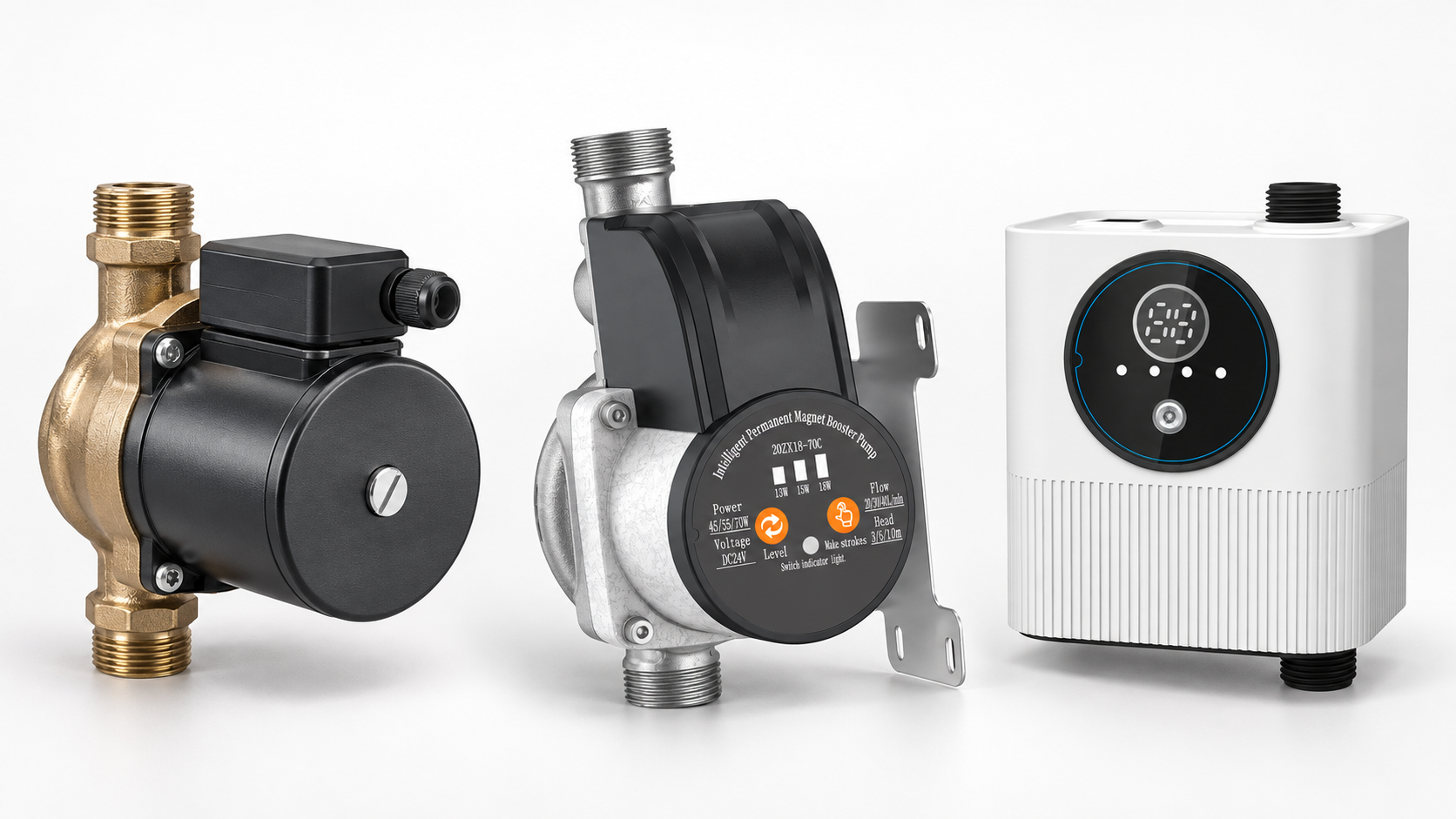
1. Fixed-Speed Hot Water Circulation Pumps
When it comes to flow and head, fixed-speed hot water circulation pumps only work at one speed. Because they’re affordable, easy to install, and have simple controls, they’re suitable for small hot water systems with fixed pipe layouts and circulation needs.
Pumps with a fixed speed work well in standard residential applications and for pump packages with steady requirements. But if you want to deal with systems that have pipes of different lengths and levels of resistance, you will probably need more than one size of pump and not just one model with a fixed speed.
2. Three-Speed Hot Water Circulation Pumps
It’s a hot water circulation pump with three speeds that can be changed by hand. The installer can change the flow and head ranges by setting the pump to different speeds. This lets them increase or reduce circulation after the pump is installed.
You can set these pumps to one of three speeds, and they work well for residential systems, small businesses, and replacement sales. There is one model that can handle small changes in pipe resistance, which could help you cut down on inventory that is unnecessary. But the three settings can only change how well the pump works in a limited range; they can’t be used to switch between models with very different flow and head.
3. Variable-Speed Hot Water Circulation Pumps
The motor speed of a variable-speed hot water circulation pump can be changed over a wider range with electronic control. Depending on the model, performance can be controlled automatically by pressure, temperature, system resistance, or a set mode of operation.
For systems that operate all day, run for many hours, or have long pipe runs, variable speed pumps work better. Because they cost more, they are better as high-end products or project-based solutions than as a direct replacement for all fixed-speed pumps.
IV. Fixed-Speed vs. Three-Speed vs. Variable-Speed Pumps
| Comparison | Fixed-Speed | Three-Speed | Variable-Speed |
|---|---|---|---|
| Speed adjustment | No adjustment | Three manual settings | Continuous electronic adjustment |
| Automatic adjustment | No | No | Available on some models |
| Installation flexibility | Low | Medium | High |
| Setup | Simple | Installer selects a speed | Control mode may need setting |
| Purchase price | Lower | Medium | Higher |
| Energy use | Depends on pump sizing | Can be reduced at a lower setting | Can adjust to changing demand |
| Suitable systems | Standard systems with fixed needs | Systems needing limited adjustment | Systems with changing operating needs |
| Product position | Basic | Standard | Premium or project-based |
V. Choosing Between the Three Pump Types
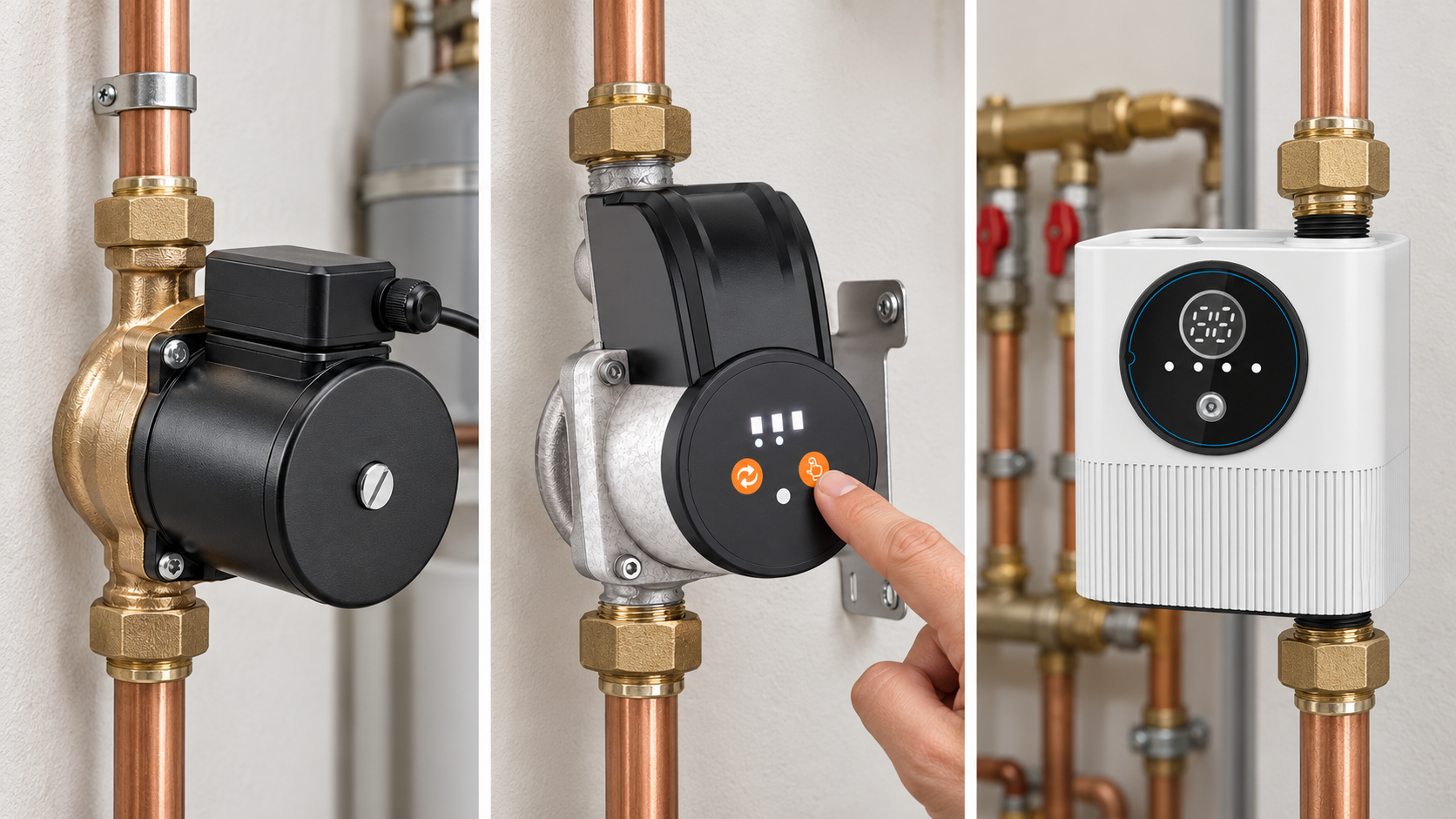
1. Match the Required Performance Range First
Speed control won’t solve the pump size problem. First choose a pump that covers the required flow at the actual pipe resistance on its curve. If all three speeds of a three-speed pump are below the required operating point, the pump will still deliver insufficient circulation. If you find even the lowest setting excessively loud, you should select a smaller model rather than tolerate noise and unnecessary power use.
2. Check Whether the Operating Conditions Stay Stable
Where pipe layout and circulation demands are stable, a fixed-speed pump will generally be enough. A three-speed pump is more useful when some adjustment is required during setup in different installations. If the required performance changes over the day due to valves, branches, or operating conditions, a variable-speed pump is a better solution.
3. Consider Adjustment During Installation
The performance of a fixed-speed pump cannot be adjusted after installation, so a more accurate selection is needed before the installation. Three-speed pumps allow the installer to handle small differences between the planned and actual system. Variable-speed pumps provide a wider adjustment range, but installers may need to understand the control modes and settings before commissioning.
4. Consider Daily Running Time
But in a small system that operates only during set periods, the amount of electricity saved by a variable-speed pump may not offset its higher purchase price quickly. A fixed-speed or three-speed model would be a better buy. A pump running for long periods under changing demand can more clearly show an operating-cost benefit with variable-speed control.
5. Compare Purchase Price with Operating Cost
Those concerned about the initial purchase price may choose fixed-speed pumps, while projects that consider long-term electricity use may accept the higher price of variable-speed models. Any claim regarding energy savings should be based on the actual power use of the pump, daily run time, and control settings, not a general percentage that may not be relevant to the system.
6. Build a Clear Product Range
Fixed-speed pumps can be positioned as basic models, three-speed pumps as standard models, and variable-speed pumps as premium or project versions. You give your customers a clear reason for the price difference, and your sales team can recommend an upgrade based on the actual system. Since speed adjustment does not allow one model to cover all flow and head requirements, each category should still have suitable pump sizes.
VI. Basic Compatibility Checks
1. Water-Contact Materials
Check whether the pump is circulating potable hot water or water in a closed heating system. Bronze, brass, stainless steel, and approved engineering plastics are common residential hot water materials subject to local requirements. Cast iron units are mainly used in closed heating loops and not in potable water systems. By separating these applications, you can prevent the sale of a pump that looks similar but is designed for a different type of water.
2. Temperature and System Pressure
Refer to the specific pump model for maximum working pressure and maximum liquid temperature. Even a pump that delivers the correct flow rate can have a shorter operating life if the seals, motor, or electrical components are not built for the actual temperature of the water. This check is more important for commercial systems that run long hours.
3. Electrical and Installation Details
After selecting the control type, check the voltage, frequency, connection size, thread standard, port-to-port length, and the allowed installation position. Such details are especially important in replacement sales, since a pump with the right performance may still require pipe changes if its dimensions do not match the old unit.
VII. Conclusion
The fixed-speed hot water circulation pump is a simple and lower-cost option for systems with stable requirements. Three-speed pumps may be adjusted manually and cover more standard installations, while variable-speed pumps are suitable for systems with changing demand, longer run times, or more control required.
To choose the right type, you need to compare the required operating point, system changes, daily operating time, installation skills, and project budget. HunGerät can support you in selecting the fixed-speed, three-speed and variable-speed hot water circulation pumps for your market. Please inform us of your required flow, pipe resistance, water temperature, voltage, connection size, and application for a suitable model recommendation.
VIII. FAQ
1. What Is the Difference Between Fixed-Speed and Three-Speed Circulation Pumps?
A fixed-speed pump operates at one speed, while a three-speed pump lets the installer select from three manual speeds. The additional settings help the pump to allow for moderate changes in pipe resistance.
2. Is a Three-Speed Circulation Pump the Same as a Variable-Speed Pump?
No. A three-speed pump is limited to one of three preset speeds, but a variable-speed pump can adjust over a much wider range by electronic control.
3. How Does a Variable-Speed Hot Water Circulation Pump Work?
It changes the speed of the motor to adjust the pump flow and head. Depending on the model, the adjustment can be made by a selected mode, pressure, temperature, or another control signal.
4. Which Type of Hot Water Circulation Pump Uses Less Electricity?
Variable speed pumps can use less electricity as the circulation needs change if properly sized. But a small fixed-speed pump may be more practical in a simple system that only runs a few hours a day.
5. Is a Variable-Speed Pump Necessary for a Small Hot Water System?
Sometimes. If the loop is short and the demand for circulation is steady, then a properly sized fixed-speed or three-speed pump may be all that is needed.
6. When Is a Fixed-Speed Circulation Pump the Better Choice?
It is a practical option for standard systems with a known pipe resistance and stable circulation requirements. It is also suitable in price-sensitive markets where automatic adjustment is not required.
7. What Are the Advantages of a Three-Speed Circulation Pump?
It allows installers three levels of performance without the cost of a full electronic speed control. This allows the adjustment of moderate overcirculation or weak circulation at installation.
8. Which Speed Should You Select on a Three-Speed Pump?
Use the lowest setting that will give the required circulation and return water temperature. A higher setting should only be used when the lower level cannot overcome the resistance of the pipe.
9. What Happens If the Selected Speed Is Too Low?
Hot water may not reach the outlets in time and the return water temperature may be too low. Check the chosen setting and ensure that the pump curve includes the required operating point.
10. What Happens If the Selected Speed Is Too High?
Too much flow can lead to pipe noise, increased electrical use, and unnecessary water velocity. If the system is still circulating correctly, then adjust the setting down.
11. Can a Three-Speed Pump Reduce Pipe Noise?
Yes, if the noise is because of too much flow, then selecting a lower speed may reduce it. But the lower setting still has to provide enough circulation for the longest section of the loop.
12. Does a Variable-Speed Pump Adjust Itself Automatically?
Some do and some only allow manual adjustment electronically. Check the control modes. Don’t assume that all variable-speed pumps are automatic.
13. Does Every Variable-Speed Pump Have a Temperature Sensor?
No. Some models will have built-in temperature sensing, others may have it as an option; some may not. Please confirm the sensor and type of control before ordering.
14. Can One Three-Speed Pump Replace Several Fixed-Speed Models?
It might replace other fixed-speed models at similar performance levels. It can not replace pumps whose required flow and head are outside the three-speed curves.
15. Can a Variable-Speed Pump Replace Any Fixed-Speed Pump?
No. The flow, head, temperature rating, materials, voltage and dimensions still have to fit with the system. Variable speed control does not mean the pump is suitable for all applications.
16. Should a Hot Water Circulation Pump Run Continuously?
It can be run continuously if it is designed for that use; however, continuous running may increase electricity use and pipe heat loss. Where hot water is not required all day, a timer, temperature control, or demand-based control may be more suitable.
17. Can a Timer Be Used with All Three Pump Types?
It may be possible to use a timer if the voltage and current ratings are suitable for the pump and the controls. Check for external power switching if using variable speed models to see whether saved settings or automatic functions are affected.
18. Which Type Is Better for Hotels and Apartment Buildings?
Variable-speed pumps are often useful in larger buildings since the operating conditions may change over the day. However, the final decision still depends on the loop design, heat loss, required return temperature, and balancing of different branches.
19. Which Type Is Easier to Stock for the Replacement Market?
Three-speed pumps, however, offer useful flexibility, in that installers can adjust them after installation. Then you have to match the water-contact materials, the size of the connection, installation length, voltage, and general performance range.
20. What Information Should You Provide When Ordering a Hot Water Circulation Pump?
Required flow, pipe resistance or pump head, water temperature, operating hours, voltage, frequency, connection size, and whether the water is potable. For replacement orders, also include the existing pump curve, dimensions, and photos of the installation.