I. Introduction
Choosing a multistage pump by price or appearance alone can lead to the wrong material for the water, unnecessary purchasing costs, or early rust problems. Stainless steel is not required for every system, while cast iron is not suitable for every liquid. This guide compares their materials, applications, costs, maintenance needs, and buying points to help you choose the right models for your market.
II. What Do Stainless Steel and Cast Iron Mean in a Multistage Pump?
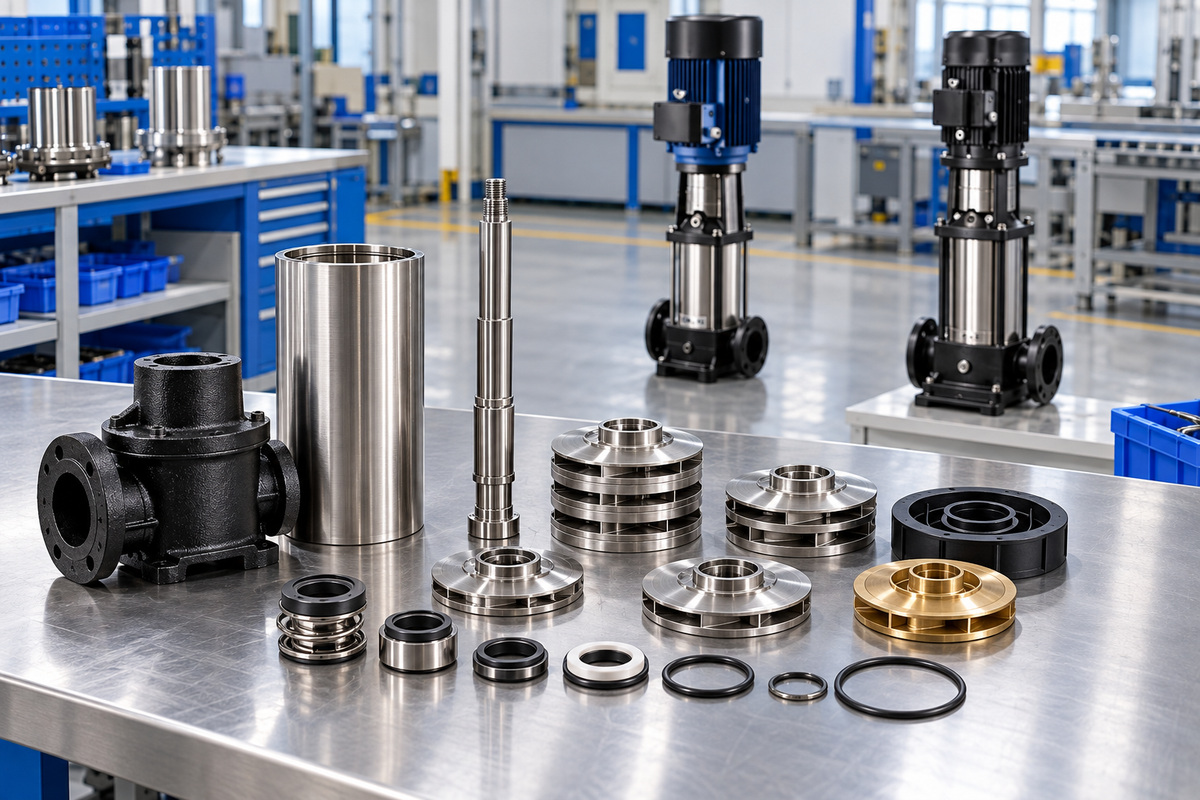
The material name normally refers to the pump casing or its main water-contact parts, but it does not always describe every part inside the pump. A stainless steel multistage pump may use stainless steel for the casing, impellers, diffusers, and shaft, or only for some of these parts. A cast iron pump may also have stainless steel, brass, engineering-plastic, or cast iron impellers. You should therefore check the full material list instead of judging the pump only by its product name or outside appearance.
The material does not decide the flow, head, or efficiency by itself. These mainly depend on the impeller size, number of stages, speed, hydraulic design, and actual operating point. When comparing stainless steel and cast iron models, you should first confirm that both pumps can provide the required flow at the same total head.
III. Stainless Steel Multistage Pumps
1. Material Structure
Stainless steel multistage pumps commonly use stainless steel for the pump casing and some or all of the main water-contact parts. Depending on the model, the impellers and diffusers may be made from pressed stainless steel, cast stainless steel, or engineering plastic. The shaft is also commonly stainless steel, while the mechanical seal contains several different materials. Before ordering, check whether the pump is fully stainless steel or only has a stainless steel casing.
2. Main Advantages
Stainless steel offers better rust resistance than ordinary cast iron in many clean-water systems. Its smooth internal surface also makes it suitable for treated water, commercial water supply, washing equipment, and applications where a clean appearance matters. It is especially useful when visible rust or changes in water colour could lead to customer complaints.
However, stainless steel is not resistant to every liquid. Water containing high levels of salt or chlorides can still damage some stainless steel grades, especially when the temperature is high. Acids, alkalis, cleaning chemicals, and other process liquids may also require a specific steel grade and mechanical seal.
3. Suitable Applications
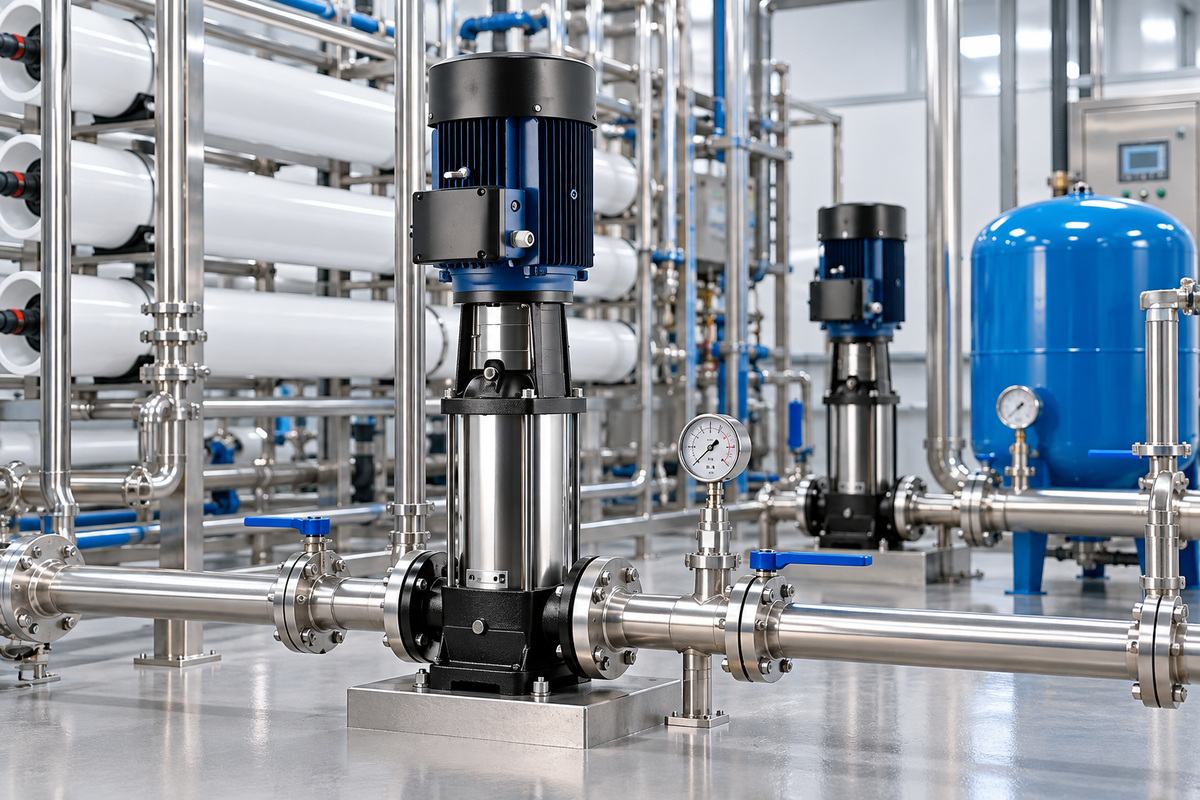
Stainless steel multistage pumps are widely used for building pressure boosting, water treatment, reverse osmosis systems, commercial water supply, washing systems, cooling equipment, and other clean-water applications. They are also common in packaged equipment because many vertical stainless steel models provide high pressure while taking up little floor space.
The correct material still depends on the liquid. A pump used after water treatment may have different material needs from one used before treatment or during chemical cleaning. If the customer only says that the pump is for a water treatment system, you should ask where it will be installed and what liquid will pass through it.
4. Value for Your Product Range
If your main customers work with water treatment equipment, commercial buildings, pressure-boosting systems, or equipment manufacturing, common 304 stainless steel models may be suitable for regular stock. You should select stock models according to the flow and head ranges that appear most often in your enquiries, rather than keeping every available motor power or number of stages.
Special configurations such as 316 stainless steel, high-temperature seals, or chemical-resistant seals are normally better handled as project orders unless you have steady local demand. This gives you access to special projects without leaving expensive, slow-moving pumps in your warehouse.
IV. Cast Iron Multistage Pumps
1. Material Structure
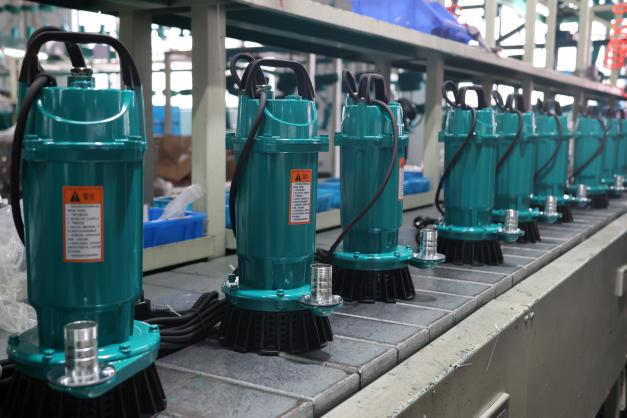
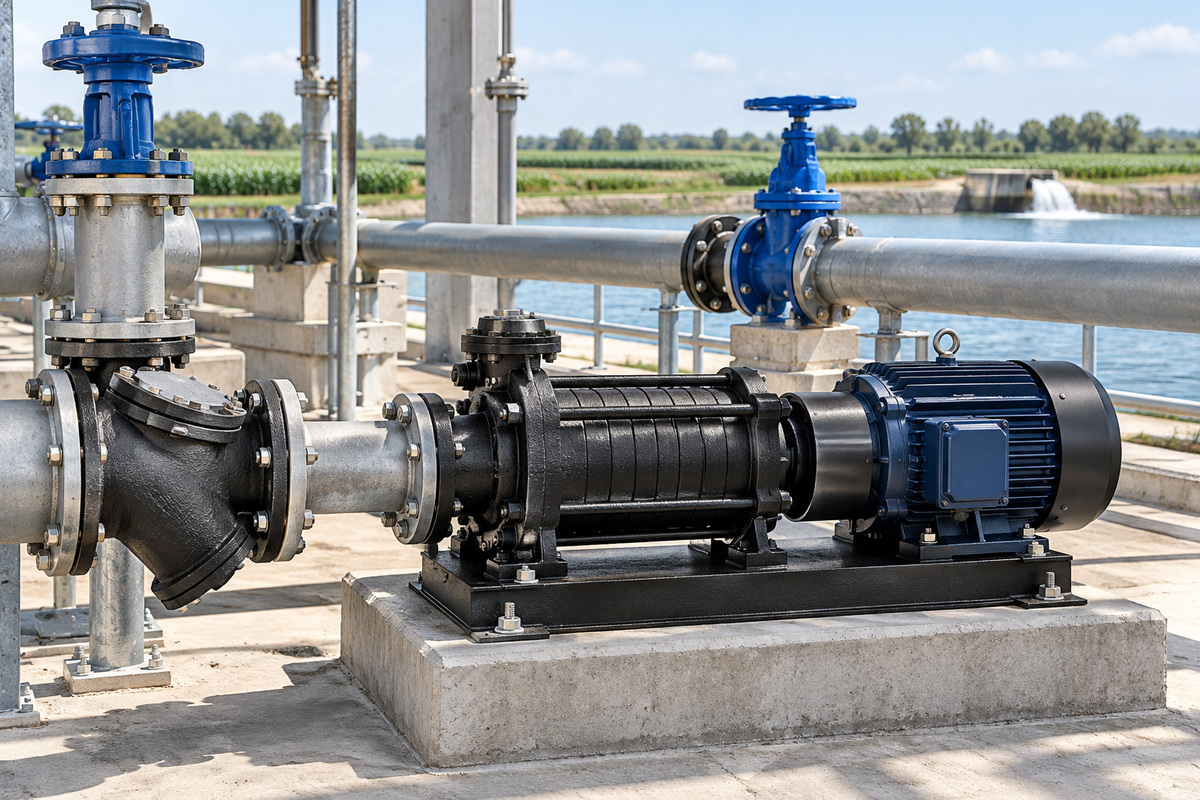
Cast iron multistage pumps normally have a cast iron pump casing, but their internal parts can vary. Some models use cast iron impellers, while others use stainless steel, brass, or engineering-plastic impellers. Protective paint or coating may be applied to the outside or inside of the pump, depending on its design. You should confirm which parts contact the water because two cast iron pumps with similar performance may have different internal configurations.
2. Main Advantages
Cast iron is strong, widely available, and commonly used for general clean-water pumps. It normally costs less than stainless steel, making it practical for irrigation, standard pressure boosting, water transfer, and industrial systems where special corrosion resistance is not required. Its lower purchase price can be important in markets where customers compare pumps mainly by performance and price.
A cast iron pump still needs suitable surface treatment, storage, and packaging. Water left inside after factory testing can cause surface rust during long shipping or storage periods. This does not always affect the pump structure, but it can create complaints when customers expect a completely clean internal surface.
3. Suitable Applications
Cast iron multistage pumps can be used for ordinary clean water, irrigation, tank transfer, general pressure boosting, cooling-water circulation, and many industrial water systems. They are a practical choice when the water is not strongly corrosive and the project does not specify stainless steel or special hygienic materials.
They should not be chosen automatically for salt water, strongly acidic or alkaline liquids, or applications with strict drinking-water material requirements. If the customer cannot clearly describe the liquid, you should obtain more information before confirming that a cast iron pump is suitable.
4. Value for Your Product Range
If most of your orders come from irrigation, ordinary clean-water transfer, or price-sensitive industrial supply, cast iron multistage pumps may be more suitable for regular stock. Focus on the duty points, voltages, frequencies, and connection sizes commonly used in your market instead of stocking many models with similar maximum figures.
For humid markets or shipments with long sea transit times, confirm how the pump is drained, protected, and packed after testing. Clear storage instructions can also help your customers prevent surface rust after the pumps arrive at their warehouse.
V. Key Differences Between Stainless Steel and Cast Iron Multistage Pumps
1. Corrosion Resistance
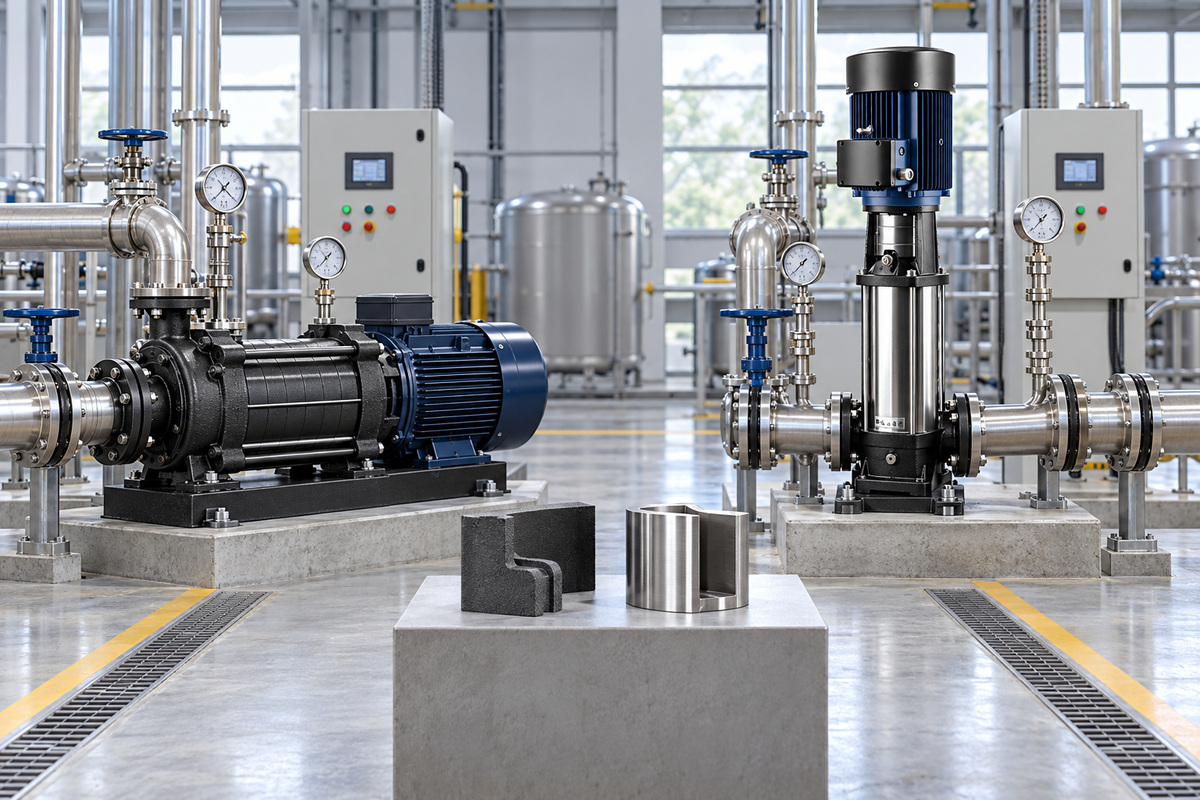
Stainless steel has better rust resistance than ordinary cast iron in many clean-water applications, but its performance depends on the steel grade and the liquid. Standard 304 stainless steel may be suitable for many clean-water systems, while some applications with more chlorides or chemicals may require 316 or another material.
Cast iron works well with ordinary clean water but can rust when exposed to air and moisture or when used with unsuitable liquids. Before quoting either material, ask about the liquid type, temperature, pH, and whether it contains salt, chlorides, acids, alkalis, or cleaning chemicals. If water information is unavailable, avoid giving an unconditional corrosion guarantee.
2. Water Quality and Hygiene Requirements
Stainless steel is commonly selected for clean-water and drinking-water systems because it resists rust and has a smooth water-contact surface. However, a stainless steel pump does not automatically meet drinking-water rules. The complete pump materials, coatings, seals, production process, and required local approvals must also be checked.
Cast iron can be used in many domestic and commercial water systems where local rules permit it, but it may not meet projects that clearly require stainless steel wetted parts or specific drinking-water approval. For tenders and building projects, read the material and certification requirements before choosing a pump instead of treating stainless steel as a replacement for missing documents.
3. Purchase Price and Project Cost
Cast iron multistage pumps normally have a lower purchase price when the hydraulic performance and motor size are similar. They are useful when ordinary clean water is being pumped and the customer wants to control the initial equipment cost.
Stainless steel pumps cost more, but the additional cost may be justified when rust resistance, water cleanliness, or project specifications require it. If both materials are suitable, you can quote a cast iron model as the standard option and a stainless steel model as the upgraded option at the same duty point. This lets the customer choose based on a real material difference rather than assuming the higher-priced pump has more flow or pressure.
4. Weight and Installation
Many cast iron pumps use thick cast parts and may be heavier than stainless steel pumps with pressed-metal bodies. The actual difference depends on the structure, stage number, motor, and pump size, so the net weight must be checked for each model.
Some stainless steel vertical multistage pumps have a narrow structure and need less floor space, but this advantage comes from the pump layout rather than the material alone. For bulk orders, compare the gross weight, package size, loading quantity, base dimensions, port positions, and service space. These details affect freight, warehouse handling, and replacement work after delivery.
5. Hydraulic Performance
A stainless steel multistage pump does not automatically provide more pressure, flow, or efficiency. A cast iron model with the right hydraulic design may perform better than a stainless steel model at a particular operating point.
Compare both pumps at the required flow and total head on their performance curves. You should also check the efficiency, motor load, NPSH requirement, and allowed operating range at that point. This prevents a more expensive material from being presented as better hydraulic performance when the two issues are separate.
6. Maintenance and Spare Parts
Stainless steel can reduce rust around water-contact parts, but it does not remove the need to replace mechanical seals, bearings, gaskets, or other wearing parts. Incorrect liquid, poor alignment, dry running, and operation outside the correct range can still damage the pump.
Cast iron pumps may become harder to take apart if rust develops around bolts, connections, or internal parts. Whichever material you sell, confirm the part numbers and supply times for mechanical seals, impellers, diffusers, bearings, and gaskets. Parts from stainless steel and cast iron series should not be treated as interchangeable just because the pumps have the same power or a similar appearance.
VI. Choosing the Right Material for Different Applications
1. Building Water Supply and Pressure Boosting
Both materials may be used for general building pressure boosting when the water and local rules allow it. Cast iron can provide a more economical option for ordinary non-drinking-water systems, while stainless steel is often selected for clean-water supply, commercial buildings, and projects that specify stainless steel wetted parts. You should check the project documents before quoting because a material upgrade cannot replace a required approval.
2. Irrigation and General Water Transfer
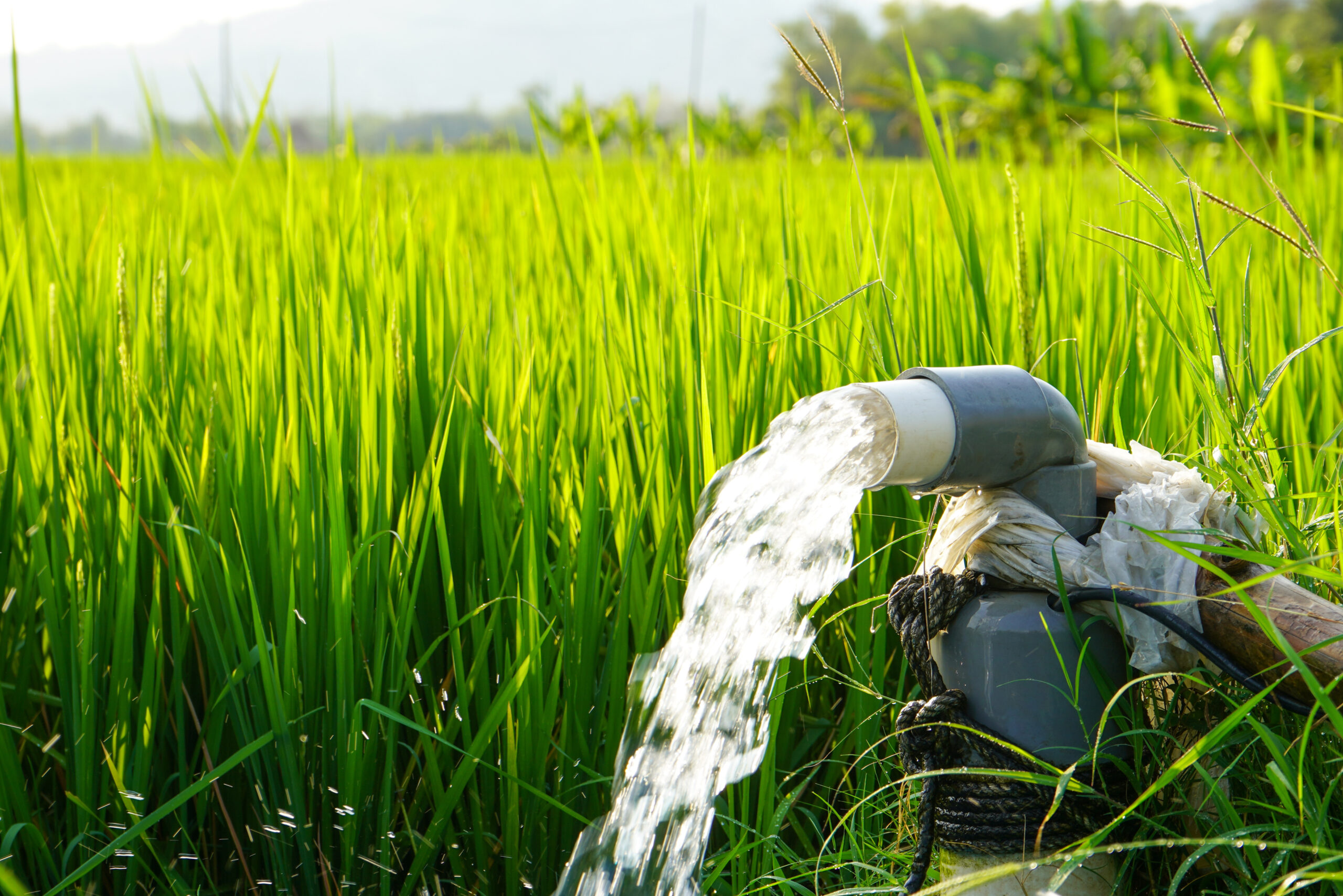
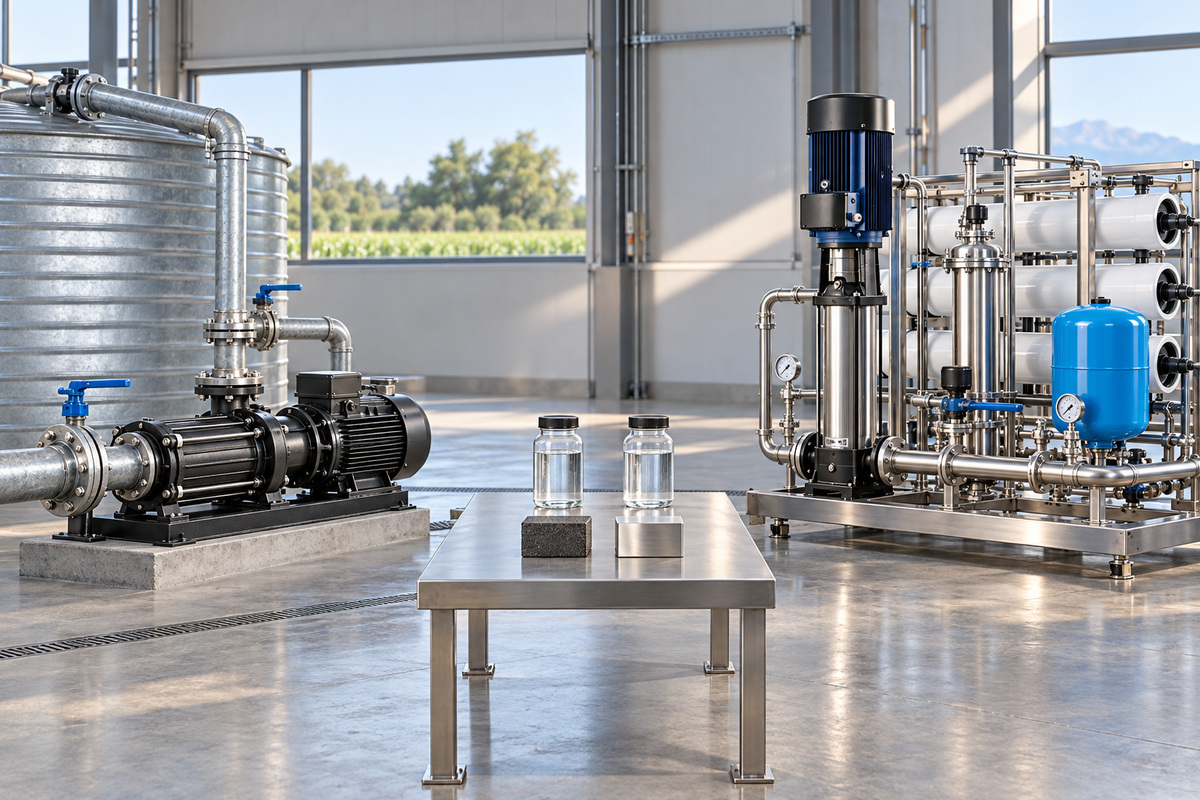
Cast iron multistage pumps are often a practical choice for ordinary irrigation water, ground tanks, reservoirs, and general water transfer. In these applications, the required flow, total head, suction conditions, and price normally matter more than having a stainless steel casing. Stainless steel should be considered when the source contains salt, chemicals, or other substances that may attack cast iron, but the steel grade must still be matched to the water.
3. Water Treatment and Reverse Osmosis Systems
Stainless steel multistage pumps are widely used in water treatment and reverse osmosis equipment because they provide good rust resistance and are available in compact high-pressure designs. However, the liquid can change at different stages of the process. Ask whether the pump handles raw water, treated water, concentrate, cleaning solution, or final product water before confirming 304, 316, or another material.
4. Industrial Water Systems
Industrial water is too broad to use as a material specification. Cooling water, boiler feed, washing water, chemical process water, and reused water can have very different temperatures and chemical contents. Before recommending cast iron or stainless steel, confirm the liquid name, temperature, concentration, pH, and expected running time. If the customer cannot provide these details, the material choice should remain subject to confirmation.
VII. Material Details to Confirm Before Ordering
1. Wetted-Part Materials
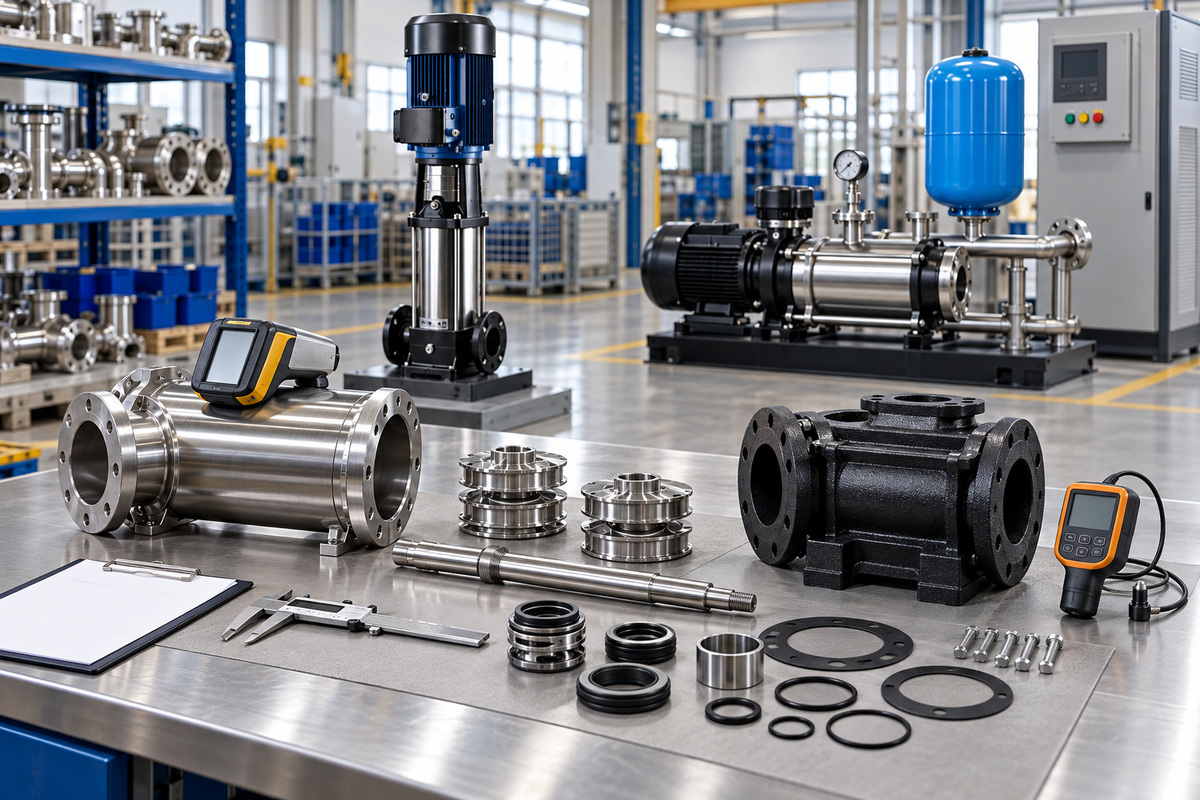
Ask the supplier to list the materials of the casing, impellers, diffusers, shaft, mechanical seal, and other main water-contact parts. Do not rely only on descriptions such as “stainless steel pump” or “cast iron pump.” Writing the actual materials in the quotation and order helps prevent disputes when the pump is opened for inspection.
2. Stainless Steel Grade
Confirm whether the stainless steel is 304, 316, or another grade. You should also check which parts use that grade because a pump with a 304 casing may have different impeller or diffuser materials. If a project specifies full 316 wetted parts, a pump with only a 316 outer casing is not an equal replacement.
3. Mechanical Seal and Gaskets
The mechanical seal and gaskets must match the liquid and its temperature. A correctly selected stainless steel casing can still be paired with a seal that fails in hot water, chemicals, or abrasive liquid. For special applications, include the seal-face and elastomer materials in the quotation instead of describing only the pump casing.
4. Surface Treatment and Coating
For cast iron pumps, confirm the internal and external coating or paint and how the pump is protected after water testing. Coating can reduce rust in suitable clean-water service, but it does not turn cast iron into a material for strongly corrosive liquids. If the pumps will remain in stock for a long time, provide dry-storage and inspection instructions to your customer.
5. Duty Point and Motor Configuration
Material selection does not replace hydraulic and electrical selection. Provide the required flow, total head, inlet conditions, liquid temperature, voltage, frequency, phase, daily running time, and control method. Record both the material configuration and operating point in the order so that you do not receive a pump with the correct material but the wrong performance.
VIII. Conclusion
Stainless steel and cast iron multistage pumps can both provide high pressure, but they serve different material and budget needs. Stainless steel is normally more suitable for clean-water systems, water treatment equipment, and projects with clear rust-resistance requirements. Cast iron offers a lower-cost option for ordinary clean water, irrigation, general pressure boosting, and many industrial water systems. The final choice should be based on the liquid, project standard, actual wetted parts, duty point, and expected service conditions.
HunGerät can help you compare stainless steel and cast iron multistage pumps for your market or project. Send us the required flow, total head, liquid information, voltage, connection size, material requirement, and application. We can provide suitable model options, performance curves, material configurations, dimensional drawings, and wholesale quotations.
IX. FAQ
1. Is Stainless Steel Always Better Than Cast Iron for a Multistage Pump?
No, stainless steel is only the better choice when the liquid, project requirements, or working environment needs its material properties. Cast iron may provide the same required flow and head at a lower cost in ordinary clean-water applications.
2. Does a Stainless Steel Multistage Pump Produce More Pressure?
No, the material does not decide the pump pressure. The available head depends mainly on the hydraulic design, impeller size, number of stages, and operating speed.
3. Is a Stainless Steel Multistage Pump More Efficient?
Not necessarily. Compare the efficiency of both pumps at the same required flow and total head on their performance curves.
4. Which Material Is Better for Drinking-Water Systems?
Stainless steel is often preferred, but the complete pump must meet the applicable local drinking-water requirements. Check the wetted parts, seals, coatings, and required approvals before ordering.
5. Can a Cast Iron Multistage Pump Be Used for Domestic Water Supply?
Yes, if the water is suitable and local rules allow cast iron for the application. Confirm whether the system supplies drinking water or only general domestic water before selecting the material.
6. Can Stainless Steel Multistage Pumps Handle Salt Water?
Not every stainless steel pump can handle salt water. Salt and chlorides can damage some stainless steel grades, so the water content, temperature, steel grade, and seal materials must be checked.
7. Is 316 Stainless Steel Better Than 304?
316 generally provides better resistance to chlorides and some corrosive liquids, but it is not required for every clean-water system. Choose it from the water conditions and project specification rather than treating it as a universal upgrade.
8. Can a 304 Stainless Steel Pump Handle Chlorinated Water?
It depends on the chloride level, temperature, concentration, and operating conditions. Ask for water data before confirming that 304 stainless steel is suitable.
9. Which Material Is Better for Irrigation?
Cast iron is often suitable for normal freshwater irrigation and usually has a lower purchase cost. Use stainless steel only when the water quality or project requirement gives a clear reason for it.
10. Which Material Is Better for Reverse Osmosis Systems?
Stainless steel is commonly used, but the correct grade depends on which part of the RO system the pump serves. Raw water, treated water, concentrate, and cleaning liquid may require different materials.
11. Are All Parts of a Stainless Steel Multistage Pump Made of Stainless Steel?
No, the casing, impellers, diffusers, shaft, seals, and other parts may use different materials. Request a complete material list before describing a model as fully stainless steel.
12. Can a Cast Iron Pump Have Stainless Steel Impellers?
Yes, some cast iron pumps use stainless steel impellers or other stainless steel internal parts. Check each component because this configuration is not standard for every series.
13. Does Cast Iron Affect Water Quality?
Cast iron may produce rust or discolouration under unsuitable conditions. Whether it is acceptable depends on the water, coating, system use, and local material requirements.
14. Which Pump Material Is Easier to Maintain?
Neither material is always easier to maintain because the pump structure and installation access also matter. Stainless steel may reduce rust around water-contact parts, while cast iron parts and replacements may be easier to source in some markets.
15. Which Material Has a Longer Service Life?
Service life depends on whether the material matches the liquid and working conditions. A correctly selected cast iron pump can last longer than a stainless steel pump used with an unsuitable chemical.
16. Are Stainless Steel Multistage Pumps Lighter Than Cast Iron Pumps?
Many pressed-stainless-steel pumps are lighter, but this is not true for every model. Compare the actual net and gross weight before calculating transport or installation costs.
17. Why Is a Stainless Steel Multistage Pump More Expensive?
Stainless steel material and its forming, welding, casting, and machining processes normally cost more than cast iron. The final difference also depends on the steel grade, pump structure, impeller material, and mechanical seal.
18. Can Stainless Steel Still Corrode?
Yes, stainless steel can corrode when exposed to unsuitable chemicals, high chloride levels, high temperatures, or poor working conditions. Choosing the correct stainless steel grade is more important than choosing stainless steel by name alone.
19. What Causes a Cast Iron Multistage Pump to Rust?
Rust can result from unsuitable water, damaged coating, remaining test water, humid storage, or exposure to air and moisture. Check whether the rust is only on the surface or has affected sealing and structural parts before making a warranty decision.
20. What Information Should You Provide When Ordering a Multistage Pump?
Provide the required flow, total head, liquid type, temperature, water quality, material requirement, voltage, frequency, phase, connection size, control method, and daily running time. For tenders or replacement projects, also send the specification, existing nameplate, dimensional drawing, and installation photos.