I. Introduction
Two multistage pumps may have the same flow rate, head, and motor power, but they need to be installed and serviced in very different ways. If you only look at performance data, the pump might come with the wrong pipe layout, take up too much space, or not have any room for upkeep. Knowing the differences in structure helps you choose, stock, and price a pump that is right for the job.
II. Horizontal and Vertical Multistage Pumps
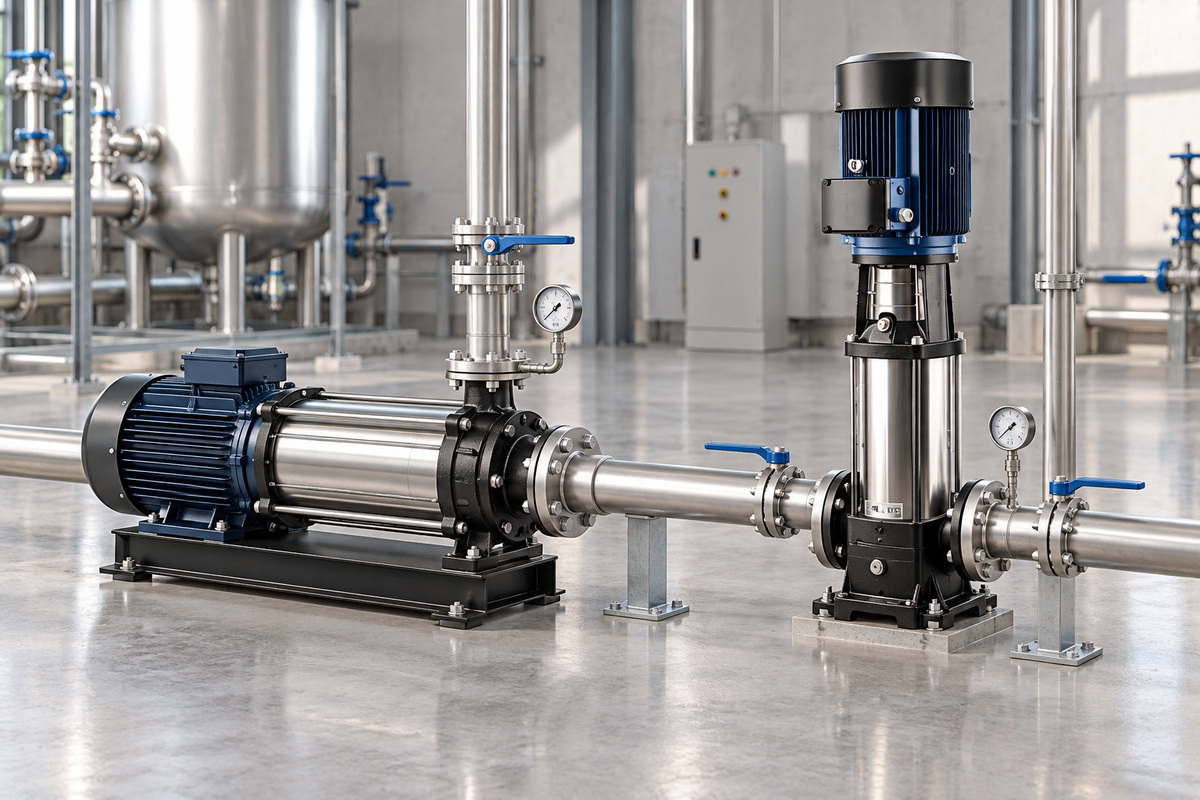
A multistage pump has more than one impeller connected in a line. As water moves from one stage to the next, the pressure builds up at each stage while the flow stays within the pump’s design range. The shaft and stages of a horizontal multistage pump are laid out horizontally. The stages of a vertical multistage pump are stacked on top of each other. There is no way to tell which pump has more head, flow, or efficiency just by looking at its orientation. Both types can make high pressure.
III. Horizontal Multistage Pumps
1. Horizontal Pump Structure
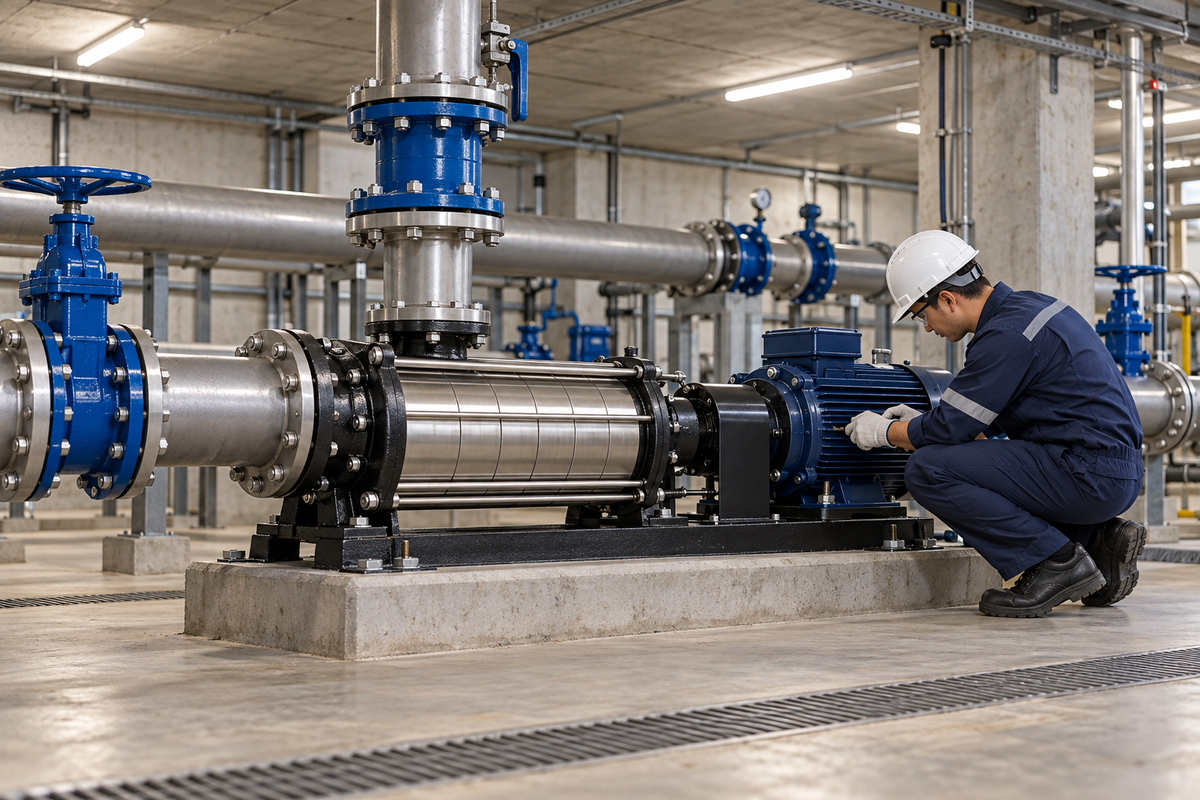
This type of multistage pump has a motor, a shaft, and pumping stages that are all laid out flat on the ground. The whole unit is usually put together on a base or flat surface, so the floor needs to be long enough for the motor and pump. With each model, the suction and discharge ports are placed in different ways. When you send a replacement pump, the flow and head aren’t the only things that matter. The base size, port positions, and shaft height can be just as essential.
2. Main Advantages
The horizontal layout often makes it easy to get to the pump from the side. Technicians may not need a lot of overhead space to check the motor, coupling, bearings, mechanical seal, and pump casing, depending on how it’s built. This could be useful in places where pumps are fixed locally and only parts are replaced, rather than the whole unit being replaced. But the pump drawing and instructions should always be used to check the correct way to service the pump.
3. Common Applications
A lot of different things use horizontal multistage pumps, like water transfer, pressure boosting, industrial water supply, and pump rooms that are below ground level. They are a good choice when the site has enough floor space and the pipes already there are set up in a horizontal way. Still, the pump has to be chosen based on its performance curve at the flow rate and total head that are needed. Just because a model has more than one stage doesn’t mean it will work with every high-pressure system.
4. Value for Your Product Range
Most single-stage pumps may not be able to handle the pressure ranges that horizontal multistage pumps can. This is especially true if your market has a lot of farms, ground tanks, traditional pump rooms, or industrial water systems. Pick models based on the most common duty points, pipe sizes, voltages, and motor powers in your market. This will help you make a more useful product line. This makes more sense than keeping a bunch of models on hand that all have similar maximum figures but not much difference at the working point.
IV. Vertical Multistage Pumps
1. Vertical Pump Structure
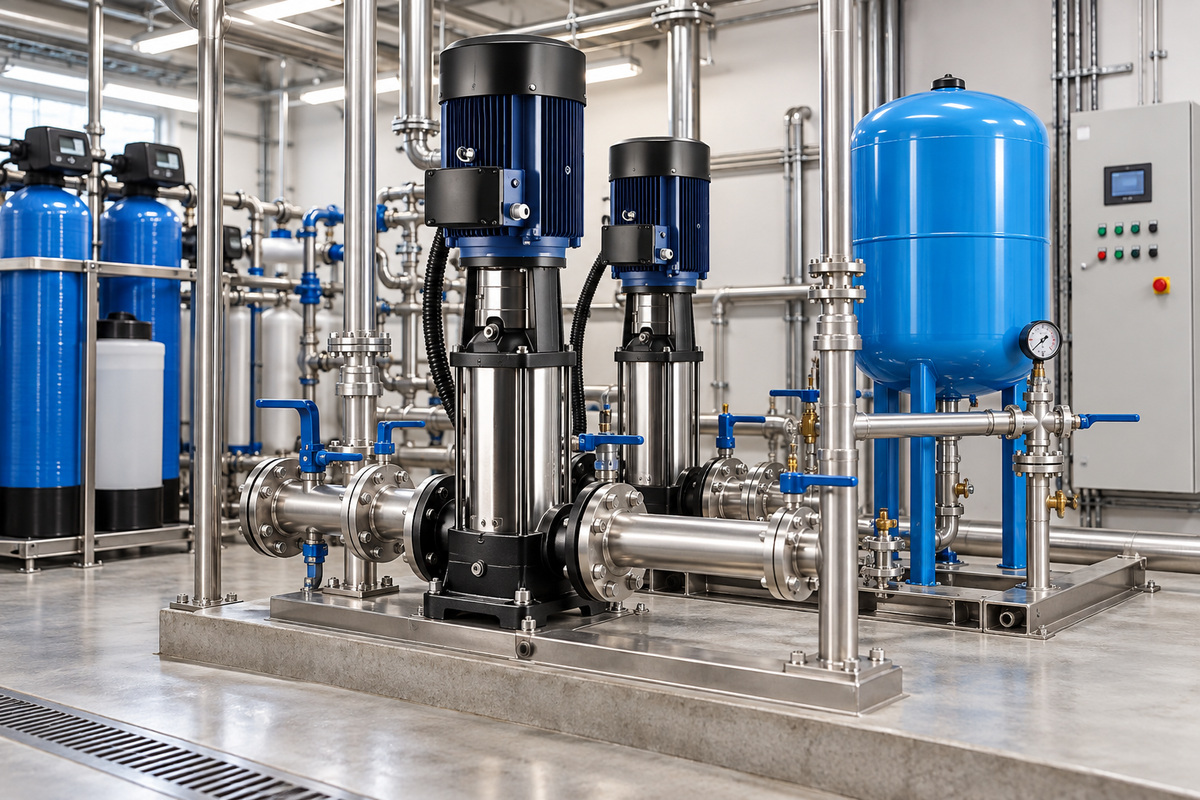
The impellers and diffusers of a vertical multistage pump are stacked on top of each other vertically. This makes the pump body tall and narrow, and it also takes up less floor space. A lot of vertical pumps have pipes that are lined up in a straight line, but not all of them do. Before you make the system layout, you should check the dimensional drawing to make sure that the inlet and outlet positions, connection standard, center distance, and overall height are correct.
2. Main Advantages
The best thing about a vertical multistage pump is that it doesn’t take up much space. It can fit in small plant rooms, booster sets that come in a box, water treatment equipment, and systems that need to put together several pumps. Because it is narrow, there is more room on the floor for pipes, valves, pressure tanks, and control panels. Also, there must be enough vertical space on the site to install and service the motor and pump body.
3. Common Applications
Vertical multistage pumps are often used to raise the water pressure in buildings, for industrial water supply, water treatment, reverse osmosis feed, washing systems and other clean-water uses that need more pressure. Still, the type of liquid, temperature, solids content, materials, seal, and pump curve determine if they are right for the job. For example, just because the casing of a vertical stainless steel pump is stainless steel doesn’t mean it can handle all corrosive liquids.
4. Value for Your Product Range
Vertical multistage pumps can help you with projects that need to be done in small spaces if your customers work with building services, packaged booster systems, water treatment, or small pieces of equipment. Instead of just motor power, a useful range should be split up by duty point and application. So that one basic pump series can be used for many types of projects, you may also need different types of material, seals, connections, voltages, and controls.
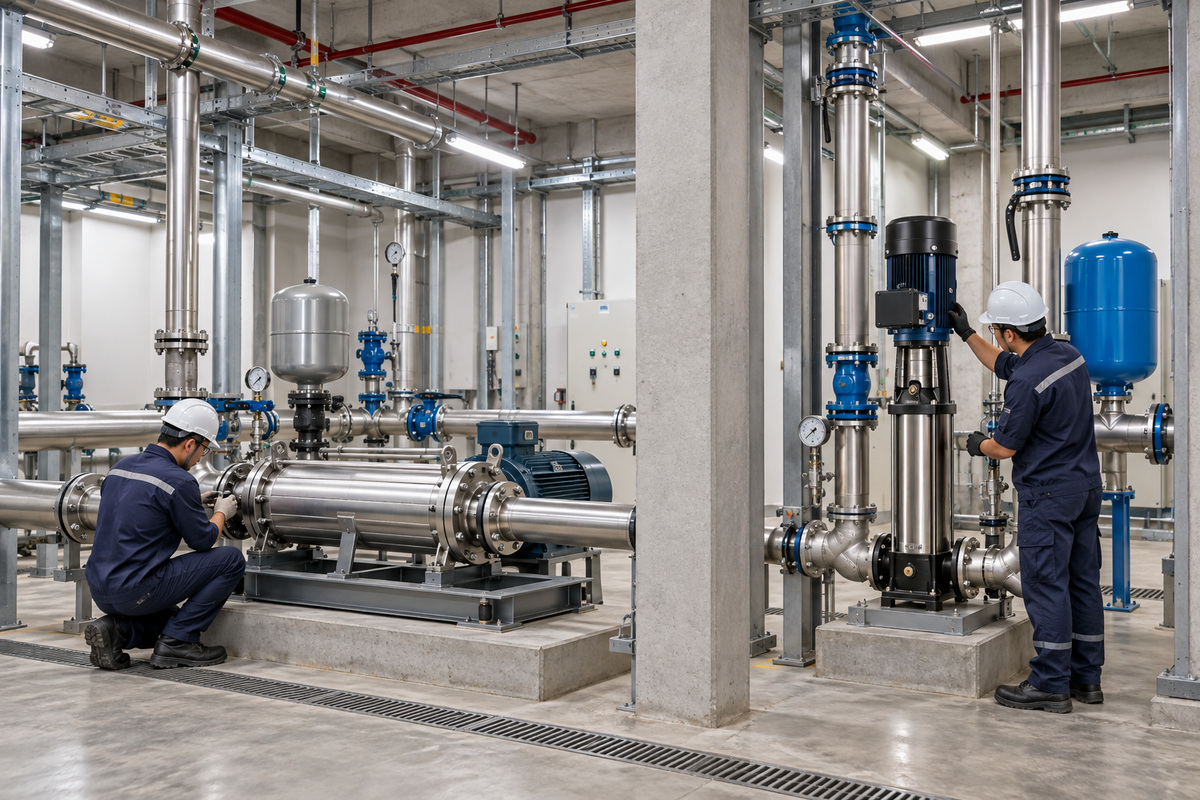
V. Key Differences Between Horizontal and Vertical Multistage Pumps
1. Installation Space
Since the motor and pump body are next to each other on a horizontal multistage pump, the floor length needs to be longer. It does its job well in a long, low pump room or in a system where the pipes and base are already set up for horizontal equipment. There should also be enough space around the pump for alignment, inspection, and taking parts off after the installation is done.
It’s better to have a vertical multistage pump in narrow plant rooms and packaged systems because it takes up less floor space. But because it’s taller, it can be hard to work under low ceilings, pipes, beams, or other things. You should look at both the installed height and the space needed to get to the motor or other parts inside the pump for repair.
2. Pipe Layout
A horizontal pump can be used in many standard surface-pump installations. However, each type has a different inlet direction, discharge direction, center height, and base position. When you replace an old pump with a new one, the new one may meet the duty point requirements, but if the dimensions don’t match, you may have to make expensive changes to the pipes or the base.
A lot of vertical multistage pumps have compact inline connections that make it easy to add them to booster sets and other process equipment. Still, the flange size, flange standard, port center distance, and flow direction need to be confirmed. If you look at the dimensional drawing before getting a quote, you can avoid adaptors, pipe stress, and delays in installation after delivery.
3. Suction and Priming Conditions
A horizontal layout does not mean that a multistage pump will automatically prime itself. A normal horizontal multistage centrifugal pump needs the pump casing and suction pipe to be filled with fluid before it can be turned on, unless the installation allows for flooded suction or the pump is designed to prime itself. A high suction lift, air leaks, long suction pipes, and small pipe diameters can all make the system not stable.
A vertical multistage pump is also usually made so that it can get water from a steady source. You shouldn’t expect it to pull water up from below the pump unless the maker makes it clear that it can. For each design, you should check the lowest level of water, the inlet pressure, the suction losses, the temperature of the water, and the NPSH requirement of the pump.
4. Flow and Head
There are a lot of different flow and head levels for horizontal multistage pumps. How well they work relies on the size of the impeller, the number of stages, the speed, and the way the hydraulics are set up. Different horizontal series are designed to handle different flow rates and head heights. In and of itself, the word “horizontal” does not describe the range of performance.
Different flow and pressure duties are also done by vertical multistage pumps. They are often chosen for small high-pressure systems, but that doesn’t mean they are more powerful or efficient than a horizontal pump. First, look at both models with the same total head and flow rate. Then, look at the efficiency, motor load, NPSH, and the range of operation allowed on the pump curve.
5. Maintenance Access
The motor, seal, bearings, and coupling are often easier to get to from the side of horizontal pumps. This can make regular checks easier if the pump room has enough space on the floor. However, some multistage designs still need to be taken apart into many pieces, so you should check to see which parts can be taken out without disconnecting the main pipes.
You can put vertical pumps on the floor to save space, but you might need to make room above the unit to get to the motor or cartridge. In a system with a lot of pipes or equipment close by, this work could be blocked. If your customers usually fix pumps on-site, making sure they know which way to remove the pump and how much space they need for service can keep them from complaining later about how hard it was to maintain.
6. Pump and System Cost
One part of the cost is not just the price of the pump itself. For example, a horizontal model might need a bigger base and more floor space, while a vertical model might need different pipe supports or a way to lift it. It may cost more to change pipes, install controls, pay someone to do the work, buy replacement parts, and do maintenance in the future than the difference in pump prices.
The cost of the whole system installed is a good way for a distributor or project supplier to compare prices. When you compare two quotes, you should think about the pump, motor, base, connections, controls, changes to the installation, and repair needs. This helps you understand why the cheapest pump isn’t always the cheapest project cost.
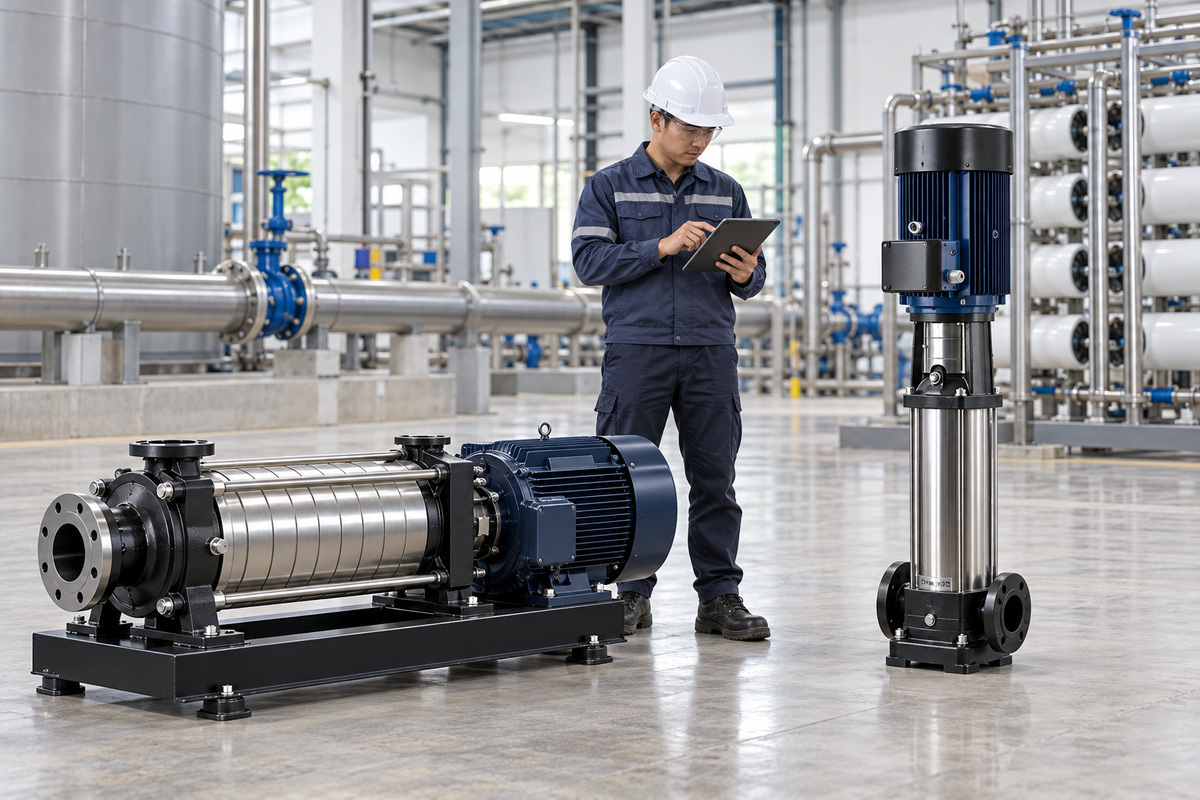
VI. Choosing the Right Structure for Different Applications
1. Building Water Supply and Pressure Boosting
When building booster systems, a vertical multistage pump is often the best choice because it takes up less floor room and can be put together with other pumps in a small package. A horizontal multistage pump might work better in places where the ceiling is low, the pipes are already horizontal, or service access from the side is desired. In either case, to find the duty point, use the expected simultaneous water demand and the required outlet pressure.
2. Irrigation and Water Transfer
In ground-level irrigation and transfer systems, horizontal multistage pumps are often used when there is enough room for installation, and the water comes from a tank or another stable source. When making a choice, you should think about the height, the length and diameter of the pipes, the valves and filters, and the pressure that the irrigation equipment needs. It’s not enough to just look at the farm area or motor power to choose a pump.
3. Water Treatment and Reverse Osmosis Systems
Compact water treatment and reverse osmosis systems often use vertical multistage pumps made of stainless steel because they can provide higher pressure without taking up a lot of floor room. Still, the right choice depends on the type of water, the temperature, the flow rate needed, the working pressure, the seal materials, and the grade of stainless steel. If you check these things, you can keep the pump from corroding, having seal issues, or working outside of its best range.
4. Industrial Water Systems
For industrial water systems to work well, they may need high pressure, long hours, special materials, and to be easy to maintain. Either layout will work as long as it meets the installation and hydraulic needs. To choose between a horizontal and a vertical pump for these projects, you should look at the full duty cycle, available space, pipe arrangement, liquid properties, motor protection, control method, and spare-part plan.
VII. Information to Confirm Before Ordering
1. Required Flow and Total Head
Give the needed flow at the real total head instead of just the highest numbers from a list. The vertical height, the pressure that needs to be at the outlet, and pipe losses should all be added up to get the total head. This lets the supplier check the working point on the pump curve and make sure of the motor load, efficiency, and margin that is available.
2. Suction Conditions
Check to see if water flows naturally to the pump’s intake or if it needs to be lifted from below. Give the lowest level of water, the pressure at the inlet, the height of the suction, the length and diameter of the pipes, the temperature of the water, and any filters or valves on the suction side. We need this knowledge to check the risk of cavitation, priming, and suction losses.
3. Installation Space
Find the length, width, installation height, and service clearance of the space that you have access to. If the pump is too tall for the room, it might not fit on the floor, and if it’s too short, it might not fit below the ceiling, leaving too little room next to other things. A simple installation drawing can help you avoid picking a pump that can’t be fixed once it’s set up.
4. Liquid and Pump Materials
Tell us if the pump can handle clean water, water that has been treated, hot water, or liquid that has chemicals in it. Then check to see what the casing, impellers, shaft, diffusers, gaskets and mechanical seal are made of. In many situations, stainless steel makes things less likely to rust, but the right grade and seal materials still depend on the liquid.
5. Pipe Connections
Make sure you know the thread or flange standard, pressure rating, connection direction, pipe center height, and the size of the inlet and outlet. Different fitting standards, such as BSP, NPT, and others, should not be used in place of each other. If you are replacing a pump, please include a dimensional drawing, the nameplate, and any photos of how it was installed.
6. Motor and Control Requirements
Give the voltage, frequency, phase, motor power, how to start it, how long it runs every day, and how to control it. If the pump is going to use a VFD, make sure you know what speed range to expect and what the pressure sensor or control signal is. Correct electrical matching helps you stay away from motors that aren’t right for the job, control problems, and types that can’t cover the duty range that’s needed.
7. Maintenance and Spare Parts
Think about whether your customers usually fix pumps themselves or buy a whole new unit. Before placing a big order, make sure that mechanical seals, bearings, impellers, diffusers, and other common parts are still in stock if local service is important. Having the right spare parts on hand for the models you sell can cut down on service time and keep customers coming back.
VIII. Conclusion
Both horizontal and vertical multistage pumps can make a lot of pressure, but they work best in different situations when it comes to installation and service. A horizontal pump might work in open-air pump rooms, systems that are below ground, or projects that need access from the side. If you don’t have a lot of floor space or need to put several pumps in a small system, a vertical pump might be better. You should make your final decision based on the duty point, the suction conditions, the pipe layout, the amount of space you have, the liquid, the motor, the controls, and your plan for maintenance.
HunGerät can help you compare horizontal and vertical multistage pumps if you send us information about the flow rate, total head, water source, installation room, pipe connection, voltage, and the application you need them for. We can help you find the right pump models for your market or project by giving you performance curves, dimensional drawings, configuration choices, and wholesale quotes.
IX. FAQ
1. Which Produces More Pressure: a Horizontal or Vertical Multistage Pump?
There is no inherent way for either structure to make more pressure. It is important to compare both pumps when the flow rate is the same because the available head is based on the number of stages, the design of the impellers, the speed, and the specific pump curve.
2. Which Type Provides More Flow?
Orientation does not decide the flow rate by itself. There are different hydraulic sizes for horizontal and vertical multistage pumps, and the right way to compare them is to look at the required flow and head on each performance curve.
3. Is a Vertical Multistage Pump More Efficient?
Not all the time. It’s not enough to know whether the pump is vertical or horizontal to know how efficient it is. How close the working point is to the pump’s best efficiency range is also important.
4. Which Multistage Pump Uses Less Floor Space?
The stages of a vertical multistage pump are stacked on top of each other, so they take up less floor space. Still, make sure you check the total height and leave enough space above for installation and upkeep.
5. Which Type Is Easier to Maintain?
Horizontal pumps are usually easier to get to from the side, while vertical pumps might need space above the unit to be taken apart. How hard it is to service relies on the model, coupling, seal design, and how the pump room is set up.
6. Can a Horizontal Multistage Pump Replace a Vertical Pump?
Yes, as long as it meets the conditions for flow, head, materials, motor, and control. You should also make sure that the horizontal unit can fit in the available floor space, among other things.
7. Can a Vertical Multistage Pump Replace a Horizontal Pump?
There is, but hydraulic efficiency isn’t enough on its own. Before you make the change, make sure you know the room height, the inlet conditions, the pipe center distance, the connection standard, the service clearance, and the base.
8. Are Vertical Multistage Pumps Self-Priming?
Most normal vertical multistage centrifugal pumps don’t have a way to prime themselves. Usually, they need an inlet that is flooded or another reliable way to keep water at the pump inlet before they start up.
9. Does a Horizontal Multistage Pump Need Priming?
A normal horizontal multistage centrifugal pump needs to be primed unless its suction is flooded or it is designed to be self-priming. Don’t let the pump run without water while you wait for water to get to it.
10. Which Type Is Better for Building Pressure Boosting?
For small booster sets, vertical multistage pumps are often the best choice. However, a horizontal pump can also work if there is enough room and the right pipes are available. Choose the pump based on how much flow and pressure the building needs.
11. Which Type Is Better for Irrigation?
While horizontal multistage pumps are most often used in ground-level irrigation systems, either type can be used as long as the curve and installation are the same. Before choosing the layout, you should figure out the elevation, pipe loss, irrigation pressure, and flow that is needed.
12. Which Type Is Better for Water Treatment and RO Systems?
A lot of small RO and water treatment systems use vertical multistage pumps made of stainless steel. Before making a choice, make sure you know the feed pressure, water chemistry, temperature, type of stainless steel, and seal materials that are needed.
13. Can Both Horizontal and Vertical Multistage Pumps Use a VFD?
Yes, a lot of types can work with a VFD as long as the motor and pump can handle using different speeds. Check the frequency range that can be used, the minimum speed, the motor cooling, and the pressure-control settings that must be used.
14. How Does the Number of Stages Affect Pump Head?
Since each stage adds pressure, more stages usually mean more head in the same pump set. The exact rise must be checked against the maker’s curve, since impeller designs and losses are different.
15. Can You Add or Remove Pump Stages?
If the pump maker hasn’t given their OK, don’t change the number of stages. The performance curve, motor load, hydraulic balance, seals, and shaft can all be changed when the stages are changed.
16. Should You Choose Cast Iron or Stainless Steel?
Most of the time, cast iron is used for clean water tasks, but stainless steel is better at resisting rust in many treated water and process tasks. The choice should depend on the type of liquid, the temperature, the cost in the area, and how long the system needs to last.
17. Which Type Produces Less Noise and Vibration?
Neither design is always naturally quieter. Noise and vibration are affected by the operating point, the foundation, the alignment, the bearings, the cavitation, the motor, the pipe support, and the quality of the installation.
18. Does Installation Direction Affect Suction Performance?
The layout changes how the pump connects to the system, but the major things that determine suction performance are the water temperature, NPSH, inlet pressure, and suction losses. If you don’t check the specs, don’t think that a horizontal pump can lift water or that a vertical pump always needs positive pressure.
19. How Do You Calculate the Required Head for a Multistage Pump?
Add the vertical height, the pressure that needs to be at the point of discharge, and the amount of pressure that you think the pipes and fittings will lose. Find the real working point on the pump curve by comparing the result with the flow that is needed.
20. What Information Should You Provide When Ordering a Multistage Pump?
Tell us about the flow rate, total head, water source, inlet conditions, type of liquid, temperature, installation space, pipe connection, voltage, frequency, phase, control method, and daily running time that you need. For projects to replace pumps, you should also send the nameplate, dimensions, and installation pictures of the old pump.