I. Introduction
Two waste pumps can be identical in output size and motor horsepower, but pump substantially different liquids. One can carry rainfall with microscopic particles. Another can carry sewage, fibres, or soft materials. If you stock them based on power or price alone, you could experience congestion and returns. This book covers the sorts, the major parts, and selection criteria that matter to your customers and your business.
II. What Is a Waste Pump?
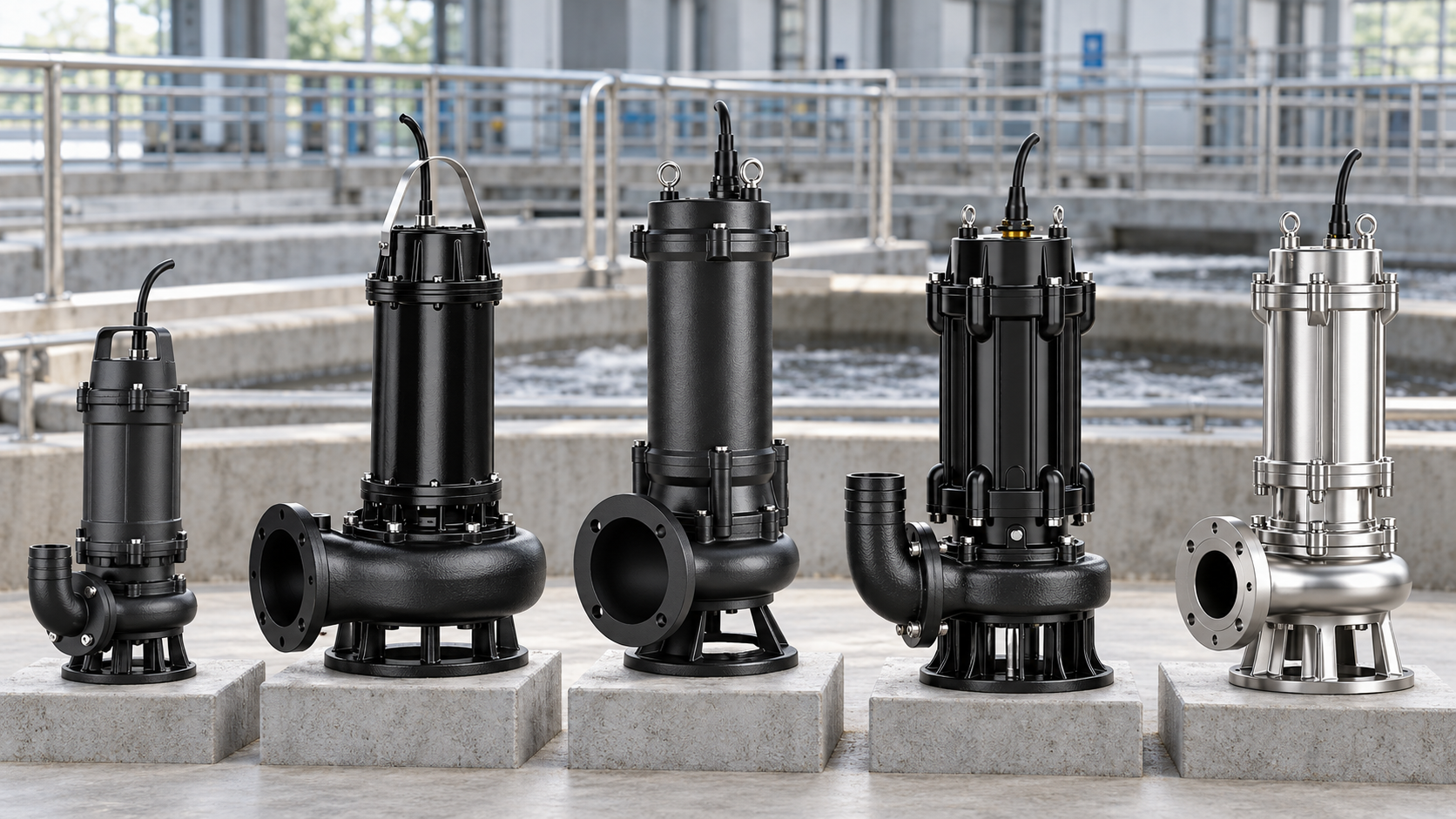
A waste pump is a pump designed to pump water mixed with dirt, suspended matter, or solid waste. It is a broad product category which may include filthy water pumps, wastewater pumps, sewage pumps, cutter pumps and grinder pumps. These goods are not substitutable. Each one has a different impeller, internal passage, solid handling ability, and intended application. Clear product categories help you prescribe the proper pump, and also help to avoid clients trying to use a basic drainage pump for toilet sewage or fibre wastewater.
III. How Does a Waste Pump Work?
The motor turns the impeller within the pump to suck wastewater in through the inlet and push it out via the discharge pipe. The impeller can allow small particles through, but heavier solids necessitate a broader internal path. Cutter and grinder pump types deal with soft solids before they enter the main flow stream. The level of the liquid can also be automatically switched on and off with a float switch or level sensor. This depends on the design of the pump and the sort of waste the pump is designed for.
IV. Main Types of Waste Pumps
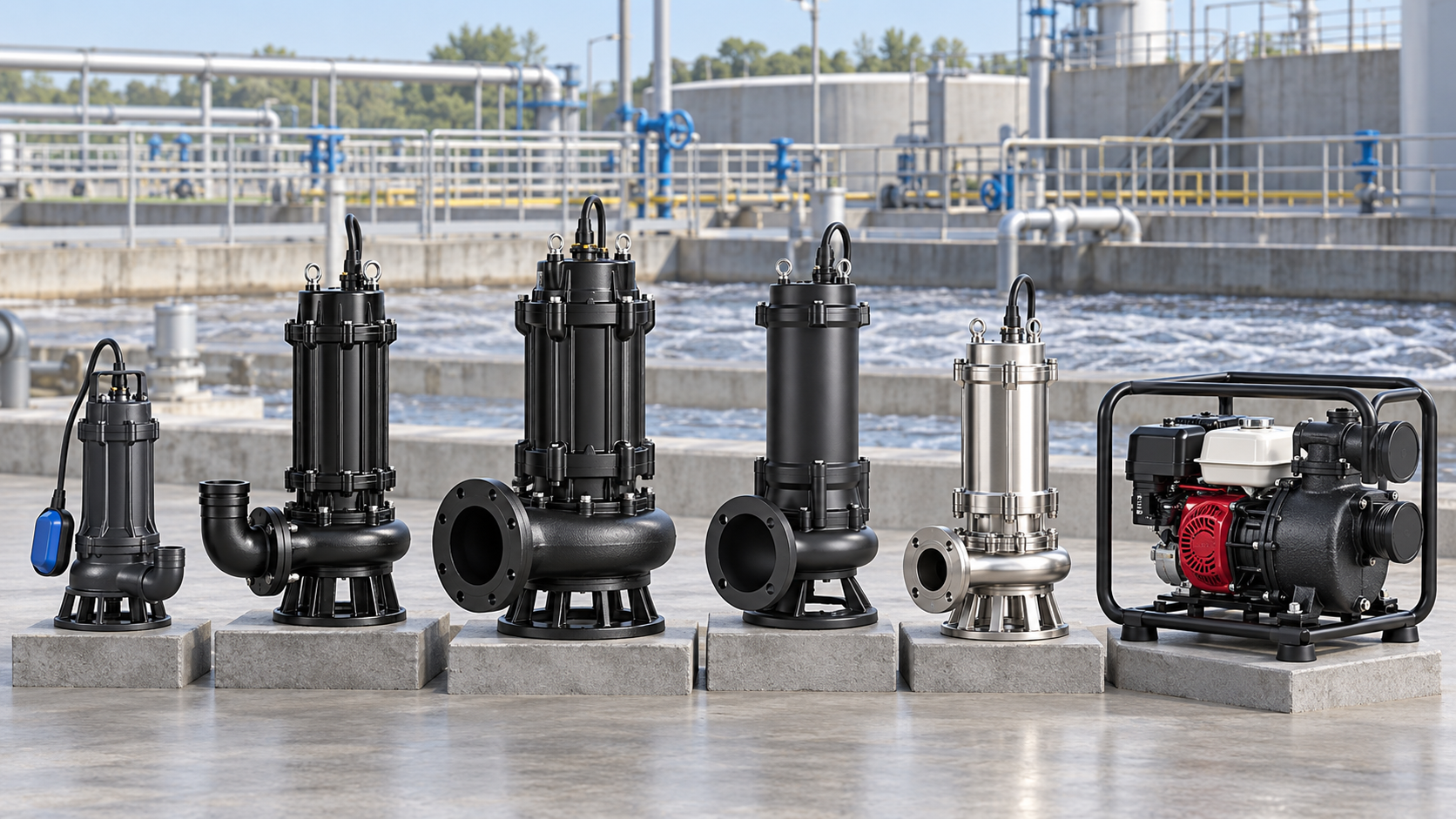
Waste pumps are classified depending on installation method and kind of wastewater and material handling structure. These groups may also overlap. For instance, a submersible sewage pump and a non-clogging pump can be one pump. Knowing the categories allows you to organise your catalogue, compare similar models and avoid stocking a lot of products that serve the same market.
1. Dirty Water Drainage Pumps
Drainage pumps for dirty water are intended for rainwater, basement water, construction water, and water with modest quantities of small particles. Sewage pumps are less expensive than high-flow pumps with a basic structure. If you have a market for home drainage and small construction jobs, you can stock single-phase automatic models with float switches and manual models for contractors. Always specify the allowable particle size and do not sell these pumps for toilet sewage, wipes, or long fibres.
2. Submersible Sewage Pumps
Submersible sewage pumps are put directly into pits, septic tanks and collection sumps. They feature bigger interior passageways allowing them to manage wastewater with solid particles that would block the normal drainage pump. You can create a range around typical pipe sizes, working heads and solid passage requirements and not keep every motor power in stock. Small single-phase automatic variants are for light applications, whereas three-phase models with a control panel are for larger systems and longer daily running times.
3. Non-Clog Wastewater Pumps
The non-clog wastewater pumps have impellers and flow tubes designed to minimise the risk of sediments or fibres adhering. Vortex impellers help to keep more of the waste away from the impeller blades. They are useful when the composition of the wastewater is not stable. Hydraulically, channel impellers are generally more efficient, but require more careful matching in the presence of long fibres in the liquid. You need to provide the impeller type and real solids transit, not just “non-clog”. No pump can handle all sorts of waste without limitations.
4. Cutter and Grinder Waste Pumps
Cutter pumps chop paper and long fibre. Grinder pumps crush soft waste into tiny bits before it reaches the output pipe. These types operate well in septic tanks as well as pressure sewage systems where you could have issues with fibrous waste or smaller pipes. They are not made to grind stones, metal or big amounts of sand. If these items are significant in your market, have spare cutter parts and mechanical seals for the main models in stock, so consumers do not have to replace the whole pump when the cutting parts wear out.
5. Septic Tank and Effluent Pumps
For a septic tank, different stages may require different pumps. Water from a chamber where most solids have settled may only need an effluent pump, but raw sewage with toilet waste and paper needs a sewage or grinder pump. Before you quote a septic tank pump, ask which chamber the pump will go into and what the liquid contains. This prevents you from offering an expensive grinder pump when an effluent pump will do or a light drainage pump when you must handle raw sewage.
6. Self-Priming Wastewater Pumps
Self-priming wastewater pumps are installed above the liquid level and draw water through a suction pipe. They are easier to check and clean than a submersible pump. They are useful for construction drainage, farm waste, rental equipment, and sites where regular maintenance is needed. Electric or engine-driven versions can be used for fixed or mobile applications. Pumps are chosen based on actual flow, head, suction height, and solid passage, and the suction pipe must be airtight for reliable priming.
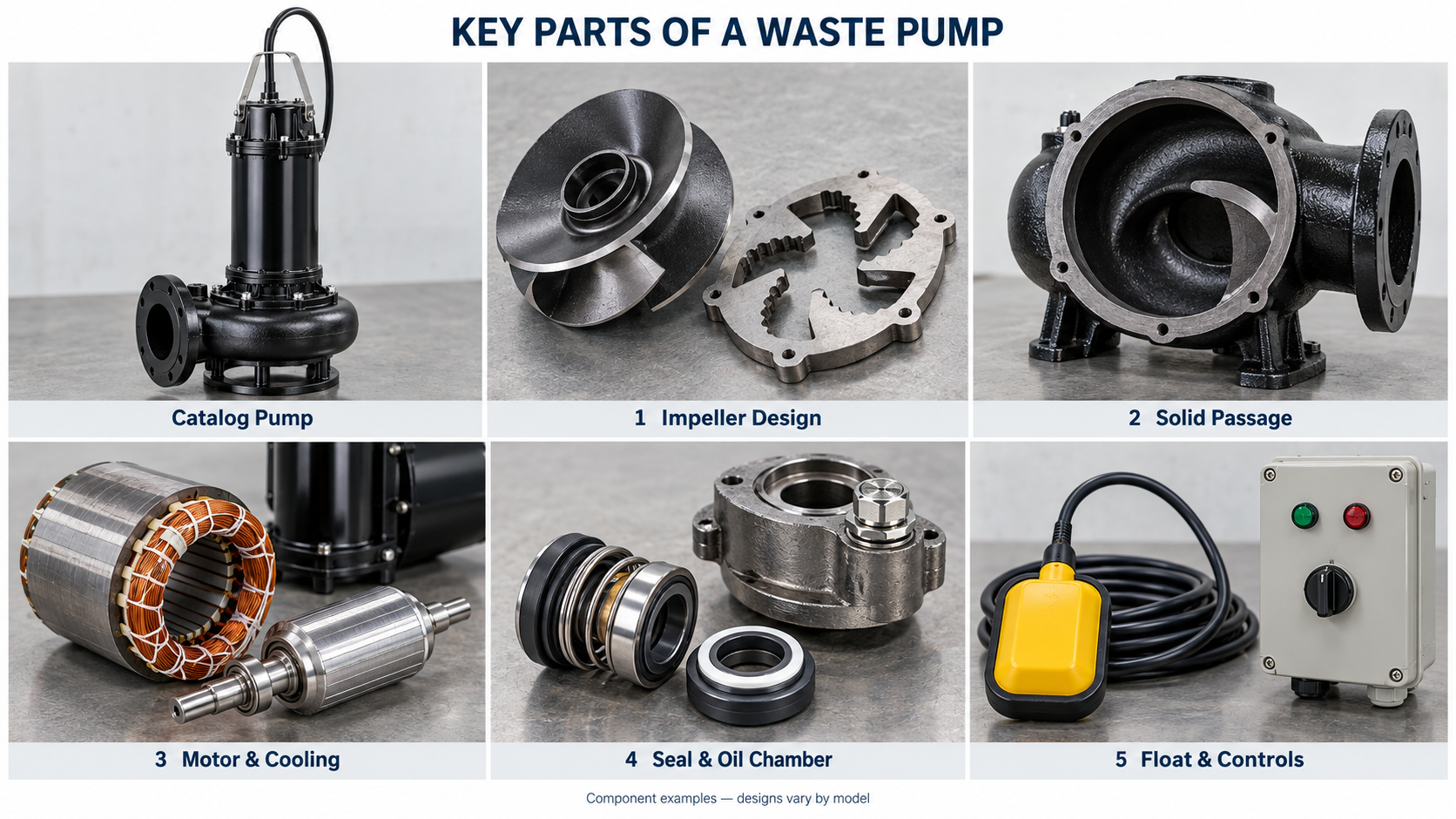
V. Main Parts That Affect Waste Pump Performance
1. Impeller Design
The impeller is the part that moves water and particles through the pump. Vortex impellers reduce the direct contact between the larger solids and the impeller; channel impellers are more focused on flow and efficiency; and semi-open impellers are usually used for water with smaller particles. Cutter and grinder systems add a cutting stage before the main pumping process. Knowing the impeller design helps you compare pumps that may otherwise be similar in power, outlet size, and appearance.
2. Solid Passage Size
The solid passage shows the largest size of solids that can be passed through the pump under the stated conditions. It is not the same as the discharge size. A 2-inch outlet pump does not necessarily pass a 2-inch solid, as the smallest internal point can be much smaller. The shape of the waste is important also. A round solid can pass easily, while a long wipe or cloth can wrap around the impeller. So, you should check the waste type and the passage size.
3. Motor and Cooling
The submersible waste pump has a sealed motor; however, the cooling method depends on the model. Some pumps need covering with liquid; others have a cooling jacket or other structure to allow for a lower water level. Also check the duty rating for the motor, continuous or intermittent, and the number of starts it can handle. These details are important in supplying pumps for automatic sumps, commercial buildings, or other systems that may start often.
4. Mechanical Seal and Oil Chamber
The mechanical seal keeps wastewater from entering the motor. Many waste pumps have an oil chamber inside to cool and lubricate the sealing area. Hard particles, such as sand, can wear the seal faces, and fibrous waste can build up around the shaft. When comparing suppliers, you should look at the seal material, the number of seal sets, the oil chamber design, and the availability of replacement seals. Such details can affect long-term service costs far more than a small difference in purchase price.
5. Float Switch and Control System
A float switch is a simple automatic control device for small single-pump systems. Larger pits may have their own level sensors, control panels, alarms, and alternating control for two pumps. The control system should also be compatible with the motor voltage, current, and starting method. For small installations in your product line, automatic models are convenient; however, manual pumps provide contractors more freedom to connect the pump to an existing control system.
VI. How to Choose the Right Waste Pump
1. Identify the Wastewater Type
Look for a pump that is rated for rainwater, home wastewater, raw sewage, septic effluent, industrial wastewater, or sludge. Is there toilet paper in the liquid? Food waste? Oil? Fibres? Chemicals? The word “wastewater” alone is insufficient to make a choice, as two places may use the same name for liquids with completely different contents. Clear information during the quotation stage prevents model changes and disputes later.
2. Check Solid Size and Fiber Content
The largest solid size is important, but you should also check its shape and material. Round soft solids may be able to pass through a regular sewage pump. Wipes, cloth, rope, and plastic strips can wrap around the impeller even if thin. Vortex impellers, cutters, and grinders solve different problems, with large passages. Just increasing the motor power without changing the hydraulic structure will not make a standard pump suitable for long fibres.
3. Match Flow and Head at the Duty Point
Select the pump for the required flow at the actual working head. The total head is the sum of the vertical lift, the pressure required at the outlet, and the friction loss in pipes, valves and fittings. The maximum flow is usually given at a very low head, while the maximum head occurs at almost zero flow; so, the two catalogue figures cannot be reached together. The duty point on the pump curve can avoid slow drainage, oversized motors, and customer complaints about the catalogue performance not being up to scratch.
4. Match the Impeller to the Waste
A drainage or semi-open impeller for water with small particles, a vortex or large-channel impeller for sewage with larger solids, and a cutter or grinder for wastewater with soft fibrous material. Don’t select an impeller just because it’s labelled heavy duty. Which is the right choice? Depends on what is likely to clog the pump. By matching the structure to the waste, you have a better reason to offer different levels of pricing in the same range of power.
5. Choose Submersible or Surface Installation
A submersible pump is directly installed into the pit; so, there is no suction line, and a compact design is possible. A self-priming surface pump stays above the liquid and is more easily inspected, cleaned, and repaired. Select one of them based on the available installation space, the suction conditions, the access for maintenance, and whether the pump will have to be moved from one place to another. If the available suction height is not suitable, a surface pump should not be chosen because it is easier to service.
6. Check the Discharge Pipe
The discharge pipe must carry the water and solids handled by the pump. This increases friction loss and decreases flow with a long or narrow pipe. A wrong check valve can be another blockage point. Before choosing the model, check pipe diameter, vertical height, horizontal distance, number of bends and valve type. In the case of grinder and high-head sewage systems, the pipe size and pressure are part of the system design, and the pipe layout should be checked as a whole system.
7. Confirm Voltage, Phase, and Motor Duty
Check the local voltage, frequency, phase, daily operating hours and control equipment available. Single-phase pumps are easy to use for home and small business use. Three-phase motors are usually better suited for larger powers and longer working times. The installation should also match the starting current, cable size, overload protection and number of starts per hour. These checks prevent you from stocking models that meet the hydraulic demand but not the local electrical supply.
8. Match Materials to the Wastewater
The strength at a reasonable cost makes cast iron suitable for general use in wastewater. If corrosion is an issue, stainless steel may be a better choice, but you still need the right grade for the chemicals, salt content and temperature. Stainless steel doesn’t make a pump sand-proof. Hard particles don’t corrode, but they do wear. When the wastewater is hot, corrosive or abrasive, be sure to confirm the materials of the pump body, impeller, shaft, seal and cable.
9. Consider Cleaning and Spare Parts
Waste pumps are used in conditions where they might be cleaned and parts replaced. Check how easy it is to get to the inlet, impeller, cutter and seal area. It pays to have a stock of mechanical seals, float switches, impellers, cutter sets, cables and other common parts for your main selling models. This means you may repair smaller problems without having to replace an entire pump and gives your customers more confidence to order the same series again.
10. Build the Range around Local Applications
Focus on common needs in wastewater to build your product range instead of trying to stock every available motor power model. Within practical range, these can include simple automatic drainage pumps, standard sewage pumps, non-clog or cutter types for tough waste, or self-priming pumps for project use or mobile use. Then you can add different power levels that sell regularly within the categories. This approach allows the product range to be kept simple, limits duplication of SKUs, and slow-moving stock is kept to a minimum.
VII. Conclusion
Choosing a waste pump isn’t only about matching motor power and outlet size. You need to check the wastewater type, size of the solids, fibre content, impeller design, solids passage, flow, head, installation method, materials, motor duty, and control system. Knowing these factors will provide you with a clearer product range, a decrease in clogging problems, and more confidence when recommending suitable models.
Waste pumps to import or distribute? Send HunGerät your target applications, typical flow and head ranges, solid-handling needs, voltage, chosen materials and expected order quantities. We can help you with the selection of a practical product range, pump curves, control options, spare parts, and OEM configurations for your market.
VIII. FAQ
1. Is a Waste Pump the Same as a Sewage Pump?
Not always. Waste pump is a general term. A sewage pump is used mainly for pumping wastewater containing sewage and solid waste. Check the product specifications and the expected type of liquid and solids.
2. What Is the Difference between a Waste Pump and a Dirty Water Pump?
Dirty water pumps are often used for drainage water with small particles, while waste or sewage pumps have a larger passage for heavier solids. For toilet sewage, do not use a dirty water pump unless it is specifically rated for such a use.
3. Can a Waste Pump Handle Toilet Sewage?
Yes, but it must have the correct impeller and a suitable solid passage. If the wastewater has wipes or long fibres, instead of a regular sewage pump, you may need a non-clog, cutter, or grinder model.
4. How Do You Check the Maximum Solid Passage?
Check the maximum particle size or solid passage for the specific pump model listed. The smallest internal passage may be smaller. Do not estimate from the discharge opening.
5. Does a 2-Inch Outlet Mean the Pump Can Pass 2-Inch Solids?
No. The outlet size is the pipe connection, not the internal solid passage. Before offering the pump for sewage or water with large particles, check the stated passage size of the pump.
6. What Is the Difference between a Vortex and Channel Impeller?
A vortex impeller keeps more solids away from the blades and can reduce clogging in tough wastewater. A channel impeller generally has higher hydraulic efficiency but needs to be properly matched with long fibres.
7. What Is the Difference between a Cutter Pump and a Grinder Pump?
A cutter pump cuts long fibres and soft waste to reduce wrapping. A grinder pump breaks waste into smaller particles for use in pressure sewage systems. Neither type is intended for grinding stones, metal, or large amounts of sand.
8. Can a Waste Pump Handle Wipes, Rags, and Plastic Bags?
Only use pumps designed for fibrous waste to handle these materials. Even a cutter or grinder pump has its limits, so check the cutting structure and allowed waste before saying it can handle wipes, cloth or plastic.
9. Can a Waste Pump Handle Sand or Gravel?
Only within the sand and particle limits given for the model. Sand wears impellers, casings, bearings, and seals, and gravel can clog or damage a pump not designed to handle hard materials in sewage systems.
10. Can a Waste Pump Run Dry?
Most submersible waste pumps are not to be run dry unless specifically allowed by the manufacturer. The motor can overheat, and the mechanical seal can be damaged. Proper level control is needed for unattended systems.
11. Can a Waste Pump Run Continuously?
Yes, as long as the motor is rated for continuous service and the pump gets enough cooling as required by its design. Check the allowed water level, motor current, liquid temperature, and working duty for the specific model.
12. Does Every Waste Pump Need a Float Switch?
No. For simple automatic operation, a float switch is useful, while manual pumps can be wired to separate sensors or an existing control panel. Larger systems may have two pumps with alternating control, alarms, and several level sensors.
13. Why Does a Waste Pump Keep Clogging?
A too-small solid passage, wrong impeller, long fibres, blocked inlet, or waste not intended for the pump are common reasons. Before replacing the pump with a larger model, check the material causing the blockage.
14. Why Does a Waste Pump Deliver Less Flow after Installation?
The actual head may be higher than calculated due to the pipe length, small pipe diameter, bends, valves or vertical lift. Low voltage. Partially blocked impeller. Worn hydraulic parts. This may further reduce flow output.
15. Can a Clean Water Pump Be Used for Wastewater?
Only when the liquid is free of particles and fibres which could clog or damage the pump. For dirty water, sewage or septic waste use a pump with suitable passage and impeller design.
16. Can a Waste Pump Be Installed above the Wastewater Tank?
If the suction conditions are right, a self-priming or dry-mounted wastewater pump can be installed above the tank. A standard submersible sewage pump is made to run inside the pit and is not suitable for use as a surface pump.
17. How Does a Long Discharge Pipe Affect Waste Pump Performance?
A long discharge pipe has more friction loss and lowers the flow available at the outlet. Losses increase when the pipe is small, the flow is high, or the system has many bends and valves.
18. Should You Choose a Cast-Iron or Stainless-Steel Waste Pump?
Choose the material based on the liquid, not its appearance. Cast iron is suitable for standard sewage while stainless steel may be better for corrosive wastewater. However, the right grade and seal materials still need to be checked.
19. Should You Choose a Single-Phase or Three-Phase Waste Pump?
Choose according to power supply availability, size of motor, running time and control system. Single-phase models work well for many small applications, while three-phase models are usually used for larger pumps and longer operation.
20. What Information Should You Provide When Ordering a Waste Pump?
Wastewater type, solid size, fibre content, needed flow, total head, installation method, pipe size, voltage, phase, running time, material requirements, control method. Main uses and expected quantity should also be provided for wholesale orders so that the supplier can prepare a suitable range of products.