I. Introduction
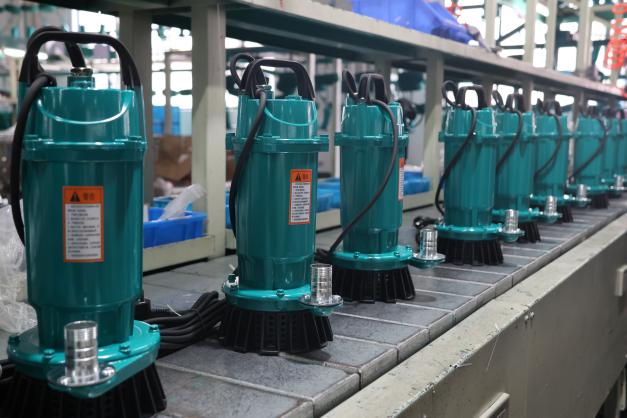
Selecting the wrong centrifugal pump can lead to poor performance, lost inventory, and additional after-sales troubles. In this guide, you’ll learn the primary types of centrifugal pumps, where each is typically used, how to choose between cast iron and stainless steel, and what to look for when picking a dependable product line. The goal is to assist you in selecting pumps for actual applications and to avoid sourcing mistakes.
II. Main Centrifugal Pump Types
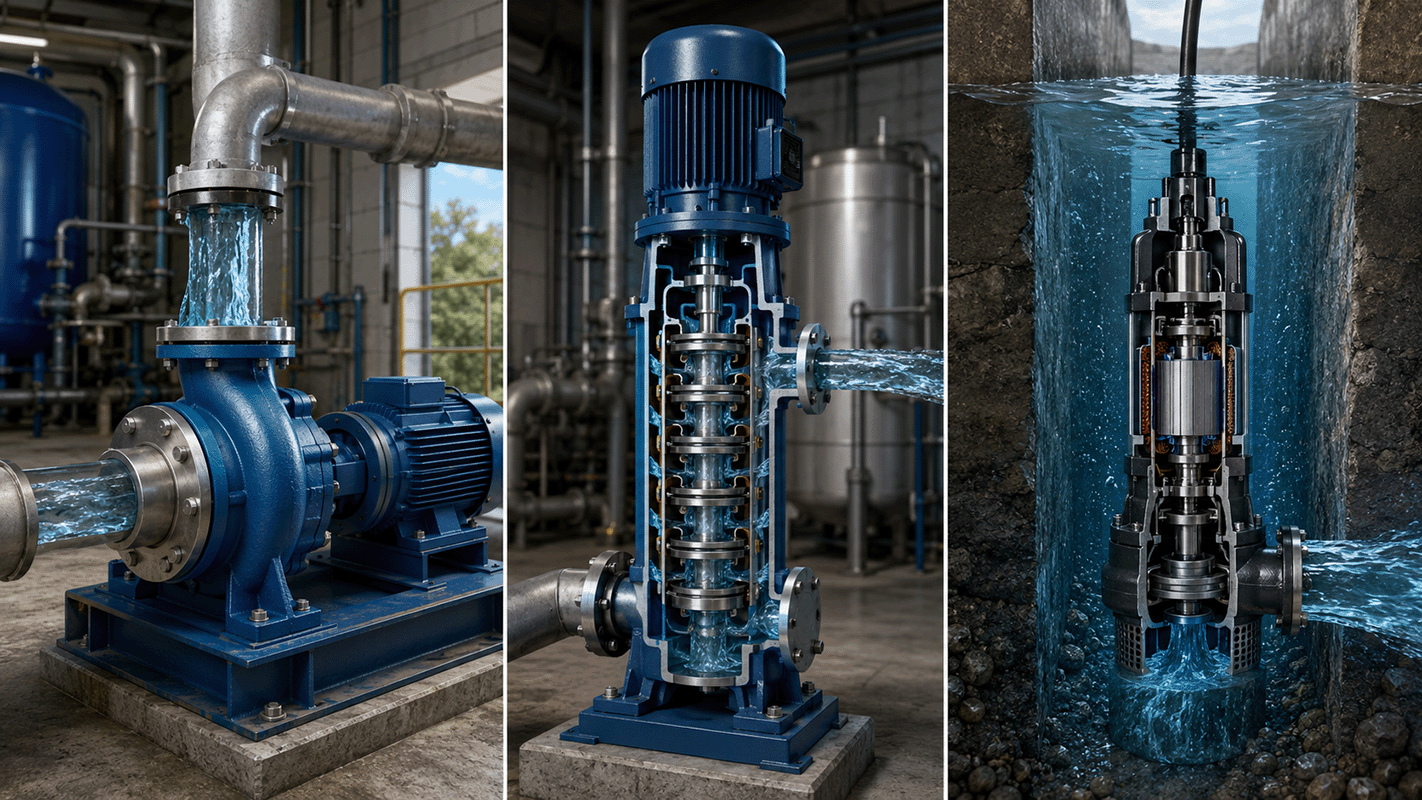
Centrifugal pumps are not all made to work the same way. Some are only meant to move water, others can handle high pressure, and still others need to be installed in water to work. You can better match each pump to its job once you know about the main types.
End-Suction Pumps
These are the standard single-stage units. If you need a pump for general water transfer, agricultural irrigation or basic facility plumbing, this is the pump is the right one you need. This is a simple, practical machine that deals with most of the everyday jobs involving water flow.
Multistage Pumps
Sometimes a single-stage pump just isn’t strong enough to move the water. Multistage pumps solve this by placing multiple impellers within a single housing. As the water runs through, the pressure is increased gradually with each internal stage. You’ll want these in your catalogue for high-pressure applications, especially including commercial boiler feeds or supplying water to the upper floors of high-rise structures.
Submersible Centrifugal Pumps
These pumps are designed to be completely submerged in the water supply, working completely without the specific external parts required for surface arrangements. They are safe to use for deep wells, flooded sumps, and nasty underground conditions where surface pumps just won’t work.
III. Major Applications
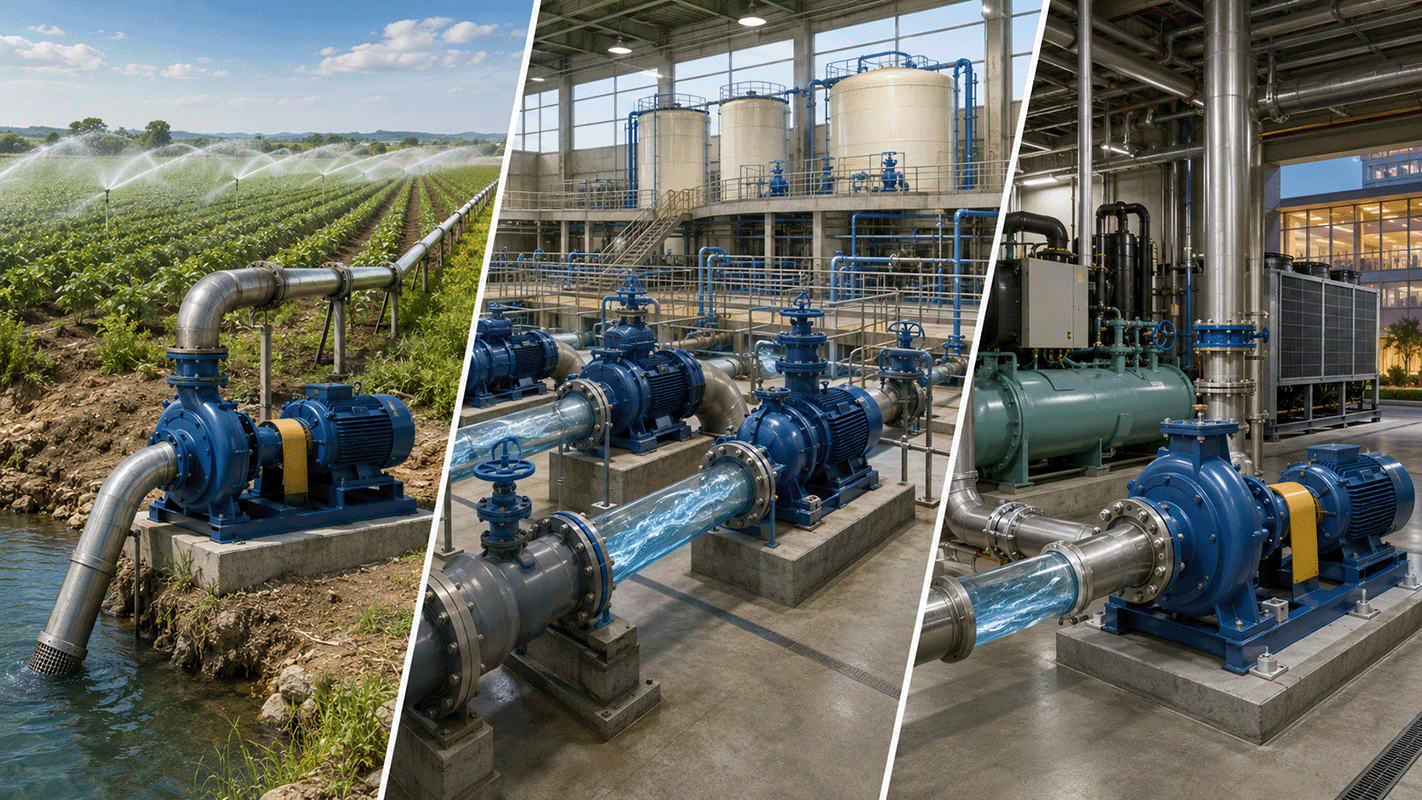
Centrifugal pumps can be used in various markets to move, deliver, and circulate huge volumes of water. That is, a simple pump category may support multiple industries, providing a consistent demand across a range of applications.
Agricultural Irrigation
In agricultural irrigation, water from wells, rivers, ponds, or reservoirs has to be moved to big planting areas for irrigation. The system might have to run for a long time, so the pump needs to have a steady flow, be easy to use, and work reliably. This is the main reason why centrifugal pumps are used so often in watering systems. They are good for watering crops, providing water to farms, watering greenhouses, and other everyday farming tasks because they can move large amounts of water quickly.
Municipal Water Supply
Water goes through sewage systems, city water systems, public water systems, and stations that increase water flow through centrifugal pumps. These systems need good working pumps as they may be operated daily for a long period.
Commercial HVAC Systems
Centrifugal pumps are also used in many commercial HVAC systems. They pump water through hotels, office buildings, businesses, shopping malls, and other major buildings to heat or cool them. It is quite crucial for these initiatives that things perform well, don’t shake about a lot, and have a stable flow.
IV. Material Selection: Cast Iron vs. Stainless Steel
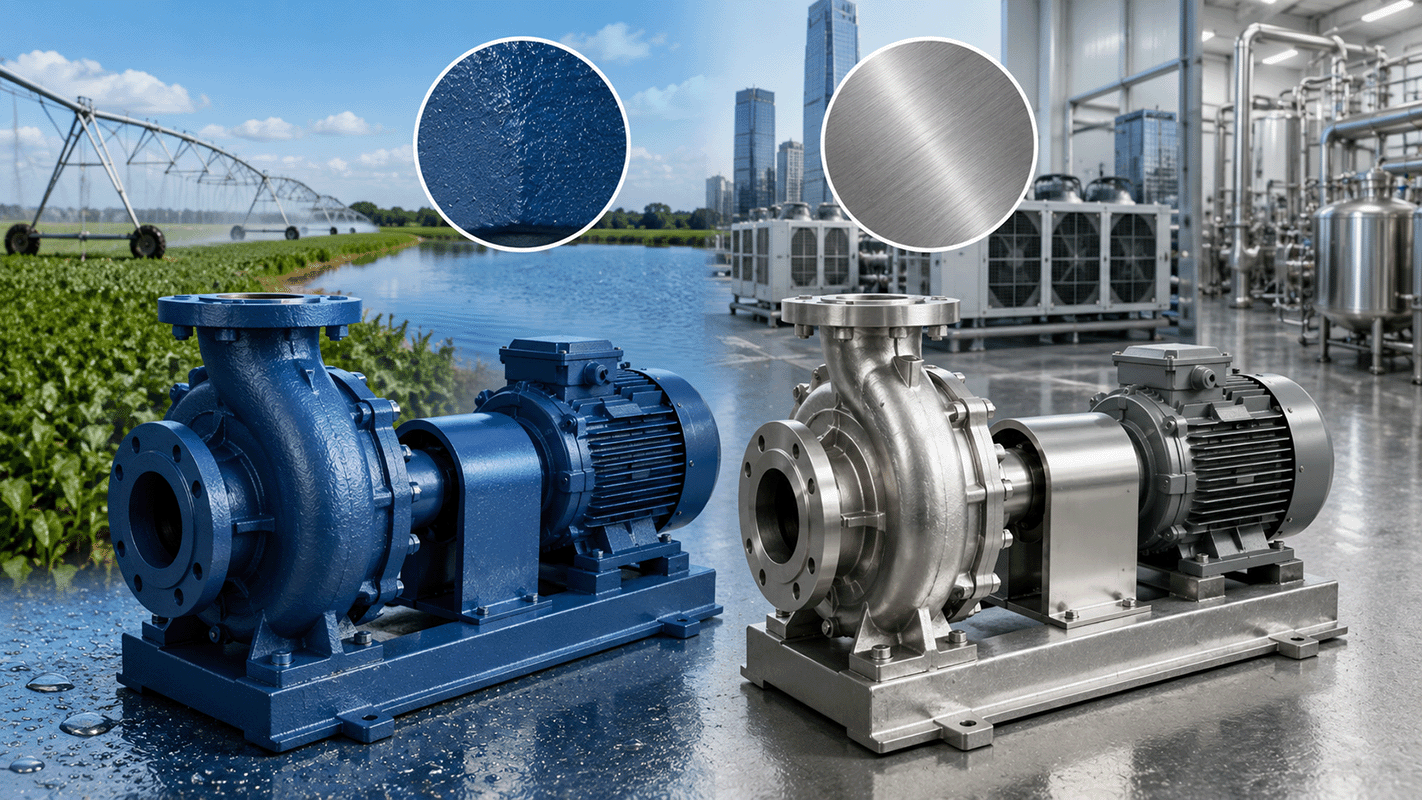
When purchasing a centrifugal pump, one of the first things to consider is material selection. The same pump design might operate substantially differently depending on the liquid, environment, and projected service life.
Cast Iron
Cast iron is a practical and economical choice for many common water applications. Cast iron pumps are usually the most durable and least expensive form of pump for clean, fresh water, irrigation, ordinary water transfer or routine commercial use.
Cast iron is a wonderful choice for many common projects because it’s sturdy, not too expensive, and performs well.
Stainless Steel 304/316
Where the work environment is rough, stainless steel is the superior choice. If the pump must handle drinking water, caustic substances, salty water, or sanitary handling, steels 304 or 316 can help to maintain the pump clean and rust-free.
You may pay more for stainless steel upfront, but it generally pays for itself over time because it doesn’t rust and doesn’t need to be replaced as often.
V. How To Choose A Centrifugal Pump
When you are selecting a manufacturer, keeping bad inventory out of your warehouse is just as important as finding a good price. Here is how you can avoid the most common sourcing traps.
Verify Manufacturing Precision
A centrifugal pump depends completely on very tight internal clearances for efficient operation. If you buy a cheap pump, you will probably find the metal castings inside are rough and the working parts are not well adjusted. Put that pump on a job site, and it will shake like crazy, waste electricity, and wear out the bearings faster than they should. You want to discover a factory that can guarantee correct casting and balancing, so you don’t have to worry about a lot of warranty claims and returns.
Standardized Component Sourcing
Some parts of a pump are wear parts over time, such as mechanical seals and wear rings. It will be hard to get spare parts when your clients need them if you utilise proprietary sizes that no other factory uses. Always better to deal with a manufacturer who makes use of standard parts. This retains your reputation as a very dependable supplier, makes it easy to purchase appropriate spare parts, and lets contractors fix problems fast.
VI. Conclusion & Sourcing CTA
Centrifugal pumps are a key product line for many water supply, irrigation, HVAC and industrial projects. A wider and more reliable range means you can meet more customers’ needs and handle more types of working situations with confidence.
HunGerat is prepared to be your factory partner to assist you with your pump business. We provide various centrifugal pump lines with rugged quality, functional design and reliable performance, assisting you in developing a better product line for international sales.
VII. FAQ: Technical & Sourcing Questions About Centrifugal Pumps
Q1: How do centrifugal pumps differ from positive displacement pumps?
A: Positive displacement pumps move set amounts of water at high pressure, while centrifugal pumps use impellers that spin to move large amounts of water.
Q2: Why must a centrifugal pump be primed before starting?
A: They can’t get air out. When you prime, you fill the casing with water, which lets the impeller make the centrifugal force it needs.
Q3: What causes cavitation in a centrifugal pump?
A: Cavitation happens when the suction pressure drops too low, causing vapour bubbles to burst and damage the metal propeller.
Q4: How does wearing rings reduce pump maintenance costs?
A: As barriers that can be swapped out, they keep the gaps between the impeller and the case small and protect the expensive metal parts inside.
Q5: When should distributors specify a multistage centrifugal pump?
A: Multistage pumps should be used for high-pressure tasks like boiler feeds, high-rise buildings, or moving water over very long distances.
Q6: What does the Best Efficiency Point (BEP) indicate?
A: BEP is the exact ratio of flow to head at which the pump works most efficiently and with the least amount of vibration.
Q7: Can standard centrifugal pumps handle dirty wastewater?
A: Standard closed impellers get clogged up quickly. To safely move solids and farm waste, you must choose impellers that are open or partially open.
Q8: What is Total Dynamic Head (TDH) in pump sizing?
A: TDH is the total amount of resistance the pump has to deal with. It includes vertical lift, pipe friction, and pressure drops inside the valves.
Q9: Why upgrade from cast iron to SS316 stainless steel?
A: SS316 is better than regular cast iron at resisting strong chlorides, seawater, and harsh industrial chemicals.
Q10: What happens if a centrifugal pump runs dry?
A: When you run your pump without any water, it quickly gets too hot, which damages the mechanical parts, melts the internals, and leads to catastrophic shaft failure.
Q11: How does a mechanical seal prevent pump leaks?
A: It has two carefully designed faces that are pressed together by springs to make a barrier that stops leaks between the moving shaft and the casing.
Q12: Why does the pump flow rate drop when the pressure increases?
A: Flow and head are opposite to each other because of centrifugal mechanics. Putting water higher naturally lowers the total amount delivered.
Q13: Are centrifugal pumps suitable for pumping heavy oils?
A: No, they don’t work as well with high-viscosity fluids, so they quickly stop working. Thick oils cause more friction inside, which lowers flow rates and puts too much stress on motors.
Q14: What causes a centrifugal pump to suddenly vibrate heavily?
A: When there is sudden vibration, it generally means that there is severe cavitation, a failed bearing, a misaligned shaft, or something physically blocking the impeller blades as they spin.
Q15: Why are inline circulator pumps used in commercial HVAC?
A: They fit right into pipes, which saves room and keeps water moving continuously and quietly through heating and cooling tower loops.
Q16: What is the main advantage of a closed impeller?
A: Enclosed blades properly guide water without any internal splashing, providing the highest level of hydraulic efficiency for moving clean water.
Q17: How do you identify a failing pump bearing early?
A: Before the shaft alignment fails fully, keep an eye out for high-pitched grinding sounds, localised heat on the housing, and more shaking.
Q18: Why is exact pump sizing critical for contractors?
A: Too big a size wastes power and wears out parts, while too small a size doesn’t meet the pressure in the system. Long-term dependability is ensured by exact size.