I. Introduction
Inline pumps are important when you need a reliable pump for raising pressure or circulating water. They are small and straight, and they can fit right into the pipe. This saves time and space when installing them. This article will talk about what an inline pump is, how it works, and the main kinds that are out there.
II. What Is an Inline Pump?
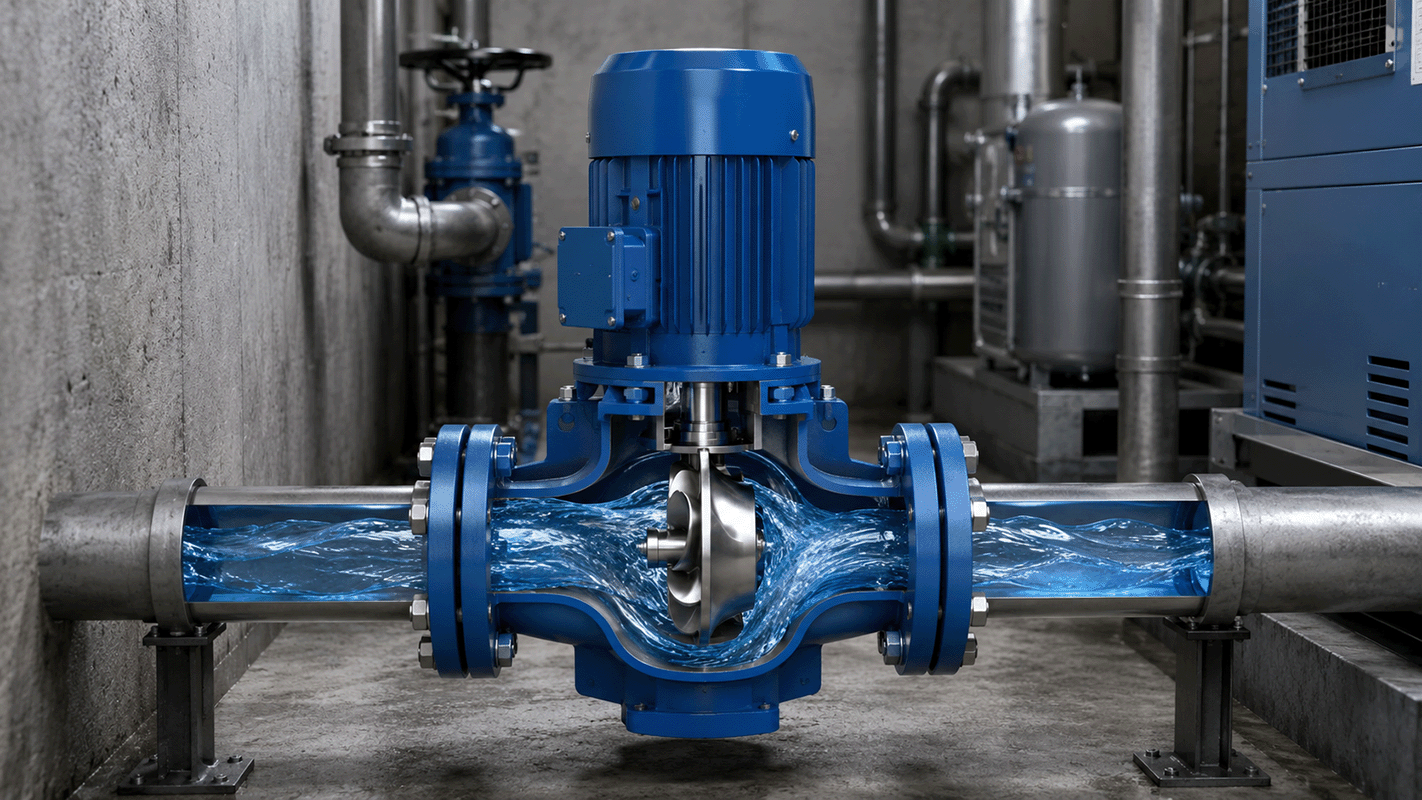
An inline pump is a type of pump that is designed to be put directly in the pipeline. Because in most places, the pipe’s inlet and outlet are straight lines. This lets water come in from one side and go out the other without having to change direction too much.
You could think of it as a clean and space-saving pump choice. Because of its design, inline pumps are easy to put in places where space is limited.
III. How Does an Inline Pump Work?
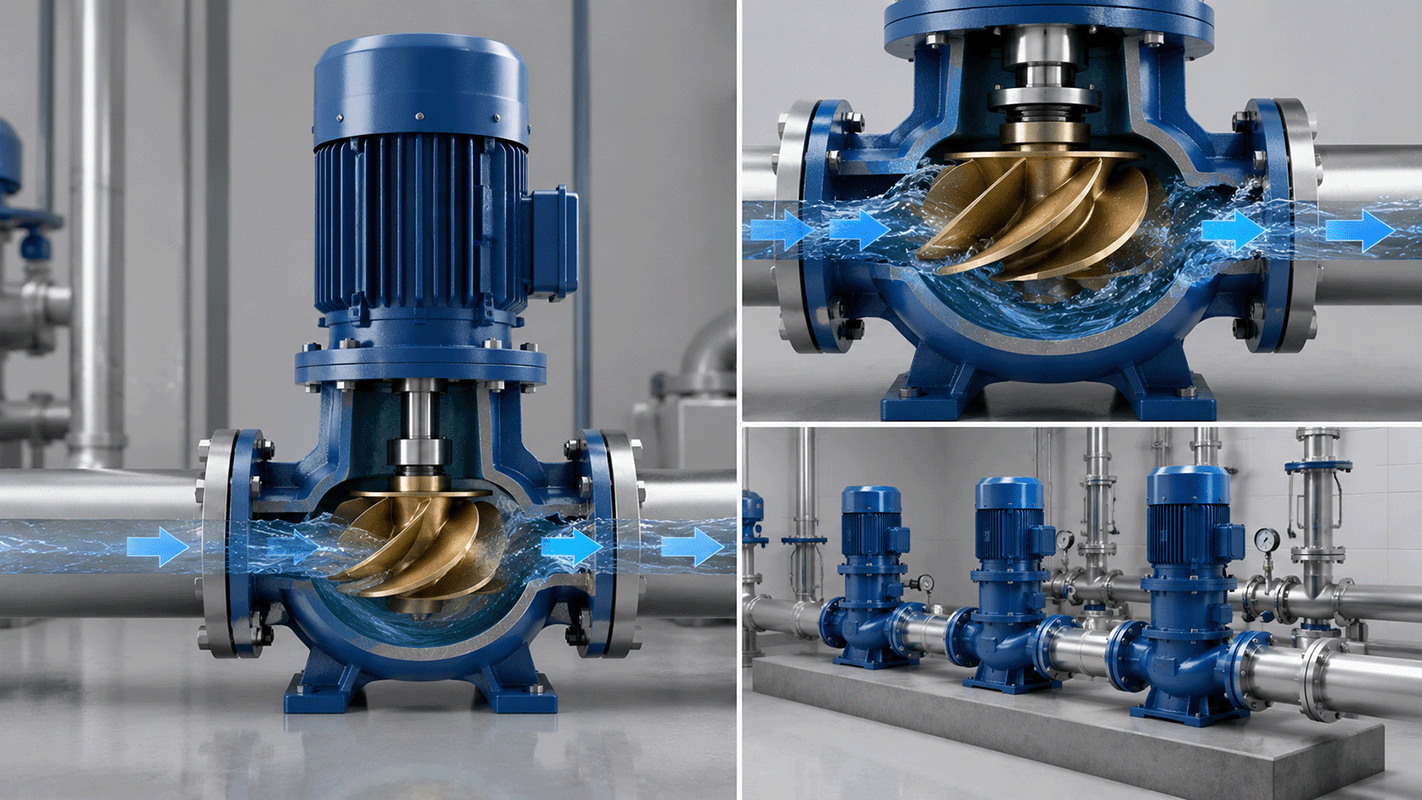
The Inline pump is easy to understand and use. The motor inside the pump body turns the impeller, which moves the water forward. The impeller gives the water power as it flows through the pump, helping to keep the flow and pressure steady.
With this straight-through form, the pump installation is cleaner and takes up less space. It’s easier to plan, easier to install, and cleaner in the pump room because you don’t have to move as many extra pipes.
IV. Main Types of Inline Pumps
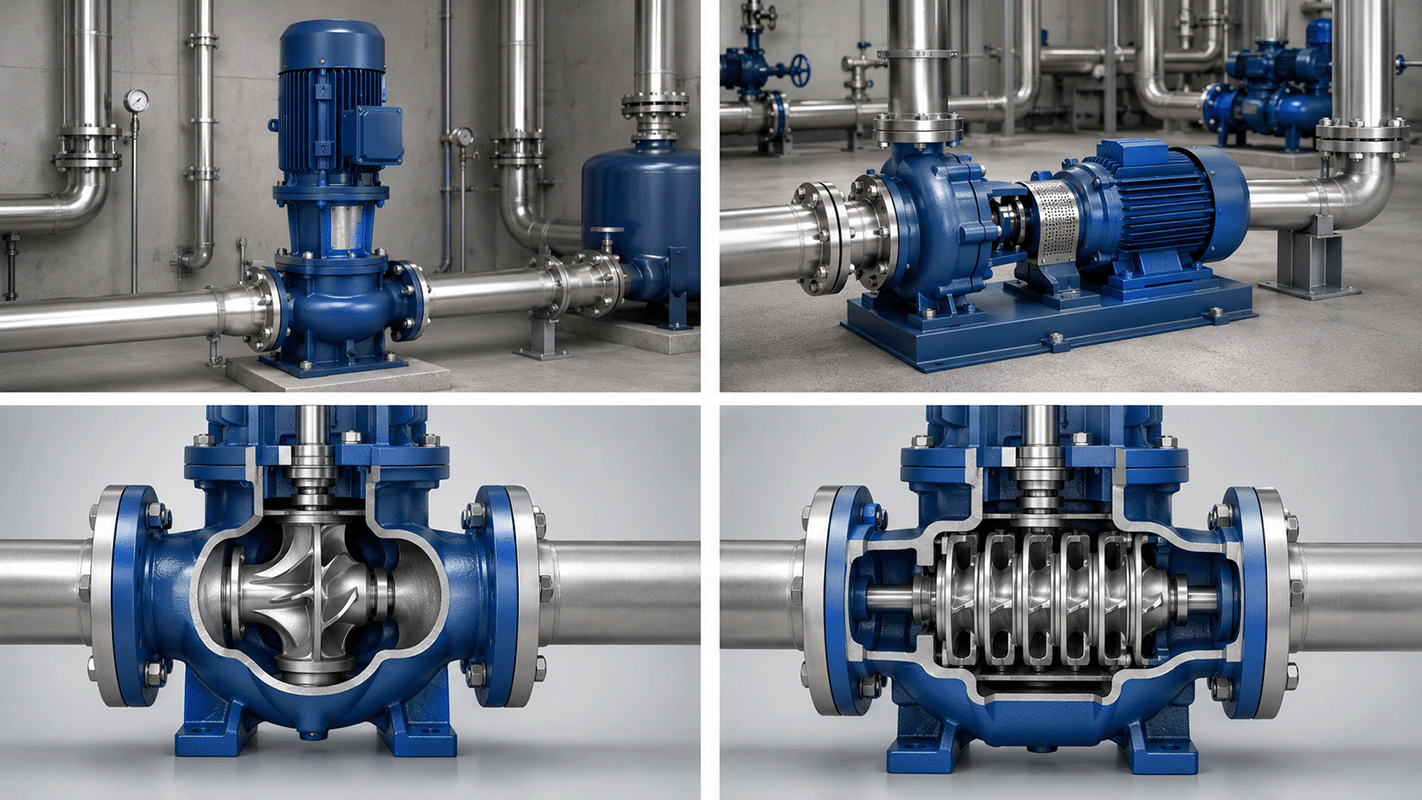
Inline pumps are made differently, and each design will be suitable for a specific operating condition. Once you know these main types, it is easier to select the proper models.
1. Vertical Inline Pump
The motor is put on top of the pump body in a vertical inline pump. This type saves floor space, which is useful when the pump room is small or the pipes need to be laid out in a tight way. They’re good when you need a steady flow but don’t want the pump to take up too much space.
2. Horizontal Inline Pump
The motor and pump body of a horizontal inline pump are laid out flat on the ground. This type is easy to check, set up, and keep up in some pump rooms. Because the pipeline is laid out horizontally, it works well in cases where laid out is the best way to install.
3. Single-Stage Inline Pump
A single-stage inline pump uses one impeller to move the water. It’s simple and often used when you need a regular flow but not quite a lot of pressure. It’s easy to match this type, and it doesn’t cost much for many daily water systems.
4. Multistage Inline Pump
A multistage inline pump has more than one impeller inside it. The pump can move water farther or higher because each impeller adds more force. When you need both high pressure and a small fitting size, a multistage inline pump is often the best choice.
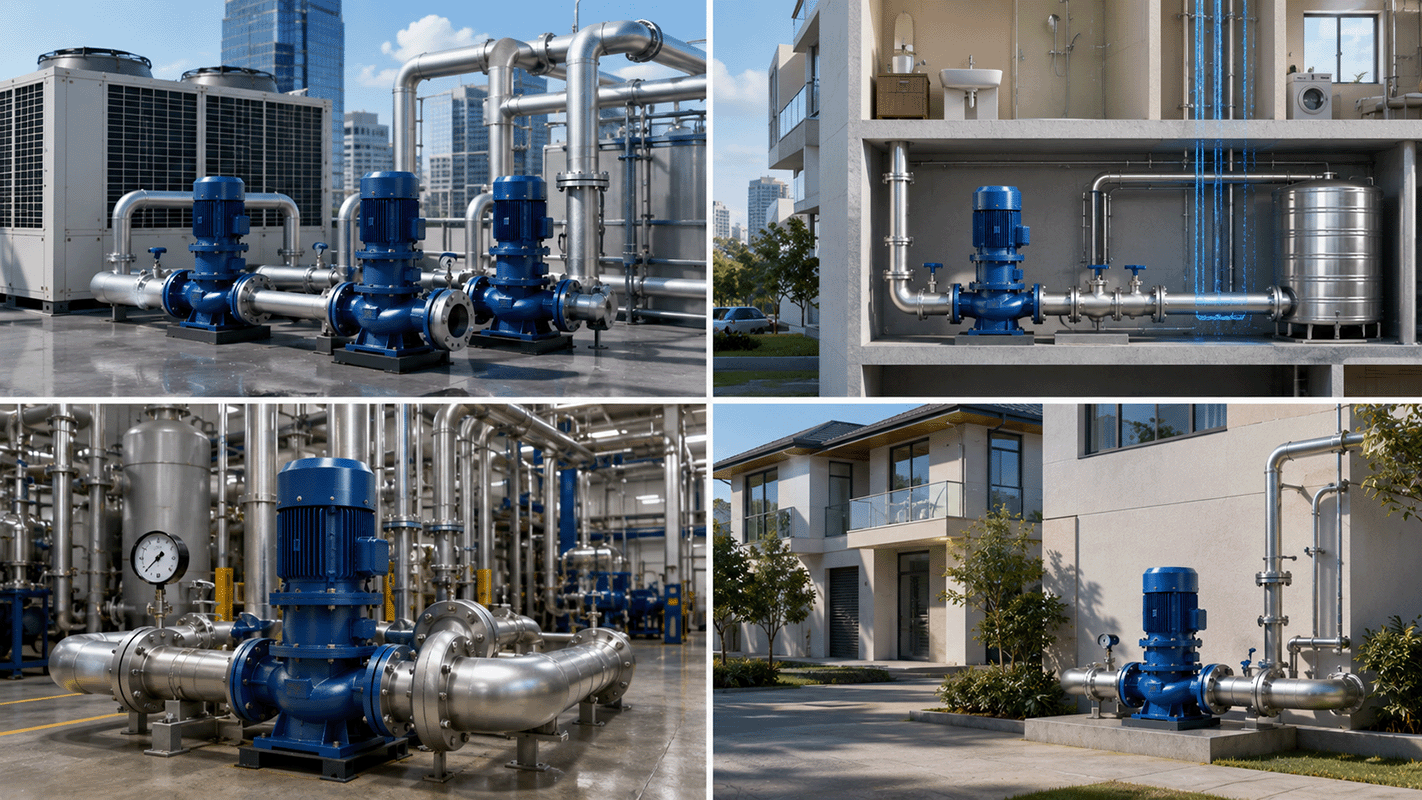
V. Common Applications of Inline Pumps
For constant use, inline pumps are often the best choice. It is important to make sure that the pump you buy is right for the job. Different uses may need different flow rates, pressure levels, and materials.
1. HVAC Water Circulation
Inline pumps are often used to move hot or cold water through HVAC systems for heating and cooling. At work, in shopping stores, in hotels, in office buildings, and in other business places, you can often find them.
2. Building Water Pressure Boosting
When the water flow is too low, especially on higher floors or in systems with longer pipes, inline pumps are also used. They help get more water and keep the flow steady. Businesses, schools, hospitals, homes, and other public places where steady water flow is important for daily use can use it.
3. Industrial Water Circulation
In industrial settings, inline pumps help move water through systems that cool, process, wash, and provide water. A steady speed is very important in these places because they need to run all the time. A good inline pump makes it easy for the water to flow and lowers the risk that the system will break down.
4. Domestic and Light Commercial Water Supply
You can also use inline pumps in smaller water systems that don’t have a lot of space for installation. It’s easy to fit them into simple pipe plans or small pump rooms because they’re small. They can be used for small business water supply systems that need to be simple to set up and move water regularly in places like homes, small shops, offices, workshops, and more.
VI. Key Specifications to Check Before Buying an Inline Pump
Before you choose an inline pump, you should look beyond the model name. If you get the right specs, the pump will work better, fit your system better, and cause fewer problems after installation.
1. Flow Rate
It is generally given in litres per minute, cubic metres per hour, or gallons per minute. Flow rate tells you how much water the pump can move in a certain amount of time. It is important to make sure that the flow rate is right for the system’s needs. Might not get enough water if the flow is too low. If it’s too high, the pump might lose power or create pressure that isn’t needed.
2. Head and Pressure
The pump’s head tells you how high or far it can move water. This has a lot to do with pressure, especially when it comes to building water supply and pressure-boosting systems. Make sure you know the minimum lifting height, pipe length, and system pressure before you choose a model. You won’t have to pick a pump that is too small or too big for the job this way.
3. Motor Power
The motor power should be right for how the pump is working. If the motor is too small, it could easily overheat, and if it’s too big, it could cost more and use more energy. Before choosing the motor power, you should look at the pump’s duty point, running time, and environment. It is very important to do this for systems that run all day long.
4. Pipe Connection Size
Both the inlet and outlet sizes should be the same as the pipeline system. It’s harder to install something if the link size doesn’t work. You might need to use more adapters or change the pipes. And in some areas, it’s easier to sell, install, and keep up with standard connection sizes for large orders.
5. Pump Material
The choice of material relies on the liquid and the place where it will be used. A popular and cost-effective choice for moving clean water, air conditioning air, and other types of water is cast iron. Stainless steel is better when you need something that won’t rust, needs to be in touch with water, or will be used with drinking water. Picking the right material can help keep the pump from rusting, leaking, and breaking down too soon.
6. Voltage and Frequency
Voltage and frequency must be right for the project or the local market. For bigger systems, three-phase power, 220V/50Hz, or 110V/60Hz is a common choice. If the electrical specs are wrong, the pump might not turn on, get too hot, or break down before it should.
7. Seal and Bearing Quality
Bearings and mechanical seals may look like small parts, but they have a big impact on how long a pump lasts. Leaks can happen if the seals aren’t good, and noise, shaking, and motor stress can happen if the bearings aren’t strong. Before you buy, you should look at the seal material, the quality of the bearings, and the general standard of the assembly. Over time, these small things can have a big effect on how reliable something is and how much it costs to maintain.
VII. Conclusion
Inline pumps are compact and useful, and they are used a lot in circulation, HVAC, building water supply, and pressure-boosting systems. You should think about the real use, flow rate, head, material, and fitting needs when picking a model.
HunGerat is a trusted factory partner that can help you with stable-quality inline pumps and full water pump solutions for a range of market needs.
VIII. FAQ About Inline Pumps
- What is the difference between an inline pump and an end-suction pump?
The biggest difference is how the pipelines are set up. An inline pump can fit right into a continuous pipe because the inlet and outlet are in a straight line. Because an end-suction pump takes water in through the front and sends it out the top at a 90-degree angle, the pump room needs to be set up in a certain way.
- Do vertical inline pumps require a concrete foundation?
Smaller inline pumps are made to be held only by the pipeline, so they don’t need a special base. For bigger, heavier industrial models, though, you should use a floor support pad or base plate to keep the pipes from bending and shaking too much.
- What is the difference between an inline pump and a circulator pump?
Both circulator pumps and circulator motors move water in a closed loop, but a circulator pump is smaller, doesn’t have any glands, and is used for heating homes. An inline centrifugal pump is a business or industrial unit that is built to last longer. It has a standard mechanical seal and a separate motor that is cooled by a fan.
- Can I install a vertical inline pump in a horizontal position?
No. Vertical inline pumps are built with bearings that can hold the weight of the motor up and down. If you install them horizontally, the bearings and mechanical seals may wear out faster than expected. Before changing the mounting position, you should always check the manufacturer’s instructions.
- How long does a commercial inline water pump typically last?
A good cast-iron or stainless steel inline pump should last between 10 and 15 years with proper installation and regular upkeep. How long it lasts varies a lot on the water quality, how many hours it is used, and how often the mechanical seals and bearings are changed.
- Do inline centrifugal pumps need to be primed?
Yes. Standard inline pumps can’t pull air like self-priming pumps can. Before you turn on the motor, you have to make sure that the pump case and the suction pipes are both full of water. If you don’t, you could damage the internal seals.
- Can an inline pump run dry?
No. You should never run an inline pump dry. For the mechanical cover, the water inside the pump is very important because it keeps it cool and lubricated. If you run it for even a short time without water, the seal could get too hot, crack, and leak.
- Are inline pumps compatible with VFDs (Variable Frequency Drives)?
Yes, most new three-phase inline pumps do work well with VFDs. When an HVAC or pressure-boosting system uses a VFD, it can change the motor speed based on the real-time water demand. This saves a huge amount of energy in business buildings.
- Why is my inline pump making a loud grinding noise?
A loud grinding or rattling sound generally means that a motor bearing or cavitation has failed. Cavitation happens when the pump doesn’t have enough water, which makes tiny pressure bubbles smash into the rotor very hard. To check the suction line, you should quickly turn off the pump.
- How do you vent air from an inline water pump?
At the very top of the pump case, most inline pumps have a small bleed valve or air plug. This valve is slowly opened before starting the pump to let any stored air escape. This is done until a steady stream of water flows out, making sure the impeller is fully submerged.
- What causes an inline pump to leak from the middle?
The mechanical seal is probably broken if water is dripping from the space between the pump body and the motor. Over time, seals wear out because of regular friction, rough water particles, or running the pump dry by accident.
- Does an inline pump restrict water flow when it is turned off?
Yes. An inline pump that is not in use will still cause some flow resistance in the pipeline because the water still has to go through the internal rotor blades. You might need an escape loop if your system needs flow from gravity when the pump is off.
- Can inline pumps handle high-temperature hot water?
Yes, but you have to make sure you get a type that is made to handle high temperatures. For hot water uses, like industrial boiler loops, you need special high-temperature mechanical seals and materials that won’t break or bend when they get really hot.
- Will installing an inline pump increase my overall system water pressure?
Inline pumps are often used as booster pumps, yes. The pump adds kinetic energy to the water as it runs through the spinning impeller. This makes the water pressure on the discharge side of the pipeline much higher.
- What maintenance is required for a closed-loop HVAC inline pump?
It’s easy to do routine upkeep. On a regular basis, you should listen for bearing noise, check the motor temperature, look for unusual vibrations, and make sure there are no mechanical seal leaks in the base. Keep the water in the pipes clean too, so the impeller doesn’t wear out.
- Can I use an inline pump outdoors?
You can, but the motor needs to have the right IP (Ingress Protection) grade, like IP55 or higher, to keep dust and rain out. Also, in cold places, the pump and lines need to be properly insulated so that the casing doesn’t crack.
- How do I know if my inline pump impeller is clogged?
A clogged impeller could cause the motor to run properly but the system to have very little flow or pressure. You might also notice that the motor is vibrating in a strange way or that its amp draw goes down.
- What is the best way to support the weight of an inline pump?
Most of the time, standard heavy-duty pipe hangers put near the pump’s inlet and outlet are enough for small to medium-sized pumps. The idea is to keep the pipes’ weight off of the pump flanges, since that could damage them or make them not line up right.
- How often should I replace the mechanical seal on an inline pump?
There isn’t a set date because it depends on how much water is used and how good it is. Seals usually last between 2 and 4 years in business HVAC systems that are used all the time. The seal only needs to be changed when you see a steady drip or leak at the pump shaft.
- Can I replace the motor without removing the pump from the pipe?
Yes, this is one of the best things about the inline style. The motor and impeller assembly can be fully removed for service because most models have a “top-pull-out” design. This means that the main pump casing stays securely bolted to the pipeline.