I. Introduction
If you’re selling pool pumps, the more expensive variable-speed variant has to offer a clear benefit. A pump running at nearly full speed all day may not save as much as you expect and a setting that is too low can prevent a heater from operating. This tutorial compares single-speed and variable-speed pumps, and helps you select the right pump for each system.
II. What Is a Variable Speed Swimming Pool Pump?
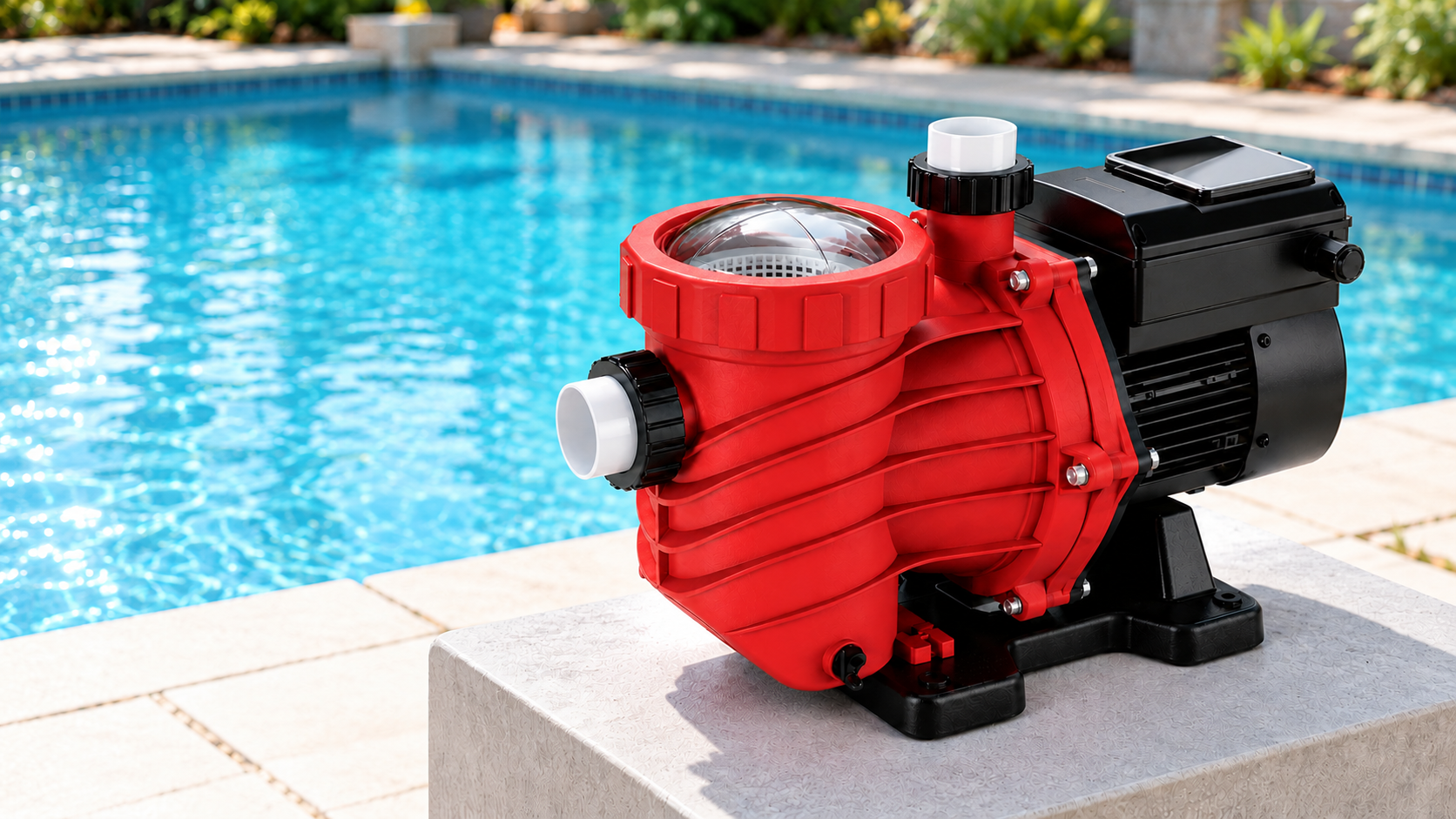
An electronic drive changes the motor speed within a certain range on a variable-speed pool pump. This lets the pump give different amounts of flow and head depending on the task at hand. The stated speed of a single-speed pump is always the same when it is turned on. Most of the time, the only difference between them is how they are controlled in terms of speed.
III. How a Variable Speed Swimming Pool Pump Works
1. Adjustable Motor Speed
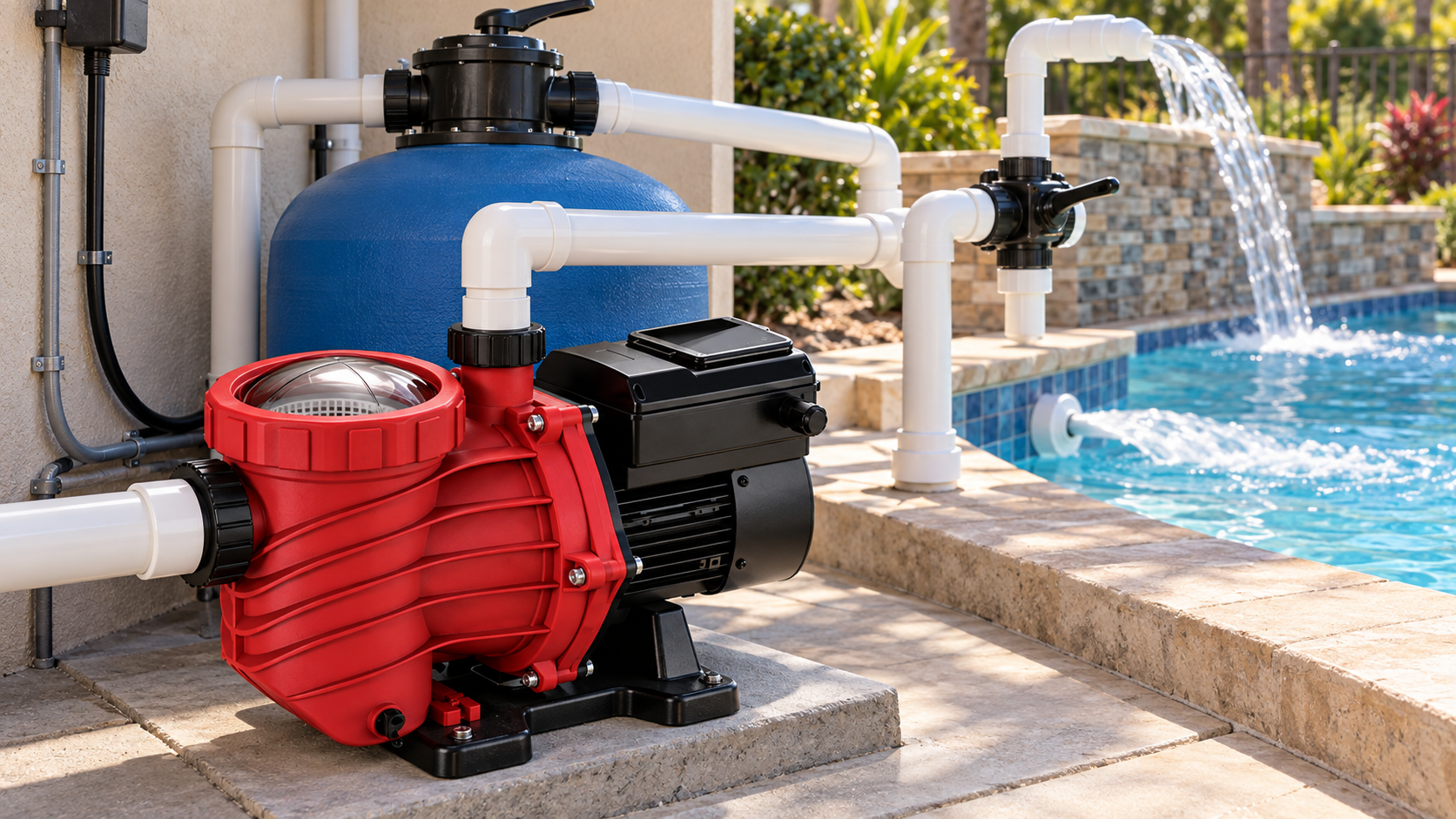
A variable-speed swimming pool pump uses an electronic drive to vary the motor speed within its allowable speed range. This allows the pump to supply various flow and head quantities for different operational requirements. One-speed pumps often start at the rated speed every time they are turned on. Both send pool water through the circulation system, but they vary in how they control their speed.
2. Different Speeds for Different Pool Tasks
Daily filtration frequently has a lower flow rate than pool maintenance, backwashing a sand filter, or some water features. A variable speed pump can run at a reduced speed for filtration, then raise its speed when another operation requires more water flow. Speed changes can be initiated from the control panel, a recorded schedule or an external control signal. If the pump’s program is set up to do so, it will go back to its filtration setting once the higher-flow task is finished.
IV. Variable Speed vs. Single-Speed Swimming Pool Pumps
1. Flow Control
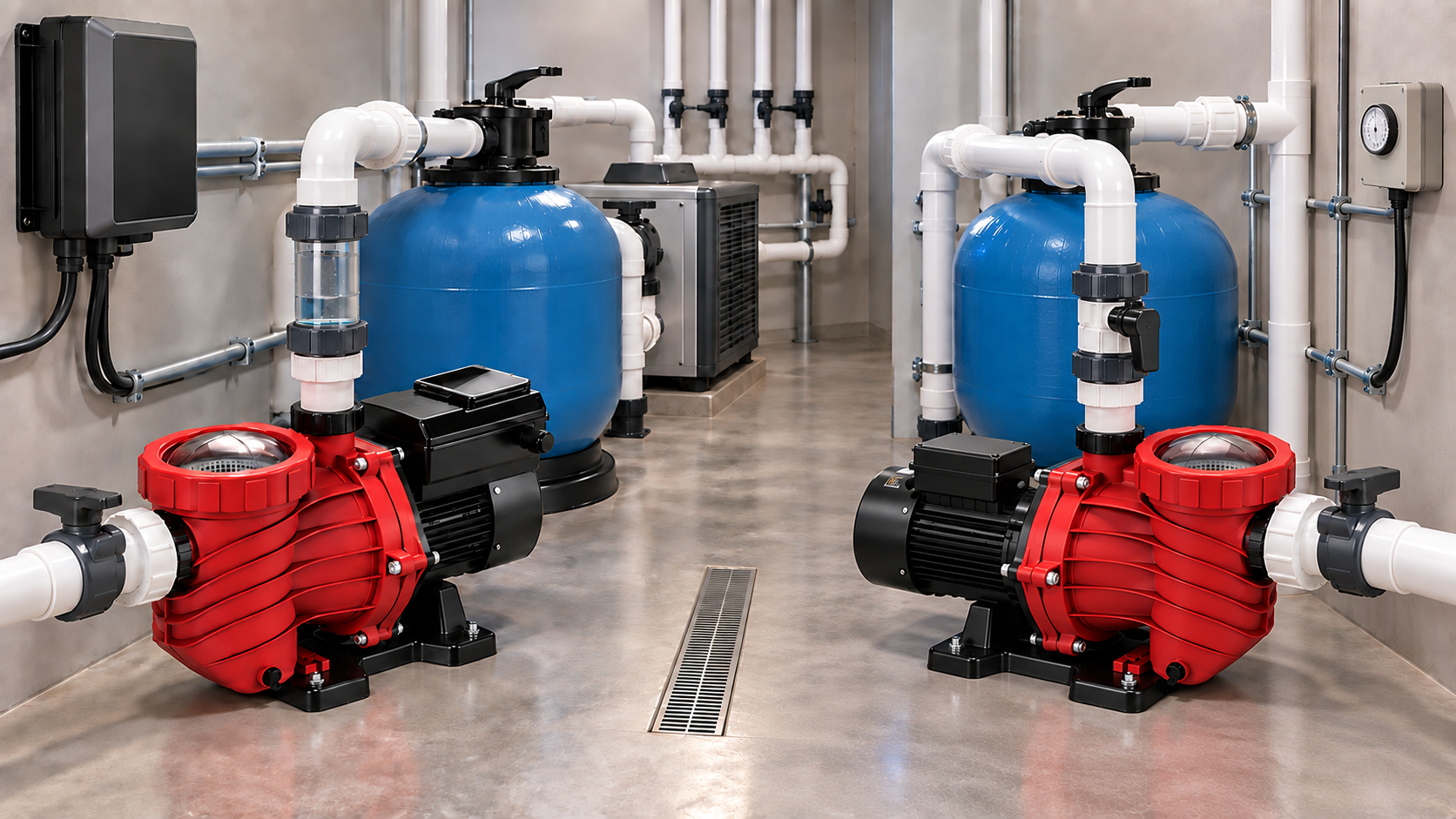
A variable speed pump lets you operate at multiple places within the performance range of the same pump. For example, a system may need moderate flow for daily filtering, but higher flow for backwashing a sand filter. The pump that you provide can satisfy the backwashing requirement but not operate at that rate during the filtering cycle.
A single-speed pump cannot vary its speed for each activity. Its real flow is still dependent on the resistance of the pipe, the condition of the filter, and the position of the valve. A single-speed pump, if properly sized, can do a very good job of the single principal circulation duty of a system. The advantage of variable speed is greater when numerous distinct flow requirements must be met by a single pump.
2. Energy Use
Filtering at low speed can consume substantially less power with a variable-speed pump. Flow becomes slower, friction losses in the system are less and power demand can decline faster than flow. Thus, a longer schedule at a lower speed may consume less electricity than a shorter schedule at a higher speed, provided both match the circulation and equipment requirements. Where pools run for many hours each day, the reduction can be a significant difference in running expenses.
A single-speed pump does not have a lower speed setting to lessen its running power. Its daily energy use is mostly controlled by operation time, although reducing hours too much leaves circulation demands unfulfilled. Check the whole daily schedules: a pump running at 1 kW for eight hours consumes 8 kWh, whereas a pump running at 0.25 kW for sixteen hours consumes 4 kWh. These are examples of calculations, not product test results, and the comparison is only helpful if both schedules accomplish the required work.
3. Operating Noise
Variable-speed pumps are typically quieter from the motor, fan and water flow at lower speeds. If you’re offering hotel pools, villas or residential projects where equipment is near bedrooms or seating areas, quieter daily filtration can be a beneficial incentive to choose the higher-priced option. The advantage is there in regular use, even if the savings in electricity alone would take longer to make up the price difference.
A single-speed pump always runs at its rated speed and cannot therefore transition to a quieter low-speed mode. But noise is also a function of pump design, mounting and pipe vibration. A single-speed pump, correctly located in a separate equipment room, may be appropriate. A variable-speed pump running at its highest speed may not be quieter than all models of fixed-speed pumps.
4. Filtration and Water Circulation
With a variable-speed pump, you can extend the time you circulate throughout the course of the day, yet still maintain flow within the working range of the filter. During these prolonged operation durations, water continues to travel through the filter. You still need adequate flow at speed for surface skimming and any equipment being used. Simply turning the pump down to its lowest setting does not necessarily increase the filtration.
A single-speed pump can also do a good job of filtration if the flow rate and run time are appropriate for the pool. It can have numerous operational times in its schedule, but it is not possible to reduce its pace between higher-flow operations. You can operate either type of pump with a simple filtration package, but variable speed gives you more options for blending flow and run time than simply providing cleaner water.
5. Pool Equipment Compatibility
A variable speed pump can be tuned to varied speeds for heaters, salt chlorinators, and suction side cleaners. The filtration setting may be too low to satisfy the minimum flow requirement of a heater, and the heater will remain off. You can remedy the mismatch by programming a greater speed when heating, and running at lower speeds at other times. This makes speed control useful in the equipment packages you sell, particularly where numerous devices share the circulation pump.
The single-speed pump must meet the equipment requirements at its one working speed. That can work if the required flow ranges overlap. Speed adjustment helps to match if they vary substantially. In any case, the flow must be within the equipment’s allowable limitations – simply adding more motor power does not mean a pump is a good match.
6. Control Functions
A variable-speed pump with a built-in timer can change from programmed speed to programmed speed without someone changing the setting every day. For a pool that is filtered and cleaned regularly, this means less daily tweaking. Some versions also get commands from a pool automation system; however, app control and automated flow adjustment are independent capabilities and not part of every variable-speed pump.
A single-speed pump can be automatically started and stopped with a simple external timer. If the customer simply needs circulation for certain hours, such a setup could already be enough. You can include a simple control package to meet that requirement and reserve more sophisticated controls for systems with multiple operating speeds or for coordinated equipment control.
7. Purchase Price and Running Cost
Variable-speed pumps often cost more since they feature a speed control drive and associated electronics. The extra expense can be recouped over time with reduced electricity use. For example, if no other cost differences are assumed, then an additional purchase cost of USD 300 and yearly electricity savings of USD 150 would pay back the price difference in two years. This is an example of the payback period, not a guarantee. Results will vary according to actual energy use, hours of operation, and electric rates.
The single-speed pump is usually the cheapest to buy. For a short operating season or restricted daily use, the electricity savings may take longer to pay back the expense of a variable-speed upgrade. Compare the increased installed cost with estimated annual savings to get a better picture of the worth of the modification. Even if speedy payback is not the primary objective, the noise reduction and control capabilities can make the upgrade worthwhile.
V.How to Choose a Variable Speed Swimming Pool Pump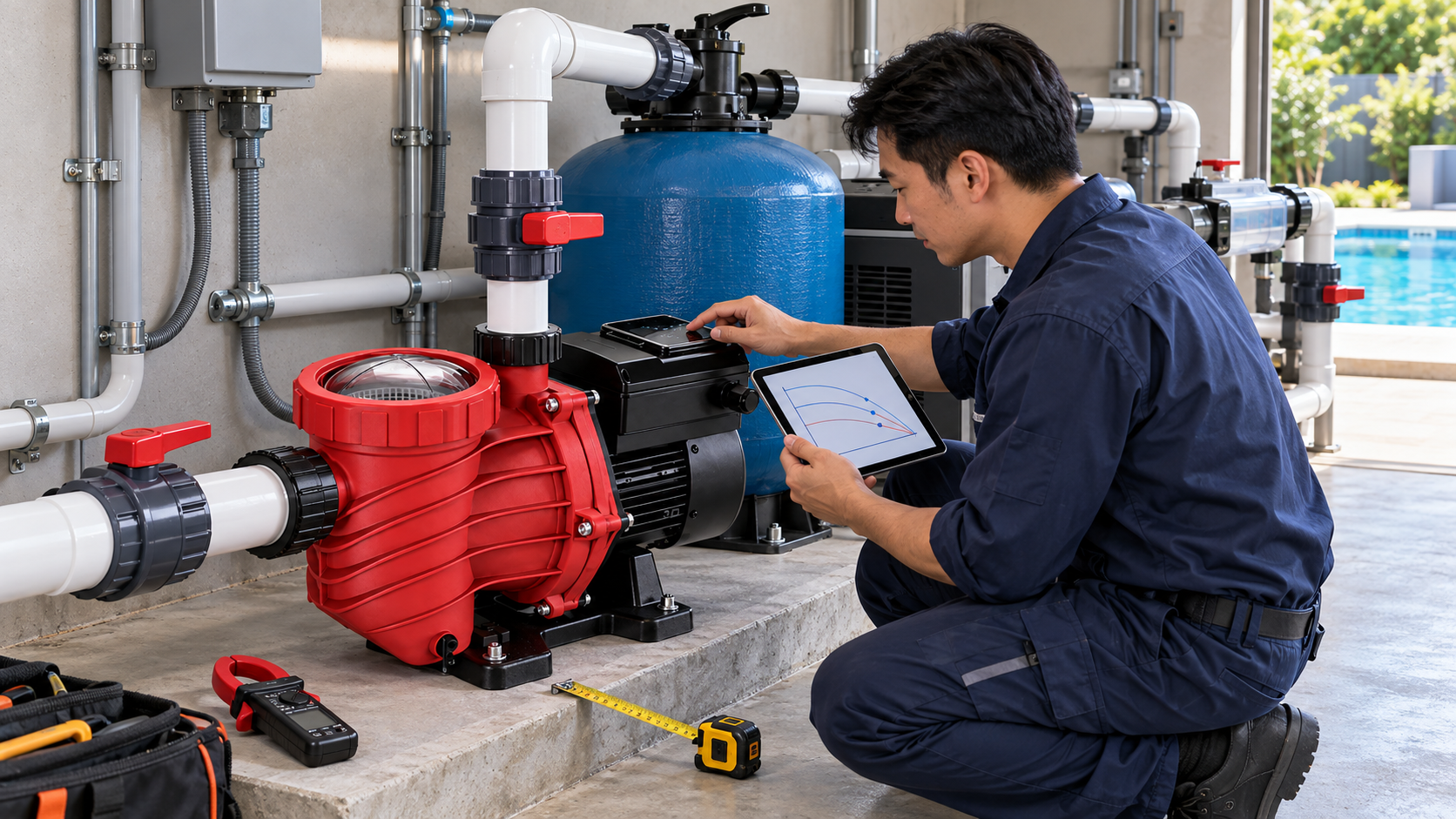
1. Match the Required Flow and Total Head
Start with the desired flow at the total head of the system, including resistance from piping, fittings, filters, and other devices. Review the pump curves at the speeds you run for filtration and other high flow jobs. Maximum flow and maximum head are two extremes of a curve, not performance that can be combined. If a pump cannot fulfil standard filtering requirements at maximum speed, it has insufficient reserve capacity for lower operating speeds. You want a model that can do both jobs in its allowed working range.
2. Calculate the Required Pool Circulation
Your pool volume and your desired circulation period will provide you with a starting point for the flow you need. For example, if a project requires 60 m3 to be circulated in six hours, the average flow demand will be 10 m3/h. This is an example of computation and not a six-hour guideline for every pool. Use levels, treatment equipment, and local requirements that apply must also be considered in the project. The pool volume will assist you in determining flow but will not tell you the head required to overcome the piping and equipment.
3. Check the Speed Range and Programs
See if the controls allow for speed adjustment over a range or just a few preset options. Verify the number of timed operation periods available and if settings and clock survive power outage. If your system requires low-speed filtration, a heating cycle, and a cleaning cycle, then the controls should be able to provide these functions without the requirement of constant manual modifications. Having more buttons or a bigger screen doesn’t ensure the pump has the scheduling functions you need.
4. Check All Connected Pool Equipment
Match the flow capacity of the filter, the minimum flow rate for the heater, the operational needs of the chlorinator, and any demand for flow by the cleaner. When backwashing sand filters, a larger flow than for typical filtering may be needed. Check these duties independently so that the pump can obtain the needed flow without exceeding the limit of another component. If you are a regular supplier, you can avoid the situation where a low-flow shutdown is mistaken for a bad pump by using a standard set of pump speeds and equipment combinations.
5. Confirm Voltage and Frequency
Verify the supply voltage, frequency, phase, and the rated input current of the whole pump. The drive’s capacity to vary the motor speed does not indicate that the drive’s power input can accept any electrical supply. Some versions have ratings at both 50 Hz and 60 Hz, others a more limited range. If you serve more than one market, consider the input rating of the full pump-and-drive unit to determine if the same version can service both.
6. Check Pipe Connections and Installation Size
Compare the old pump inlet and outlet positions, connection sizes, base dimensions and available service space for a replacement order. Matching the nominal pipe size does not mean the union threads will fit or the pipes will line up. Make sure your quote includes any unions or adapters you’ll need. A cheaper pump may require a lot more piping, and a replacement that fits with fewer pipe adjustments may be cheaper to install.
7. Confirm the Control Method
Decide whether the pump will run off its own panel and timer or be commanded by an existing pool controller. If you are controlling it from outside, make sure you know what signal or communication protocol it uses and what connection module you will need. Not all products with an RS-485 port are compatible. Before you make the combination available as a matched package, you should be able to say which functions the connected system can run, e.g. start/stop, speed selection or flow setting.
8. Check Materials and Installation Protection
Make sure the components that contact the water, such as the shaft and seal components, are compatible with the pool salt level, chemicals, and temperature. A plastic casing does not mean that the entire pump is seawater-proof. Make sure to examine the drive’s protection grade, ambient temperature range, and ventilation needs. For outdoor installation, find a location with drainage and that provides the protection recommended by the manufacturer. An outdoor rating does not make the controller acceptable for use in a flood situation.
VI. Conclusion
Variable-speed pool pumps provide flexible flow, less power consumption at appropriate low-speed operation, and quieter daily filtering. Single-speed pumps are easier to control and usually cost less to buy. The correct decision relies on the flow and head required, daily operating duties, linked equipment, and the value of the extra features.
If you are importing or distributing swimming pool pumps, contact HunGerät with your needed flow and head, power supply, connection sizes, and control requirements. Please contact us for acceptable models, performance curves, and wholesale pricing for your market or project.
VII. FAQ
1. How Much Energy Can a Variable Speed Swimming Pool Pump Save?
Appropriate low-speed filtration can replace long periods of full-speed operation with substantial reductions. So, for example, a measured decline from 8 kWh to 4 kWh per day is a 50% saving as long as the circulation requirements are the same for both schedules. This is an example calculation and not a standard saving for every pump.
2. Is a Variable Speed Pool Pump Worth the Higher Price?
For pools with lengthy operating hours, high electricity costs, or a demand for quieter operation, the extra expense is typically worth it. Compare the added installed cost with predicted annual savings. Then consider whether the control features meet a true need.
3. Can a Variable Speed Pool Pump Run All Day?
Yes, if the model is continuously operable and operated under the conditions it is rated for. All-day running is not necessarily the cheapest way. The timetable should match the circulation and equipment needs at a reasonable speed.
4. What Speed Should a Variable Speed Pool Pump Run At?
Use a speed that will give the measured flow needed for the task to be accomplished. A lower speed may be suitable for filtration; a higher setting may be needed for heating, cleaning or backwashing. One RPM number will not fit every installation.
5. Does Running a Pool Pump at a Lower Speed Reduce Filtration?
Lower speed will reduce flow but need not reduce the total daily amount filtered if the running time is regulated properly. The flow must still sustain the filter, surface skimmers, and any treatment equipment in use at that time.
6. Can a Variable Speed Pump Replace a Single-Speed Pool Pump?
Yes, assuming the performance, power needs, connections and controls are compatible with the present system. Matching the previous pump’s horsepower is not enough to ensure the replacement will provide the appropriate flow or fit the installation.
7. What Is the Difference Between Variable Speed and Variable Flow Pool Pumps?
A variable-speed pump matches a selected motor speed. The variable-flow pump changes speed to maintain a selected flow within its operational limitations. If you are merely controlling speed, flow can go down as the filter gets dirty, even if the RPM setting is the same.
8. Does a Variable Speed Pool Pump Need an External VFD?
Usually not if the full pump already has its own electronic drive. In some larger systems, an external variable frequency drive is used, and it must be matched to the motor and the control requirements of the pool.
9. Can a VFD Be Added to a Single-Speed Pool Pump?
Only if the pump, motor, and drive as proposed are authorised for that setup. A conventional capacitor-type single-phase pool motor will not run on a standard 3-phase output VFD so an upgrade may require a compatible replacement motor and drive.
10. Can Variable Speed Pumps Work with Sand and Cartridge Filters?
Yes, provided the operating flow is within the allowable range of the filter. Sand filters also require sufficient flow for backwashing, while cartridge filters usually require removal of the elements for cleaning.
11. Can a Variable Speed Pump Work with a Pool Heater?
Yes, if it gives the needed flow for the heater while heating. Run at a heating flow beyond the minimum proven demand, but below the maximum allowable flow of the apparatus.
12. Can a Variable Speed Pump Work with a Salt Chlorinator?
Yes, if the chlorinator has adequate flow and runs long enough to produce the needed chlorine. Even with a very low filtration setting, the water may still flow through the pipes, but the flow switch for the chlorinator will not come on.
13. Can the Same Pump Run Pool Cleaners and Water Features?
It depends on desired flow, head, and plumbing arrangement. Some pressure-side cleaners or distinct water features require their own pump, while a suction-side cleaner can share the circulation pump.
14. Can a Variable Speed Pump Connect to a Pool Automation System?
Yes, providing the pump and automation system are capable of a compatible control link. Be sure to check what models and commands are available. Not because it has a communication port means that all functionalities will be working.
15. Can One Variable Speed Pump Work on Both 50 Hz and 60 Hz Power?
Yes, assuming the entire unit is rated for both input frequencies. Before you release a version for markets that have various power systems, check the voltage and input current as well.
16. Are Variable Speed Pool Pumps Available in Single-Phase and Three-Phase Versions?
Yes, you can have pump-and-drive setups for both sorts of power supplies. Select according to the input rating of the drive, because the internal electrical configuration of the motor does not always indicate the required incoming supply.
17. Are Variable Speed Pool Pumps Suitable for Saltwater Pools?
They work if their water-contact parts and seals are rated for the actual salt level and water chemistry. Variable-speed control is an electrical function and does not offer saltwater resistance.
18. Are Variable Speed Pool Pumps Quieter at Every Speed?
No. Their noise benefit is usually best at lower speed operation. The noise at higher speeds is a function of the pump design, water flow, mounting, and surrounding installation.
19. What Spare Parts Should You Stock for Variable Speed Pool Pumps?
Begin with model-matched mechanical seals, lid seals, and unions, then consider new drives or displays depending on servicing requirements and lead time. Match electronic parts by permitted part number and version. Similar-looking modules may not be interchangeable
20. What Information Should You Provide When Ordering a Variable Speed Swimming Pool Pump?
Specify the needed flow and total head, power supply, connection sizes, and the filtration, heating, or cleaning duties to be performed by the pump. For replacement orders, submit the old model, installation measurements, and images. Submit existing controller data if external control is required.