I. Introduction
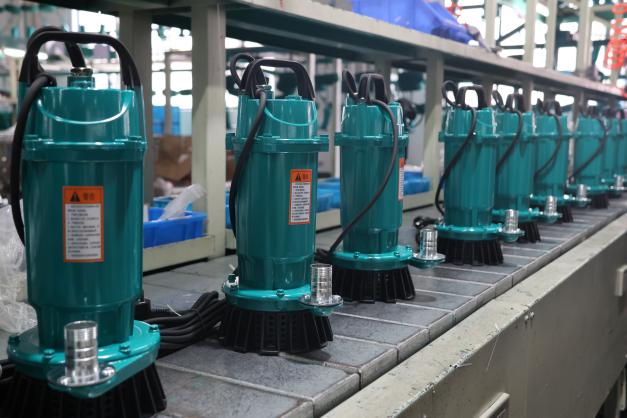
A water pump that hums but won’t start, starts slowly, overheats, or trips the breaker does not always need a new motor. The trouble could be a bad capacitor, or one with the wrong capacitance, or a capacitor that is not suitable for the local power conditions. This guide will help you understand the types of capacitors, choose the right specifications, know the typical problems, and offer suitable replacements for various water pump applications.
II. What Is a Water Pump Capacitor?
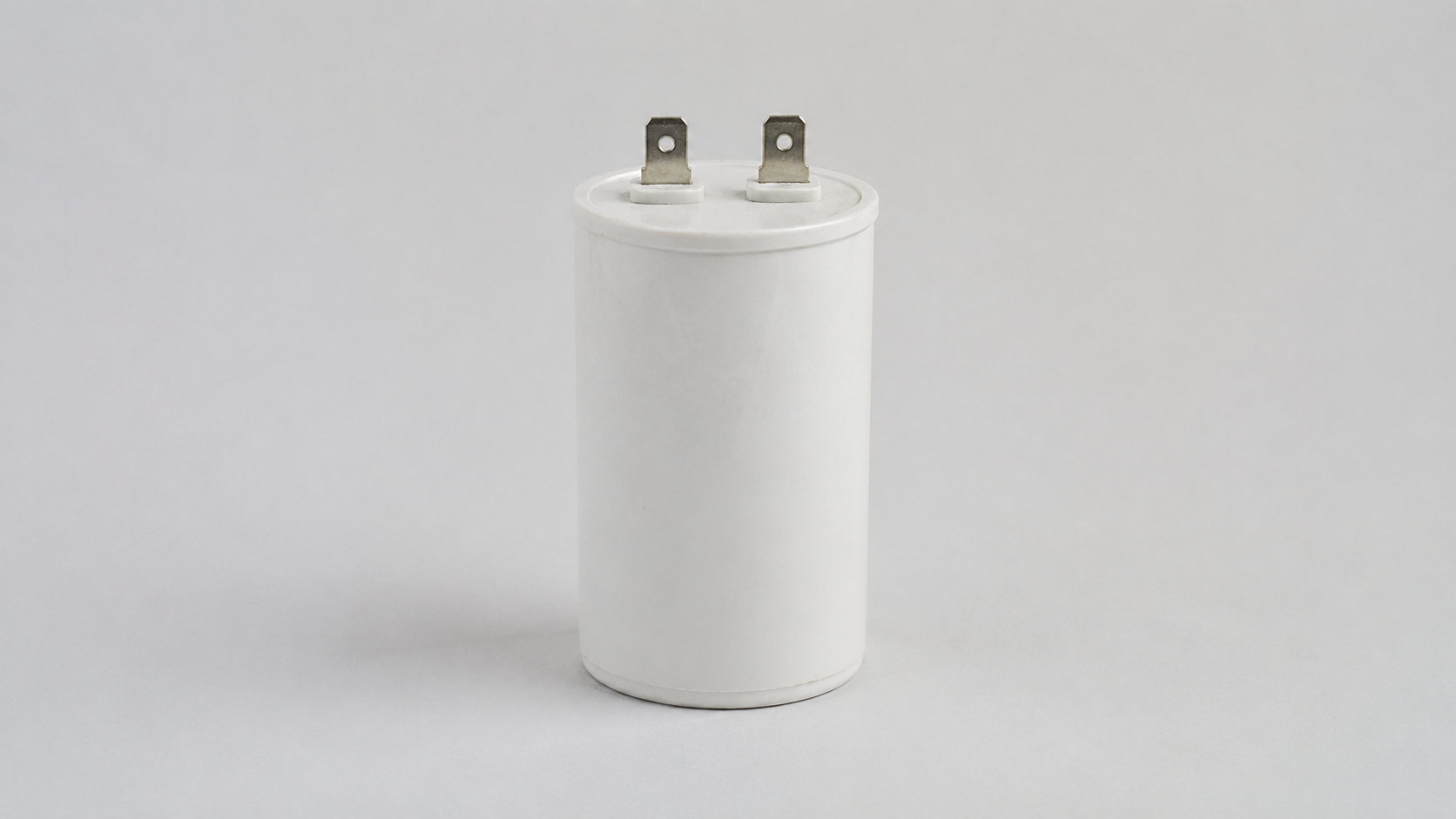
A water pump capacitor is an electrical device that is used mostly in single-phase pump motors. It works with the motor’s auxiliary winding to give the needed support during starting or normal operation. If the capacitor is bad, the pump may have a hard time starting up, even if the motor is OK. This knowledge of the function will help you to clearly describe the problem and not to consider a replaceable capacitor failure as the whole failure of the motor.
III. What Types of Capacitors Are Used in Water Pumps?
1. Start Capacitor
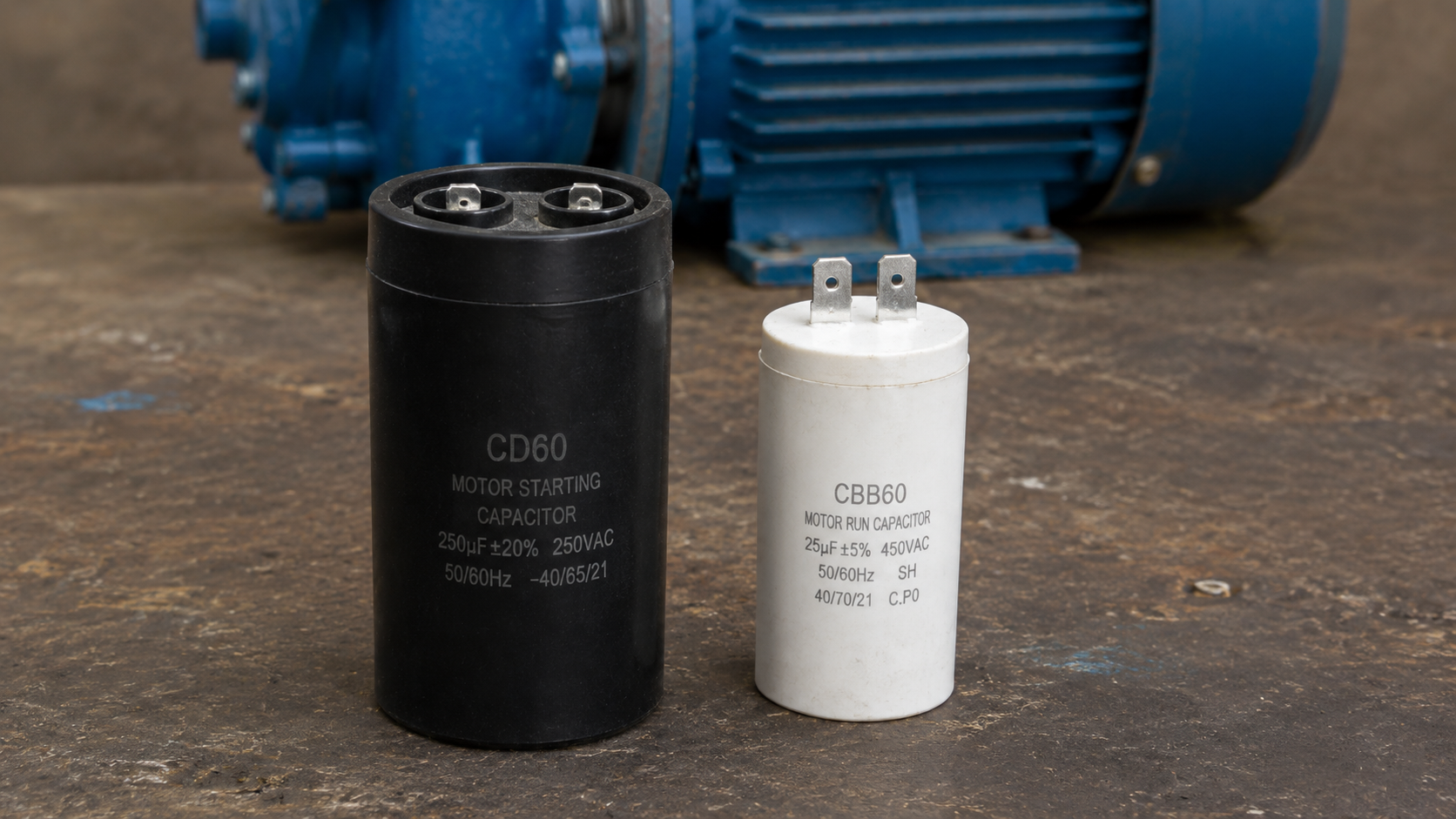
The start capacitor helps generate more torque while starting the water pump motor. A centrifugal switch or beginning relay usually disconnects the motor from the circuit when it achieves working speed. The start capacitor is usually higher in capacity than the run capacitor, but it cannot be left connected for long periods since it may overheat. Clearly marking the component as a start capacitor when you offer replacements will help prevent it from being placed as a continuous-duty part.
2. Run Capacitor
The run capacitor is wired, and the water pump is running. It helps the motor to keep proper torque, current, temperature, and stable running under the load. Run capacitors are normally metalized film types and are designed for continuous service. When you’re supplying pumps for hot regions or long daily working times, the voltage and temperature ratings of the run capacitor become critical features of the motor setup.
3. Pumps with Start and Run Capacitors
Some use a single-start capacitor and a single-run capacitor. The start capacitor adds torque on startup. The run capacitor stays in the circuit until the motor reaches working speed. The two capacitors can be put in the motor terminal box or outside in a control box. You also include the capacitors separately in your model and spare-parts records so you can supply the correct component for each function.
Start Capacitor vs. Run Capacitor
| Comparison | Start Capacitor | Run Capacitor |
| Main Function | Provides higher starting torque | Supports stable motor operation |
| Working Time | Only during startup | During normal operation |
| Typical Capacitance | Usually higher | Usually lower |
| Duty | Short-time duty | Continuous duty |
| Common Failure Result | Pump hums but cannot start | Motor overheats, trips, or runs poorly |
| Can They Be Interchanged? | No | No |
This comparison gives an idea of why two capacitors with similar shapes cannot replace each other. It also enables the comparison between start and run capacitors when preparing technical papers, spare parts, and replacement instructions.
IV. How to Choose the Right Water Pump Capacitor
1. Confirm the Capacitor Type
First, figure out if you need a start capacitor, a run capacitor, or both. Two capacitors may look and feel the same and have the same terminals, yet be rated for very different service conditions. You need to check the kind from the original capacitor tag, motor wiring diagram, pump manual, or factory specification. Checking the type of capacitor saves you from ordering one that physically fits but can’t do the job.
2. Match the Capacitance in μF
The capacitance must be in microfarads, or μF, to match the motor design. Too low a value may result in weak starting torque, delayed start-up, or difficulties in restarting the pump under pressure. A number too high will increase motor current and temperature without increasing flow or head. For each pump model, the proper μF value is recorded, so you can prepare the right spare parts and not just select capacitors based on motor power.
3. Check the Rated Voltage
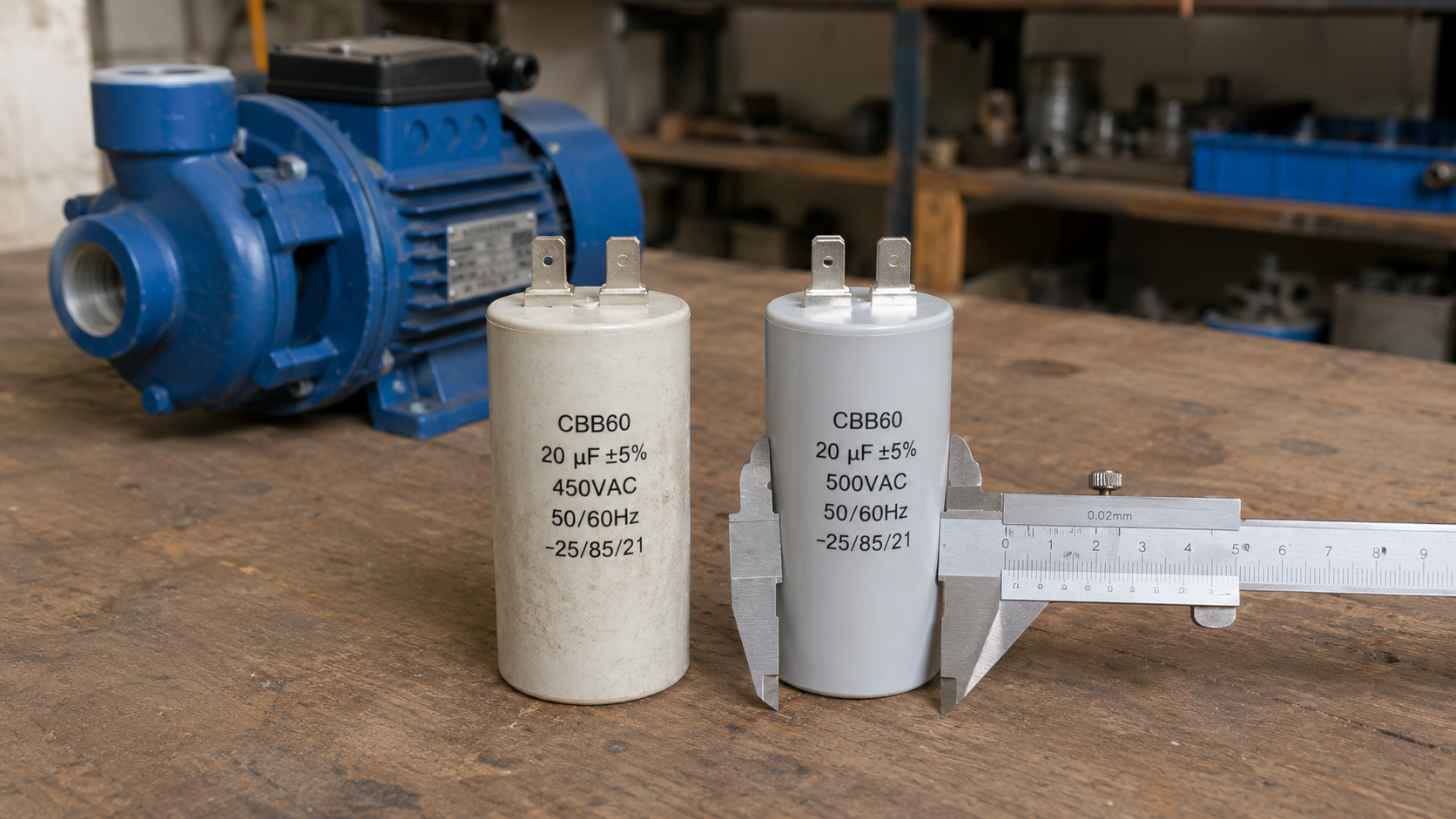
The rated voltage of the capacitor should be suitable for the pump circuit and not lower than the specified original. If the size and connections are suitable, then a capacitor of the same type and uF value but with a greater voltage rating can typically be used. So, an appropriate 500 V AC run capacitor may work for a 450 V AC run capacitor, but a 250 V capacitor must not be used for a 450 V capacitor. If you are in a market where voltage changes a lot, checking the right voltage rating will save you from early capacitor failure.
4. Check Frequency, Temperature, and Tolerance
Capacitor should be rated for the local 50Hz or 60Hz mains supply and expected working temperature. Temperature rating is especially important when the pump is running in hot climates, in a closed terminal box, or for long periods of the day. You should also follow the capacitance tolerance shown on the label, which could be ±5%, ±10%, or another model-specific figure. By matching these ratings to local conditions, you may create a pump setup that performs reliably in your market.
5. Confirm Size and Connection
The replacement capacitor must be the exact size to fit within the motor terminal box or the external control box. Consider the body diameter, length, terminal type, number of terminals, mounting method, and available installation space. Connections must be tight and protected against movement, moisture, and contact with other electrical components. If you add these details to your spare-parts list, you will avoid stocking capacitors which have the correct rating but can not be fitted into the intended pump.
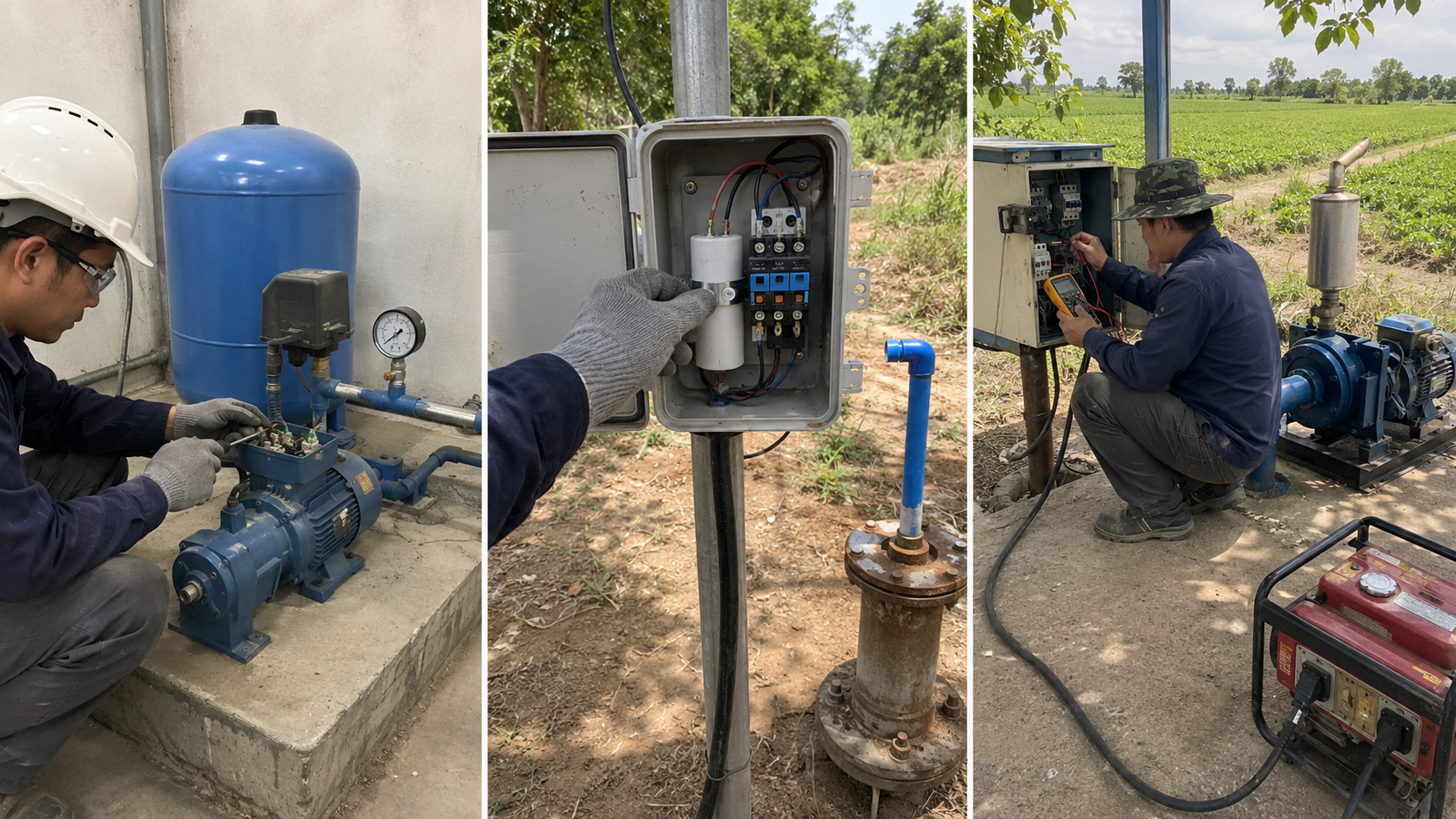
V. What Should You Check for Capacitors in Different Water Pumps?
1. Surface and Self-Priming Pumps
A self-priming pump may have to restart with the output pipe still pressurised, so don’t estimate its capacitor by a low-load workshop test alone. Check that the motor starts smoothly when hot and that the pump comes back up to its usual running pressure. If the motor is running up to speed but the pump is not taking in water, then the problem is more likely to be a lack of priming water, a leaking suction pipe, or a foot valve out of order than the capacitor. This difference allows you to avoid shipping a needless new capacitor for a hydraulic problem.
2. Booster Pumps
If system pressure drops, a booster pump will start immediately and may restart while pressure is present in the pipeline. When checking the pump and capacitor combination, examine both the first cold start and a hot restart at the standard pressure-switch cut-in point. If capacitors are repeatedly failing, look for a leaking pipeline, an incorrectly charged pressure tank, or an unsuitable controller causing the pump to start too often. These checks will help you select a booster pump that will start reliably under actual pressure-system conditions.
3. Deep Well Pumps
If the single-phase deep well pump is getting the proper voltage but simply hums, starts slowly, needs several tries, or trips quickly after starting, the capacitor may be weak or damaged. Examine first the power supply, cable connections, and overload protector. Then examine the capacitor, according to whether it is mounted inside the pump or in an external control box.
Internal Capacitor: In some deep well pumps, the capacitor is mounted inside the lower section of the motor assembly. If this capacitor fails, you usually have to remove the pump, delivery pipe, and cable from the well before opening the unit for testing and repair. So, an internal capacitor defect can mean a large amount of repair time and labour in a deep well in that the pump must be pulled and reinstalled.
External Capacitor: Other deep well pumps locate the capacitor in an above-ground control box. If the pump does not start, remove the power first and then check the capacitor in the control box without removing the pump from the well. This design allows a damaged external capacitor to be replaced immediately inside the control box for faster and easier servicing.
4. Irrigation Pumps
Irrigation pumps often run for several hours in hot outdoor environments, and so the run capacitor must be rated for continuous duty and the local working temperature. Long power connections and generator supplies can also drop the voltage to the motor, making it difficult to start the pump and producing electrical heat. Before you select an irrigation pump, you should check the daily running time, the length and size of the cable, the voltage at the pump, and the starting capacity of the generator if required. If you have a bad power supply, you do n’t make the capacitor bigger ( in uF ) . The capacitor needs to be the right size for the motor.
VI. What Other Capacitor Problems Should You Check?
1. The Pump Starts, but the Running Current Is Abnormal
If the pump starts normally, but the operating current is higher than the motor nameplate value, the run capacitor may be weak or the wrong size. Before approval of a replacement, request the real voltage, motor current, capacitor muF value, and pump working condition. These measures allow you to distinguish between a capacitor defect, low voltage, hydraulic overload, or a motor problem and avoid a needless pump return.
2. The Start Capacitor Becomes Hot After Startup
A start capacitor should be unplugged quickly after the motor achieves the operating speed. Also, a bad centrifugal switch or starting relay that keeps the capacitor connected can cause it to get hot, swell, or fail again, even after replacement. If you get this type of complaint, check that the starting device disconnects correctly, and you can avoid sending another capacitor that will fail in the same manner.
3. The Capacitor Is Bulging, Leaking, or Burnt
Usually, a swollen case, cracked housing, leaking material, burned terminal, or a strong burned smell shows the capacitor has failed. Before sending a replacement, ask for a very detailed picture of the whole label, terminals, damaged area, and room available for installation. This allows you to check the kind of capacitor, the μF value, the voltage, the terminals, and the dimensions to ensure the correct spare part is supplied the first time.
4. The Replacement Capacitor Fails Again
If a properly specified replacement capacitor fails again, then the problem could be the power source, starting frequency, motor load, temperature, relay, or centrifugal switch. Starting voltage, running voltage, motor current, starts per hour, working temperature, and condition of starting equipment. This information helps you to identify if the failure is from the capacitor, the pump, or the installation, and to handle the claim with clear evidence.
VII. How to Test and Replace a Water Pump Capacitor
1. Disconnect the Power Safely
Before opening the terminal box or control box, switch off and disconnect the power. A capacitor is capable of storing electrical energy even after the water pump has been disconnected from the supply and must be safely discharged before touching its terminals. Supplying proper safety instructions with the pump can help reduce the chances of improper testing and risky handling while replacing capacitors.
2. Inspect the Capacitor and Wiring
Check the capacitor body, the terminals, the wires, and the components around before using a metre. Check for swelling, cracks, leaks, corrosion, darkened terminals, loose connectors, broken insulation, or water inside the box. Compare the installed capacitor with the motor wiring diagram to make sure the correct type and connections were made. A wiring diagram linked to the pump or control box might help you in spotting faulty connections without depending just on wire colour.
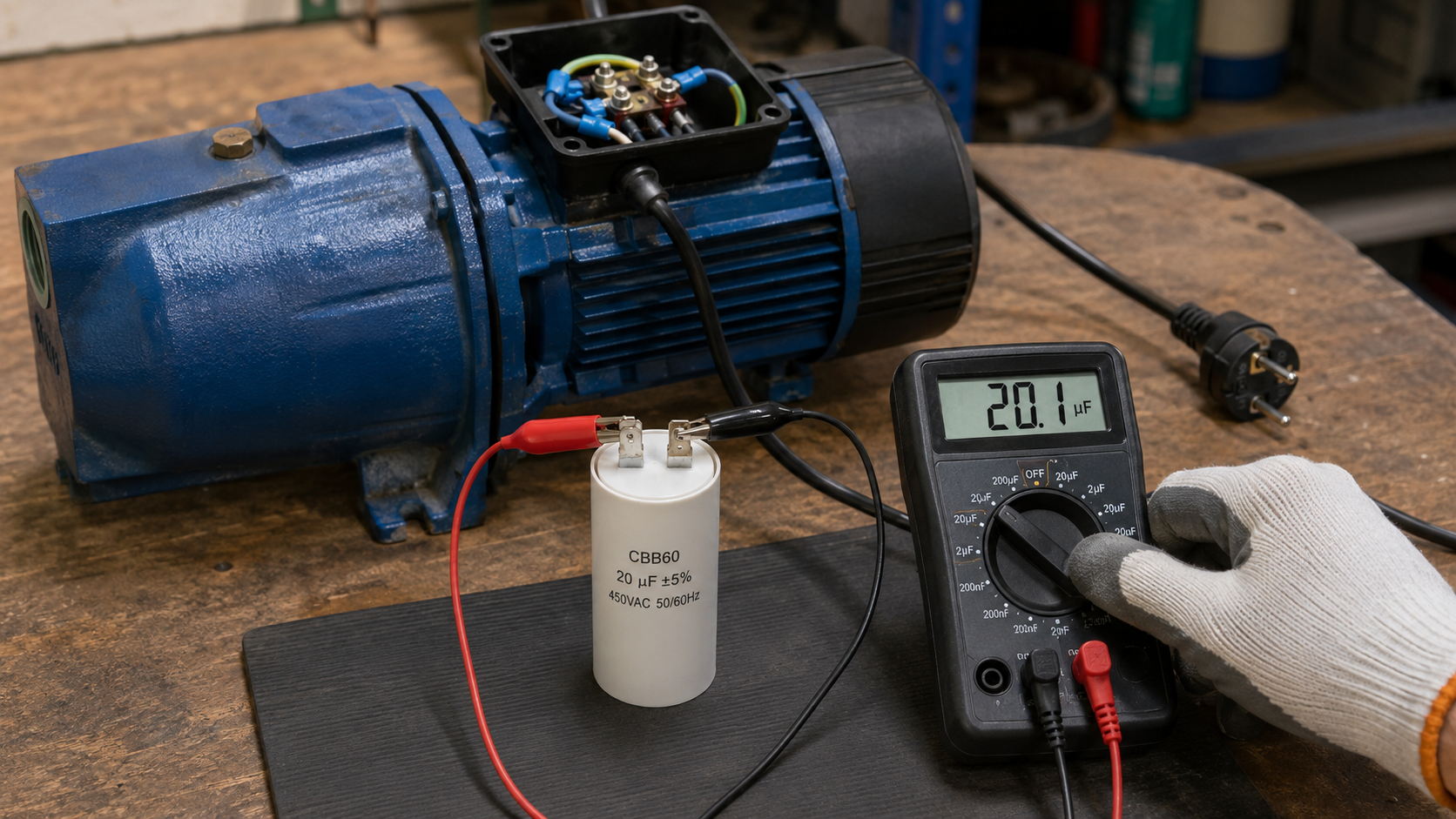
3. Measure the Actual Capacitance
Remove the capacitor from the circuit and check the μF value with a multimeter that has a μF feature. Compare the result with the rated capacitance and tolerance of the label. So, a 20 μF ±5% capacitor should read anywhere in the range of 19 to 21 μF. If they specify the stated tolerance for each capacitor, that’s a clear standard for pass/fail on the part.
4. Rule Out Other Pump Problems
A typical capacitance reading suggests the capacitor should not be replaced unless the rest of the pump is checked. Check incoming voltage, cable connections, pressure switch, start relay, centrifugal switch, impeller, bearings, overload protector, and motor windings as required. A failing capacitor might have the same starting or overheating symptoms as electrical or mechanical problems. This sequence of checks will help you in isolating capacitor problems from motor, power-supply, and pump problems.
5. Test the Pump After Replacement
After the correct replacement is installed, verify that the pump starts immediately, comes up to the normal speed, and does not make an odd sound. Measure the supply voltage and running current. Compare the current with the motor nameplate. Also, the pump should be checked under its regular working load and not with an empty pipe. Recording the starting voltage, current, and temperature results gives you strong evidence that the replacement capacitor is correctly matched.
VIII. Conclusion
When selecting a water pump capacitor, check for the function, capacitance, rated voltage, tolerance, temperature rating, size, and connection. Do not select a water pump capacitor by its appearance or the power of the motor. Knowing these points helps you choose the right pump designs, order the right replacement parts, and respond to capacitor problems with precise technical knowledge. HunGerät can be matched with the motor, capacitor, control box, voltage, and frequency to your model and the intended working conditions of the pump.
IX. FAQ
1. Can a 450 V Water Pump Capacitor Be Replaced with a 500 V Capacitor?
If the capacitor type, μF value, frequency, terminals and dimensions are suitable you can typically replace a 450 V AC capacitor with a 500 V AC capacitor. The correct higher-voltage replacement allows for supplying a compatible part without affecting the original capacitance of the motor.
2. Can a Higher-μF Capacitor Make a Water Pump More Powerful?
No, A higher-μF capacitor does not increase rated motor power, maximum flow, or pump head. Giving the correct μF value helps prevent excessive motor current, overheating, and complaints due to the wrong-sized capacitor.
3. How Much Capacitance Tolerance Is Acceptable?
Use the tolerance printed on the capacitor. It might be ±5%, ±10%, or something else for your model. A 30 μF capacitor with a tolerance of ±5% should measure between 28.5 and 31.5 μF.
4. Can One Capacitor Be Used for Several Water Pump Models?
You can use one capacitor for several models only if the capacitor type, μF value, voltage, frequency, size, and connection are the same. By documenting these common details, you can reduce the number of extra spare-part SKUs without compatibility issues.
5. Does a 50 Hz Water Pump Need a Different Capacitor at 60 Hz?
Choose a capacitor and motor combination that is rated for the actual operating frequency. A capacitor marked 50/60 Hz is good for both. But the pump motor must be compatible with the local frequency.
6. Does a Long Power Cable Affect the Water Pump Capacitor?
A long or undersized cable might cause voltage loss during startup and make the motor appear to have a weak capacitor. Checking the cable length and cross-section before giving a replacement avoids treating a power-supply problem as a capacitor fault.
7. Can a Generator Damage a Water Pump Capacitor?
Unstable voltage, poor frequency control, or insufficient generator capacity might stress these capacitors and motors further. You should size the generator based on the pump’s initial load, not just the ongoing load.
8. Why Does the Pump Start After You Turn the Motor Fan by Hand?
Usually, this means that the beginning circuit of the motor is not delivering enough starting torque. Check the capacitor, auxiliary winding, centrifugal switch, relay, voltage, and mechanical resistance before recommending a replacement.
9. Can You Test a Water Pump Capacitor Without Removing It?
The reading with the probe in the circuit may be affected by the motor winding and other components in the circuit. To get an accurate result, you should drain and remove the capacitor before measuring its uF value.
10. Does a Water Pump Capacitor Have Positive and Negative Terminals?
Most of the AC motor-start and motor-run capacitors do not have positive and negative terminals. Multi-terminal capacitors may have marked portions or common connections, so you should follow the motor wiring diagram.
11. Can Two Smaller Capacitors Replace One Larger Capacitor?
When capacitors are connected in parallel, their capacitances add, so two 10 μF capacitors provide about 20 μF. This method should be used only when the capacitor type, voltage, tolerance, mounting, and circuit design permit.
12. What Is the Difference Between CBB60 and CBB65 Capacitors?
CBB60 and CBB65 capacitors are common in motor run applications. CBB60 capacitors are generally housed in plastic cases, and CBB65 capacitors are generally housed in aluminium cases. You can choose a suitable replacement for them by looking at their complete specs instead of choosing one by its housing material.
13. Can a CD60 Capacitor Replace a CBB60 Capacitor?
Usually no, because CD60 typically refers to an intermittent-duty start capacitor, while CBB60 typically refers to a continuous-duty run capacitor. Before delivering either capacitor as a replacement, ensure the whole label and duty type.
14. Can Moisture Damage a Water Pump Capacitor?
Yes, water or humidity can corrode the terminals, damage the insulation, and produce leakage current or a short circuit. Check the terminal-box seal, cable gland, and gasket so you don’t have to replace the capacitor because of the same moisture damage.
15. How Should Replacement Water Pump Capacitors Be Stored?
Store capacitors in a clean, dry location within the manufacturer’s temperature and humidity limits. Keeping the terminals free of moisture, dust, chemicals, and physical damage ensures you have usable spare parts supplies.
16. Can a Water Pump Capacitor Be Installed Outside the Motor?
If the motor design and the wiring layout permit, a capacitor can be put in a suitable external control cabinet. The external box should protect the capacitor against water, dust, heat, vibration, and accidental touch.
17. Can the Same Control Box Be Used for Different Deep Well Pumps?
The same control box can only be used if the voltage, frequency, motor rating, capacitor values, relay, overload protection and wiring of the control box are compatible with the motor. Avoid mixing mismatched deep well pump electrical components by reviewing the whole control box standard.
18. Can a Water Pump Capacitor Change the Pump’s Flow or Head?
If the capacitor has failed, a replacement capacitor can restore normal pump output. It does not increase the flow or head on the pump curve and motor rating.
19. Why Do Two Pumps with the Same Power Use Different Capacitors?
Two motors of equal horsepower can have different windings, starting torque requirements, speeds, loads, and starting methods. If you can measure the capacitor values for each pump model exactly, then you can give the correct replacement rather than just taking the value from another pump of the same kW.
20. Do Three-Phase Water Pumps Need Start or Run Capacitors?
A basic three-phase water pump motor normally doesn’t require a start or run capacitor. Knowing the motor phase will prevent the preparation of single-phase capacitor parts that are not needed for three-phase pump models.