I. Introduction
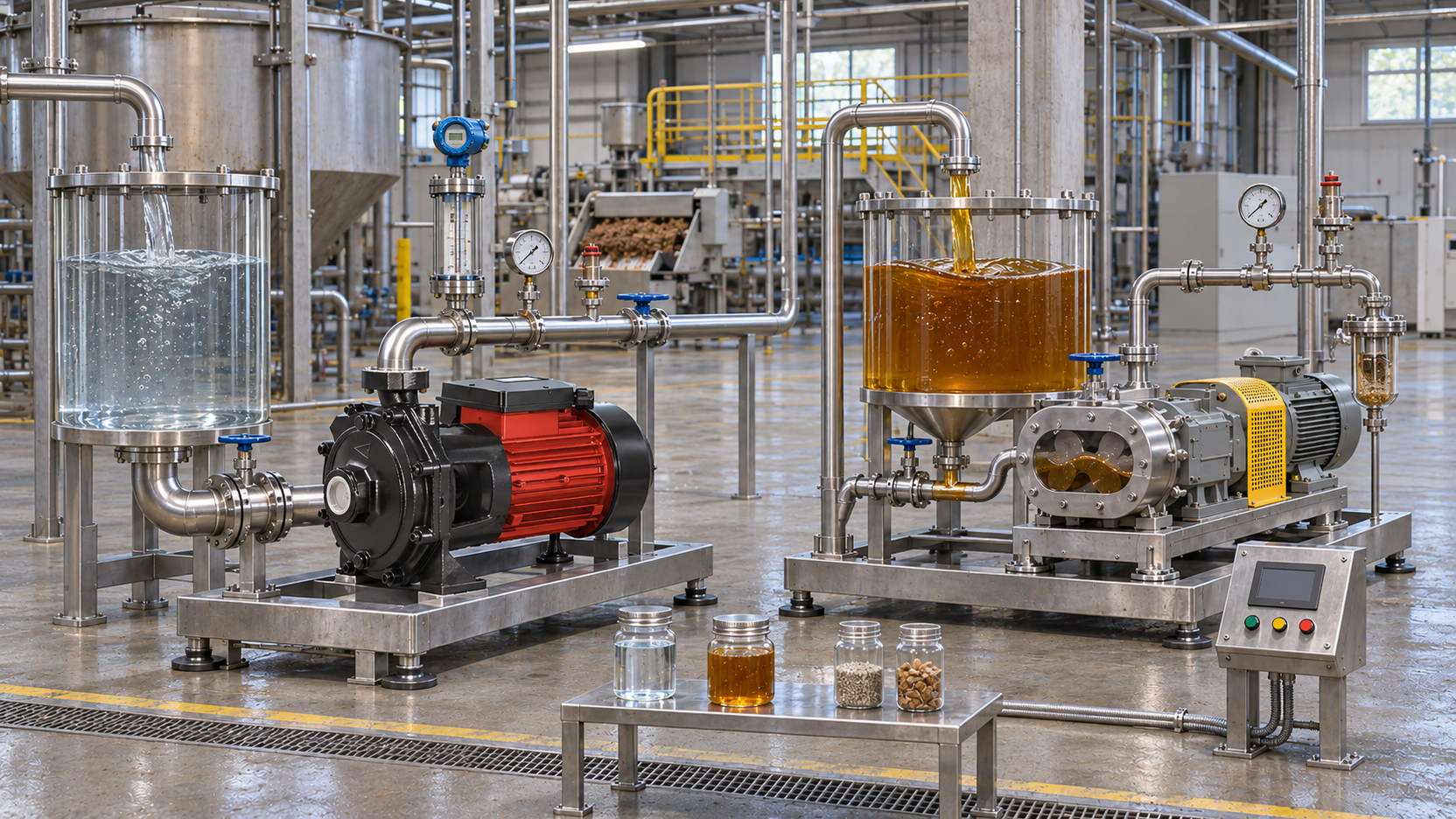
The purpose of the pump is more important than the type of pump when choosing between a centrifugal pump and a positive displacement pump. Even if you make the wrong choice, the liquid may still flow, but it may move in a shaky way, waste energy, damage the product, or require extra safety measures that aren’t necessary. It is important to check how each pump reacts to changes in pressure, viscosity, solids, flow conditions, and control parameters. This guide explains the differences so you can pick, list, and store pumps for specific uses instead of relying on labels that say “pump.”
II. How Does Each Pump Move Liquid?
1. Working Principle
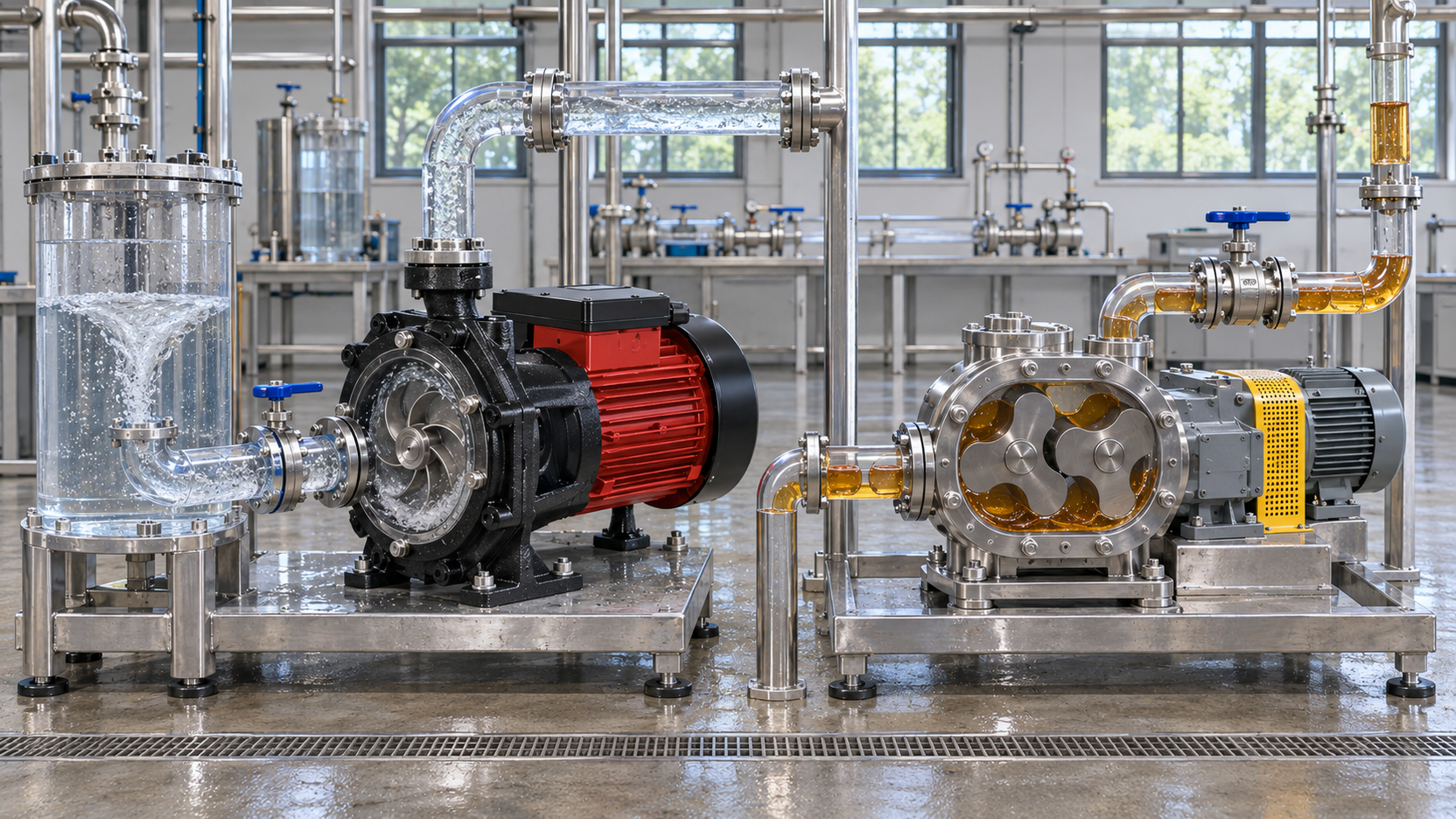
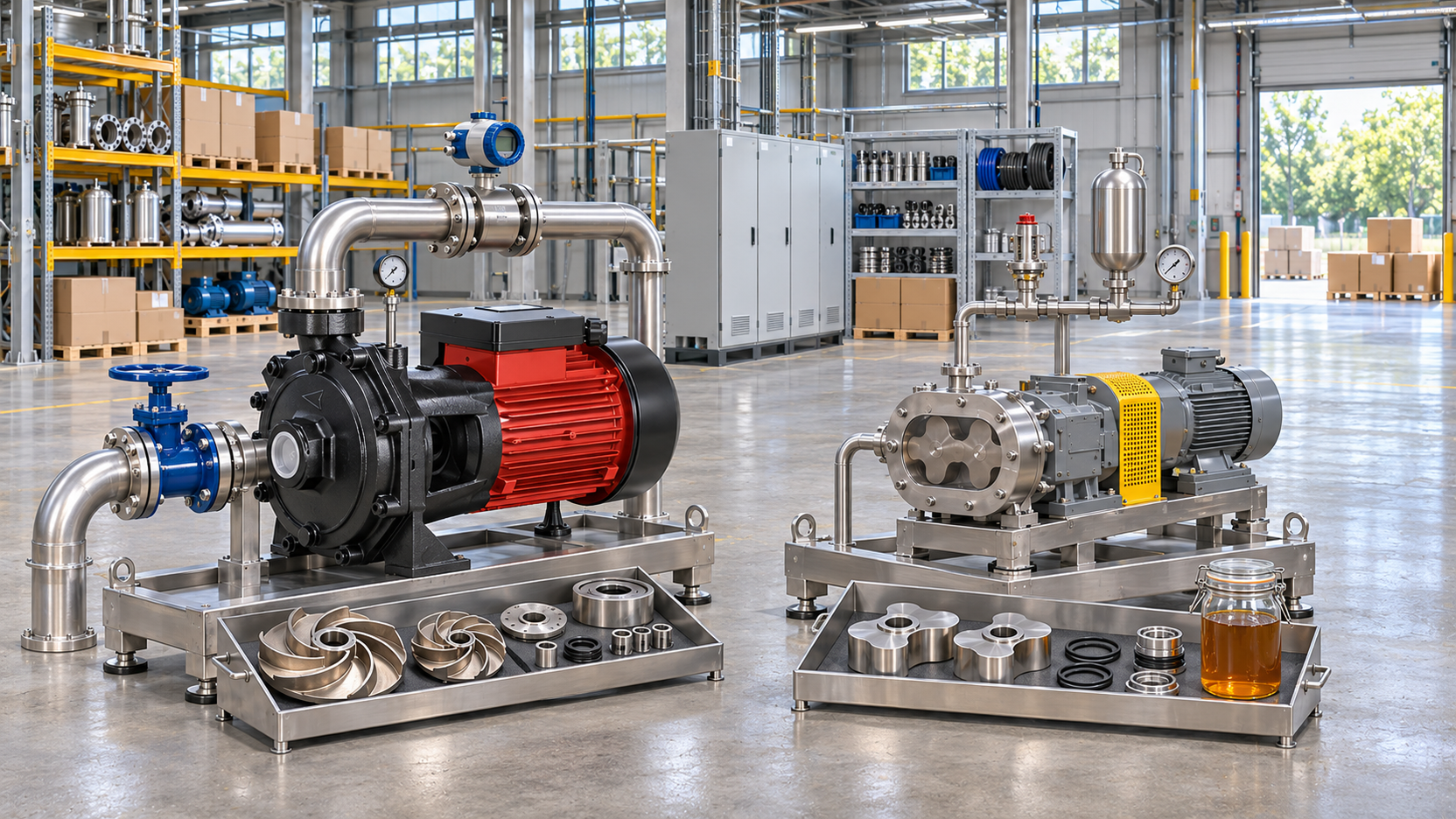
A centrifugal pump has an impeller that spins to speed up the liquid and a casing or diffuser that changes some of that speed into pressure. The pump always moves fluid through it, and the amount that comes out depends on where the pump curve meets the system curve. This idea works for continuous transfer duties, but it can’t be used to judge the pump based on its displacement per revolution.
With each cycle or rotation, a positive displacement pump moves a certain amount of fluid from the inlet to the outlet. Gear, screw, lobe, vane, progressive-cavity, and peristaltic pumps are rotary types. Piston, plunger, and diaphragm pumps are reciprocating types. Instead of just saying “positive displacement pump,” you need to say what kind of PD pump it is because different types react differently to solids, pressure, and pulsation.
III. How Does Their Hydraulic Performance Differ?
1. Flow Response to System Pressure
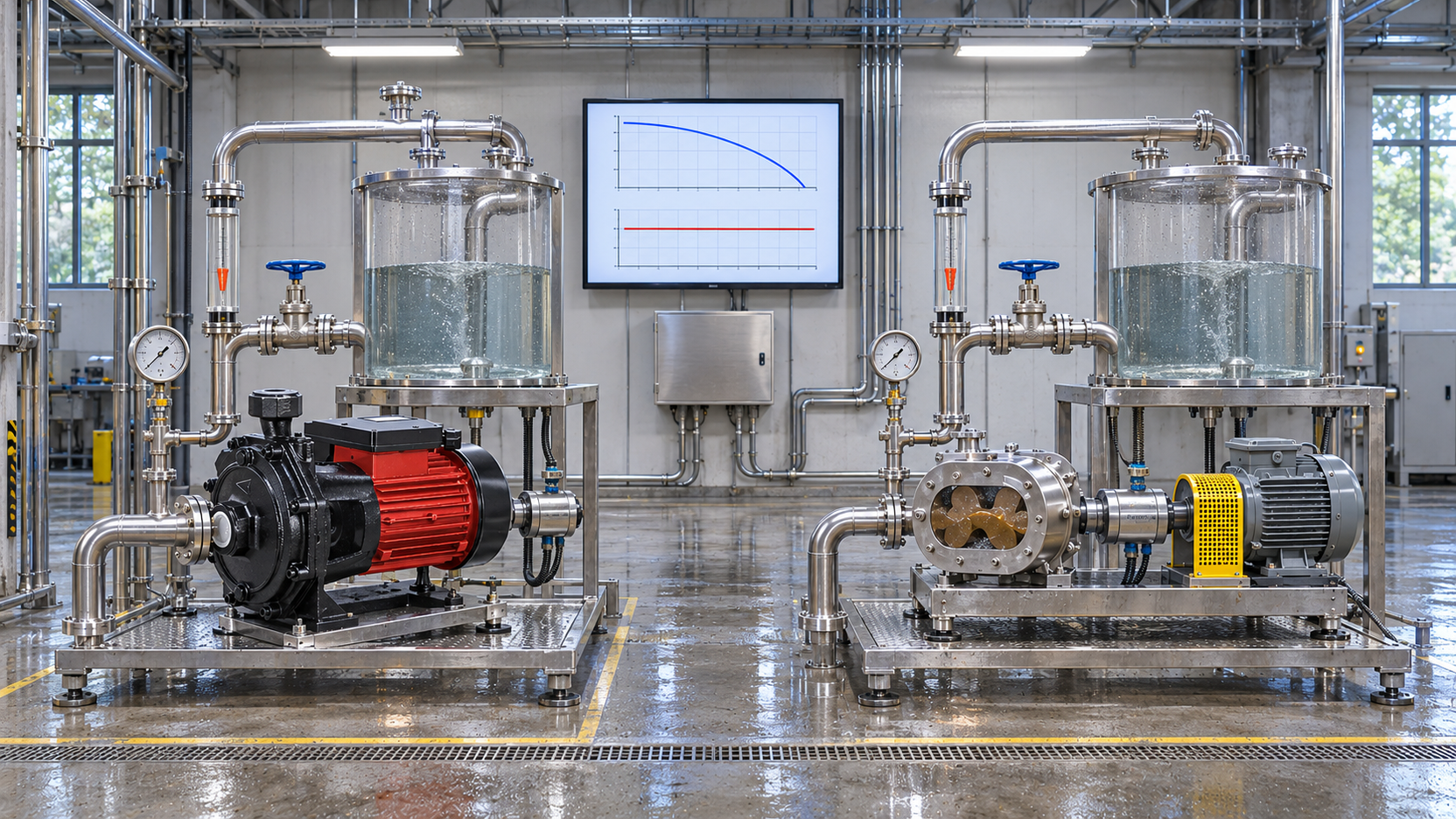
As the system head rises at a steady speed, a centrifugal pump reduces the flow. The operating point moves along a descending head-flow curve. This means that a clogged filter, a valve that is only partially closed, or a high discharge level can change the flow. When recommending this pump, you should compare the full curve to the customer’s system resistance instead of taking the flow rate listed in the catalogue as fixed.
Since a positive displacement pump moves almost the same amount of fluid with each cycle, flow is mostly related to speed. Increasing the differential pressure makes internal slip worse and requires more torque. This causes the delivered flow to drop slightly, but usually not as much as with a centrifugal pump. Look at the flow-versus-pressure data provided by the manufacturer. “Constant flow” is more of a practical term than a promise of perfect uniformity.
2. Reading the Performance Curves
The flow is shown on the horizontal axis of a centrifugal pump curve, and the head is shown on the vertical axis. For example, if the need is 30 m³/h at 28 m, find that spot and make sure it’s within the acceptable working range, ideally close to the point where it works best. If a catalogue lists a maximum flow of 50 m³/h and a maximum head of 40 m, that doesn’t mean the pump can reach 50 m³/h at a head of 40 m; those are two different operating points.
A positive displacement pump curve usually shows the output flow in relation to the differential pressure at a certain speed and viscosity. Due to more slip, a pump that can theoretically move 20 L/min might only move 19.5 L/min at 3 bar and 18 L/min at 10 bar. Use the curve to find the real liquid and speed, then check the torque, input power, inlet specs, and the setting of the relief valve at the highest pressure.
3. Flow and Pressure Range
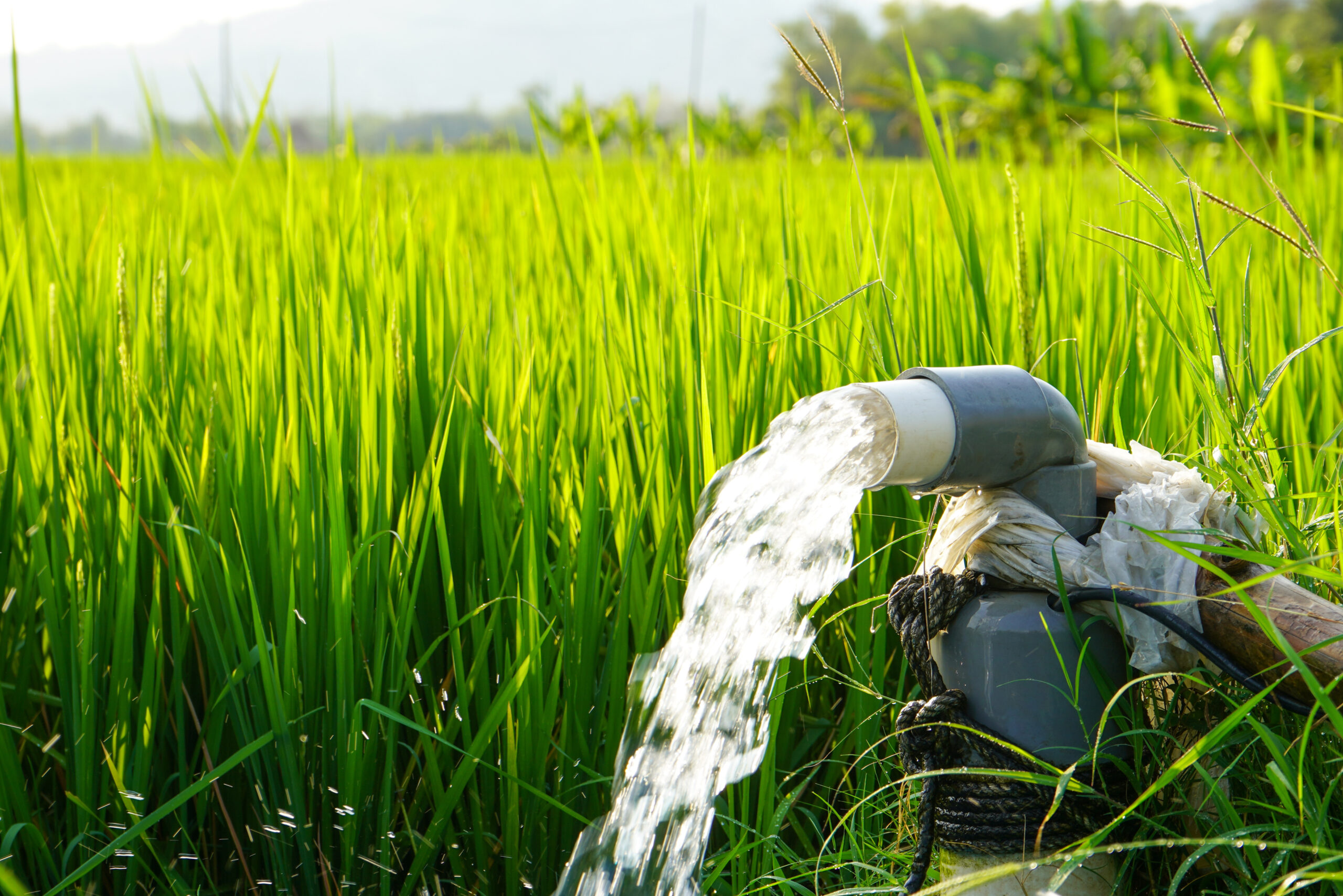
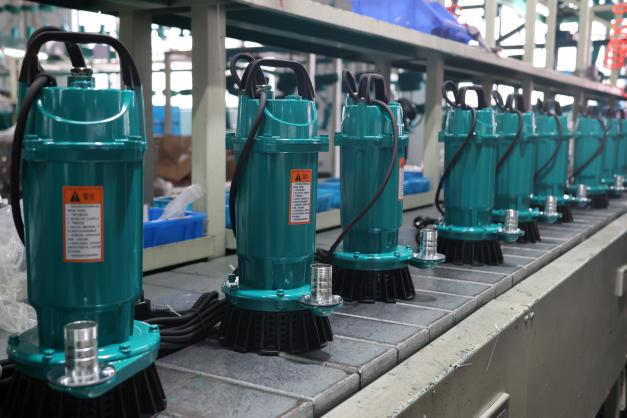
Most of the time, a centrifugal pump is better for high continuous flow with low to moderate viscosity. High head can also be achieved with multistage systems, so high pressure doesn’t always rule them out. Common tasks include supplying water, moving large amounts of process fluid, cooling water, irrigation, and drainage. Before making a choice, compare the needed point to a real single-stage or multistage curve.
When there is low flow and high differential pressure, or when the volume per cycle needs to be controlled, a positive displacement pump is generally the best choice. Some common applications are dosing, high-pressure injection, hydraulic service, lubricant transfer, and viscous product transfer. Don’t just choose it based on its pressure rating; also check the displacement, speed, slip, torque, and whether the rotary or reciprocating design is right for the liquid.
IV. How Do Liquid Properties Change the Choice?
1. Viscosity and Temperature
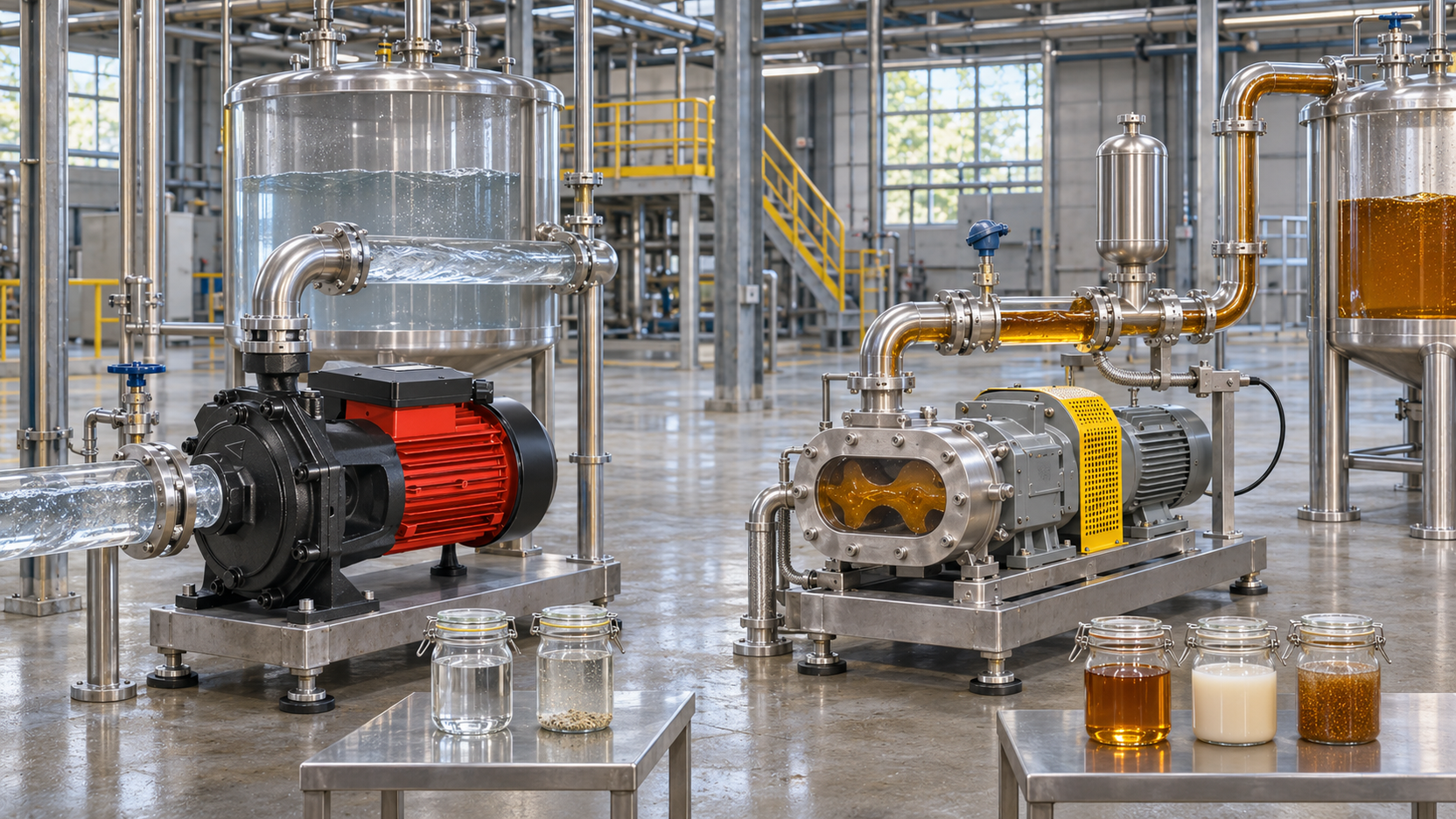
As viscosity goes up, a centrifugal pump loses efficiency, flow, and head, but the power input may go up. There isn’t a single limit on viscosity because it depends on the duty, the size of the pump, its speed, and the shape of the impeller. Not only should you ask for the viscosity at room temperature, but you should also ask for corrected performance data when the liquid is very different from water.
A positive displacement pump usually works better with viscous liquids because it moves stored volume instead of relying on the speed of the liquid. It’s possible that a higher viscosity will lower internal slip and improve volumetric efficiency, but it may also need a lower speed because it increases friction, input power, and inlet losses. Instead of a general maximum viscosity claim for oils, syrups, adhesives, or concentrates, use the real viscosity-temperature range to describe how well the product works.
2. Shear, Pulsation, and Product Condition
A centrifugal pump usually has a pretty high internal speed and may shear the liquid more, though this relies on the design and speed of the impeller. It makes a discharge that is smooth and doesn’t pulse, which is good for circulation and continuous transfer. Before you offer a standard high-speed centrifugal model for emulsions or fragile products, find out if shear changes the quality of the product.
You can handle a positive displacement pump more gently if you choose a low-shear design, like some lobe, screw, progressive-cavity, diaphragm, or peristaltic pumps. This type of flow isn’t always low-shear, and patterns that move back and forth can create pulsating flow that needs a dampener. Choose a PD mechanism that works with both the allowed shear rate and the tolerance for pulsation in the system further downstream.
3. Solids and Abrasives
When it has the right channel, vortex, recessed, or open impeller with enough free passage, a centrifugal pump can handle solids. Some examples are slurry and sewage centrifugal pumps, but particles that are rough can wear down the impeller, the casing, and the spaces between the parts. Before using “dirty water” as a full liquid description, ask for the largest particle size, concentration, form, density, and abrasiveness.
When the right mechanism is chosen, a positive displacement pump can handle soft solids, fibres, or concentrated slurries. Common mechanisms that can do this are progressive-cavity, peristaltic, diaphragm, and some lobe designs. Hard abrasives can damage gear teeth and small gaps inside the gears. So, don’t just assume that every PD pump is a slurry pump; instead, compare the solids with the pump’s internal path and wear materials.
V. How Do Installation, Control, and Safety Differ?
1. Priming, Suction, and Entrained Gas
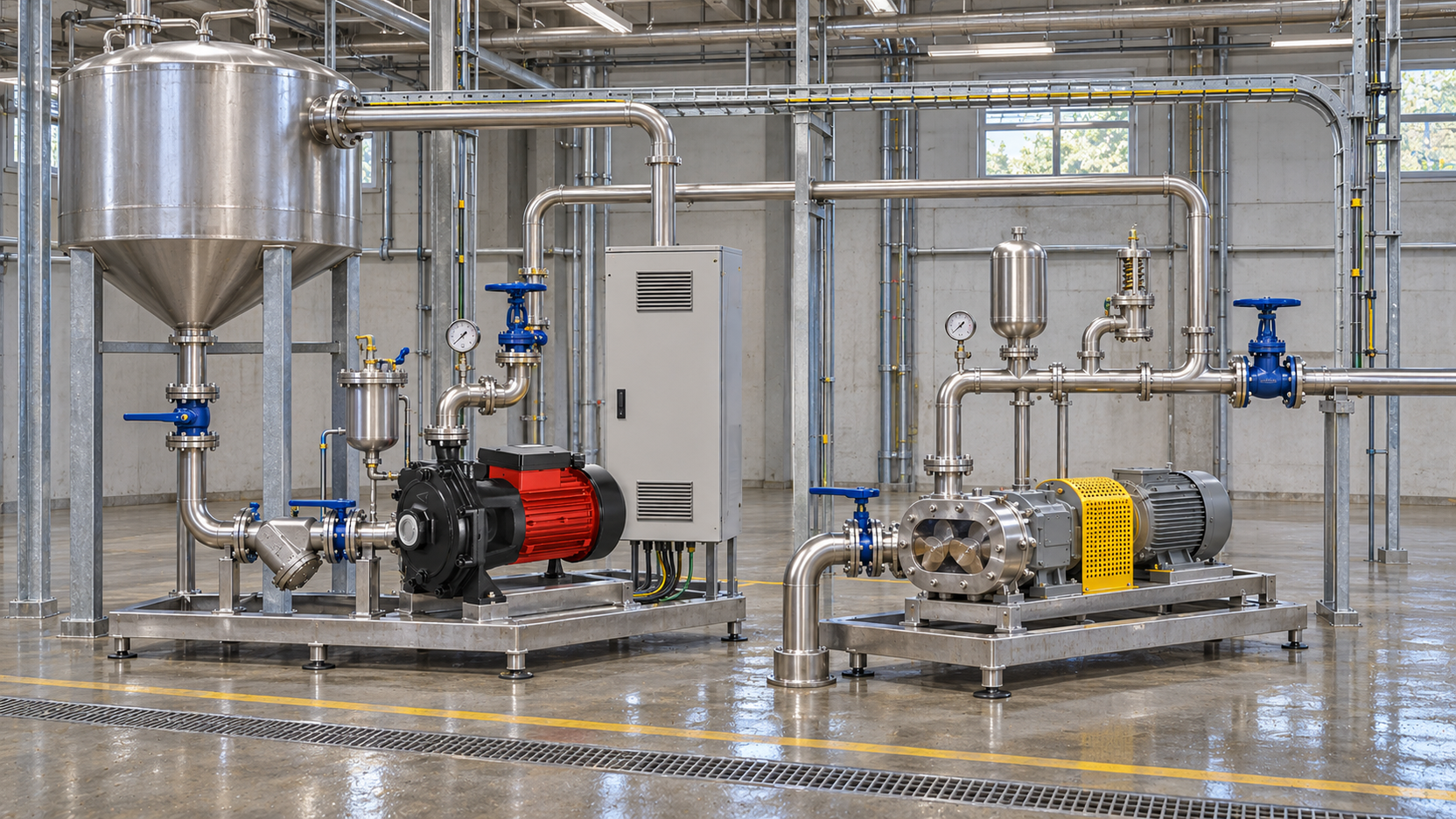
A normal centrifugal pump needs to be filled with liquid before it can work because it can’t remove a lot of air from the suction line. It’s possible that flooded suction, a priming system, or a self-priming design made just for the job will be needed. Check the available NPSH, suction lift, liquid temperature, altitude, and pipe losses. The term “self-priming” does not get rid of these limits or allow for continuous dry running.
It’s possible for a positive displacement pump to self-prime better and handle some entrained gas, but this depends on the type and doesn’t mean that the pump will always be able to pull in more air. Even if the viscosity is high, the speed is fast, the inlet is narrow, or the net positive inlet pressure is not enough, incomplete filling and cavitation can still happen. In the selection data, you should include the size, length, fittings, level, and viscosity of the inlet pipe.
2. Flow Control
You can change the speed of a centrifugal pump, slow down the flow, trim the impeller, or run two pumps in parallel. When the system’s needs change, variable-speed control often works better than throttling, which changes the operating point and wastes some of the created head. Make sure you check the whole operating range so the pump doesn’t spend too much time close to shutting off or going over its flow limit.
Most of the time, you can change a positive displacement pump’s speed, stroke, or displacement, or you can bypass part of the flow. If you try to control it by closing the discharge valve alone, the pump will keep moving the liquid around, and the pressure will rise. If you sell a PD package for variable demand, make sure the drive and control method are right for the required turndown and that there is enough starting torque.
3. Deadhead and Pressure Protection
When the discharge of a centrifugal pump is closed, it reaches its shutoff head. This means that pressure usually doesn’t keep going up forever. Long-term deadhead operation, on the other hand, can heat the liquid, cause internal recirculation, damage seals, and shorten the life of the pump. Make sure you know how long the shutoff can last and add minimum-flow protection if the job calls for it. Just because something is “safer at closed discharge” doesn’t mean it’s safe to run forever.
A positive displacement pump keeps pushing volume toward a discharge that is closed or blocked. This means that pressure can rise quickly until the driver stops working or a part breaks. The pump and pipes must be protected by a relief valve or other device that limits pressure to the right size, and the relief path must be routed to a safe place. Instead of taking it as an extra, include the protection device and how it is set in the quote.
4. Maintenance and Total System Cost
A centrifugal pump usually has fewer parts that move and seal, makes a smooth flow, and can be cost-effective for handling large amounts of thin liquid. Even if you make the wrong choice, the pump can still have problems with the seal, the bearing, cavitation, and the impeller, especially when it works outside of its normal range. Instead of choosing based only on the lowest price, look at how easy it is to maintain, how the seals are arranged, how the bearings are made, and what the real operating point is.
There may be gears, screws, lobes, valves, diaphragms, hoses, or close-clearance elements in a positive displacement pump that make it need different types of wear parts. It can still be the cheaper system option if it stops viscosity loss, gives accurate dosing, or gets rid of the need for too much throttling. In your quote, you should list any pulsation-control parts that are needed for that design, as well as any wear parts, check intervals, and relief protection.
VI. Which Pump Fits the Duty?
1. Final Selection Rule
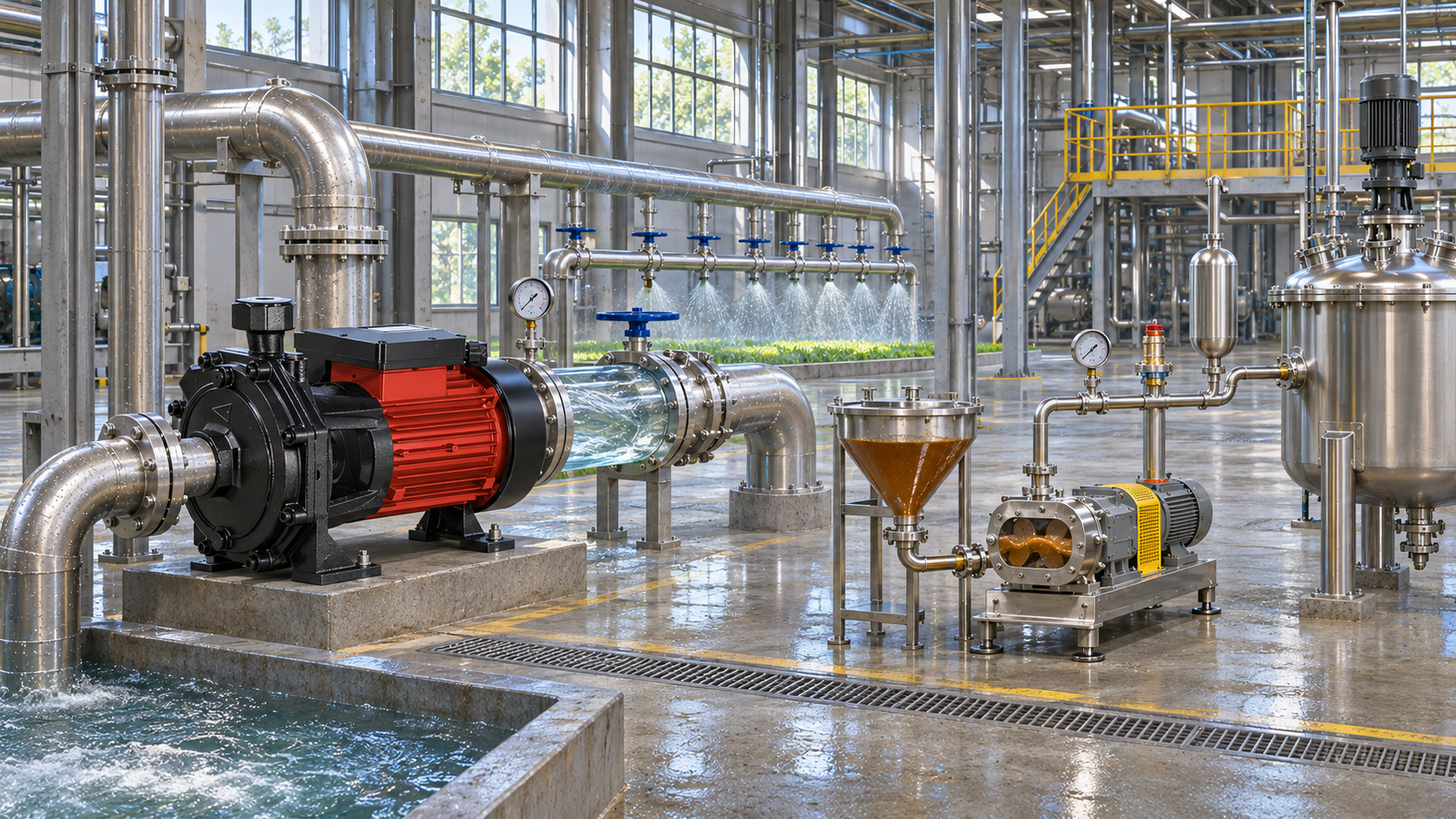
If you need a pump with a steady high flow rate, low viscosity, a smooth output, and a flow rate that can change with system head, choose a centrifugal pump. Check the needed flow and total head, the properties of the liquid, the suction conditions, the operating range, and the exact performance curve. For water, circulation, irrigation, cooling, drainage, and moving large amounts of water, this is usually the better option.
If the job needs flow that is almost proportional to speed, high pressure at low flow, exact metering, good viscous-liquid performance, or a certain low-shear mechanism, choose a positive displacement pump. Make sure you know the exact PD type, displacement, pressure, viscosity, temperature, solids, speed, torque, inlet conditions, pulsation, and relief protection. If both types can do the job, you should look at the whole system and how much it costs to run instead of just the price of the pump.
VII. Conclusion
There is no one type of pump that is better than the other. A centrifugal pump is usually used for jobs that need a lot of flow through a thin liquid. On the other hand, a positive displacement pump is usually used for jobs that need a lot of pressure through a viscous liquid. The final choice will still depend on the real operating point and the design of each item in each category. Send HunGerät your flow, pressure or head, liquid properties, suction conditions, control range, and electrical needs so they can talk about making a pump setup that works for you.
VIII. Frequently Asked Questions
1. What is the main difference between centrifugal and positive displacement pumps?
An impeller on a centrifugal pump adds speed. Each cycle or revolution of a positive displacement pump traps and moves a set volume.
2. Which pump is usually better for clean water?
Most of the time, a centrifugal pump is best for moving clean water continuously when the needed flow and head are within its useful operating range.
3. Which pump is better for viscous liquids?
A good positive displacement pump is usually better, but you need to think about the viscosity at the right temperature, the speed, the inlet losses, the torque, and the pump mechanism when making your choice.
4. Which pump is better for high flow?
For moving large amounts of low-viscosity liquid, a centrifugal pump is usually more useful and cost-effective.
5. Which pump is better for high pressure?
A positive displacement pump is usually best for low-flow, high-pressure applications. However, multistage centrifugal pumps can also make high pressure.
6. Does a positive displacement pump deliver perfectly constant flow?
No. Flow is almost directly related to speed, but things like internal slip, pressure, viscosity, wear, and filling conditions can change how much is delivered.
7. Can a centrifugal pump be used for accurate dosing?
It is usually less suitable because flow changes with system head. A controlled-volume metering pump is normally preferred for precise dosing.
8. Does every positive displacement pump need a relief valve?
The pump and discharge system require suitable overpressure protection because blocked flow can raise pressure rapidly. Follow the applicable manufacturer and system requirements.
9. Can a centrifugal pump run against a closed discharge valve?
Only for the time period allowed by the maker. If you run the deadhead for too long, the liquid can get too hot and damage internal parts.
10. Are positive displacement pumps self-priming?
A lot of them can self-prime well, but the limit depends on the type of pump, the liquid, the inlet pipes, the speed, and the condition.
11. Are centrifugal pumps self-priming?
Most standard centrifugal pumps aren’t. Usually, you need a flooded suction, an external priming system, or a self-priming design that was made just for that purpose.
12. Which pump is gentler on shear-sensitive liquids?
There are lobe, screw, progressive-cavity, diaphragm, and peristaltic PD pumps that can handle liquids gently, but it depends on the design and speed of the pump.
13. Which pump provides smoother flow?
A centrifugal pump usually gives a steady, smooth flow. Some PD pumps pulse, but screw pumps and systems that are properly dampened can be much more stable.
14. Can centrifugal pumps handle solids?
Yes, as long as it has the right impeller and a free passage. The pump must be able to handle the solids’ size, fibres, concentration, and abrasiveness.
15. Can positive displacement pumps handle abrasive slurry?
For some systems, it is possible, but hard abrasives may wear down gears, valves, stators, or hoses quickly. Check the pump and the materials that it is made of.
16. Why does viscosity reduce centrifugal pump performance?
Internal hydraulic losses go up when viscosity goes up. This can lower flow, head, and efficiency while increasing the required input power.
17. Why can higher viscosity improve PD pump volumetric efficiency?
It might cut down on internal slip across pump gaps, but it might also make friction, inlet losses, and power demand go up.
18. Can both pump types use variable-speed drives?
Of course, but their torque limits and how they work are different. For each pump and task, the drive must be chosen and programmed.
19. Are maximum flow and maximum pressure available together?
No. Check the performance numbers at the speed, viscosity, and configuration that are needed for the operation.
20. What information should you provide before selecting either pump?
Give the necessary information about the flow, head or differential pressure, liquid, viscosity, temperature, density, solids, suction conditions, control range, operating hours, and power supply.