I. Introduction
Sewage pumps and grinder pumps both move wastewater, although they are built for distinct systems. A Grinder Pump for a regular sewage pit may be an unnecessary investment. A Sewage Pump in a small, high-pressure line may produce blockage or weak flow. This guide covers their solids handling, flow, head, pipe requirements, applications, and control methods so you can make the correct pump choice for each question.
II. Grinder Pump and Sewage Pump Basics
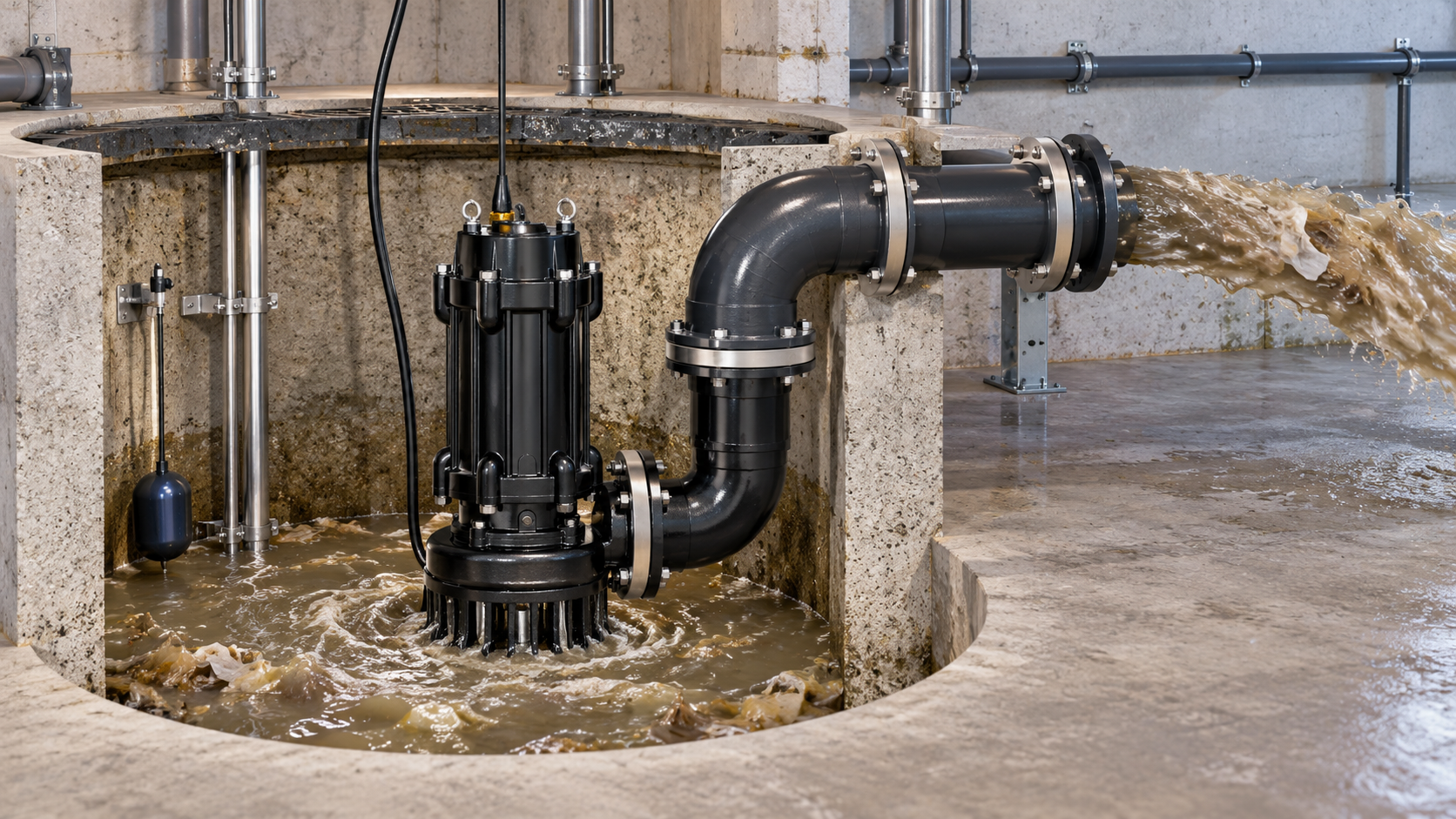
1. Sewage Pump
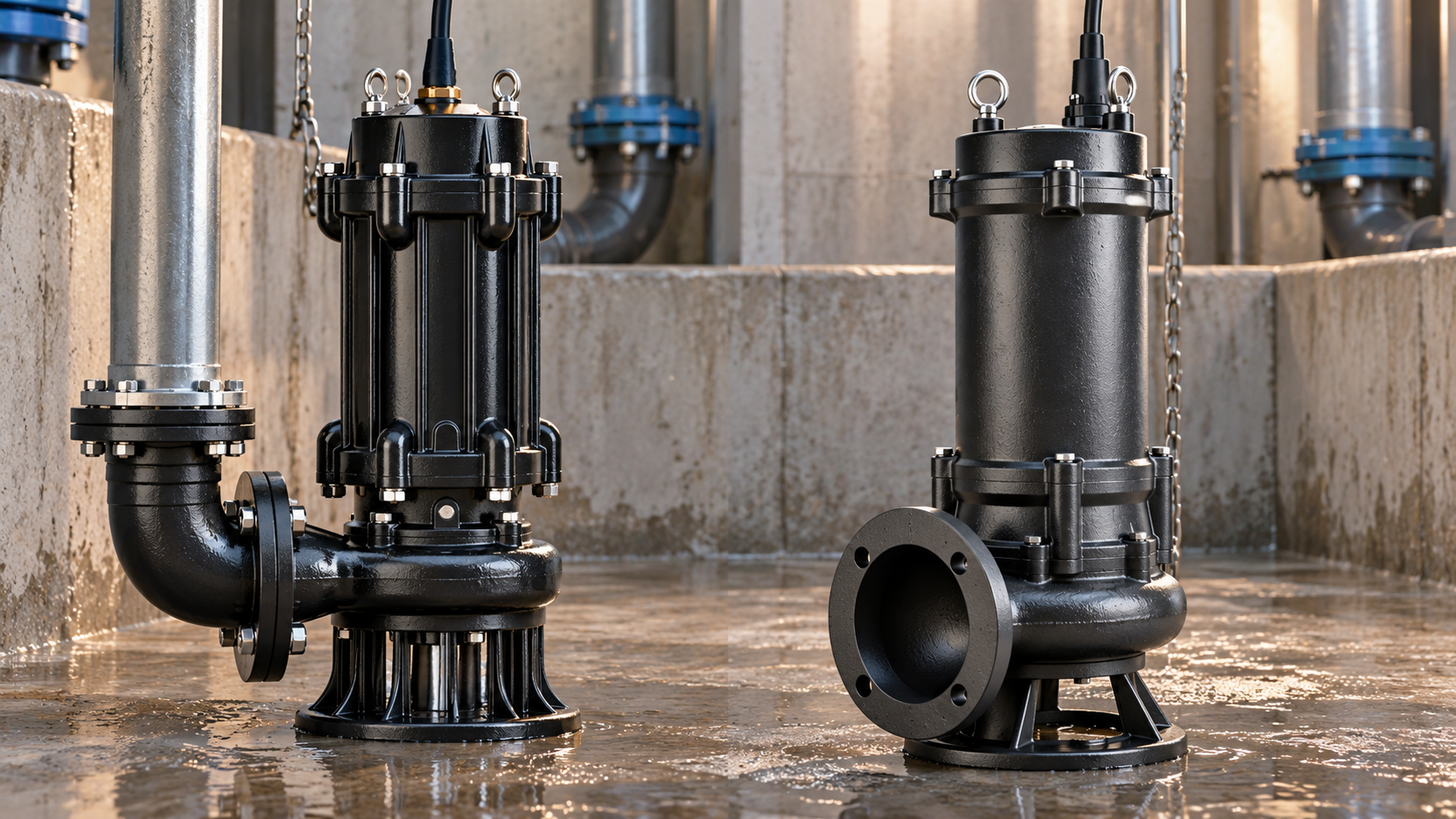
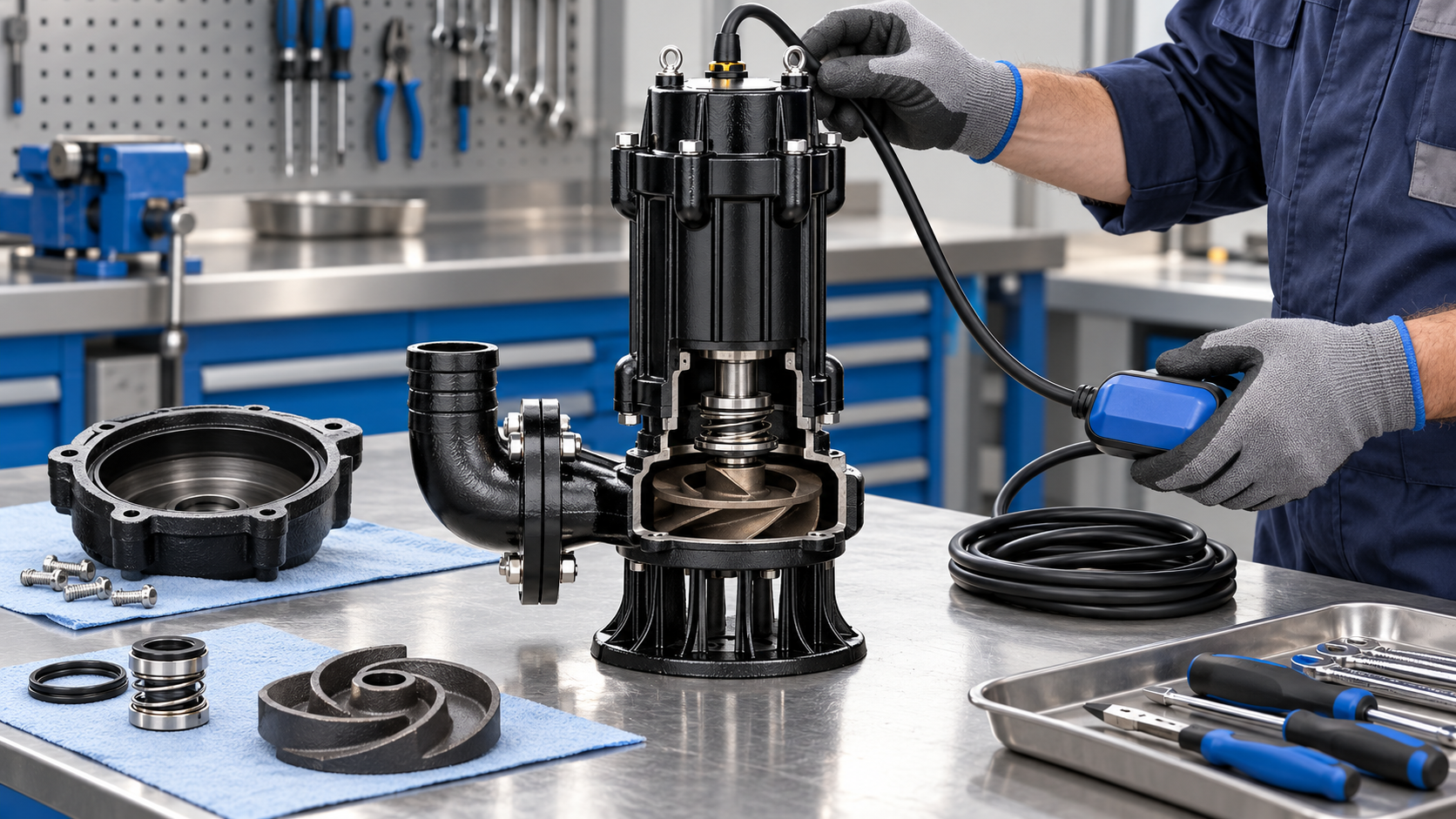
A Sewage Pump has a solids-handling impeller (vortex, semi-open, or other) that pumps wastewater and solids through the pump. Usually, it does not cut the waste into smaller pieces. Instead, the internal channels must be large enough to allow the requisite solids to flow through without plugging the pump.
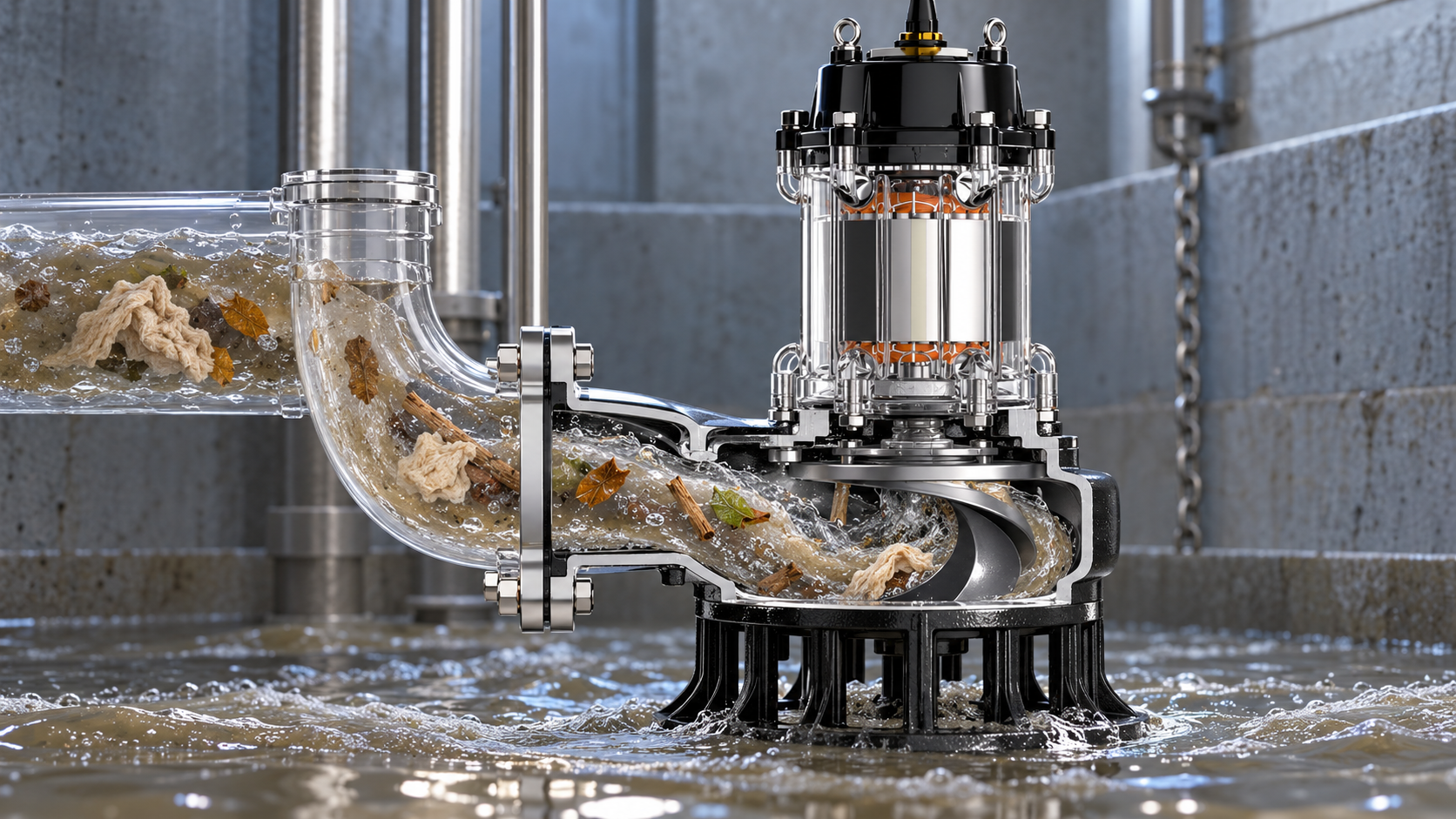
Sewage Pumps are often employed when the system requires a relatively high flow through a proper outlet line. Some residential models have a 2-inch discharge and can pass solids up to 2 inches, but the exact limit varies by type and should always be checked on the spec sheet.
2. Grinder Pump
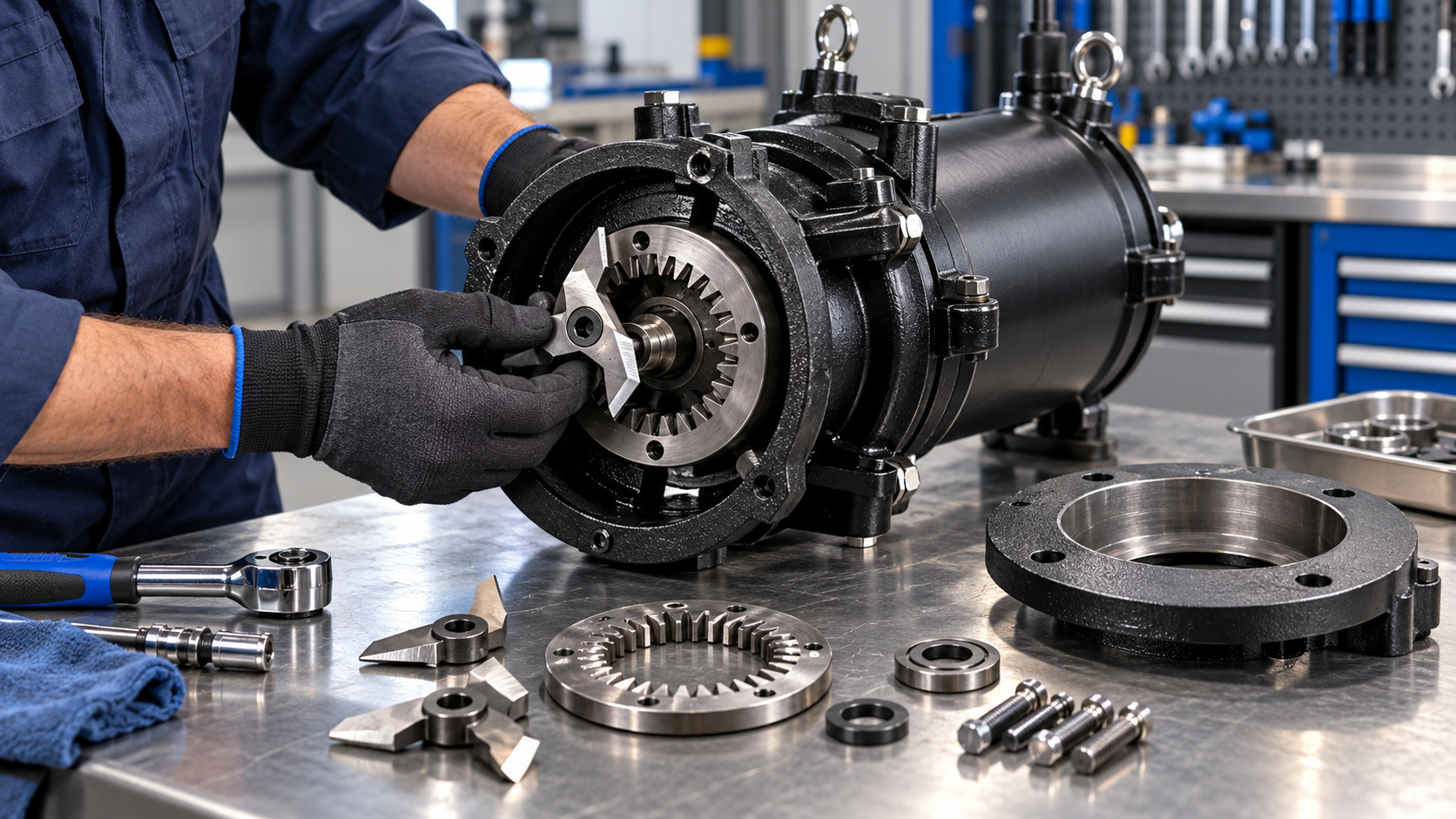
A Grinder Pump has a cutter, blade, or grinding plate near the inlet. The cutting system reduces some sediments and fibrous material into smaller particles before the effluent enters the pumping portion.
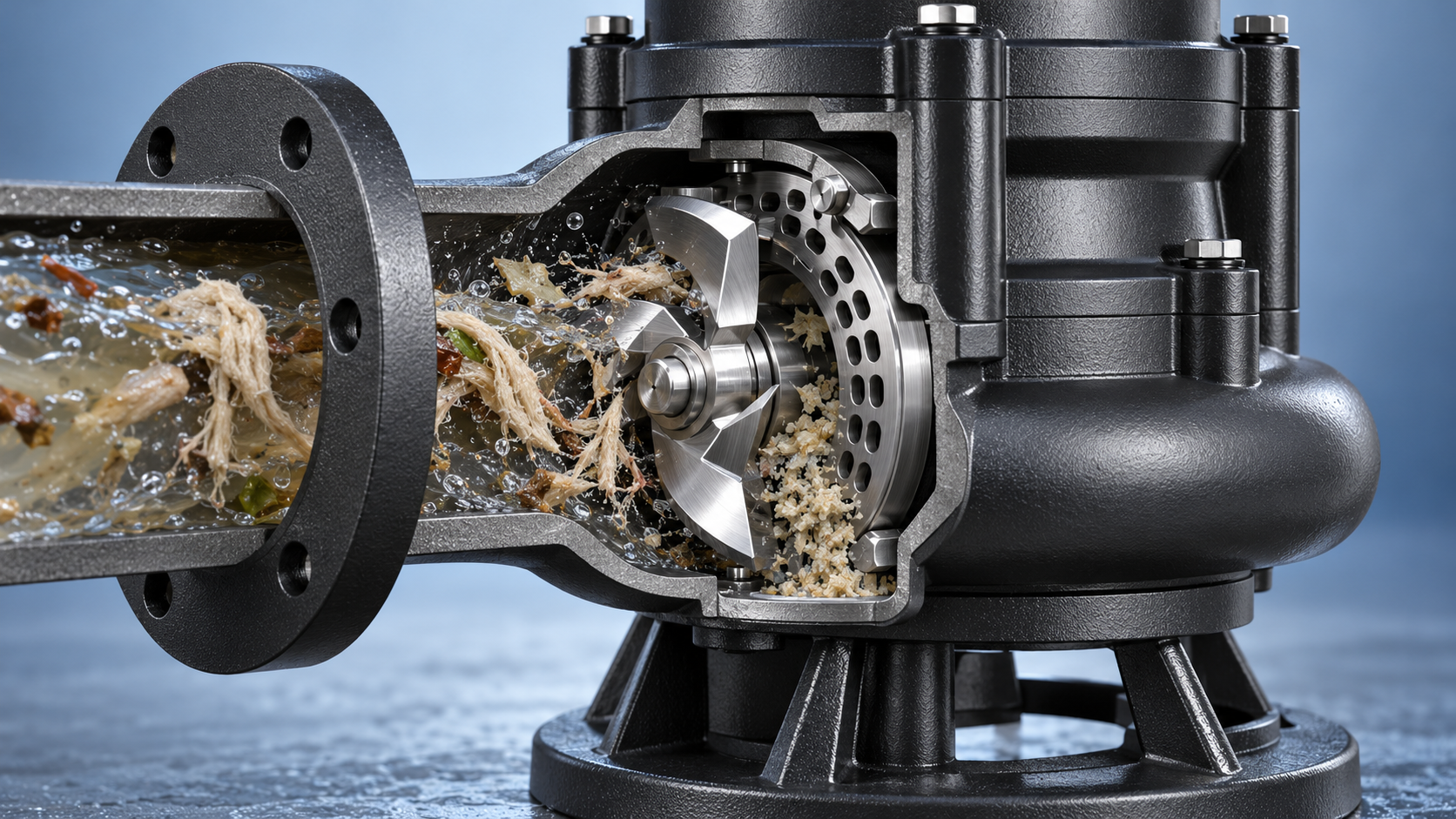
This design allows a Grinder Pump to push wastewater via smaller pressure pipes and overcome higher system pressure. It is often utilised in low-pressure sewer systems, long discharge lines, and installations where there is a considerable risk of clogging due to fibrous material.

III. Key Differences Between Grinder Pumps and Sewage Pumps
1. Passing Solids vs. Cutting Solids
A Sewage Pump moves solids through the impeller and pump housing. Its capacity to handle solids is based on free flow through the pump and not necessarily the size of the inlet or discharge. A 2-inch outlet does not inherently indicate the pump can pass a 2-inch solid.

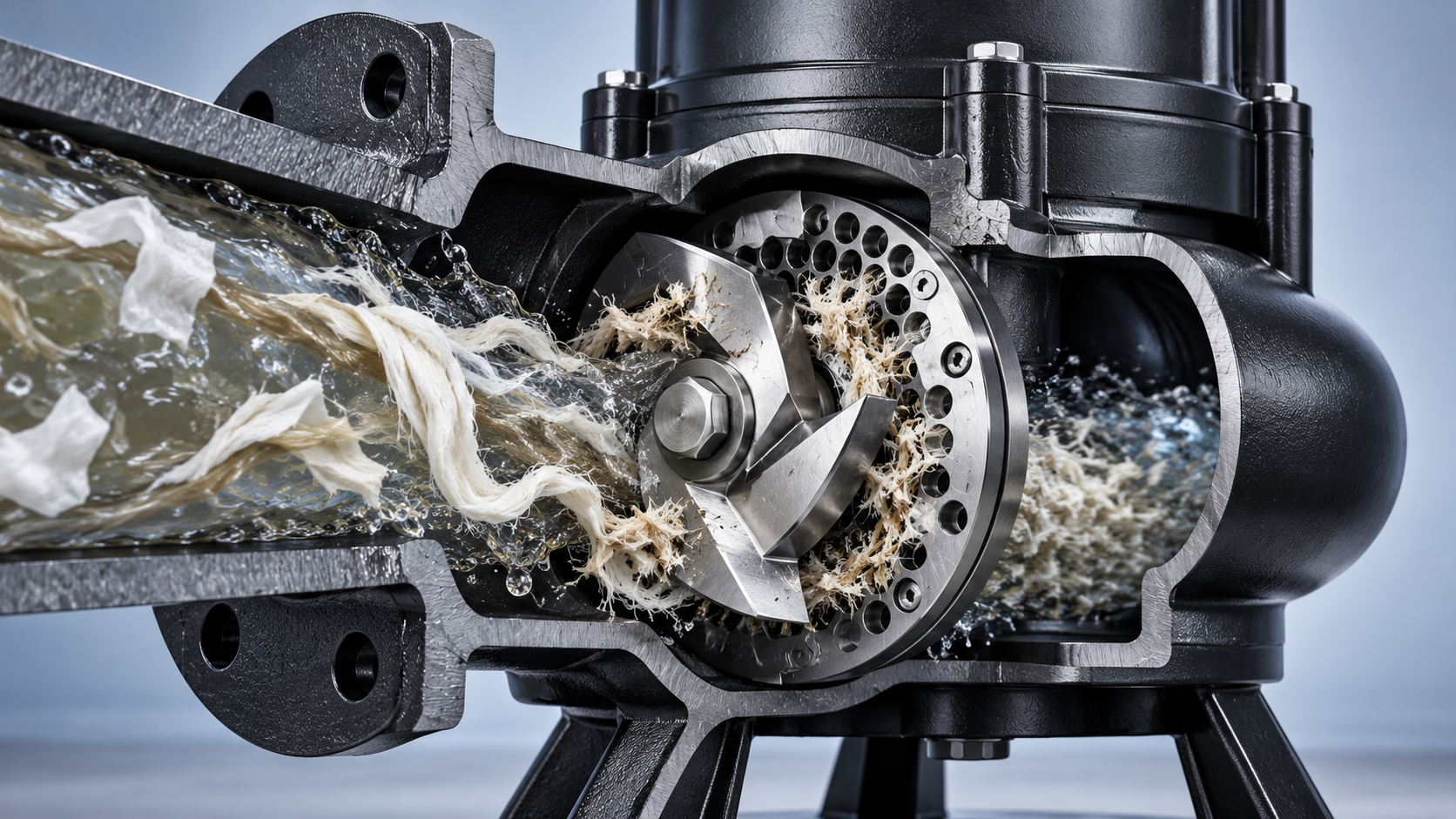
A Grinder Pump shreds acceptable trash before pumping. Hence, its performance should be checked by the type of cutter, blade material, and the type of waste to be processed. The solids-passing size and the grinding ability are two independent criteria and should not be compared as if they were the same.
2. Flow and Head
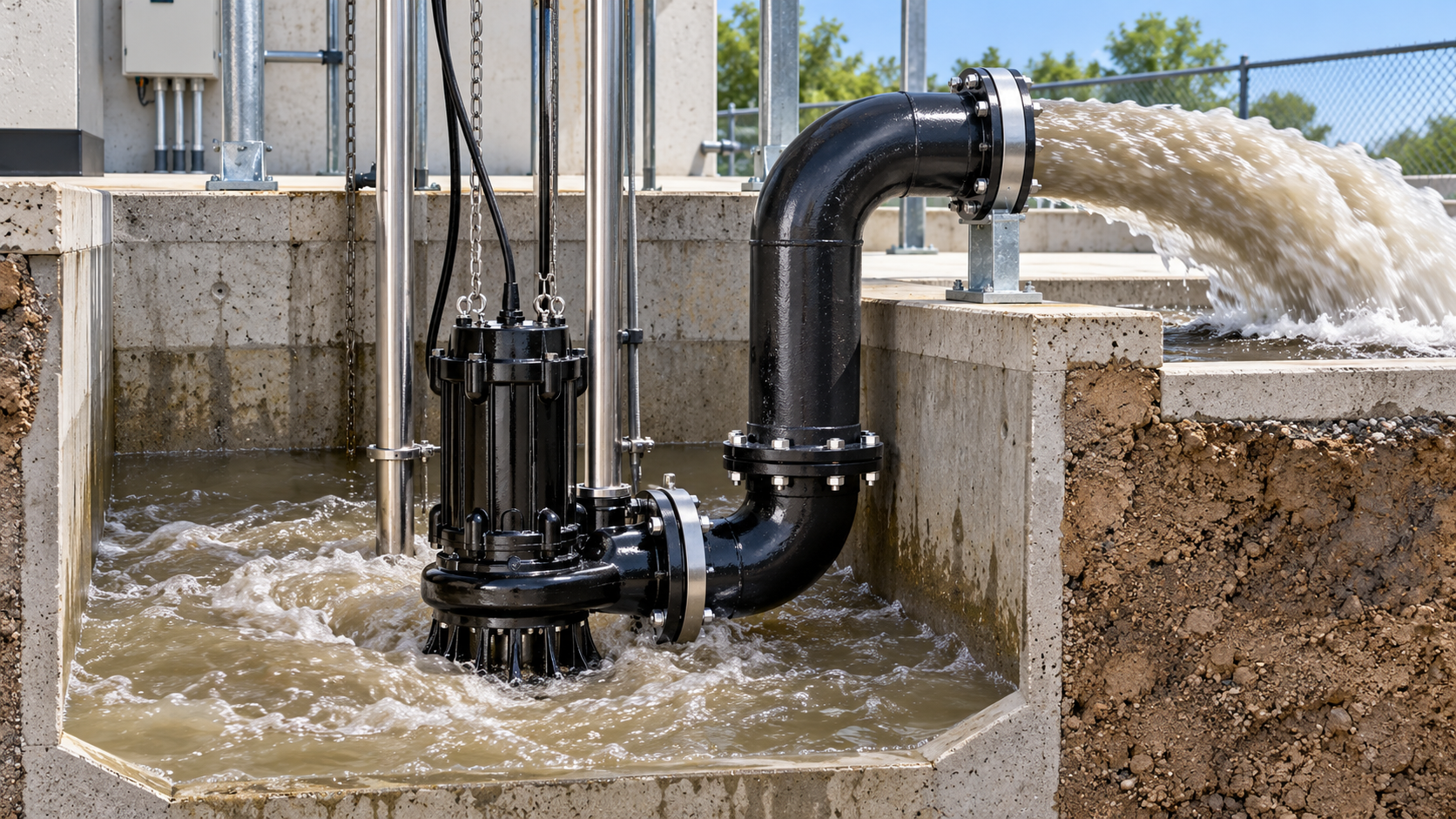
A Sewage Pump usually handles greater flow at a modest head. This makes it excellent for emptying sewage pits, transferring wastewater via larger pipes, and handling applications where a significant volume must be evacuated in a short time.
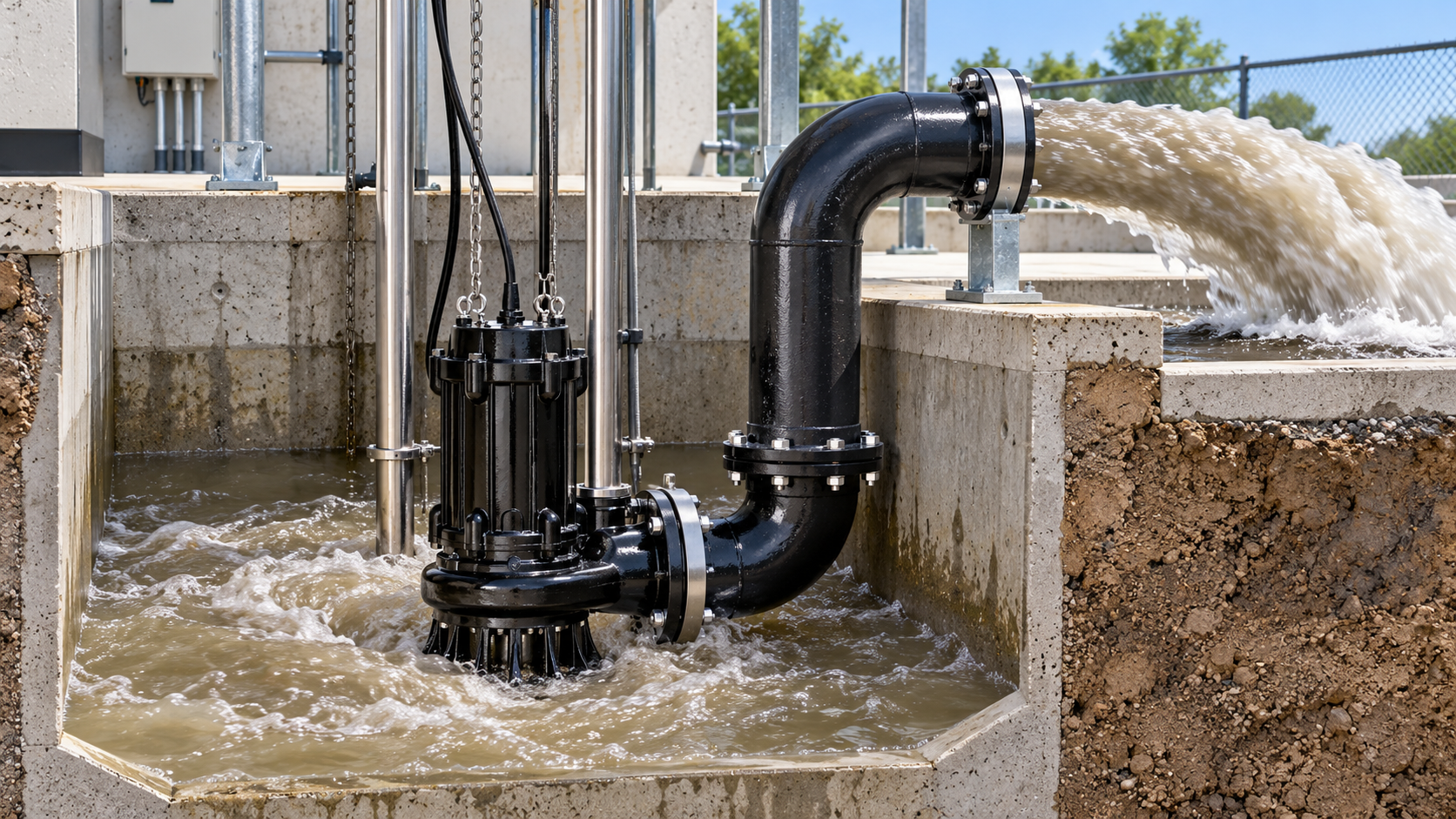
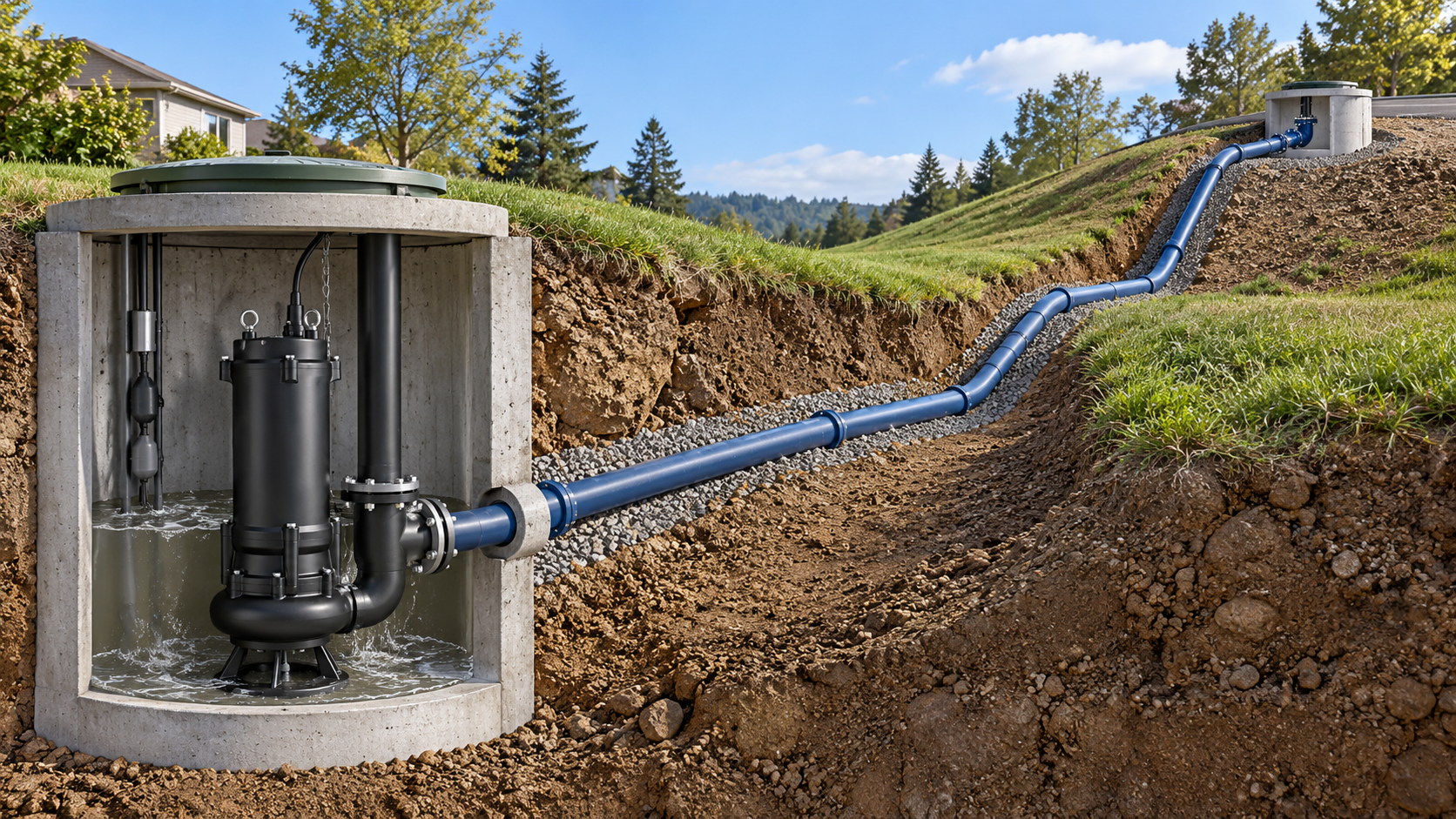
The standard Grinder Pump produces a lower flow but may pump against a higher head. This is beneficial where wastewater needs to be pumped uphill, over a lengthy force main or into a pressurised sewer. But the exact difference is model-dependent, so you still have to compare both pumps at the desired operating point.
3. Discharge Pipe Size
The Sewage Pump must have a pipe large enough to transport the solids that pass through the pump. The pipe should be no smaller than the size allowed by the pump manufacturer, as a smaller pipe diameter increases resistance and may trap solids.
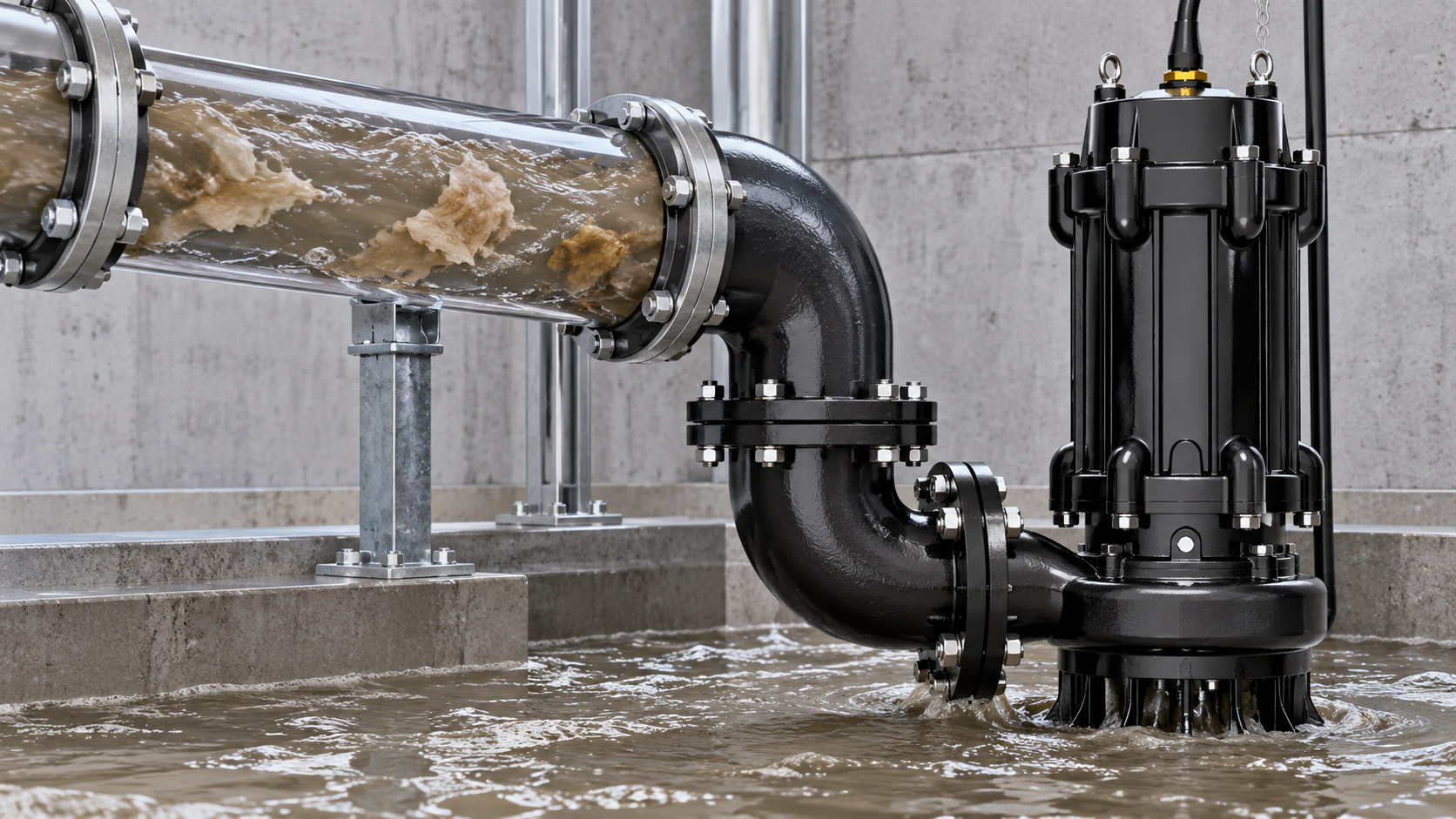
A Grinder Pump can sometimes work with a smaller pressure pipe since the cutter breaks the waste down into smaller pieces. You should not reduce the size of the pipe just because the pump has a cutter. The pipe still needs to have enough flow velocity to carry the trash.
4. Suitable Waste
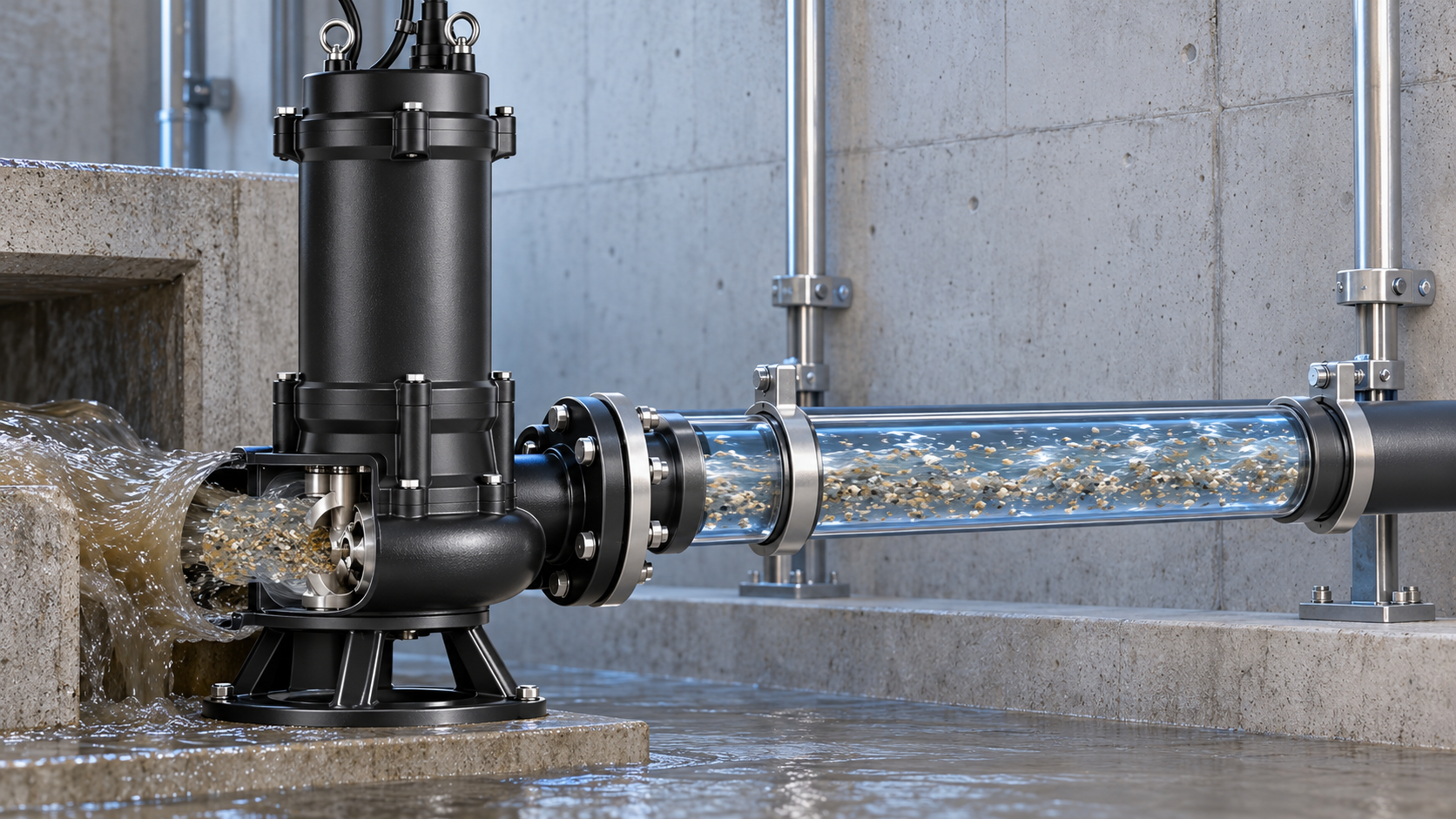
A Sewage Pump is ideal for domestic wastewater, toilet paper, human waste, and soft sediments within its rated channel size. Although it may look small in overall size, long fibres, cloth, moist wipes, and sanitary goods can become trapped around the impeller.

A Grinder Pump is better suited for wastewater that can contain fibrous debris. Depending on the design of the cutter, some model types are able to process wipes, cloth and sanitary items. Do not use either pump for stones, metal, wood, or huge volumes of sand unless the manufacturer specifically allows the application.

5. Cost and Maintenance
As a rule, a Sewage Pump is simpler in build and cheaper to purchase. The regular service consists mainly of inspecting the impeller, mechanical seal, motor, cable, float switch, and pump casing.
The Grinder Pump adds a cutter or grinding plate, which generally raises the cost of the product. Inspection and replacement of the cutting edges and cutter clearance is also a consideration. If cutting is not necessary, the extra expense of a Grinder Pump may not be of practical advantage.
| Comparison | Sewage Pump | Grinder Pump |
| Waste handling | Passes solids through the pump | Cuts waste before pumping |
| Typical performance | Higher flow at moderate head | Lower flow at higher head |
| Discharge pipe | Usually larger | Can suit smaller pressure pipes |
| Fibrous waste | Higher risk of clogging | Better handling of approved fibrous waste |
| Main structure | Solids-handling impeller | Cutter and pumping section |
| Purchase cost | Usually lower | Usually higher |
| Typical use | General sewage transfer | Pressure sewage transfer |
IV. How to Choose Between a Grinder Pump and a Sewage Pump
1. Check Where the Wastewater Is Going
First determine if the wastewater is flowing to a gravity sewer, a septic tank or a pressurised sewer main. Often this decision informs you more than the name of the motor power or pump.
If the pump just needs to move wastewater a short distance into a nearby gravity pipe or septic tank, a Sewage Pump is usually the best choice. If the wastewater needs to be pumped lengthy distances, lifted great vertical distances, or forced into a pressurised main, a Grinder Pump may be more appropriate.
2. Identify What Is in the Wastewater
For normal home wastewater containing human waste, toilet paper and soft solids, select a Sewage Pump with an appropriate solids passing capability. Check the pump passage against the largest solids predicted in the system.
If wet wipes, cloth, sanitary goods or other fibres are likely to enter the pit, verify that a Grinder Pump is intended to cut those materials. Grinder Pumps come in different variants with different cutter strength and authorised forms of waste, so not all solid waste can be processed by all Grinder Pumps.
A different judgement is required for hard materials. Stones can destroy the impeller. Metal can ruin a cutter. Sand will erode the pump and mechanical seal. If these materials are found in your system, you must either remove them or choose a pump built for abrasive wastewater.
3. Confirm the Required Flow
The required flow rate relies on the rate at which wastewater flows into the pit and the rate at which the pit must be emptied. The pump must be capable of delivering more than the peak incoming flow at the actual system head, or else the water level would continue to rise while the pump runs.
If high flow is the primary requirement, a Sewage Pump is generally the preferable option. Don’t buy a Grinder Pump just because it has a bigger motor – the cutting mechanism and hydraulic design can deliver less flow than a less expensive Sewage Pump.
If the required flow is not available, request the building type, number of connected fixtures, projected peak input, pit capacity, and allowable emptying time. These details provide a safer basis for choosing a flow range than guessing off the output size.
4. Calculate the Total Dynamic Head
The total dynamic head consists of the vertical lift, the pipe friction, and any pressure at the discharge point. Long runs of pipe, tiny diameter tubing, elbows, valves, and check valves all add to the head that the pump must overcome.
Then determine the total head, find the required flow on the pump curve, and check the available head at that point. Do not select a model whose maximum head is equal to the system head, because maximum head is typically measured at zero or almost zero flow.
For example, a pump with a maximum head of 20 m will not give its maximum flow when operating at 20 m. If the system requires 10 m³/h at 15 m head, the pump curve must show at least 10 m³/h at 15 m, not just a maximum head above 15 m.
5. Match the Discharge Pipe
For a Sewage Pump, the entire discharge line must be capable of transporting the solids via the pump. A high solids-passing rating is of limited utility if a smaller pipe, valve or fitting generates a choke point downstream of the pump.
For a Grinder Pump, check the recommended pipe diameter, pipe length and flow at the actual head. If a pipe is too tiny, the friction loss is substantial. If a pipe is too large, the velocity of flow is decreased, and the settled waste is trapped.
Existing piping is very crucial in replacement projects. Before quoting a pump, ask for the current pipe size. Switching from a Sewage Pump to a Grinder Pump—or vice versa—does not immediately make the existing line appropriate.
6. Check Solids Passage and Cutting Ability Separately
For a Sewage Pump, verify the maximum size of spherical solid that can flow through the pump. Verify the impeller type and the internal free passage, and do not assume that the discharge connection offers the same solids-handling size.
Confirm cutter construction and permitted waste types for the grinder pump. Hardened cutter materials and exchangeable blades may be advantageous in demanding systems, but still the final choice must match the wastewater and expected working time.
This is significant when comparing quotes. One vendor might give a solids-passing diameter and another vendor a cutting ability. These specifications describe two separate techniques of treating trash and are not to be included in the same comparison column.
7. Choose Automatic or Non-Automatic Control
An automatic pump features a float switch that is either built into the pump or attached to the pump that turns the pump on and off as the water level rises and falls. It is perfect for many tiny, single-pump pits where there is room for the float to move.
A non-automatic pump is operated by external level switches and a dedicated control panel. This design is more suitable for commercial systems, narrow pits, duplex installations, or if distinct start, stop, high-level alert, and backup-pump settings are required.
Before giving a quote, verify if the buyer needs merely a pump or a full automatic setup. A pump may be electrically correct but not suitable for use in the system for which it was intended if given without the necessary means of control.
8. Confirm Electrical and Running Conditions
Check the voltage, frequency, phase, rated current, cable length, and manner of starting. Small installations often employ single-phase pumps, whereas larger commercial systems may use three-phase motors and additional control panels.
Also check projected run time and starts per hour. Small pits can cause repeated starts that can overheat the motor, reducing the life of the float switch, relay, and starting elements.
Where continuous removal of sewage is needed, a duplex system may be required. During normal operation, the two pumps may alternate. The second pump can provide additional capacity or back-up should water levels continue to climb.
V. Selection Recommendations for Common Applications
1. Basement Bathroom with a Short Discharge Line
Select a sewage pump when the waste from a basement bathroom only needs to be pumped a short distance into a neighbouring gravity sewer. The output pipe must be large enough for the solids flow for which the pump is rated, and the operating head must be within the pump curve.
In case the system has a smaller pressure pipe or frequently receives fibrous waste, determine if a Grinder Pump is needed. Don’t pick a Grinder Pump simply because the installation is below ground level.
2. Remote Building Connected to a Sewer Main
A Grinder Pump is generally better suited for a remote structure that has to pump wastewater over a long, small-diameter force main. The cutting mechanism breaks down the permitted waste into smaller particles, and the pump delivers the pressure required to overcome lift and pipe resistance.
Ask for vertical lift, entire length of pipe, diameter of pipe, and pressure at point of connection. Distance alone is not enough, as a large pipe could have less resistance than a short narrow pipe.
3. Commercial Sewage Pit Requiring High Flow
A business building, public amenity, or multi-unit property might generate significant peak inflow. In this situation, start with a high-flow sewage pump and see if its solids passing meets the wastewater.
If the wastewater contains a high amount of fibrous debris, compare a Grinder Pump to a clog-resistant Sewage Pump at the duty point necessary. A Grinder Pump that takes care of the waste but produces too little flow will not keep the pit level down.
4. Septic Tank System
Generally, a Sewage Pump is the first option when raw sewage needs to travel only a short distance to a septic tank. Some septic systems may not settle regularly and finely processed materials may remain suspended; hence a Grinder Pump should not be automatically used.
Use a Grinder Pump only where the design of the septic system, pipe size, or lift or transport distance dictates. The choice of pump should be based on the architecture of the entire septic system, not solely on the presence of solids.
5. Existing Small-Diameter Force Main
You will still need to calculate total head; however, if you have an existing small-diameter force main, a Grinder Pump will typically be required. If the pump curve does not match the pipe resistance, a powerful cutter will not help.
Before replacing the pump, check if the old pipe is obstructed, broken, or too small for the needed flow. Putting a bigger Grinder Pump in a pipe that is not designed to handle it will boost pressure but not return the wastewater flow to what is desired.
VI. Information Needed Before Quotation
Before recommending a Grinder Pump or Sewage Pump, ask for the following information:
- Wastewater source
- Type of solids and fibrous waste
- Required flow
- Vertical lift
- Total discharge pipe length
- Pipe diameter
- Number of elbows and valves
- Gravity discharge or pressurized sewer
- Pressure at the discharge point
- Voltage, frequency, and phase
- Automatic or non-automatic operation
- Single-pump or duplex system
- Pit dimensions and working volume
- Expected running time
- Required cable length
These details let you calculate the operating point and confirm whether the system needs solids passage or cutting. They also prevent you from choosing a Grinder Pump only because the waste looks difficult, or choosing a Sewage Pump only because a higher-flow model costs less.
VII. Conclusion
A Sewage Pump will pass specified solids via the pump. In general, it is the superior choice for high-flow sewage transfer through suitable pipes. A Grinder Pump will chop up acceptable solids and fibres prior to discharge, making it more suited to tiny pressure pipes, long force mains, higher heads, and wastewater with a greater danger of clogging.
The right option is not only the motor power, but also the wastewater, the required flow, the total dynamic head, the size of the pipe, the discharge system, and the control mechanism. Send your project data or target-market specifications to HunGerät, and we can help you compare suitable Grinder Pump and Sewage Pump models, performance curves, electrical setups, and OEM possibilities.
VIII. FAQ
1. Is a Grinder Pump a Type of Sewage Pump?
Yes. A Grinder Pump is a Sewage Pump with an additional cutting or grinding device that processes acceptable solids before release.
2. What Is the Main Difference Between a Grinder Pump and a Sewage Pump?
A Sewage Pump lets solids pass through its internal passages, while a Grinder Pump cuts suitable waste into smaller particles. The correct choice depends on the waste, pipe size, flow, and total head.
3. Which Pump Provides More Flow?
A standard Sewage Pump usually provides more flow than a Grinder Pump of similar power. Compare their pump curves at the same total head because actual performance varies by model.
4. Which Pump Provides Higher Head?
A Grinder Pump is commonly designed for higher-head pressure systems. However, some Sewage Pumps are also available in high-head designs, so the performance curve remains the final selection basis.
5. Can a Sewage Pump Handle Wipes?
A standard Sewage Pump will often give greater flow than a Grinder Pump of the same power. Actual performance varies by model. Compare their pump curves at the same total head.
6. Can a Grinder Pump Handle Stones or Metal?
No standard Grinder Pump is designed to grind stone, metal, or other hard items. These materials can cause damage to the cutter, impeller, shaft, or mechanical seal.
7. Can a Sewage Pump Replace a Grinder Pump?
Only if the current pipe can carry the solids and the sewage pump fulfils the needed flow and head. Never connect a Sewage Pump to a tiny Grinder Pump force main without verifying the entire system.
8. Can a Grinder Pump Replace a Sewage Pump?
It might be doable but not always useful. The Grinder Pump may have less flow, cost more and have more cutter maintenance than the original Sewage Pump.
9. Why Does a Grinder Pump Use a Smaller Discharge Pipe?
The cutter breaks down permitted garbage into smaller pieces that can be transported through a smaller pressure pipe. Lastly, the final pipe size must allow sufficient flow and keep friction loss within the available head of the pump.
10. Can a Grinder Pump Discharge into a Septic Tank?
It can be, in systems configured to accommodate such a scenario, but it shouldn’t be the first pick. Finely processed materials settling out can impact some septic tanks. First, check out the whole system architecture.
11. Which Pump Is Better for a Gravity Sewer?
Usually, a Sewage Pump is better for a short lift into a gravity sewer with a proper pipe size. It usually gives the flow needed without the extra cost of a cutter.
12. Which Pump Is Better for a Long Force Main?
A Grinder Pump is typically better for a long, small-diameter pressure line. Confirm the needed pipe friction and flow, as the pump must reach both values at the same operating point.
13. How Do You Calculate the Required Sewage Pump Flow?
Start with the maximum intake of wastewater and the time available to empty the working volume of the pit. The real total head must be less than the pump-provided flow, and the flow must be greater than the incoming wastewater.
14. How Do You Calculate Total Dynamic Head?
Add the vertical lift, pipe friction, losses in fittings, and pressure at the point of discharge. Check the pump curve using the resultant total head together with the needed flow.
15. Is Discharge Size the Same as Solids-Passing Size?
No. The discharge size is the pipe connection; the solids-passing size is the largest specified solid that can go through the pump.
16. Does a Grinder Pump Always Need More Motor Power?
No. The motor power is dependent on the flow needed, head, cutter load, speed and hydraulic design, and not solely on the pump name.
17. When Should You Choose an Automatic Pump?
For a small pit with one pump and plenty of float travel, select an automatic model. Check start and stop levels versus pit depth and inlet position.
18. When Does a Sewage System Need a Duplex Pump?
Use a duplex system when: • Wastewater service is critical • Peak intake may exceed one pump capacity • Backup operation is required. The controls should alternate the pumps and then start the second pump at a higher water level.
19. Why Does a Sewage Pump Start and Stop Too Often?
The pit may be too small or the float travel too short. Or there may be wastewater returning through a malfunctioning check valve. Frequent starting can overheat the motor and reduce the life of the electrical components.
20. What Information Is Needed to Select the Correct Pump?
Provide the wastewater, solids, flow rate, vertical lift, length and diameter of pipe, outlet pressure, voltage, frequency, phase, and mode of control. This information enables the supplier to match the pump to the true operating point and not only by power.