I. Introduction
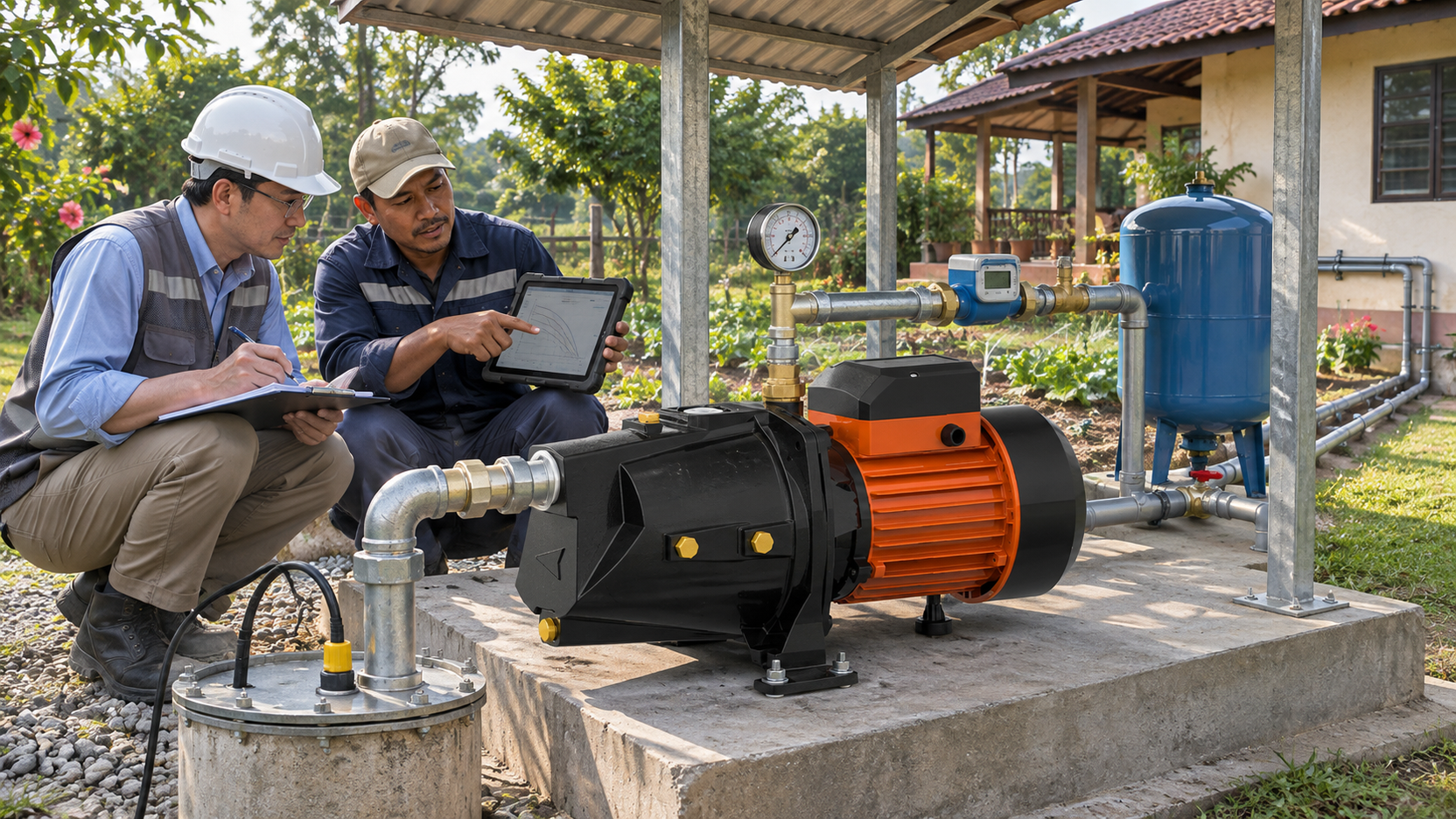
The largest risk of importing or distributing shallow well jet pumps is selecting models based only on horsepower or maximum flow. The pump may look good on paper, but may not prime, may not deliver the needed pressure, cycle too often, or produce unnecessary warranty claims. This guide will take you through matching a shallow well jet pump based on the pumping water level, needed flow, system pressure, suction pipework, pressure tank, materials, motor data, and target market conditions so you can develop a range your clients can confidently select.
II. What Is a Shallow Well Jet Pump?
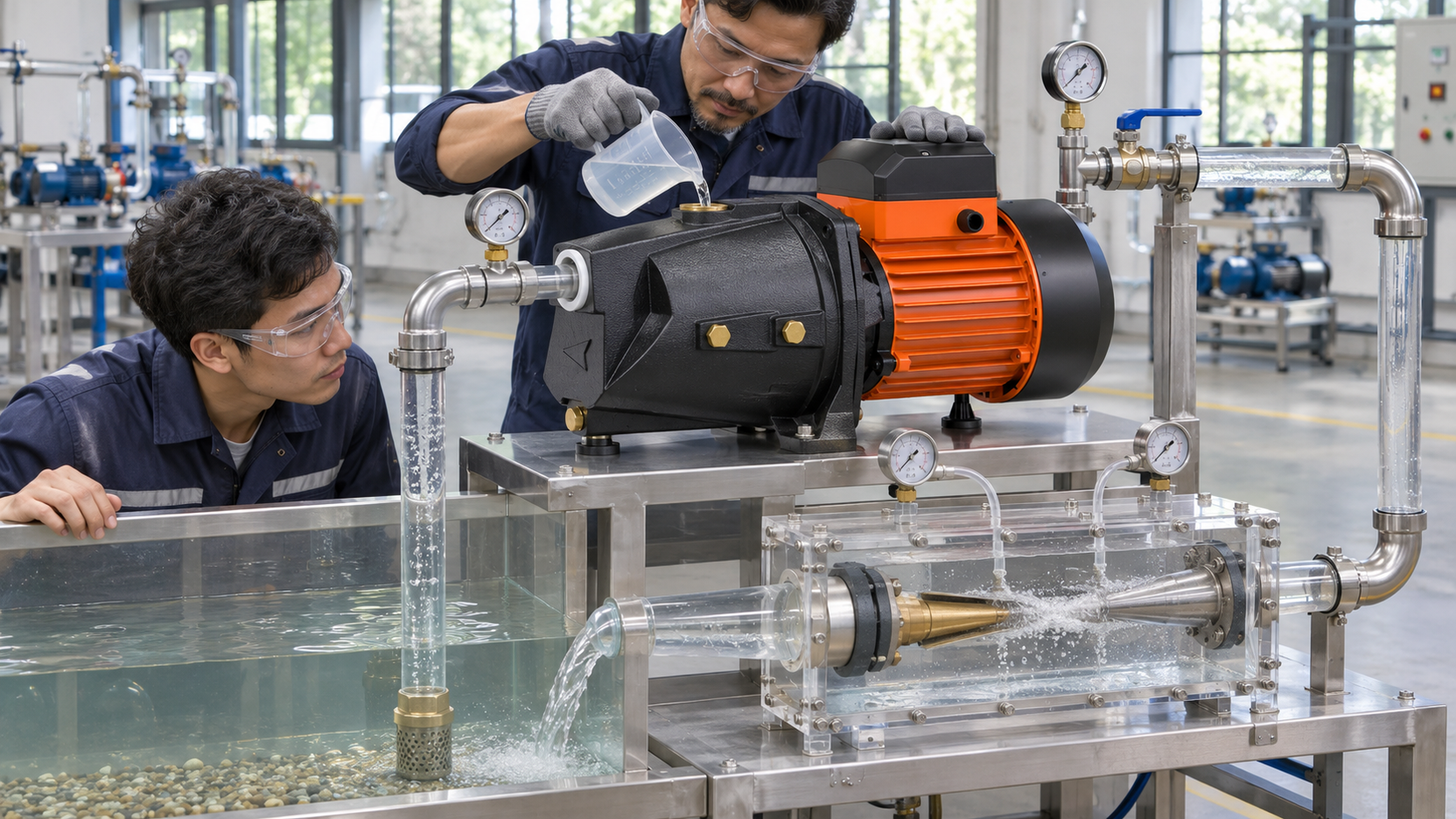
A shallow well jet pump is a surface pump for clean water that usually pulls water through one suction pipe. A low-pressure area is created by the nozzle and venturi in the integral jet assembly, causing atmospheric pressure to force water into the suction line. Most models are designed for a total suction lift of 25 feet (7.6 meters) or less. You may also find the pump labelled as a shallow well pump, self-priming shallow well jet pump, well water jet pump, or water jet pump for home use, but these names do not validate its real flow, pressure, suction capability, materials, or electrical setup.
III. Confirm Whether a Shallow Well Jet Pump Fits the Application
1. Check the Pumping Water Level and Total Suction Lift
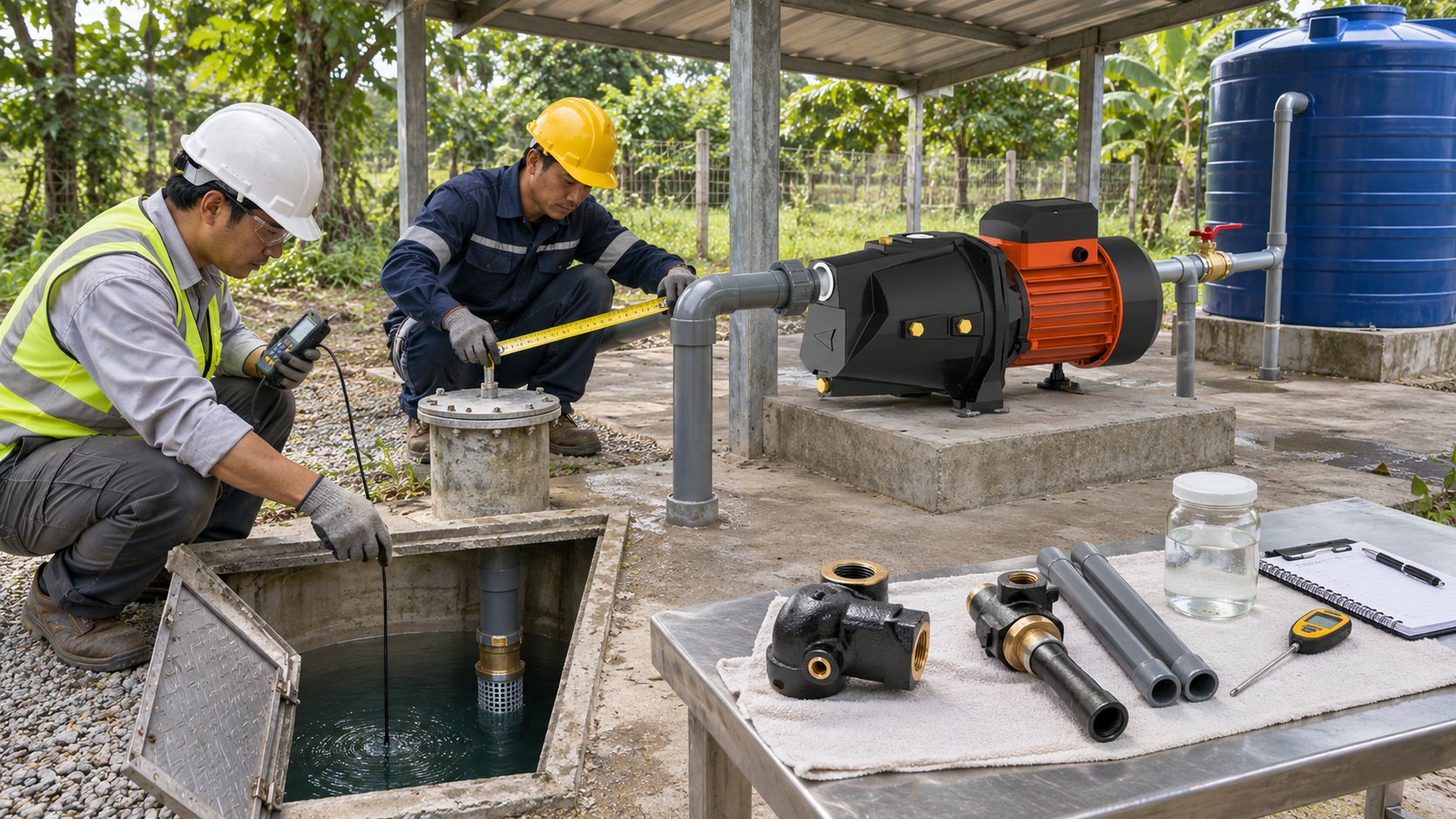
Start with the level of the water you are pumping from, not the whole depth of the well. The level of water pumped is the distance between the pump and the surface of the water at the time of pumping. Even a well 30 meters deep may have its water level for pumping only 4 meters below the pump, so a shallow well jet pump may still be suitable. You then have to add the friction losses in the suction pipe, elbows, fittings, strainer, and foot valve. A long or undersized suction pipe can take the actual operating condition out of the safe range if the vertical lift is already near the pump’s maximum rating.
2. Understand Shallow Well Pump vs Deep Well Pump Selection
A shallow well jet pump usually has the jet assembly in the pump body and one suction pipe. A deep-well jet pump places the jet assembly down inside the well and often requires either a two-pipe or packer system. If you have the proper shallow-well adapter or deep-well ejector kit, either configuration can be used with a convertible jet pump. If you wish to decrease the number of SKUs in your catalogue, then a convertible model may be handy, but you will need to manage the adapter, nozzle, venturi, pipe connections, and instructions as part of the full system.
3. Confirm the Water Source and Operating Conditions
A shallow well jet pump may pump clean water from a shallow well, cistern, storage tank, lake, or similar source, provided the suction conditions are within the limits of the pump. Before you suggest a model, ask about seasonal water level changes, available water volume, estimated operating hours, water temperature, sediment, sand, and the possibility of freezing. A bigger motor won’t help a bad source, too much suction lift, or a well that cannot recover fast enough.
IV. Calculate the Required Flow and Pressure
1. Estimate the Simultaneous Flow
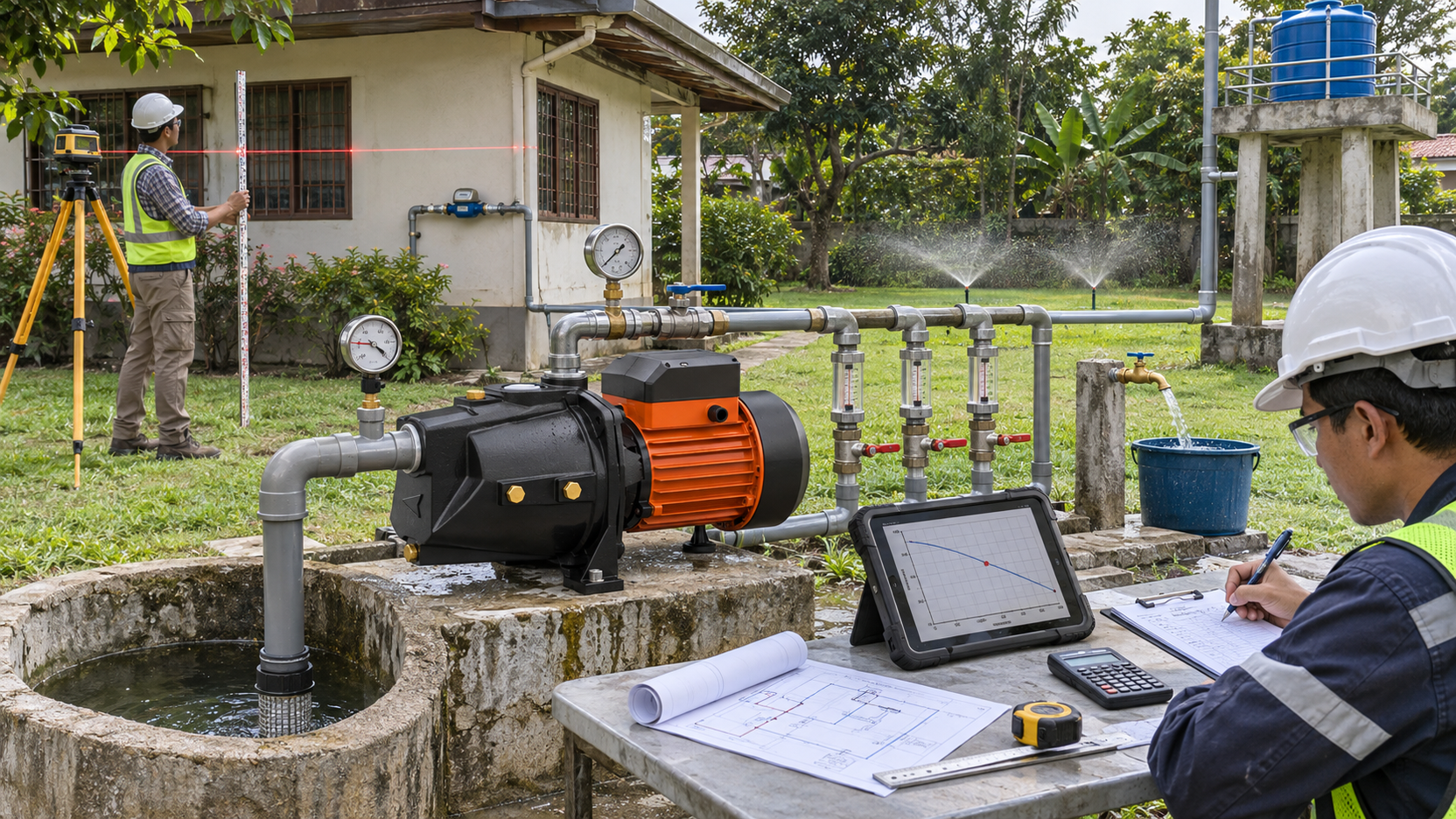
Instead of summing up the peak flow of all outlets, figure out the flow needed from the outlets that are likely to be on at the same time. For a household system, you may need to consider bathrooms, kitchen use, laundry, outdoor taps, irrigation, and tank filling. Agricultural or light commercial use: Decide whether the demand is continuous or intermittent. This allows you to deliver enough water without oversizing the pump and raising purchase cost, starting current, noise, and cycling.
2. Calculate the Required Head
The pump has to overcome suction lift, elevation of discharge, required outlet pressure, and friction in the pipe. A simple calculation is total dynamic head = suction lift + discharge elevation + required pressure head + friction loss. 1 bar = about 10.2 meters of water head. 1 psi = approximately 2.31 feet. If the customer wants 3 bar at the farthest outlet, the pump has to deliver around 30.6 meters of pressure head before you start factoring in elevation and pipe losses.
3. Check the Pump Curve at the Real Working Point
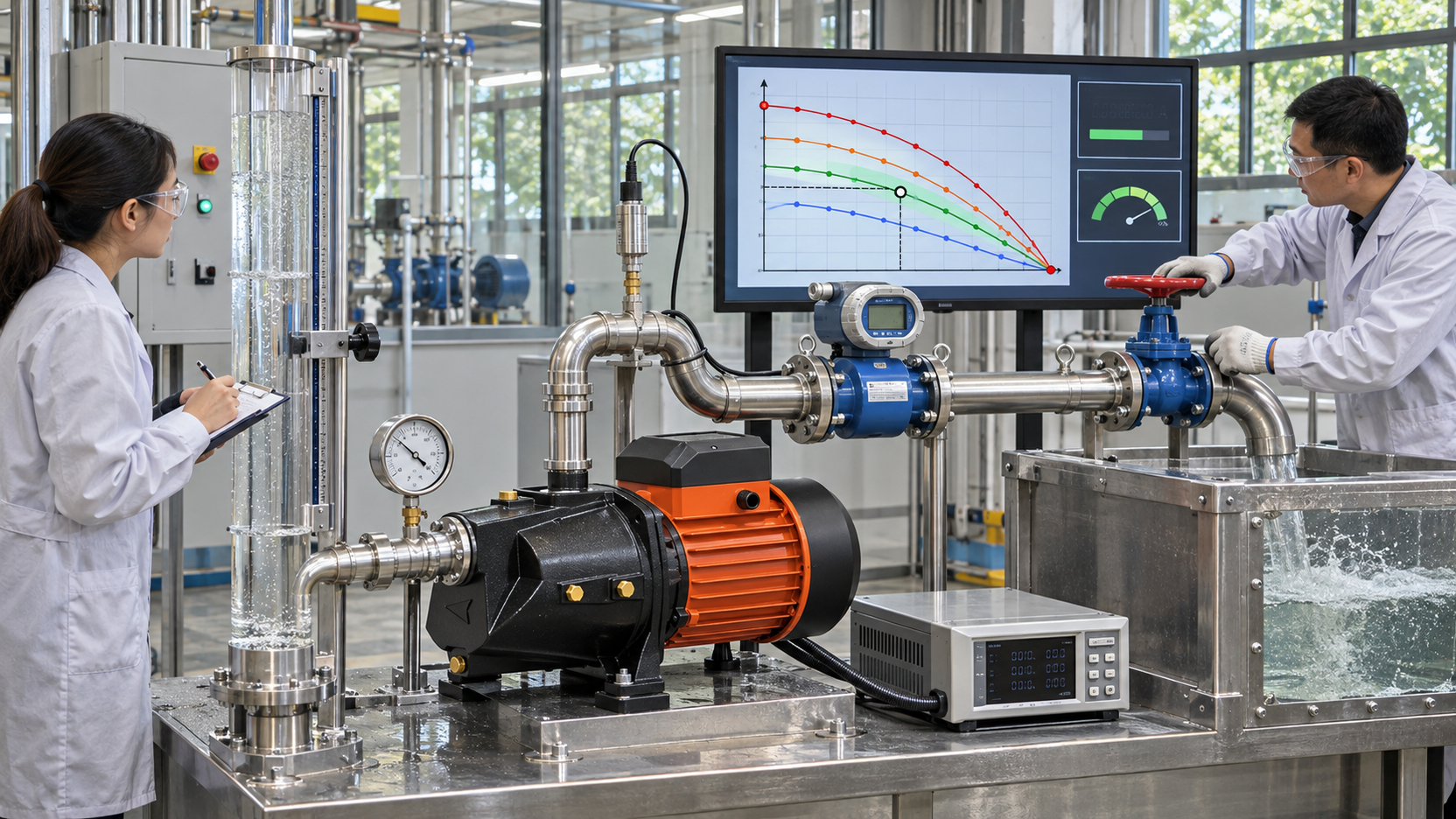
Maximum flow and maximum pressure cannot be given simultaneously. Find the appropriate flow on the pump curve, go to the required pressure or head, and check the model performance at the actual suction lift. Some suppliers have distinct curves for different suction lifts; others give flow at a certain lift and pressure. When comparing suppliers, have them demonstrate performance under the same conditions. Flow at 5, 15, and 20 feet of suction lift at both 30 and 40 psi would be a helpful comparison.
V. Choose the Right Pump Configuration
1. Compare Performance Instead of Horsepower
Horsepower merely tells you the rating of the motor. It doesn’t tell you how much water the pump can deliver at the required suction lift and pressure. Two 1 HP models may have different impellers, nozzles, venturis, motor speeds, and hydraulic systems; therefore, their performance may vary greatly. When a buyer asks for a “shallow well jet pump 1HP,” enquire about the pumping water level, needed flow, and target pressure before recommending a model. The best shallow well pump is one that reaches the required working point with a reasonable performance margin.
2. Avoid Excessive Oversizing
A bigger pump may give greater flow, but it can also raise starting current, noise, pipe velocity, system pressure, and purchasing cost. In a system with a small pressure tank, an oversized pump can cycle too often and for extremely brief periods. Pick adequate capacity to meet peak demand and anticipated water level variations, but don’t over-select a pump that’s much larger than the job actually requires.
3. Decide Between Pump-Only and Tank Packages
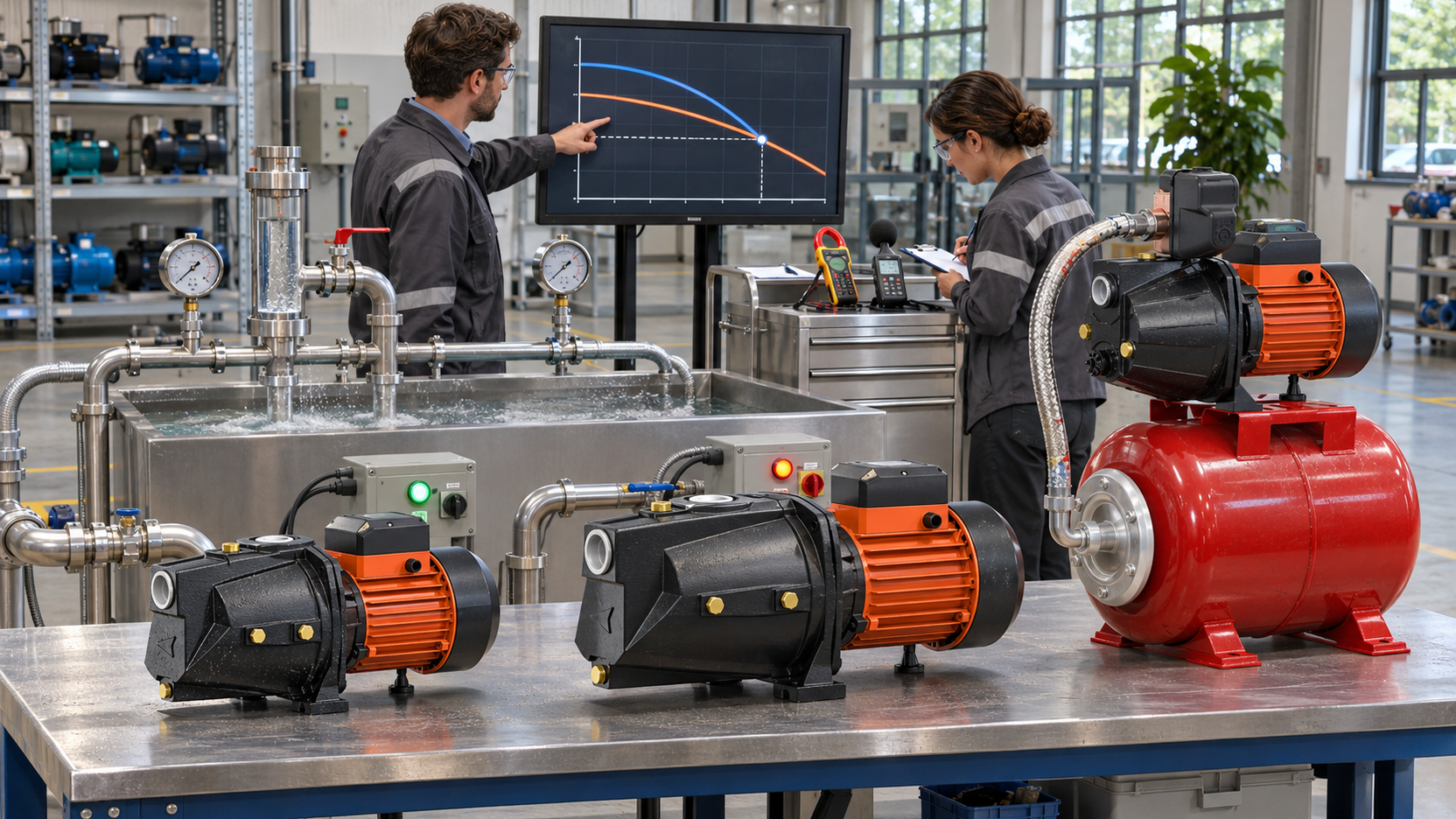
A shallow well jet pump with pressure tank gives your customer a more complete system and lowers the possibility of incompatible components. The pump-only type allows installers more flexibility in choosing tank size, pressure range, and layout. Be explicit about what your quotation covers. Customers may compare a pump-only model to a shallow well pump with pressure tank and assume both quotations include the same equipment.
VI. Select the Pump from Its Performance Curve
1. Find the Required Working Point
The required operating point is the combination of flow and pressure that the pump must supply at the actual suction lift. For example, if your customer demands 35 litres per minute at 3 bar and the pumping water level is 4 meters below the pump, you need to locate a model that can produce that flow, taking into account suction lift, outlet pressure, elevation, and pipe losses. A model that only manages 35 litres per minute at low pressure is not acceptable.
2. Do Not Compare Maximum Flow and Maximum Head
The required operating point is the combination of flow and pressure that the pump must supply at the actual suction lift. For example, if your customer demands 35 litres per minute at 3 bar and the pumping water level is 4 meters below the pump, you need to locate a model that can produce that flow, taking into account suction lift, outlet pressure, elevation, and pipe losses. A model that only manages 35 litres per minute at low pressure is not acceptable.
3. Compare Pumps Under the Same Test Conditions
Have each supplier prove performance at the same suction lift and discharge pressure. A helpful comparison may be flow at 5, 15, and 20 ft suction lift at 30 and 40 psi. One supplier offers maximum flow, another flow at 20 psi, and a third flow at 40 psi, although their figures are not directly comparable. Consistent test conditions allow you to see which pump really performs better in terms of usable performance.
4. Keep a Reasonable Performance Margin
Select a pump with capacity higher than the calculated operating point to account for changes in the water level being pumped, pipe conditions, and customer demand. But you don’t want to pick a model that is substantially larger than needed. Excessive oversizing can raise the purchasing cost, starting current, noise, pipe velocity, and cycling rate. The correct model should allow for expected changes, but not go too far beyond normal client demand.
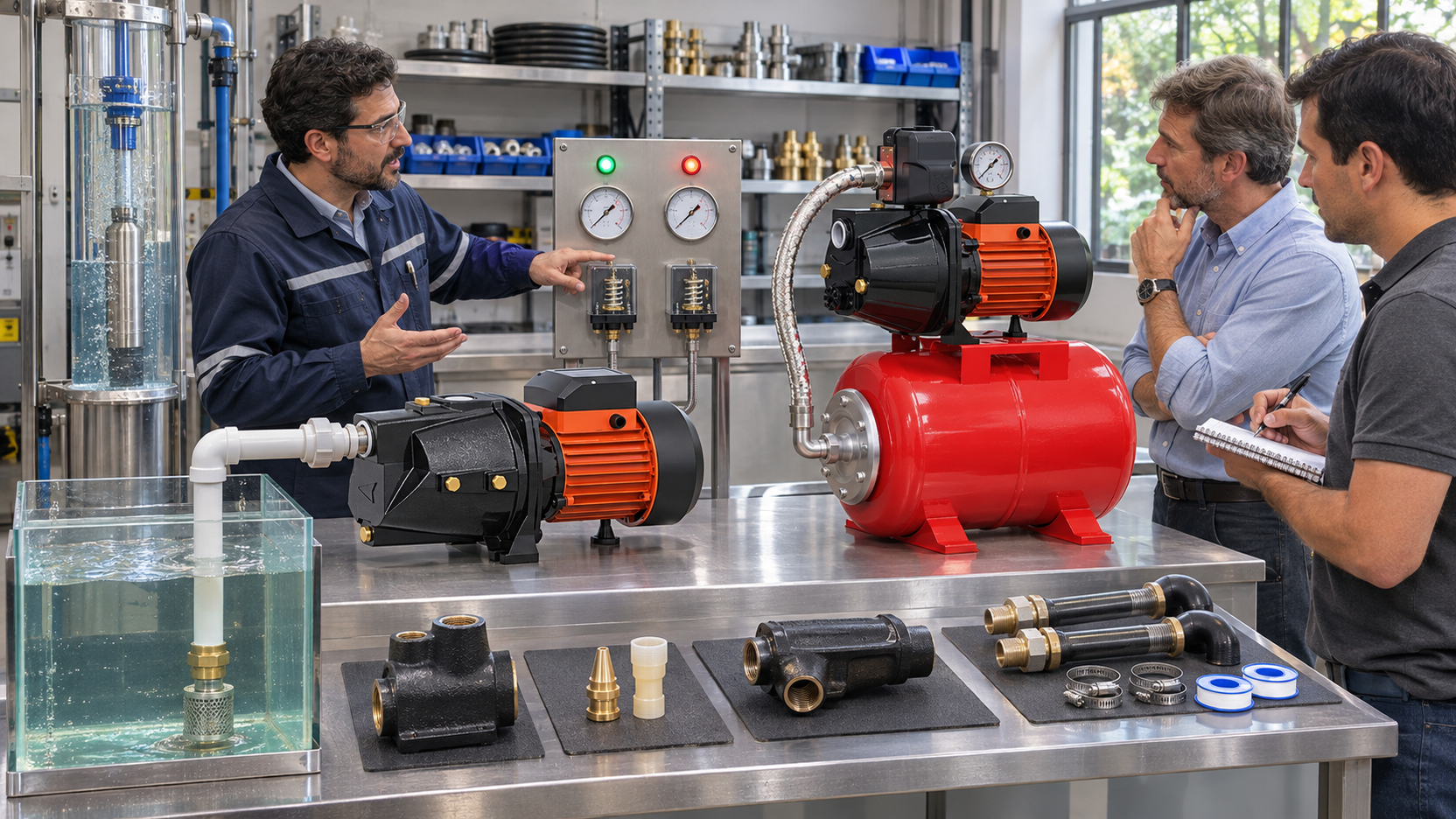
VII. Choose the Right Shallow Well Jet Pump Configuration
1. Dedicated Shallow Well Jet Pump or Convertible Jet Pump
When the application will remain in the shallow-well range and your customer prefers a simpler one-pipe system, choose a dedicated shallow well jet pump. Select a convertible jet pump when you want one family of pumps from your distributor to handle both shallow- and deep-well applications, using various jet assemblies. A convertible model can help minimise the SKU count, but that also means you need to manage the right adapter/nozzle/venturi/pipe configuration and installation instructions.
2. Pump-Only Model or Pump-and-Tank Package
If your customer already has an appropriate pressure tank or wishes to choose the tank locally, choose a pump-only model. Choose a shallow well jet pump with pressure tank when your customer needs a comprehensive and easy-to-match kit. Compare the tank drawdown, pressure-switch range, connection diameters, and the provided fitting options. A complete shallow well pump with pressure tank is not to be directly compared to pump-only models.
3. Choose the Motor Power After Checking Hydraulic Performance
Don’t let the rating (1/2 HP, 3/4 HP, or 1 HP) be your first consideration. Start with the required flow, pressure, and suction lift. Then figure out what motor rating can support that hydraulic performance. If a customer requests a “shallow well jet pump 1 HP,” you still have to validate the operating point. An efficient 3/4 HP pump may give more useful flow than a poorly designed 1 HP pump under similar conditions.
4. Select the Correct Pressure Range
The pump must be able to achieve the specified cut-out pressure at the actual suction lift. On a 30/50 psi system, the pump has to start around the 30 psi mark and stop around 50 psi. A 40/60 psi system needs additional pressure capacity. If the pump curve is not good enough to cover the cut-out setting with adequate margin, the pump can operate constantly. Do not simply choose the highest setting. Choose the pressure range based on the customer’s outlet needs and the actual curve of the pump.
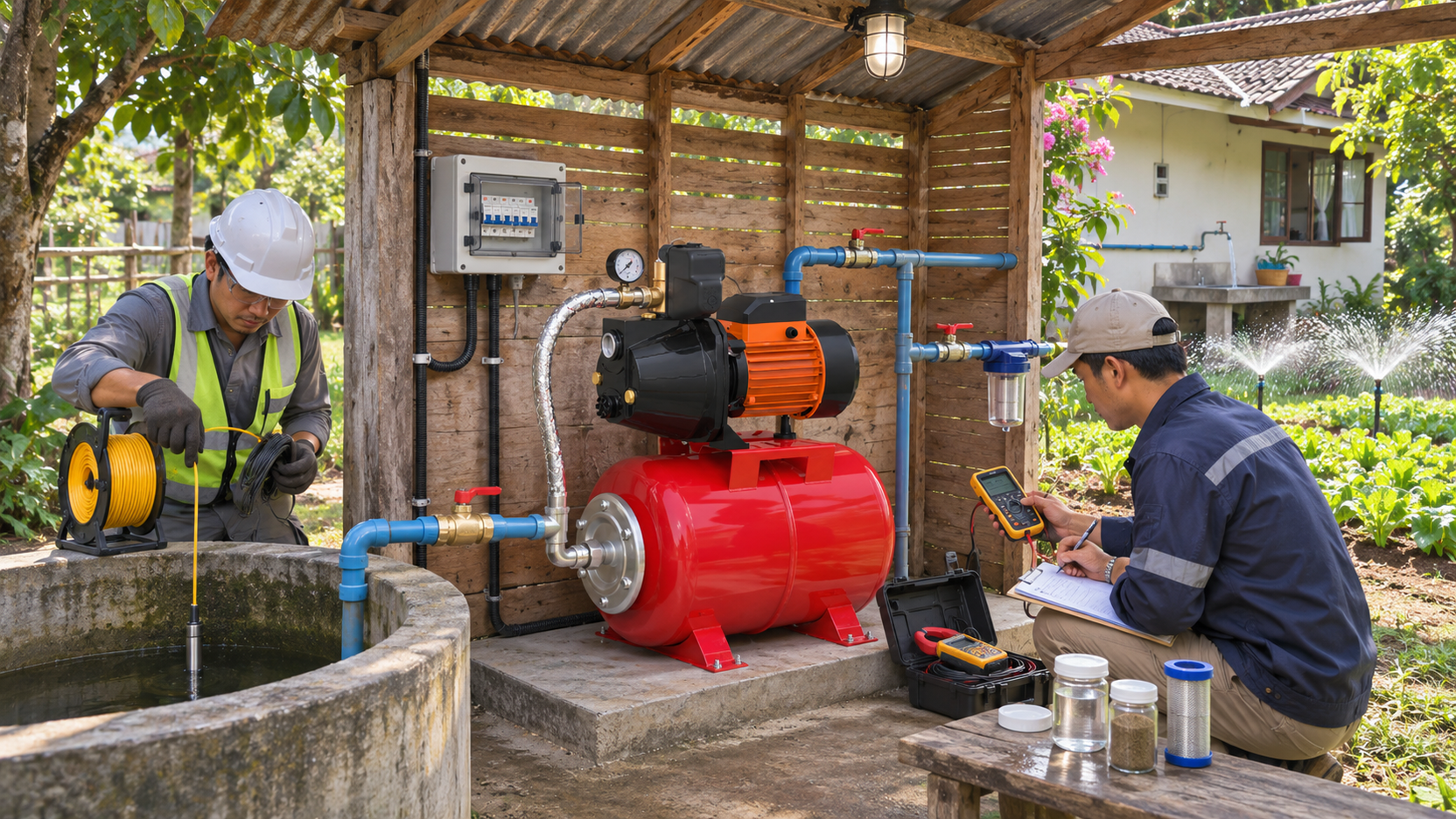
VIII. Match the Pump to the Actual Operating Conditions
1. Domestic Water Supply
Estimate the number of outlets that may be used simultaneously for a standard household and choose the pump from this simultaneous demand. A modest house with one bathroom has different needs than a residence with multiple bathrooms, laundry facilities, outdoor taps, and irrigation. A good shallow well pump for a home should be able to maintain a stable pressure during the demand peak, but not be too huge to short-cycle every time there is a tiny water demand.
2. Irrigation and Tank Filling
Check the required flow and projected running time for irrigation or tank filling. A pump that is fine for short bursts of use in the home may not be suited for continuous irrigation for several hours. You also need to ensure that the well or storage source can replenish water as fast as the pump removes it. If the source cannot support the increased flow, then a higher-flow pump will not help the system.
3. Changing Water Levels
If the source water level is variable during dry seasons or long-term pumping, the model should be selected based on the lowest predicted pumping water level instead of the ideal seasonal condition. As the suction lift increases, the available flow decreases. If a pump is chosen based purely on the static water level, it may operate during the initial test but not be able to meet the demand when the water level falls.
4. Water Quality and Temperature
Select the pump according to the real conditions of the liquid. Clean-water shallow well jet pumps are not intended for use with high quantities of sand, abrasive particles, or corrosive substances. Check the construction materials of the pump body, impeller, diffuser, nozzle, venturi, shaft, and mechanical seal. Material selection should be compatible with expected water quality and temperature, but it cannot make up for a poor water source.
5. Target-Market Electrical Supply
Select the suitable voltage, frequency, phase, current, plug, cable, and motor protection for the market you are targeting. A pump that is rated at 60 Hz may not function the same when it is run at 50 Hz. If the same housing has several electrical versions, provide different model codes so that your consumers won’t get the wrong version. Electrical compatibility is part of the pump selection process, not just a packaging detail.
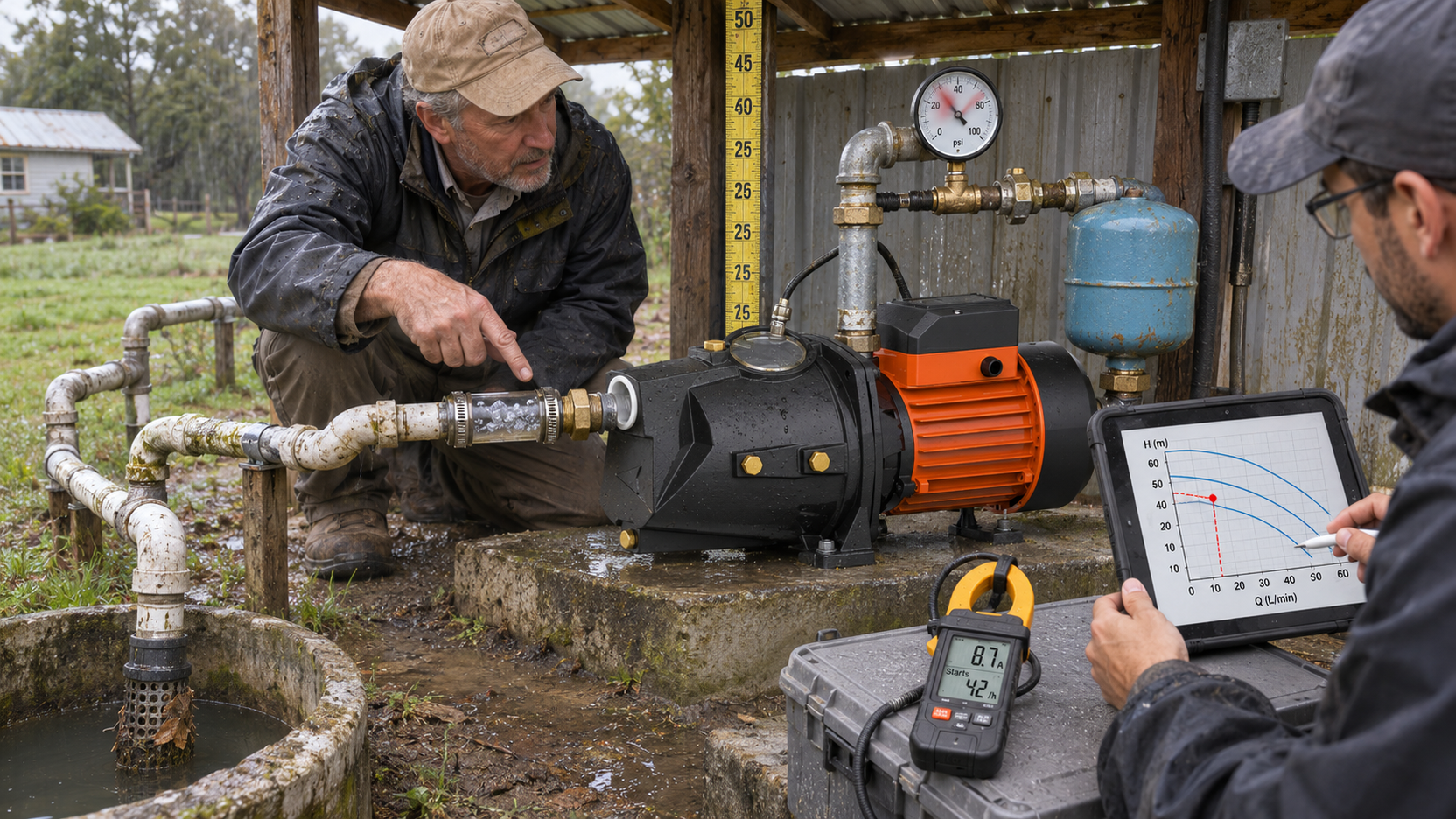
IX. Avoid These Common Shallow Well Jet Pump Selection Mistakes
1. Using Total Well Depth Instead of Pumping Water Level
Your well’s overall depth doesn’t decide if you require a shallow well jet pump. What counts is the vertical distance between the pump and the level of the water being pumped out of the well. Selecting from the whole depth of the well can lead to your rejection of a suitable shallow well pump or your recommendation of a pump for a suction condition that is not acceptable.
2. Selecting Only by Horsepower
More horsepower will not automatically give you the flow and pressure that you need. Performance is affected by hydraulic design, impeller size, nozzle, venturi, suction lift, and motor efficiency. Always check the pump curve before deciding that a larger motor is the right choice.
3. Selecting Only by Maximum Flow
The maximum flow does not tell you how much water the pump can provide at the pressure the customer needs. A 60 litre-per-minute pump will not provide you anywhere near that at 3 or 4 bar. Use the flow at the required operating point, not the highest number shown on the carton.
4. Ignoring Suction-Pipe Losses
A narrow, lengthy, or badly designed suction pipe also raises the effective suction lift and decreases pump performance. Even with an appropriately sized pump, an inadequate, leaking, or unnecessarily bent suction pipe can prevent the pump from priming or delivering adequate water. When choosing the model, include the suction-pipe information.
5. Assuming Self-Priming Means Unlimited Suction
Even a self-priming shallow well jet pump has limits to how far it can lift water and usually needs to be primed first. It can’t pull water reliably from any depth, and it can’t run safely without water. Check the actual suction lift and priming operation before you recommend the pump.
6. Choosing an Incompatible Pressure Tank or Switch
If the pressure tank is too small or the pressure switch is set incorrectly, the correctly chosen pump will cycle too much or run until it reaches cut-out pressure. When selecting a pump for an automatic water system, the pump curve, pressure-switch range, tank drawdown, and required pump run duration should be considered simultaneously.
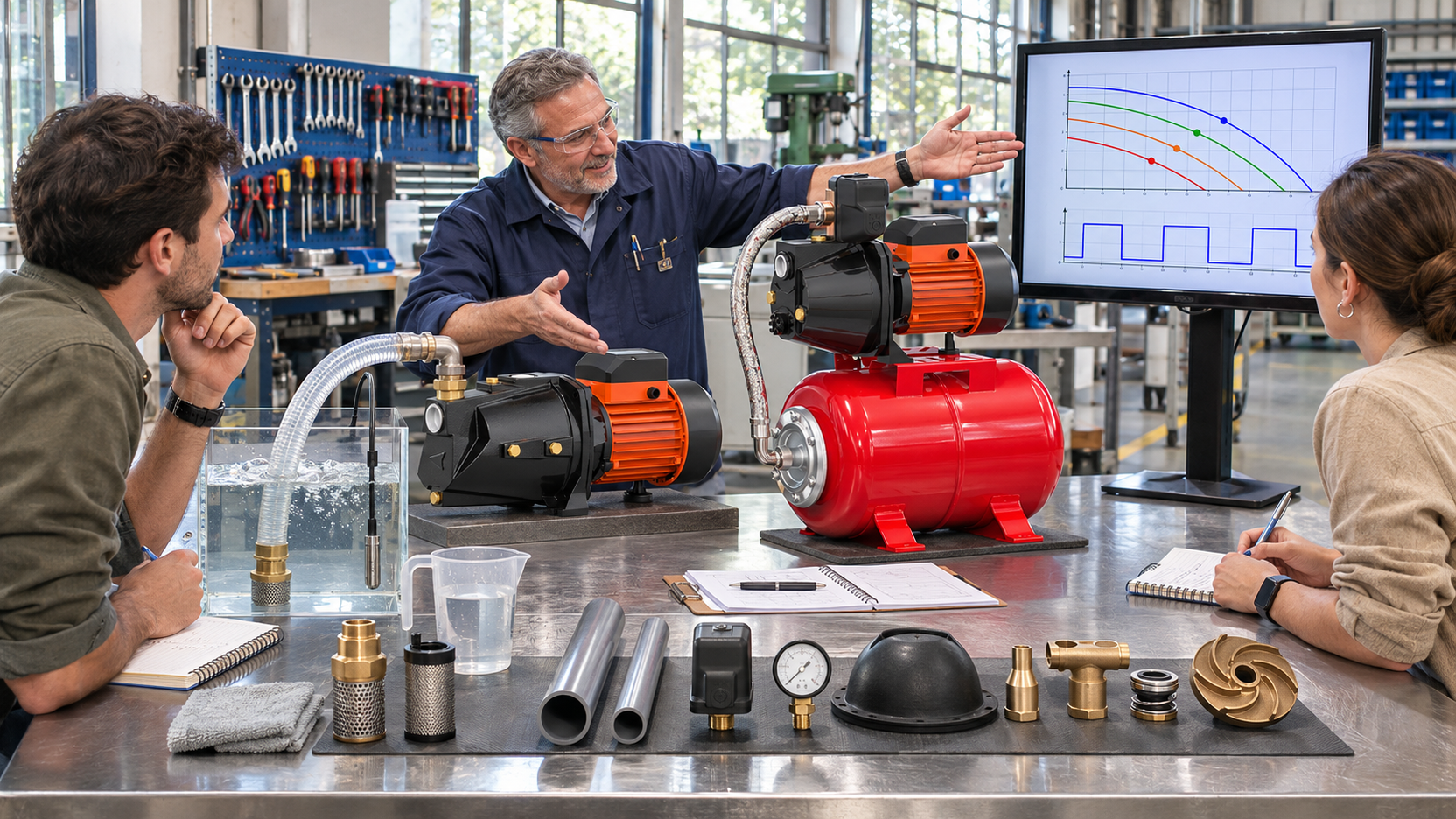
X. FAQ
1. What Is a Shallow Well Jet Pump?
A shallow well jet pump is a clean-water pump located above ground with a jet assembly in or near the pump body. Usually, it will draw water through a single suction line and supply a pressure tank or water system.
2. How Does a Shallow Well Jet Pump Work?
The pump pushes water via a nozzle and venturi to create a low-pressure region. The pump then supplies pressurised water to the system, while atmospheric pressure forces source water into the suction pipe.
3. How Deep Can a Shallow Well Jet Pump Draw Water?
Many models have a maximum total suction lift of around 25 feet or 7.6 meters. You usually need some operating margin. The real limit includes vertical lift and suction-pipe friction.
4. Is Well Depth the Same as Suction Lift?
No. The well depth is the physical depth of the well, and suction lift is determined by the distance between the pumping water level and the pump and suction-side friction.
5. What Is the Difference Between a Shallow Well Pump and a Deep Well Pump?
A shallow well jet pump usually has one suction pipe and keeps the jet assembly at the pump. A deep-well jet pump installs the jet assembly in the well and often uses a two-pipe or packer system.
6. What Is a Convertible Jet Pump?
A convertible jet pump can be used with an adapter on the pump in a shallow-well application or in a deep-well application with an appropriate ejector assembly in the well.
7. How Do You Size a Shallow Well Jet Pump?
Calculate concurrent flow, suction lift, discharge elevation, outlet pressure required, and pipe friction. Choose a pump that gives the appropriate flow at that full operating point.
8. Is a 1 HP Shallow Well Jet Pump Always Better?
No, horsepower doesn’t tell you what flow is available at the required suction lift and pressure. A smaller model, appropriately chosen, may perform better in the real system.
9. How Much Flow Can a Shallow Well Jet Pump Produce?
The flow is a function of hydraulic design, motor power, suction lift, discharge pressure, and pipe resistance. Use the tested pump curve rather than maximum flow.
10. Does a Shallow Well Jet Pump Need a Pressure Tank?
When the pump is feeding an automatic pressurised water system, a pressure tank is generally needed. It stores useful water and cuts down on the number of motor starts.
11. How Do You Select a Pressure Tank?
Select the tank according to its drawdown, pump flow rate, pressure-switch range, and minimum required pump run time. Usable drawdown is not the same as the tank’s nominal volume.
12. Which Pressure-Switch Setting Should You Use?
Common ranges are 20/40, 30/50, and 40/60 psi. The correct setting depends on the system’s pressure requirement and on whether the pump can reach cut-out pressure at the actual suction lift.
13. Why Is a Shallow Well Pump Not Building Pressure?
Possible causes are incomplete priming, air leaks on the suction side, a leaking foot valve, low water level, obstruction of the nozzle or venturi, worn hydraulic parts, or too high a pressure setting.
14. Why Does a Shallow Well Pump Keep Losing Prime?
Usually it’s a leaking foot valve, loose suction fitting, fractured pipe, mechanical-seal problem, trapped air, or a source water level below the suction inlet.
15. Can a Self-Priming Shallow Well Jet Pump Run Dry?
No. Self-priming means that, after the pump is filled appropriately, it can expel some air. This does not indicate that the pump can run safely without water.
16. What Suction-Pipe Size Should You Use?
Use a pipe at least the size of the pump suction connection unless the manufacturer says differently. A bigger diameter may be required if the suction pipe is long.
17. Can a Shallow Well Jet Pump Be Used for Irrigation?
Yes, assuming the pump can deliver the appropriate flow and pressure at the actual suction lift. Additionally, check the water-source recovery rate and the continuous-duty capacity.
18. Which Pump-Body Material Is Best?
The best material depends on the water quality, the operating temperature, the installation environment, the price objective, and the desired service life. Inspect all wetted components, not just the pump body.
19. What Should You Test Before Placing a Bulk Order?
Priming test, flow at various lifts and pressures, operation of pressure switch, tank cycling, current, temperature, noise, leakage, restart performance, and sample-to-sample consistency.
20. What Information Should You Send HunGerät?
Pumping water level, needed flow, target pressure, suction-pipe details, pressure-tank requirement, voltage, frequency, water conditions, target market, certifications, projected order quantity.