I. Introduction
It’s not just about price or the highest head that surface or submersible pumps can handle. What you should choose depends on how much water is in the tank, how strong the suction is, how much flow and head you need, the properties of the liquid, the space you have for installation, and how you plan to service the pump. Once you understand the variations, you can suggest a pump that will work at the real duty point, not just the limits shown in the catalogue. This article compares the two designs and shows you how to use each one in real life.
II. How Does Each Pump Move Water?
1. Pump Position and Water Movement
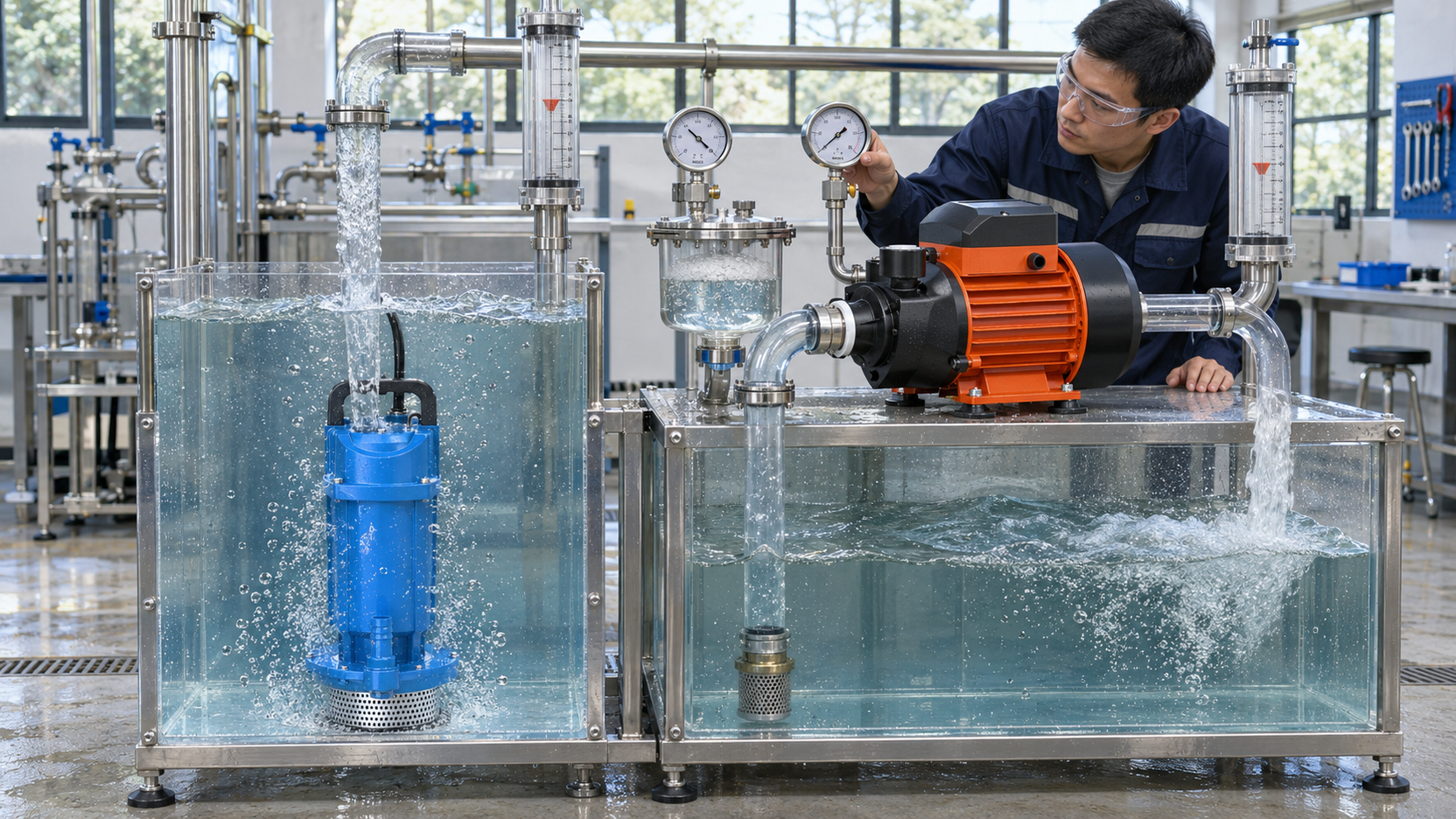
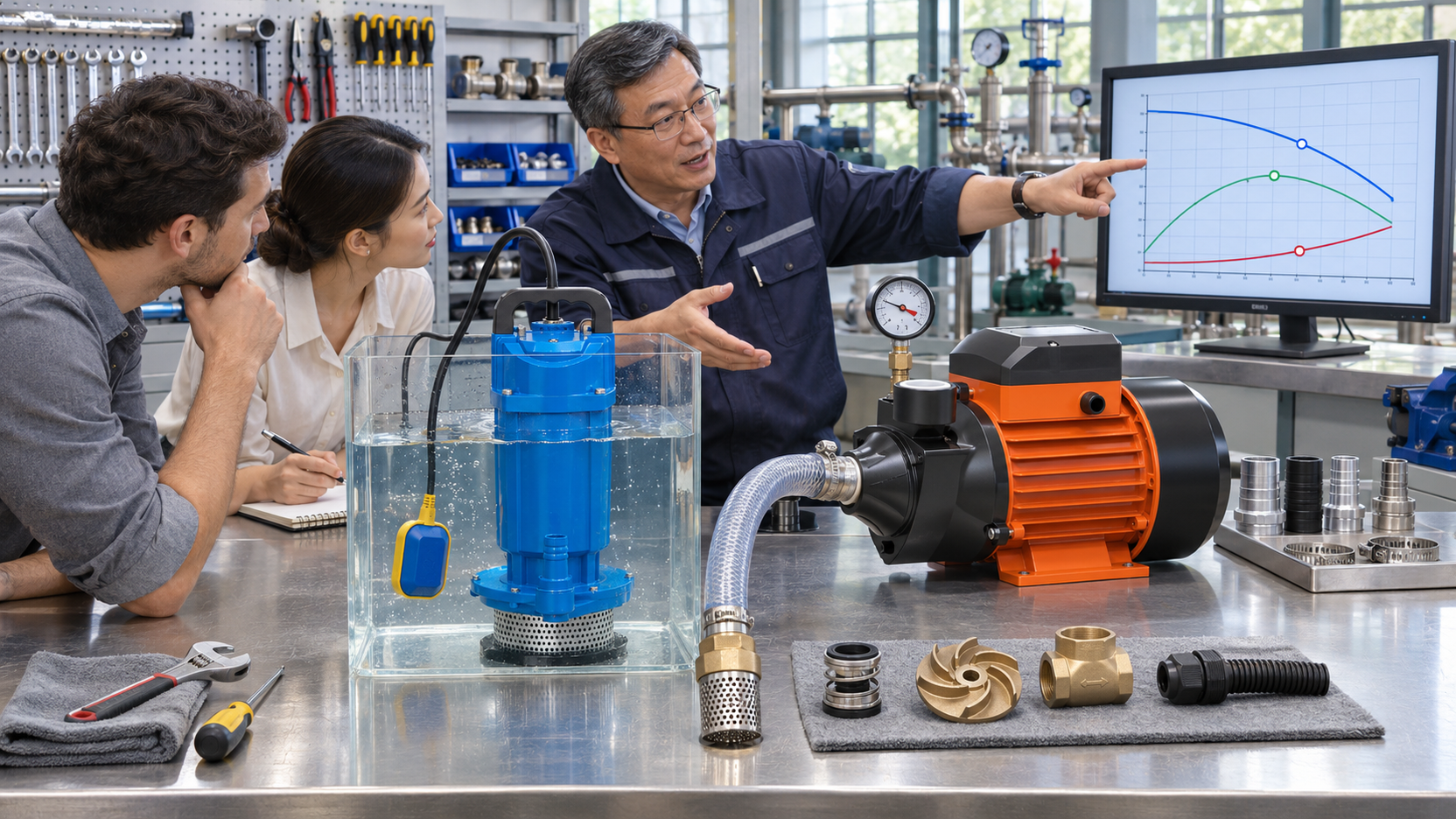
A pump that can go underwater is put into the liquid. Water is already going into it. It gives the liquid more energy and forces it out of the discharge pipe as the impeller spins. Both the pump and motor can be made as a sealed unit or as parts that are submerged and fit together.
A pump that runs on top of or next to a tank and not in the liquid is called a surface pump. Lowering the pressure at the intake is what the impeller does. This lets atmospheric pressure or pressure at the source move water through the suction pipe. The pressure goes up, and the pump then lets the water out through the pipe that leads to the outside.
2. Priming and Initial Start
Some pumps don’t need to have their suction lines primed because the hydraulic part is underwater. But the inlet must not have less liquid than what is allowed, and the motor must get the cooling it needs for that model. This means that a well, tank, or sump needs low-level or dry-running protection when it can be emptied.
An impeller in a surface pump needs to be wet before it can start running properly. If a pump doesn’t self-prime, the fluid or positive pressure needs to be added to the suction line or the pump needs to be turned on. Self-priming pumps can handle a small amount of air once they are primed, but they need to be primed the right way the first time. There must be no leaks in the suction line, and the installation must not go over the rated suction lift.
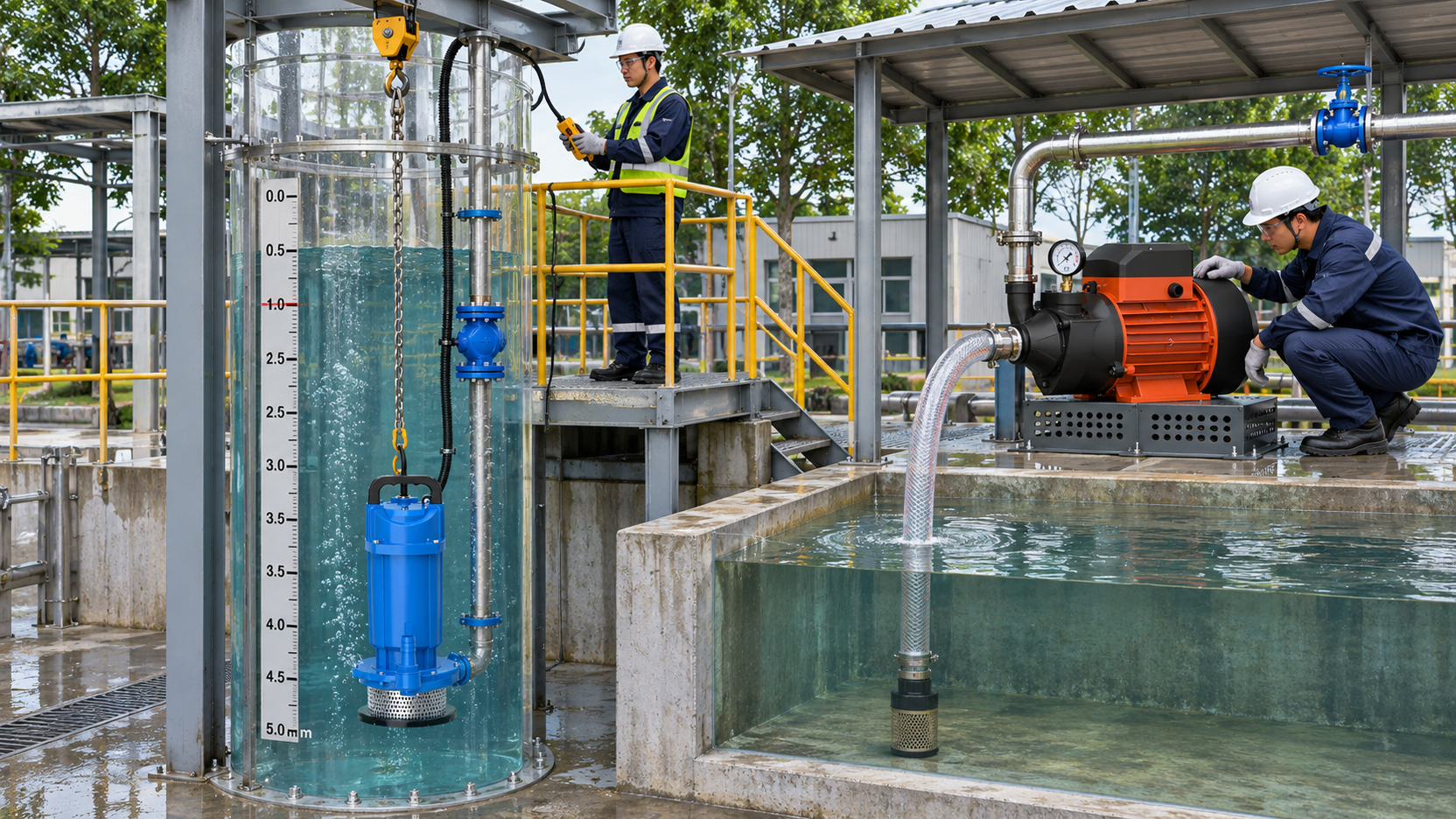
III. What Are the Main Differences Between a Submersible Pump and a Surface Pump?
1. Water Source Depth and Suction Limit
A submersible pump can work below the water level and is not limited by the lift in the air that a surface pump is. Check the minimum submersion, cable length, dynamic water level, pump setting depth, and motor cooling requirement to make sure the application is right. The total depth of the well does not tell you which pump to pick.
The surface pump has to pull the water up through the suction line if the water source is below the pump. In an ideal world, the theoretical lift for water at sea level is about 10.33 m. There is less lift allowed because of things like altitude, water temperature, suction losses, vapour pressure, and the pump’s NPSH requirements. When measuring, use the model’s limit and go from the center line of the pump’s inlet to the lowest level of water that can be used. Most installations will be between 7 and 8 meters. You can avoid getting a quote for a shallow suction model for a deep source by making the static water level, dynamic water level, and pump location fields on your request form required.
2. Installation Requirements
A submersible pump needs a pipe for discharge, a power cable, a way to be lifted or supported correctly, a non-return valve if needed, and a way to keep the cable from getting damaged. Some borehole pumps may also need enough water flow past the motor or a cooling sleeve. For your quote, make sure that the pump comes with the required cable length, control box, level control, discharge connection, and installation accessories.
A surface pump needs a stable base, airflow, shelter from rain or frost, and enough space to be inspected. Make sure the suction pipe is short, the right size, always going up toward the pump if needed, and doesn’t leak air. Foot valves, strainers, priming plugs, flexible connectors, and suction hoses should all be included in the installation, not just added on as an extra.
3. Maintenance Access
Most of the time, a submersible pump needs to be taken out of the pit, well, or tank before it can be inspected. The service time is directly related to the way the cable is retrieved, its weight, how it is handled, the risk of contamination, and the lifting equipment that is available. When you sell these pumps, you should include a full list of all the parts that can be taken apart and changed. This should include seals, cables, capacitors, control boxes, and hydraulic parts.
The surface pump can be reached without taking it out of the water, so it’s usually easy to check the motor, shaft seal, bearings, and casing. But the foot valve, strainer, priming system, and suction hose all add more places where something could go wrong. So, your plan for extra parts should include both the pump and the parts that keep the suction working.
4. Efficiency at the Actual Duty Point
The submersible pump gets rid of the need for a long, air-sensitive suction line and can usually work in deep water. However, the hydraulic design, motor, cable, controls, and operating point still affect how well it works. When you need the right flow and head, compare wire-to-water efficiency. This makes sense for separating standard and high-efficiency models, but it doesn’t mean that every submersible pump is automatically more efficient.
A surface pump can work very well if the inlet is flooded or the suction line is short and well-designed. High suction lift, pipe that is too small, fittings that are too tight, or air leaks can lower the available inlet pressure and lead to cavitation or performance loss. If you look at the full curve at the customer’s duty point, you can choose the stronger model based on how well it works instead of having a higher catalogue maximum.
5. Liquid and Solids Handling
You can get a clean-water borehole pump, a drainage pump, a sewage pump, or a grinder pump. These things have a wide range of impellers, passages, seals, and materials. Check the maximum solids size, fibre content, abrasiveness, temperature, chemical compatibility, and minimum liquid level of each before you suggest one.
One type of surface pump is a clean-water end-suction pump. Another type is a trash or slurry pump that can prime itself. Just because the pump is above ground doesn’t mean it can handle big solids. Check the type of impeller, the stated solids passage, the casing and wear materials, the shaft seal, and make sure the suction hose is right for the liquid.
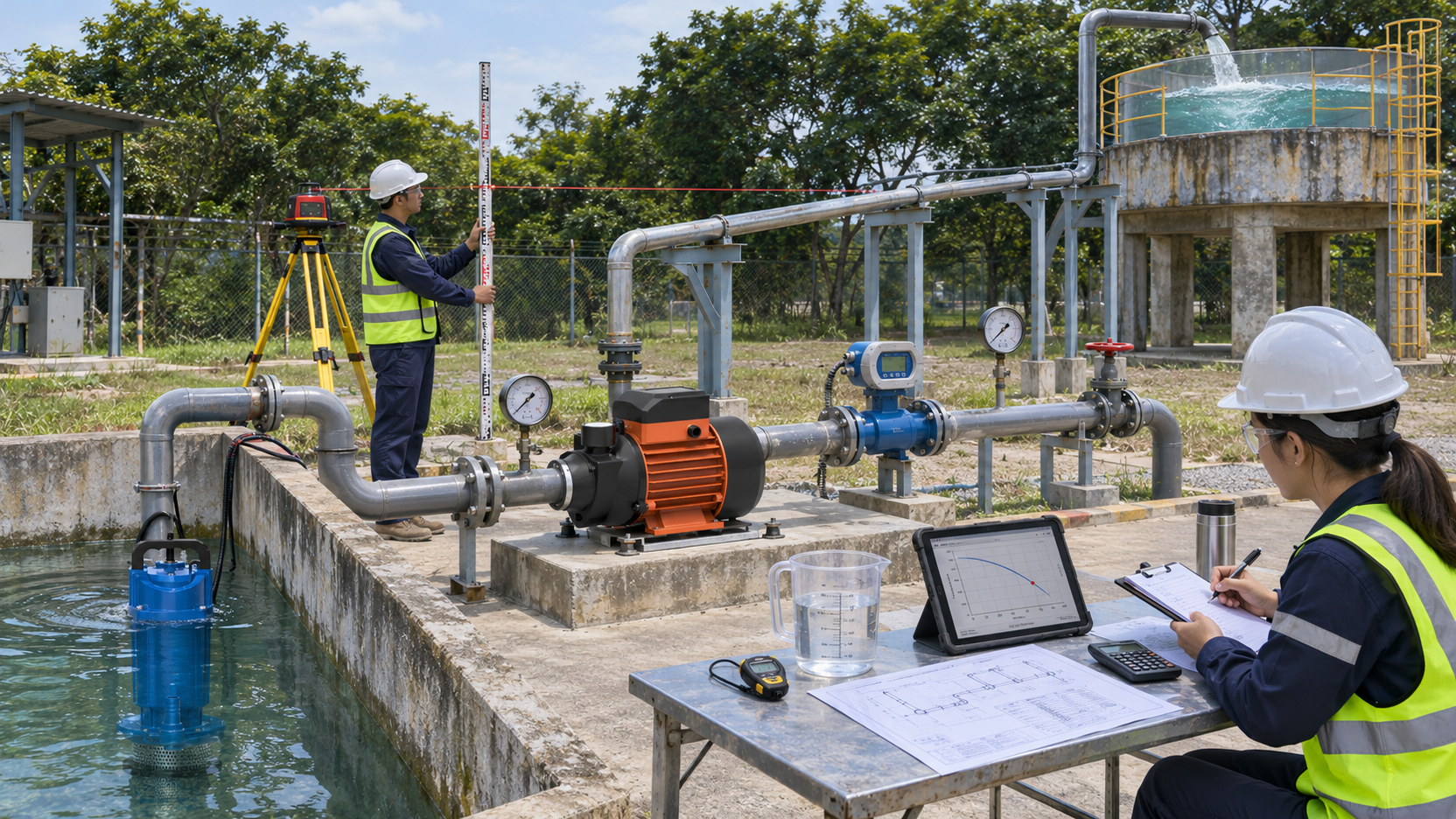
IV. How Do You Calculate the Required Duty?
1. Required Flow
To find the flow for a submersible transfer pump, divide the amount of water that needs to be pumped by the amount of time that is available to pump it. It takes three hours to move 30 m³, which is equal to 10 m³/h. For a well, the chosen flow must also be within the well’s yield range. To figure out drainage, use the expected peak inflow. We start by getting the volume, operating time, and well output. This way, we don’t use the pump’s maximum flow as a false substitute for demand.
For a surface transfer pump, the same volume-and-time math works. In the case of irrigation, add the flow from all the running outlets or zones. To figure out how much water is coming in, add up the time it takes to pull it down. Write these demand values on your quote. This helps the customer understand why you chose the model you did, and it also makes it easier to fix performance issues down the road.
2. Total Head
For a submersible well pump, figure out the static lift from the lowest expected dynamic water level to the point where the pump is set, not from the depth at which the pump is set. Add the required discharge pressure to the losses in the pipe, valves, and fittings. Eighteen metres below ground is where the water level sits. The outlet is 7 meters above the ground. Pressure must be 2 bar, which is equal to about 20.4 m of water. The loss of friction is 6 m. This needs a head of about 51.4 m.
Find the difference in height between the source liquid level and the discharge point for a surface pump. You need to add up the pressure at the outlet and the losses in both the suction and discharge pipes. Check separately that the available vertical suction lift and NPSHA meet the requirements for the pump’s inlet. Even if the total head that a pump builds up on its curve is enough, the pump may still fail because the suction condition is wrong.
3. Performance Curve and Operating Limits
For a submersible pump, mark the exact curve with the right stages, impeller, frequency, and voltage for the flow and head that you need. This is where you read about input power and efficiency. Then check the allowed working range, the maximum installation that can be done, the minimum level of submersion, the cooling requirement, and the number of starts per hour. Make sure that the approved sample, curve, nameplate, cable length, and control box all show the same configuration before you place a bulk order.
On the head-flow curve of a surface pump, mark the same job. Then, read the efficiency and power at the same flow. Look at the NPSH-required curve, the maximum suction lift that has been stated, the priming mode, and the motor power over the expected operating range. Before placing an order, make sure the approved sample is tested in the required duty and agreed-upon suction condition. Maximum flow and maximum head are the curve’s ends and shouldn’t be used together as a single sales claim.
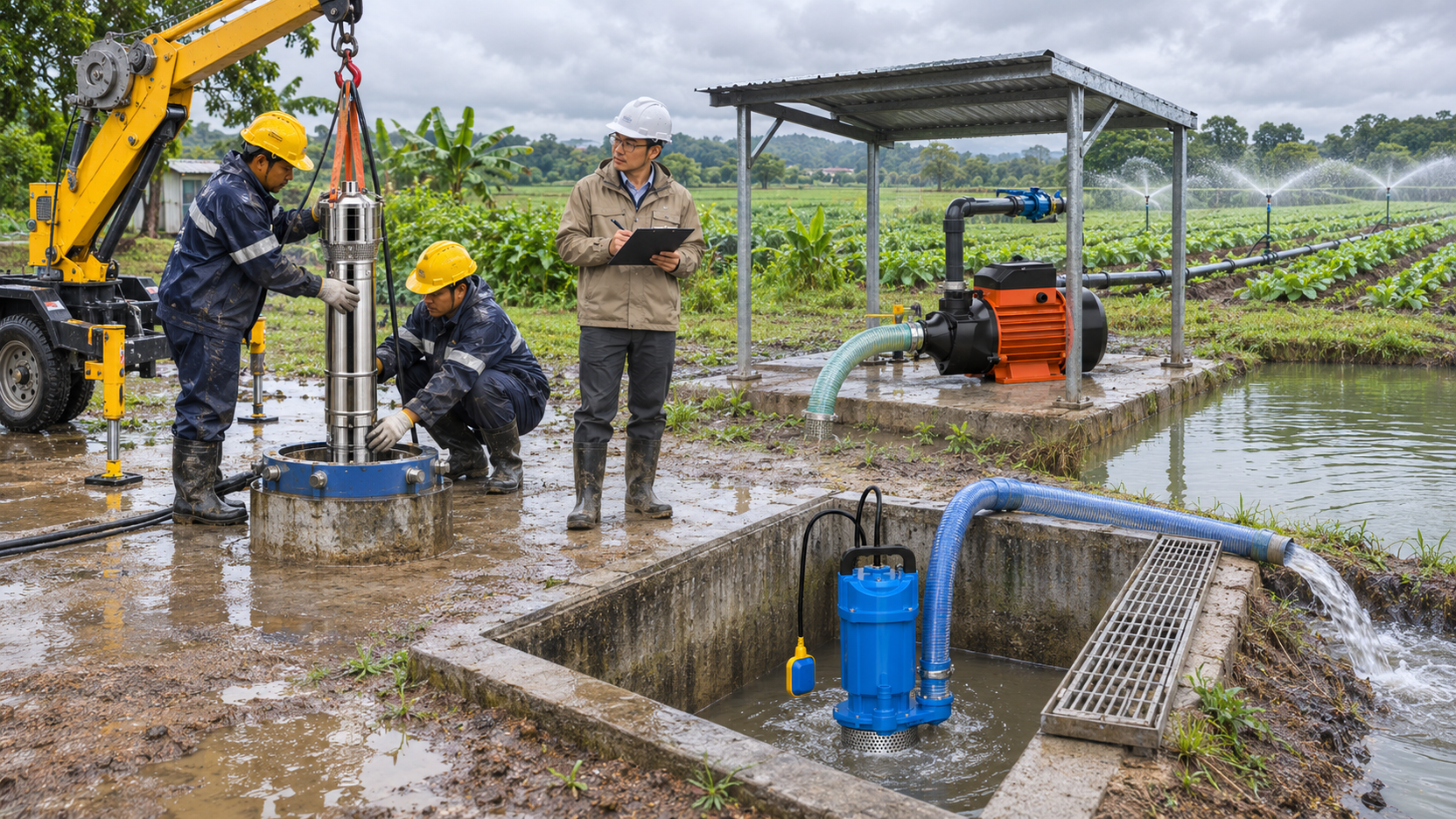
V. Which Pump Fits Each Application?
1. Deep Wells and Boreholes
It is best to use a submersible borehole pump when the water level is too deep for a surface pump to operate. Choose one based on the well yield, the diameter of the bore, the pressure, the flow rate you need, the dynamic water level, and the elevation of the discharge. It’s better to have more than one stage count or duty range than to only separate models by motor power.
In this case, you should not use a surface pump. If there is another method, like a deep-well jet setup, it should be used instead. Ask the customer for both the static and dynamic water levels before suggesting a standard surface model. If they can only give you the well depth, this is what you need to know.
2. Shallow Water Sources, Transfer, and Irrigation
A submersible pump is best for shallow wells, tanks, cisterns, rivers, and ponds where the water is deep enough but there isn’t much room above ground or because of noise. It can also be used to irrigate, transfer, or put pressure on something. Take a look at the water quality, the amount of sediment in it, and where and how easy it is to get to the intake. Then decide if automatic control or low-water safety is needed.
Surface pumps are useful for shallow sources, moving water, watering plants, and boosting pressure because they are easy to test and pair with different motors and controls. Place it near water and make sure the line that pulls water in is short and airtight. Also, make sure you have the right strainer, foot valve, and suction hose for the job.
3. Drainage, Dewatering, and Wastewater
A sewage or drainage pump that works under water can be put in a pit, sump, flooded area, or collection tank and turned on. That can be done with a float or level sensor. It’s not enough to just say “submersible.” Based on the solids and fibres that are there, choose the hydraulic design. Find out how low the motor can go before it stops and decide if it needs to be fully or partly submerged to cool down.
A self-priming surface dewatering or trash pump can help you get to where you need to go quickly, move around, drive the engine, or get service. How much space there is on the site, the length of the hose, the priming system, how the air is handled, and how solids are passed all play a role. When both types of pumps can do the job, this is sometimes the better choice.
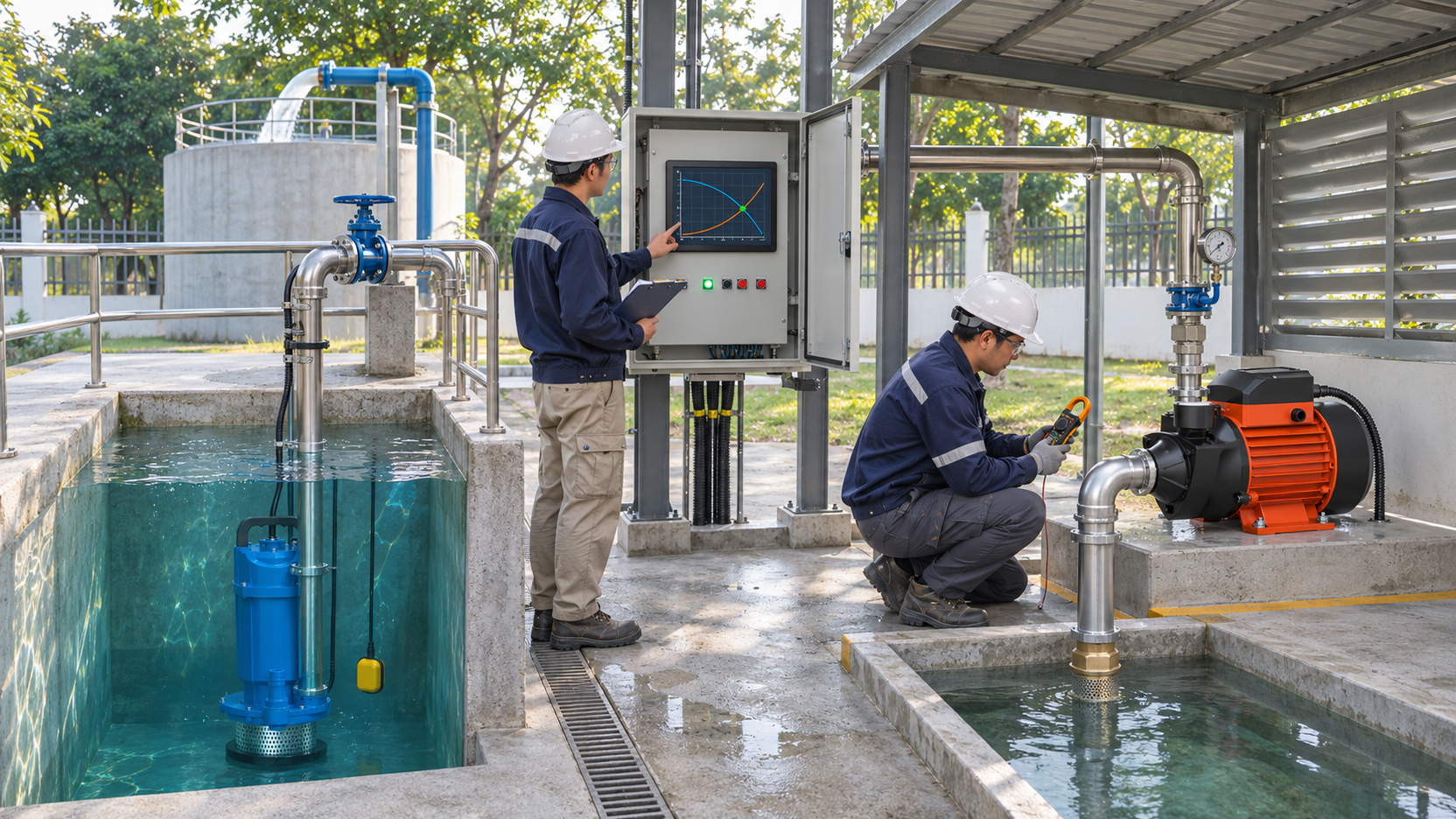
VI. Conclusion
A surface pump isn’t as strong as a submersible pump when it needs to work below the water level, like in sumps, deep wells, or places with confined water sources. Since the source is usually shallow, the pump needs to be accessed often, or the system needs to be portable and easy to service, a surface pump is usually the best choice. It’s still not clear what to choose until the flow and head numbers are calculated, along with the liquid, the operating limits, and the maintenance plan. Please send these application details to HunGerät along with your voltage, frequency, target market, and order quantity so that they can help you choose the right pump range.
VII. Frequently Asked Questions
1. What is the main difference between a submersible pump and a surface pump?
A surface pump sits above the liquid and uses a suction line, while a submersible pump works inside the liquid.
2. Does a submersible pump need priming?
It usually doesn’t need conventional suction priming because the hydraulic part is submerged.
3. Does a self-priming surface pump need initial filling?
Of course. Yes. For the first fill and priming, follow the manufacturer’s instructions.
4. How high can a surface pump lift water by suction?
It is estimated that water can’t go beyond about 10.33 m. What the real limit is depends on the model and how it is installed.
5. Is 8 m a guaranteed suction lift for every surface pump?
No. Altitude, the temperature of the water, pipe losses, air leakage, NPSH, and the design of the pump can all lower the allowable lift.
6. Is a submersible pump always better for a deep well?
Most of the time, the water level should be deeper than what a surface pump can actually pull up.
7. Should well-pump head be calculated from total well depth?
No, you should use the lowest estimated dynamic water level, discharge height, pressure, and friction losses.
8. Which pump is easier to maintain?
When you need to get to a submersible pump, you usually have to pull the submersible pump out first.
9. Which pump is quieter?
A submersible pump works under the water, making it quieter on site.
10. Is a submersible pump always more efficient?
No. Compare the overall pump efficiency at the same required flow and head.
11. Can a submersible pump run dry?
Yes, but the motor, seals, or bearings can be damaged by dry running unless the model is protected for this.
12. Can a surface pump run dry?
Most cannot be safely run dry unless the design and manual clearly allow it.
13. Which pump handles larger solids?
Neither category always does. Solids handling depends on the impeller, passage size, strainer, seal, and pump design.
14. Which pump is better for sewage?
A purpose-designed submersible sewage pump is typical, but the solids and fibre handling requirements must be checked.
15. Which pump is better for shallow irrigation sources?
When suction conditions are good and ease of servicing is needed, a surface pump is typically convenient.
16. Can a submersible pump be used in a rainwater tank?
Yes, if the liquid, the immersion, the inlet arrangement, the controls, and the pump materials are suitable.
17. What causes a surface pump to lose prime?
The most common causes are air leaks, a leaking foot valve, low water level, suction obstruction, or too much suction lift.
18. What data should you request for a submersible pump?
Exact performance curve, motor data, cable length, maximum depth, minimum liquid level, cooling conditions, and protection.
19. What data should you request for a surface pump?
Request the performance and NPSH curves, the priming method, the suction limit, the inlet requirements, the motor data, and protection details.
20. Can maximum flow and maximum head be used as one operating point?
No. They tend to be at opposite ends of the curve and should not be combined.