I. Introduction
Self-priming pumps come in a range of sizes, from small Jet pumps for household supply to high-flow centrifugal pumps and sewage pumps. But if you just sort these products by motor power or group them as one type of pump, you may find yourself carrying units that are not right for local applications. In this article, we introduce you to self-priming pumps: how they work, their main parts, what types exist, and the main points to check when choosing them.
II. Self-Priming Pump Basics
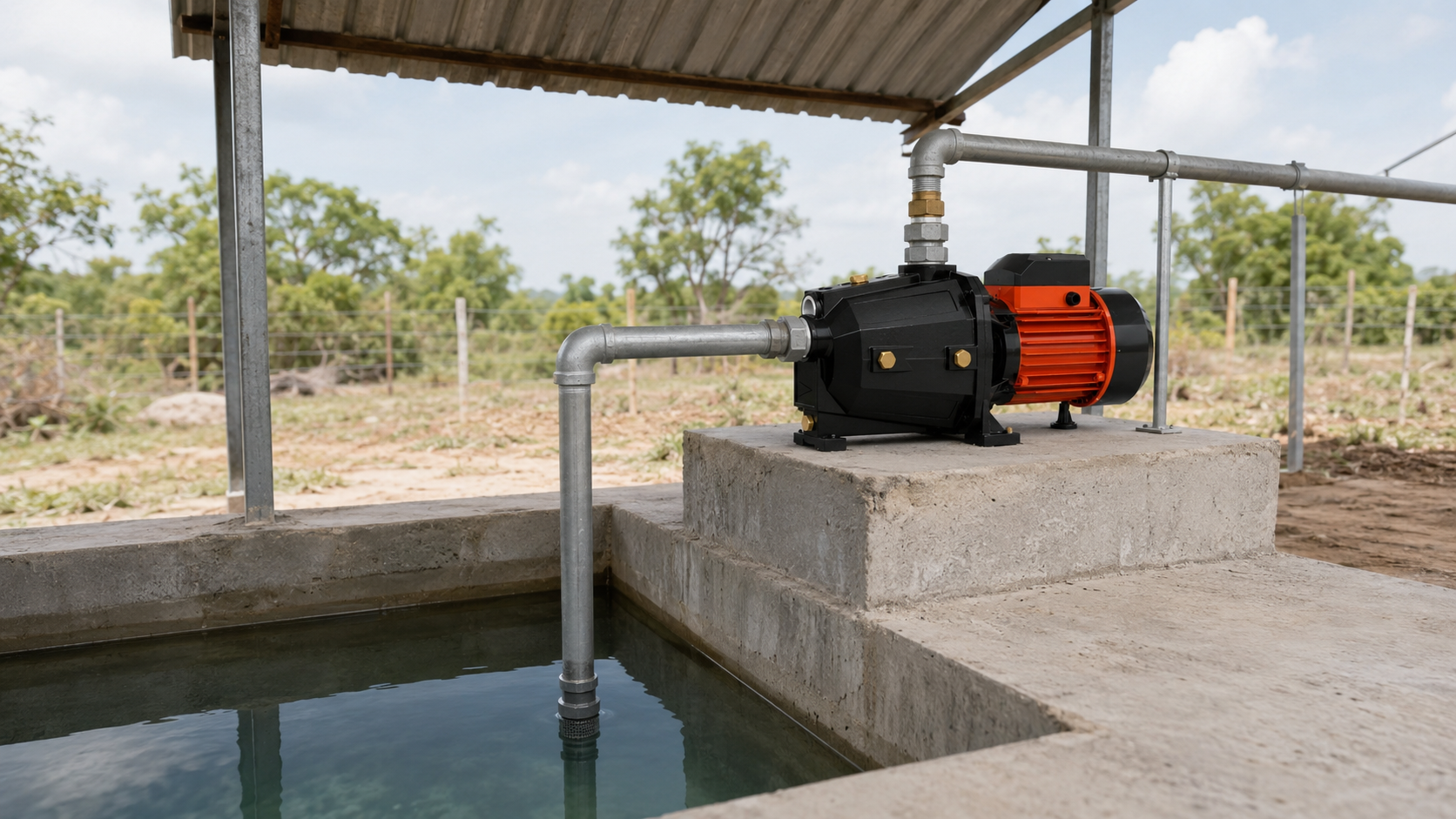
A self-priming pump is a type of surface pump that can remove air from the suction pipe and pull water from a source below the pump. It also allows the pump to be placed above tanks, ponds, shallow wells, and other sources of water, but still be accessible for inspection and maintenance.
III. Self-Priming Pump Working Process
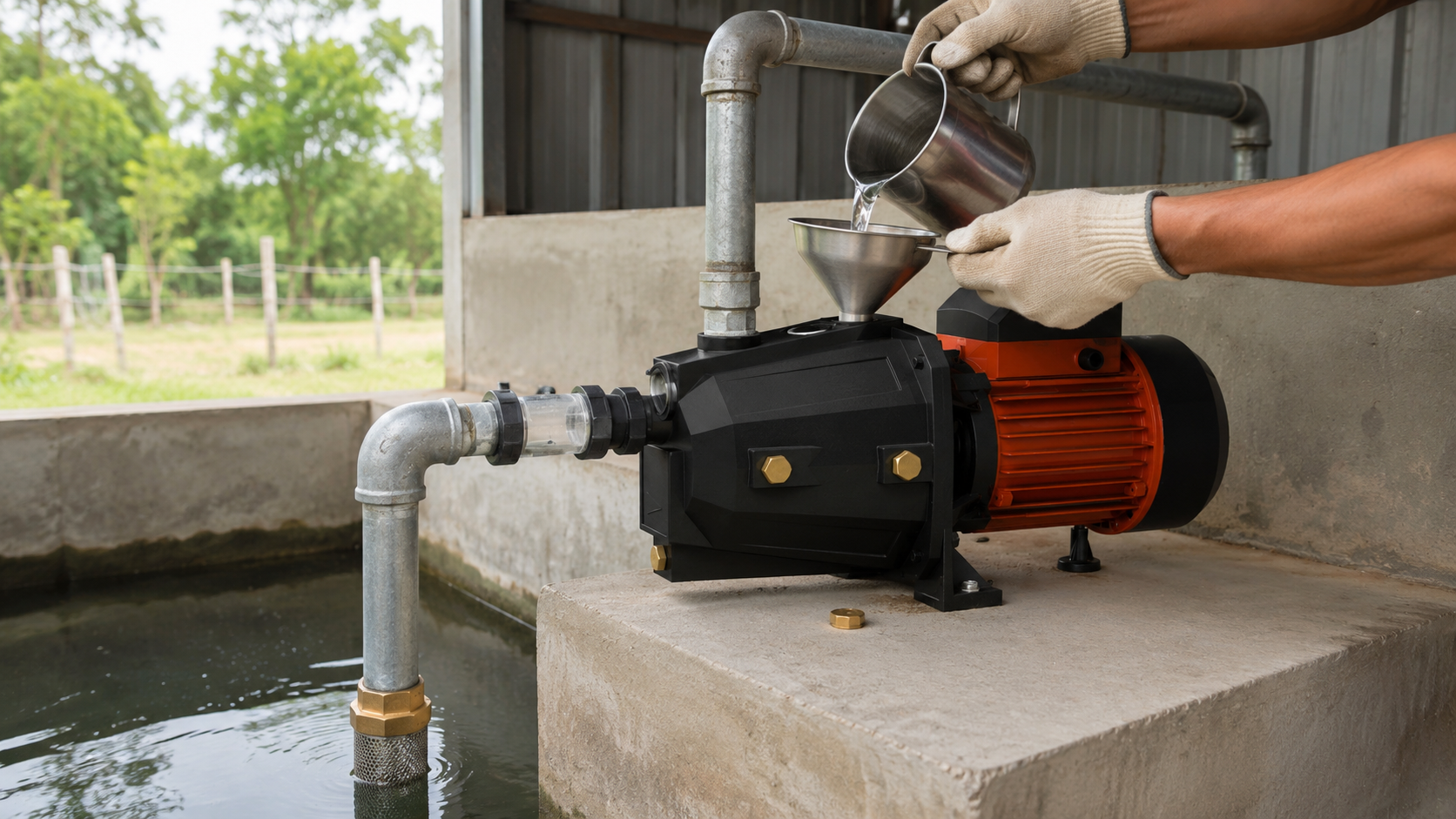
1. Initial Filling
Before the first start-up, the pump casing or the self-priming chamber must be filled with water through the priming port. This water is needed for air and water circulation during the priming process.
2. Air Removal
When the motor is turned on the impeller will mix the water that is left with air from the suction pipe. The pump is a separator of air from water. On the discharge side the air is removed and the water returned to complete the cycle till the suction pipe is filled.
3. Normal Water Flow
Water flows continuously into the pump and normal pumping begins after the air is removed. In the self-priming chamber some water stays when the pump is turned off so that the pump does not need to be filled again on starting up.
IV. Main Self-Priming Pump Parts
1. Self-Priming Chamber
Water flows into the self-priming chamber, forcing air out of the suction line. If the chamber is too small for the water, the pump may take longer to prime or may not restart properly.
2. Impeller and Return Channel
The impeller forces the mixture of water and air through the pump and the return channel pushes the water, now separated from the mixture, back into the circulation process. The design of the pump affects how quickly it can remove the air and start pumping the water properly.
3. Air-Water Separation Space
The separation area allows the separation of the air from the mixed flow and the water to stay in the pump. The better the separation, the less water is pumped out before priming is complete and the pump reaches steady flow more quickly.
4. Suction Connection and Check Valve
The suction connection should be air tight, any small leak of air can result in poor suction or failure of the priming process. A foot valve or check valve also helps to keep water in the pump and suction line after shutdown.
5. Mechanical Seal and Gaskets
The mechanical seal and gaskets hold the water in the pump and keep the air out. For self-priming pumps, reliable sealing is important because the suction performance is based on a closed suction system.
V. Main Types of Self-Priming Pumps
1. Jet Self-Priming Pumps
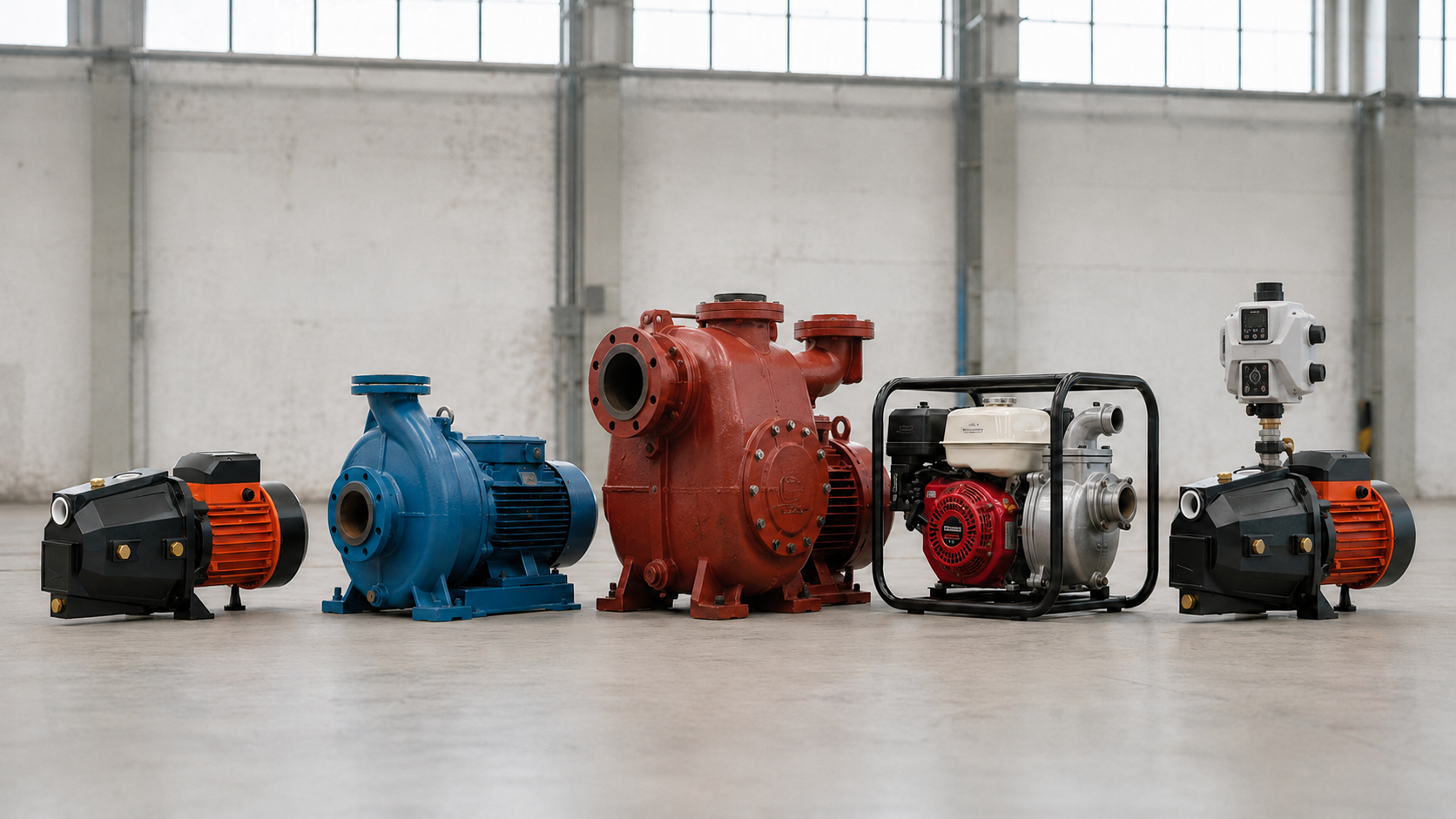
Standard clean water centrifugal pumps of the same size have weaker suction and lower pressure compared to jet self-priming pumps. Under stated conditions, some models may have a maximum suction of about 8-9 m. They are good for shallow wells, underground tanks, household supply and small pressure systems, but often offer less flow and less efficiency. Offer them when your customers need more suction and pressure, not high-flow water transfer.
2. Clean-Water Self-Priming Centrifugal Pumps
Clean water self-priming centrifugal pumps often have higher flow and better transfer efficiency than small Jet pumps. They can be used for irrigation, filling tanks, transferring from reservoirs and commercial water supply, but the standard models are not right for sewage or big particles. Choose them based on the required flow and head, not only comparing motor power or maximum flow.
3. Self-Priming Sewage Pumps
Self-priming sewage pumps have larger channels and suitable impellers to handle sewage which contains the above listed particles. Benefits include easier maintenance above ground and better handling of solids. Their limits are larger size, higher cost and lower efficiency than pumps for clean water. Quote by type of waste water, size of solids, fibre content, flow and head required.
4. Engine-Driven Self-Priming Pumps
Engine driven self-priming pumps can be used to transfer water where grid power is unavailable. Gasoline types are lighter and easier to move around, but diesel models are usually better for longer running times and heavy work; both require fuel and regular engine maintenance. If agriculture, construction or emergency drainage are common in your market, models should be chosen based on outlet size, required flow and expected daily running time.
5. Self-Priming Pumps with Automatic Pump Controllers
The pumps are fitted with an automatic pump controller which allows them to start when the pressure in the pipe falls and to stop when the flow of water stops. The controller combines pressure sensing, flow sensing and electronic control, and may provide the control functions normally handled by a pressure switch and flow controller. Many systems can also work without a separate large pressure tank and have dry-run protection. Such a setup is more expensive than a simple self-priming pump but it offers easy installation and automatic operation for household water supply and pressure boosting. Match the pump and controller as a system by checking motor current, controller settings and pipe connections.
VI. Self-Priming Pump Selection Guide
1. Match the Required Flow and Head
Start with the flow required at the actual total head, not the maximum values shown in the catalogue. By checking the operating point on the pump curve, you can avoid delivering too little water, using oversized motors, and returning units due to wrong model selection.
2. Confirm the Actual Suction Height
Measure the vertical distance from the lowest operating water level to the pump suction. The maximum suction height listed on a pump, e.g. 8 m, is limited in actual installation to about 6–7 m because of pipe resistance, altitude, water temperature and small air leaks.
3. Check the Suction Pipe
The suction pipe should usually be of at least the same size as the pump inlet, and should be kept as short and straight as possible. Long pipes, small diameters of the pipe, extra bends and loose couplings can increase the time for priming and limit the amount of water delivered by the pump.
4. Match the Pump to the Water Type
For water without large particles, clean-water pumps are needed. For wastewater with solids or fibres, sewage models are needed. Before choosing a model, you must check the water source, the expected size of the solids, the fibre content, and whether sand can enter the pump.
5. Check the Motor and Power Supply
Please confirm voltage, frequency, phase, motor power and expected daily running time. If you correctly match the electrical requirements you can select the right models for the target market and also reduce the number of complaints caused by low voltage or wrong frequency or undersized generator.
6. Select Suitable Pump Materials
Cast iron is common for general water transport. Stainless steel provides better corrosion resistance for cleaner water paths or more difficult settings. The impeller, shaft, mechanical seal and gasket materials should also be compatible with the water quality and expected operating conditions.
7. Confirm Pipe Connections and Installation Size
Check inlet and outlet size, standard BSP or NPT thread, flange size, pump base and available space for installation. These details are especially important if you are supplying replacement pumps or preparing the same product line for a range of markets.
8. Choose Manual or Automatic Control
The basic self-priming pump is suitable for use when the user operates the pump manually or connects it to an existing control system. A matching automatic pump controller can provide automatic start and stop, flow sensing and protection features with fewer separate system parts for household supply and pressure boosting.
VII. Self-Priming Pumps Compared with Other Pumps
1. Self-Priming Pump vs. Standard Centrifugal Pump
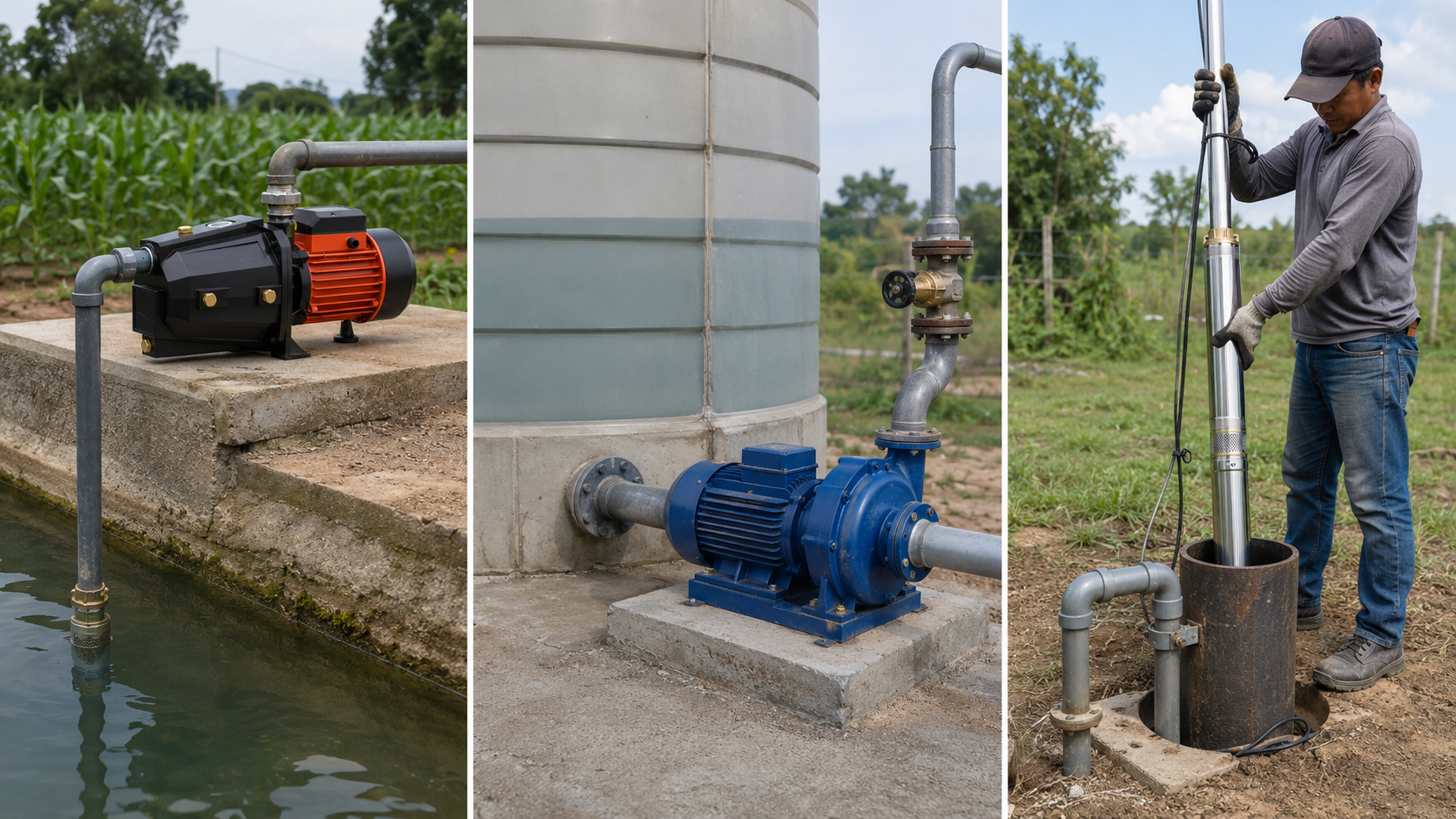
Self priming pumps are better suited for cases where the pump is to be installed above a shallow water source and air has to be removed regularly from the suction line. A standard centrifugal pump usually requires a flooded suction inlet, but it might offer lower cost and higher efficiency in tank transfer systems where water naturally feeds the pump. By keeping the applications separate you avoid selling a more expensive self-priming model when the suction feature is not needed.
2. Self-Priming Pump vs. Submersible Pump
Self-priming pumps are easy to check and repair as they stay above the water source. They are good for shallow wells, tanks, ponds and the like. A submersible pump works underwater and is the better solution when the working water level is too deep for suction from the surface. Before choosing which type to quote you must check the vertical distance from the lowest water level to the pump.
VIII. Conclusion
Choosing a self-priming pump is not just a matter of matching motor power and connection size. Based on actual application, you need to choose the type of pump, needed flow rate, total head, height of suction, water quality, power supply, materials and control system. HunGerät can provide matching self-priming pump designs for household water supply, irrigation, water transfer, wastewater treatment and automatic pressure systems.
IX. FAQ
1. How Much Lower Should the Actual Suction Height Be Than the Rated Maximum?
For pumps with maximum suction rating of 8 m, the working height of about 6-7 m is usually a safe range for real installation. The actual limit is affected by the suction pipe, altitude, water temperature and airtightness of the system.
2. How Long Should a Self-Priming Pump Take to Start Delivering Water?
Many self-priming pumps will be able to deliver water within around 30 seconds to several minutes after startup. If the pump passes the manufacturer’s listed priming time, stop the pump and check the filling water, suction line, valves and seals.
3. Does a Long Horizontal Suction Pipe Reduce Self-Priming Performance?
Yes, a long suction pipe has more air in it and more resistance, so the pump takes longer to prime and may provide less water. If the installation distance cannot be reduced, the suction line should be kept straight and a larger pipe size used.
4. Can the Suction Pipe Be Smaller Than the Pump Inlet?
Usually the suction pipe should be at least the same size as the pump inlet, since a smaller channel creates more resistance to flow. If the pump and installation allow, increasing the pipe size by one size may improve the performance of a long suction line.
5. Does Every Self-Priming Pump Need a Foot Valve?
Not all models need a foot valve; however it can help keep the suction pipe full and shorten the next priming time. This is especially the case when the suction pipe is long or the internal check valve does not hold water well.
6. Can a Self-Priming Pump Keep Its Prime Overnight?
Yes, if the casing, seals, check valve and suction pipe remain air tight, the pump can usually hold enough water for the next start. If it loses prime over night, check the foot valve, the threaded connections, the drain plug and the mechanical seal.
7. Why Does a Self-Priming Pump Lose Water After It Stops?
Water might return to the source through a leaking check valve or into the ground through a bad pipe connection. A self-priming chamber can also drain through a damaged gasket, drain plug or pump casing.
8. Why Are Air Bubbles Coming from the Discharge Pipe?
Air bubbles often appear if there is an air leak on the suction side or if the suction inlet is not completely covered in water. Check the joints of the pipe, the water level, the foot valve and any vortex developing around the suction inlet.
9. How Long Can a Self-Priming Pump Run Dry?
A standard self-priming pump shouldn’t be run dry as the mechanical seal can overheat within minutes. Use dry-run protection if the water source can run dry or the pump can run alone.
10. How Does Altitude Affect Self-Priming Height?
As a rule of thumb, available suction height can be reduced by about 1 m for every 1,000 m rise in altitude. For pumps sold for high altitude markets, increase the suction margin.
11. Can a Self-Priming Pump Handle Hot Water?
Only if the mechanical seal and pump materials are rated for the actual liquid temperature. Hotter water also limits available suction so check with the supplier for both the maximum temperature and suction performance.
12. Can a Clean-Water Self-Priming Pump Handle Sand?
Standard clean-water models are not meant for continuous pumping of sand, which can wear the impeller, casing and mechanical seal. If you can’t get rid of the sand, use a pump for abrasive water or use a strainer.
13. How Do You Check the Solid Size a Sewage Self-Priming Pump Can Handle?
Instead of deciding by the inlet or outlet diameter, check the maximum solid passage listed for that specific pump model. The actual solids handling ability is set by the impeller geometry and the internal flow passages.
14. When Should You Replace a Self-Priming Pump with a Submersible Pump?
If the working water level is more than around 6-8 m below the surface pump, a submersible pump is usually the better choice. It pushes water up from inside the source and is not limited by surface suction in the same way.
15. Can a Pressure Tank Be Used with a Self-Priming Pump?
Yes you can use a pressure tank with a pressure switch to reduce pump starts and store a small volume of pressurized water. The pre-charge and pressure switch settings for the tank must be set below the working pressure of the pump.
16. Can a Self-Priming Pump Run Continuously?
It will run continuously, if the motor is properly duty rated, the pump is receiving water and the current is within nameplate rating. Also check the liquid temperature, ventilation and allowed running time with the manufacturer.
17. Can a Self-Priming Pump Be Used with a VFD?
Many three-phase self-priming pumps can be used with a VFD if the motor insulation, cooling and allowed frequency range are correctly set. Check the minimum speed. Running too slowly may limit self-priming ability and cooling of the motor.
18. How Large Should a Generator Be for a Self-Priming Pump?
When it starts up, a direct-start motor can draw three to six times its rated current. As a first guide, a generator with a rating of around two to three times the motor power can be used, but the motor starting current and the generator surge capacity should be checked.
19. Can a Self-Priming Pump Be Installed Outdoors?
Yes, but the motor, electrical box and controller need suitable protection from rain, dust, sunlight, and flooding. If there is any chance of freezing weather, the pump should also be drained or insulated.
20. What Information Should You Provide When Ordering a Self-Priming Pump?
Required flow Total head Actual suction lift, Water type Solids size Voltage Frequency Connection size Control method This data allows the supplier to select a pump based on its actual operating point and not only its motor power.