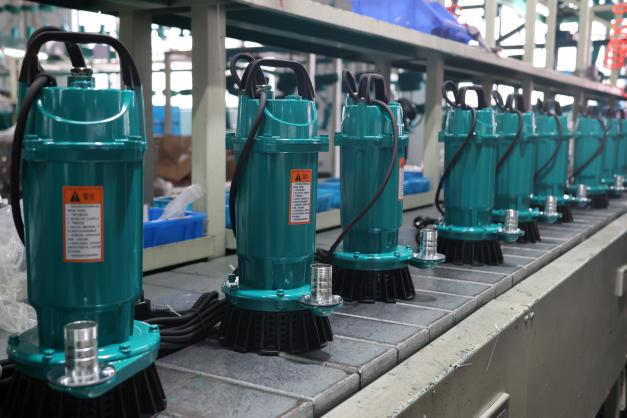
AC, DC and AC/DC submersible pumps may have the same flow and head ranges, but different power and control systems. If you are selling into markets with solar power, or an unreliable grid, or generator backup, then these variances impact your quotations, stock and after-sales operations. This article will describe the three systems, compare their commercial value, and illustrate what to check before adding them to your range.
I. What Is the Difference Between an AC Pump and a DC Pump?
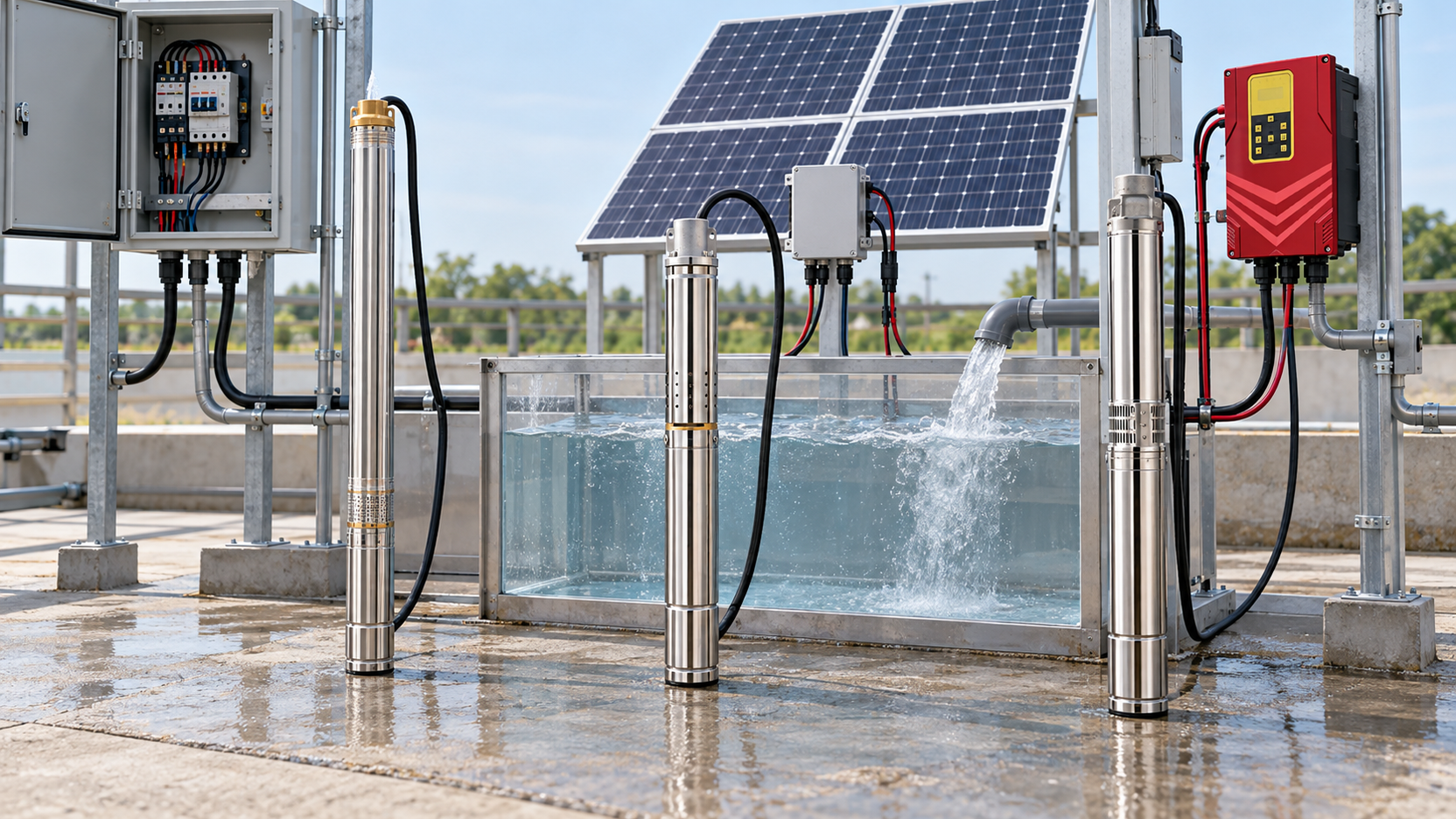
An AC pump is run by an alternating-current motor and usually powered off the grid or a generator. A DC pump employs a direct-current motor. A DC pump is usually powered by solar panels through a matching controller. The power type does not dictate the flow or head; they are determined by the pump design, motor power, speed and operating point.
An AC/DC submersible pump is a hybrid device that can use solar DC and a suitable AC source. Its controller can select between the two sources, favour solar, or blend them in some other proportion. Since these are different functions, you have to check the real controller design, not just the AC/DC label.
II. How Does Each Pump System Work?
1. AC Submersible Pump
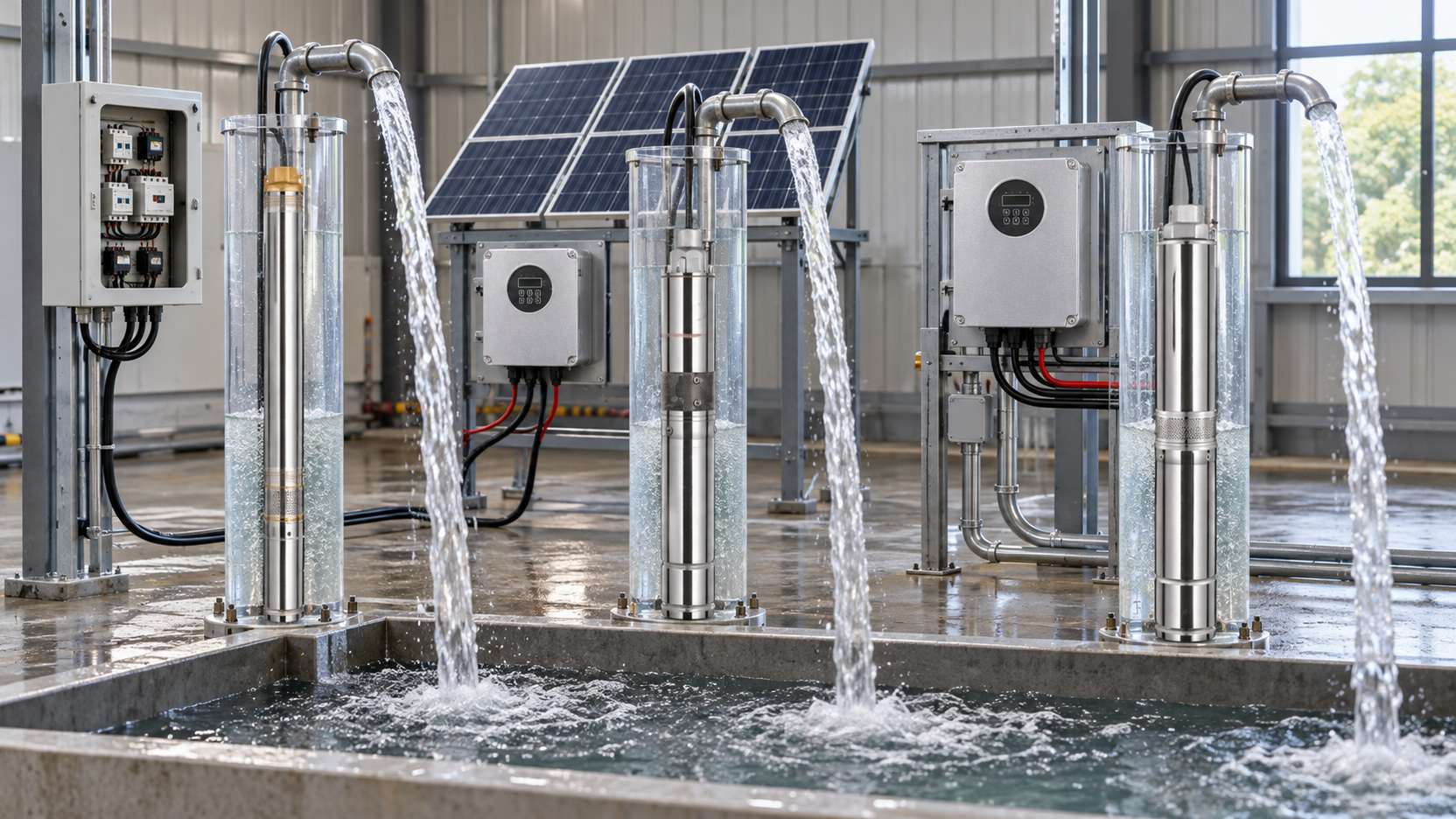
A conventional AC submersible pump receives AC power from the grid or a generator. To run it from solar panels, you need a compatible solar pump inverter that converts PV direct current into controlled AC output for the motor. The inverter voltage, phase, current, frequency range, and motor settings must match the pump.
2. DC Submersible Pump
The DC submersible pump is connected to the DC supply through its controller. The controller in a solar system handles the varying PV input and can provide MPPT, soft start, sensor control and electrical protection. The controller is part of the motor system because many models use a brushless DC motor and cannot be replaced based only on a matching kilowatt rating.
3. AC/DC Submersible Pump
An AC/DC solar pump receives solar DC and grid or generator AC through a hybrid controller or permitted conversion unit. Solar is the major source. AC is used as backup when the solar input is low. Some controllers switch sources, while some can supplement solar with AC. Thus, the working sequence must be shown in the wiring diagram and technical specification.

III. AC Pump vs AC/DC Submersible Pump
1. Power Source
AC pump: Normally, an AC pump is powered by the grid or a generator. It is a straight fit for markets with stable AC infrastructure, but it can’t use electricity from solar panels without an appropriate inverter.
AC/DC pump: The AC/DC submersible pump can be powered by solar DC and a specified AC source via its hybrid control system. The system is for markets where solar is the primary source, but grid or generator power is also accessible.
2. Controller and System Components
AC pump: A grid-powered AC pump may require a starter, protection panel or variable-frequency drive depending on the motor and application. When powered from solar panels, a solar pump inverter must convert the DC input to a controlled AC output.
AC/DC pump: An AC/DC pump employs a hybrid controller to manage both power inputs and to supply the matching motor. You have to examine the allowed DC range, AC voltage, phase, frequency, controller output and source-control method as one system.
3. Operation When Solar Power Changes
AC pump: If you have a reliable grid or generator, an AC pump can run no matter what the sunlight is like. If running on a solar pump inverter without AC backup, speed and water flow may vary with the available solar power.
AC/DC pump: An AC/DC pump can use AC when there is not enough solar input; however, the response relies on the controller. It might switch sources, pause and restart after a delay, or supplement solar with AC. You need to check these functions before you decide to run continuously.
4. Flow, Head, and Efficiency
AC pump: The AC motor does not automatically increase the flow or head to the pump. The hydraulic performance depends on the impeller, the number of stages, the speed, the motor power and the operating point. Check flow availability at the desired head using the pump curve.
AC/DC pump: Dual-source capabilities are not always better for hydraulic performance. Compare the AC/DC pump with the AC one at the same duty point and check if its curve or input power is different between solar and AC operation. The controller, motor and pump should all be included in the comparison.
5. Installation and Commissioning
AC pump: If the correct AC voltage, phase, protection, and cabling are already present, installation is often straightforward. For solar operation, PV input calculations and inverter settings are needed. The pump must be provided with the approved inverter and motor characteristics.
AC/DC pump: The PV array and AC supply need to be tested separately for installation. The technician must also be familiar with the controller terminals, source priority, transition settings, sensor inputs, and fault indications. You will need a complete wiring diagram for this type.
6. Maintenance and After-Sales Support
AC pump: AC motors, starters, and standard protection devices are easy to service where there is good electrical support. If you install a solar inverter, your team will need to diagnose inverter settings, PV input, and motor compatibility.
AC/DC pump: In general, the hybrid controller is the starting point of after-sales support. A shutdown can occur due to limited solar input, no AC power, a sensor signal, protection logic, wiring, or the motor. For each pump set, maintain a list of fault codes, the approved controller model, and the replacement method.
7. Purchase Cost and Product Range
AC pump: If you already have a suitable AC supply, the price for the pump may be lower. If you are looking for solar operation, add an inverter and other electrical equipment and then compare the complete package cost.
AC/DC pump: A single pump set can be used for solar-first projects that require AC backup; however, the hybrid controller may add to the initial package cost. Your range has commercial value in that you are catering for both power conditions without stocking separate AC-only and solar-only sets for the same duty.
IV. Where Does Each System Fit Your Market?
1. Choose an AC Range for Established Electrical Markets
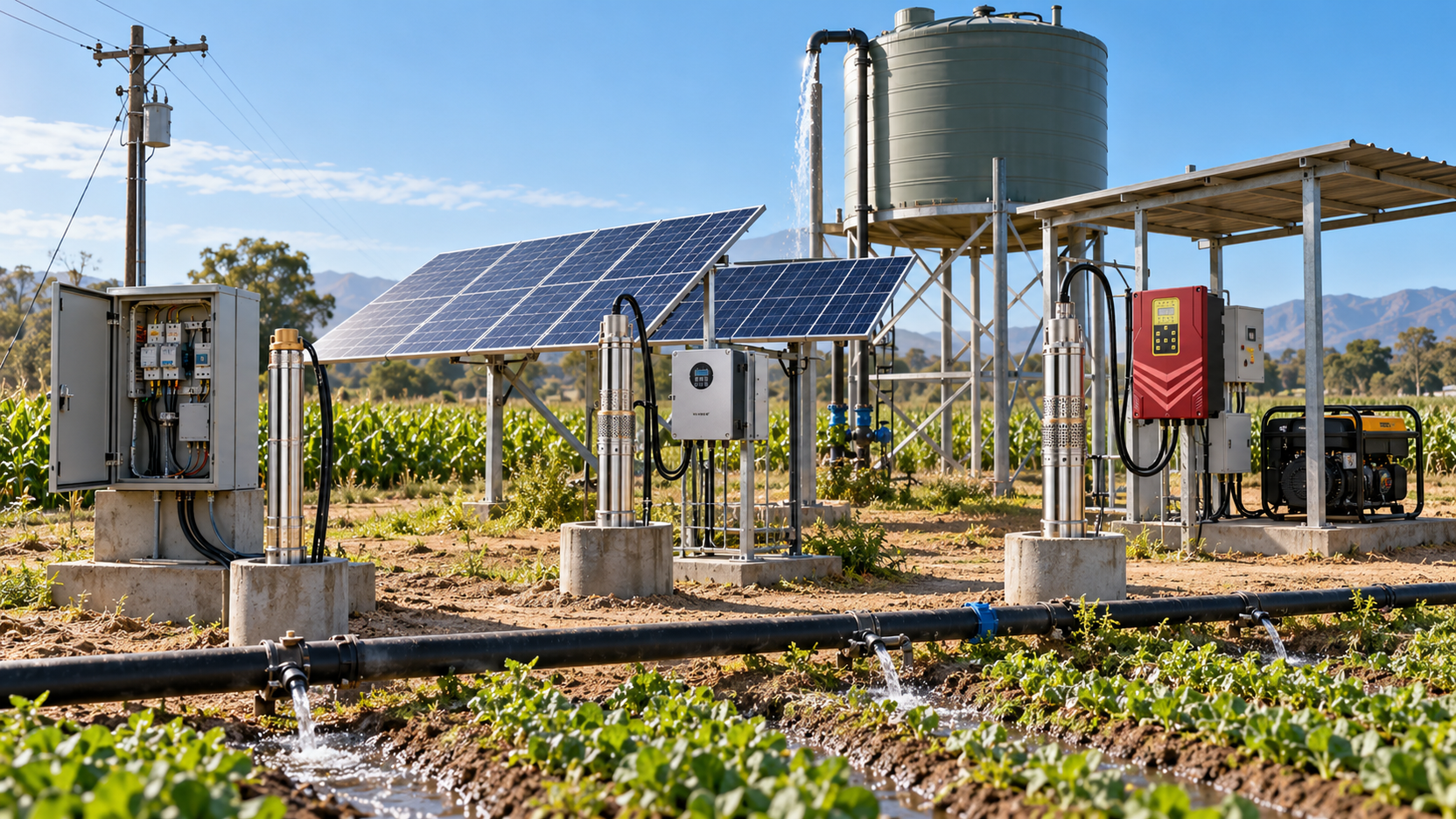
The AC series is good for places that have reliable grid power, often use generators, and have people who know how to service AC motors. It can handle a lot of different hydraulic tasks without needing a solar controller in every package. If you offer solar operation as well, please list the approved inverter and the pump models it works with separately.
2. Choose a DC Range for Dedicated Solar Pumping
DC solar pumps are great for remote boreholes, watering animals, and storing water on farms so that pumping can be planned to work with the sun’s availability. Your quote should clearly state the permitted solar array layout, as well as the operating voltage, maximum PV open-circuit voltage, current limit, and the matching controller.
3. Choose an AC/DC Range When Backup Power Has Real Value
The AC/DC submersible pump works great in places where solar power is likely to be the main source of power but where grid or generator power is also available. That makes it easier to sell to water projects and farms that can’t just use sunlight. What is valuable is the tried-and-tested backup method, not some vague promise of nonstop or 24-hour operation.
V. What Should You Verify Before a Bulk Order?
1. Pump Performance
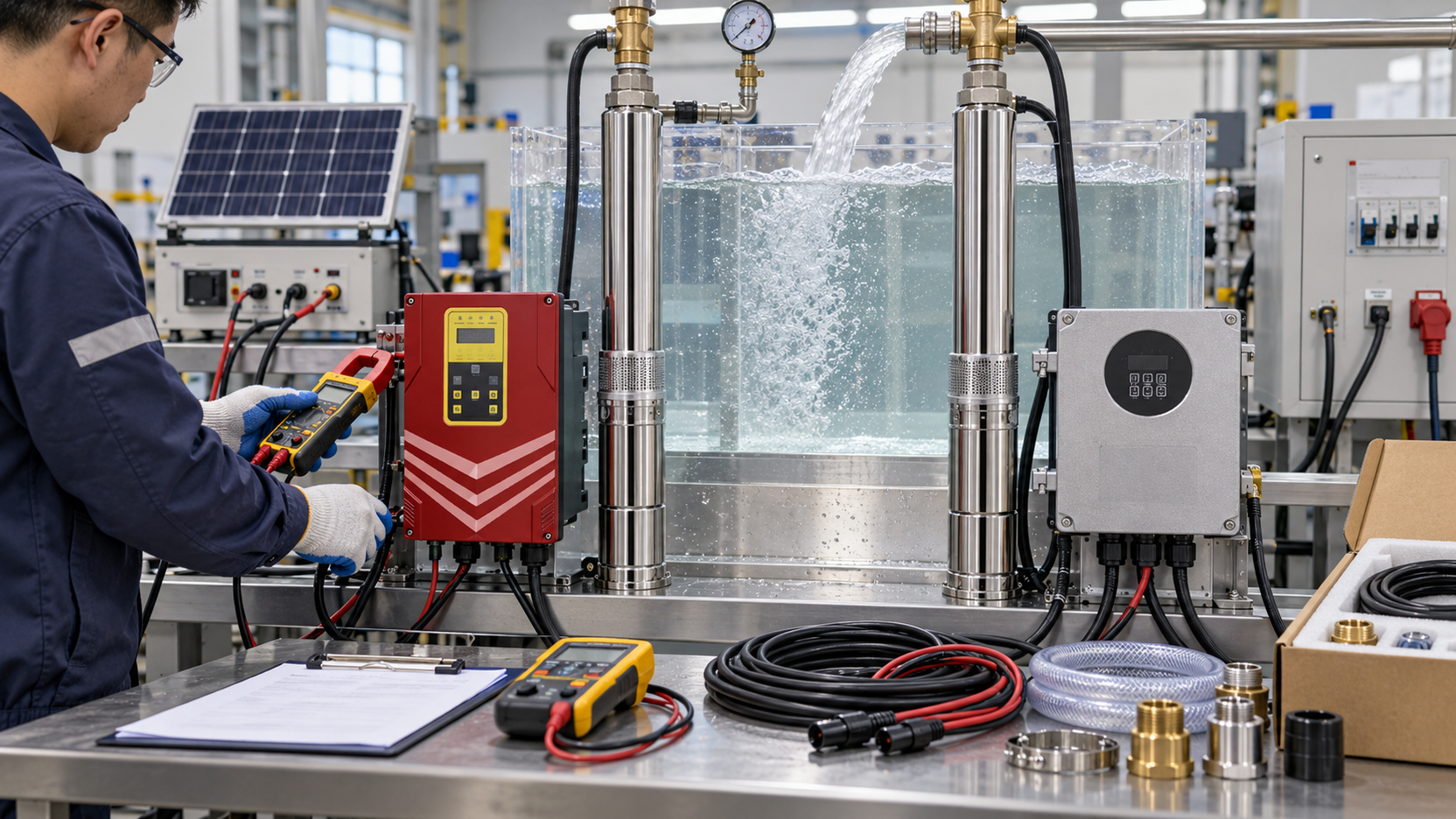
You can compare the models at the operating points that are important to you in your market after getting the full flow-head curve. For solar models, take note of how the output depends on how much power is coming in. Get an AC/DC model and check to see if the curve is the same for both power sources and if one mode derates.
2. Electrical Compatibility
For DC input, check the voltage range that works, the maximum open-circuit voltage, the current limit, the polarity requirements, and the way the solar string is set up. For AC input, check the voltage, phase, frequency, current, and protection requirements. The voltage, current, and control systems on the motor and controller should all be compatible.
3. AC/DC Operating Logic
Test the hybrid pump with solar DC, the given AC supply, and the supported switch between the two. Write down if it switches, stops and resumes, uses a delay, or adds AC to solar power. This test will show you what your sales team can promise and what your tech team needs to explain during commissioning.
4. Protection and Fault Information
Check to see what protection features are built in and which ones need extra sensors. Also, look at how faults are reported and how the pump starts up again. Ask for the list of fault codes, the wiring diagram, the troubleshooting steps, and the rules for replacing the controller. These things will help you tell the difference between a sensor or low-power shutdown and a pump that isn’t working correctly.
5. Complete Supply Scope
Check out the price of the whole system, not just the pump. Check the quote for the controller/inverter, sensors, connectors, cables, protection devices, and instructions. The total cost of two pumps with the same hydraulic performance can be very different.
VI. How Should You Build a Practical Product Range?
1. Organize Models by Duty Point
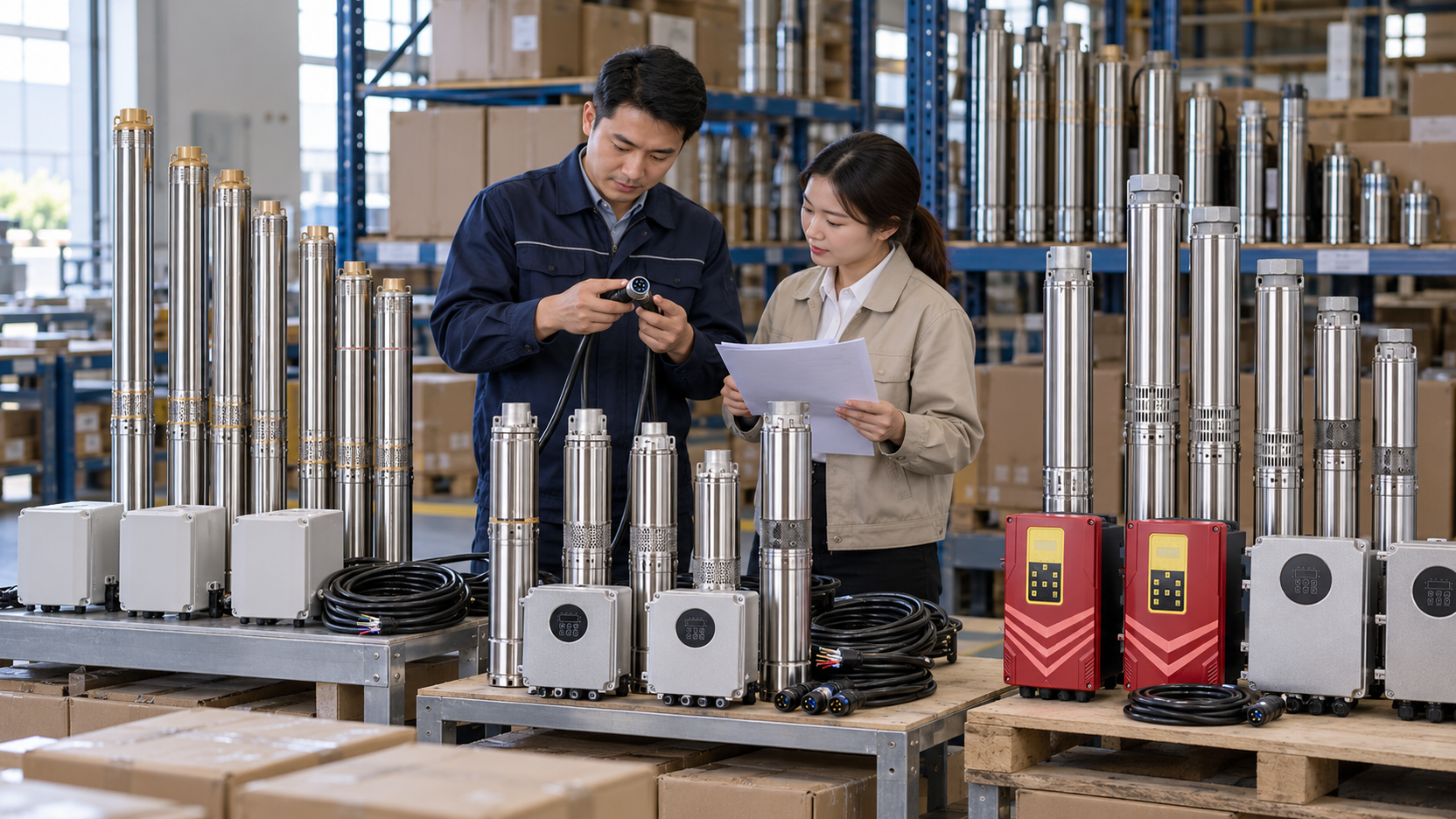
First, figure out which flow and head combinations a lot of people in your market buy. Then figure out which duties need AC, DC, or AC/DC versions. This keeps you from having to store multiple power choices for the same small task, which would leave an important operational range uncovered.
2. Control Electrical Versions
Give each version a different item code if the AC voltage, phase, frequency, DC input range, or controller type is different. Keep all DC and hybrid pumps on the controllers that were approved for them. It’s not always the case that a controller with the same power rating will work with a motor and its control system.
3. Create Three Clear Offers
When you need regular power, use an AC range. For solar pumps, use a DC range. For solar with backup power, use an AC/DC hybrid range. These are not grades, but different kinds of power systems. The basic and higher-spec models in each group are set apart by how well they work hydraulically, how they’re built, how the controller works, and the results of tests.
4. Keep Sales Documents Consistent
The model number and the electrical information on the quote, label, catalogue, wiring diagram, and manual must all match. If you have an AC/DC water pump, is AC an alternative power source, backup power source, or supplementary power source? When you use clear wording, your clients won’t expect features that the controller doesn’t offer.
VII. Conclusion
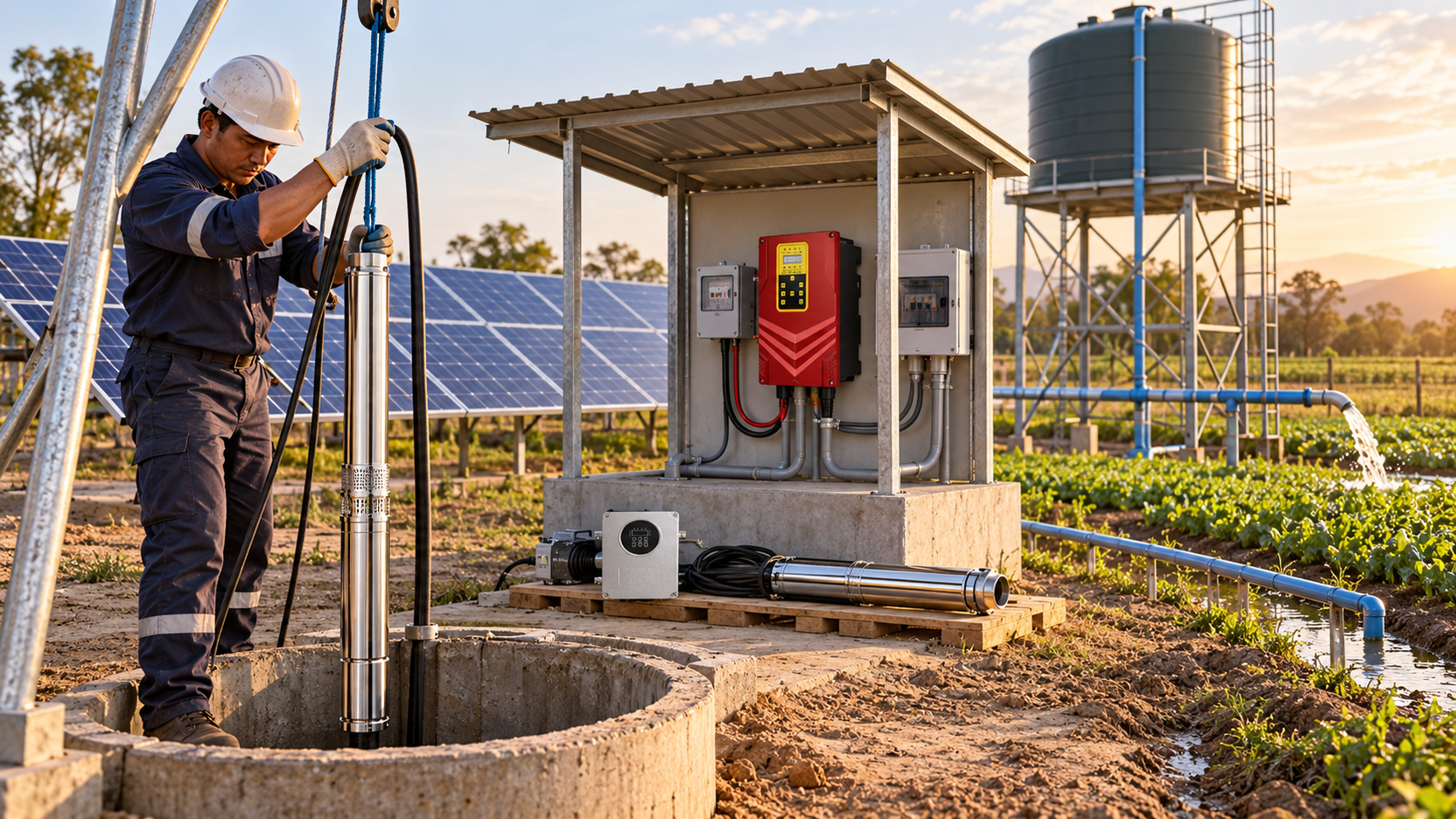
When comparing AC pumps and DC pumps in real life, it’s not about which is better overall. AC works with the electricity systems that are already in place. DC lets you use direct routing for certain types of solar pumping. An AC/DC submersible pump can be used as a backup power option if that is needed.
Build your series around real duty points, sets of related pump controllers, and electrical versions that are clearly separate from each other. Before you order, make sure you understand the power path and hybrid operation sequence. This makes quotes clearer, keeps stock better, and speeds up the after-sales diagnosis process.
If you are making a set of AC, DC, or hybrid submersible pumps, please send HunGerät the model structure you want to see along with the flow, head, power sources, local voltage, and phase you need. That will help us discuss a suitable range for your market.
VIII. FAQ
1. What Is an AC/DC Submersible Pump?
It’s a submersible pumping system that runs on solar DC and an AC power source, using a hybrid controller or converter unit. The controller specification explains how the two sources are used.
2. Can a Normal AC Pump Run From Solar Panels?
If you pair it with a properly selected solar pump inverter, the answer is yes. The inverter output, motor ratings, PV input, cable, and protection settings need to be compatible.
3. Can a DC Submersible Pump Connect Directly to Solar Panels?
A controller that works with the panels and motor is used in most solar DC pumps. To connect panels, don’t use total wattage as a guide. Instead, use the voltage, current, polarity, and PV array limits that are listed.
4. Does Every Hybrid Solar Pump Switch to AC Automatically?
No. Automatic switching, transfer delay, solar priority, and AC supplementation are some of the model-specific features. Check and make sure that the actual order of operations is correct.
5. Does an AC/DC Solar Pump Need Batteries?
Not necessarily. When solar is available, most systems use it. If solar isn’t available, they use AC from the grid or a generator. It’s only necessary to have batteries if your system is designed to store electricity.
6. Is a DC Pump Always More Efficient Than an AC Pump?
No. At the same flow and head, you can compare the pump, motor, and controller or inverter as a whole. Just because something is marked as AC or DC doesn’t mean that the whole system is efficient.
7. Can Controllers With the Same Kilowatt Rating Be Exchanged?
Not necessarily. It’s also important that the voltage, current, motor type, commutation, control method, parameters, connectors, and other parts match. Use only the pump-controller combinations that are approved.
8. What Information Should You Request Before Ordering?
Ask for the pump curve, a compatible controller model, AC and DC input limits, motor output data, source-control logic, a wiring diagram, a list of fault codes and protections, a list of supplied components, and a sample test method.
9. What Is the Difference Between a DC Pump and an AC/DC Pump?
An AC/DC pump has a hybrid control system and can also be powered by a certain type of AC source. A DC pump can only be driven by a DC source. The extra AC input gives you a backup plan, but it also means you have to keep an eye on more electrical characteristics.
10. Can an AC/DC Submersible Pump Run Only on Solar Power?
Yes, as long as the controller can handle the voltage and power conditions of the PV array. In most cases, the AC input doesn’t need to be connected if there is enough solar power. Check to see what the requirements are for your controller.
11. Can an AC/DC Submersible Pump Run Only on AC Power?
Without solar power, most models can still work with their rated AC input. Check the AC voltage, phase, frequency, and requirements of any converter unit.
12. Is a Hybrid Solar Pump the Same as an AC/DC Solar Pump?
Most of the time, the phrases refer to the same type of product, but the controller designs may be different. Check to see if the system changes sources, adds AC to the solar power, or uses an external AC-to-DC converter.
13. Which AC Input Details Must Be Confirmed?
Check the allowed range, rated voltage, frequency, input current, earthing, and circuit protection. Also, make sure the source is single-phase or three-phase. Don’t say that a product is AC compatible unless you also state these conditions.
14. Which DC Input Details Must Be Confirmed?
Check the working voltage range, starting voltage, maximum open-circuit voltage, current limit, polarity requirements, and permitted PV string configuration. These limits tell you which solar modules can be safely connected.
15. What Does MPPT Do in an AC/DC Solar Pump Controller?
MPPT changes the operating point of the controller to make better use of the power from the solar panel as the sunlight changes. It won’t fix a PV array that is too large or has too much voltage.
16. How Should You Compare AC and AC/DC Pump Curves?
Look at both pumps with the same total head and flow rate. Check the input conditions for each curve and see if the AC/DC model acts differently when it’s running on AC power versus solar power.