I. Introduction
12V water pumps can be diaphragm pressure pumps, centrifugal inline pumps, submersible pumps, or other designs driven by 12V DC. The voltage on these items may be the same, but the flow, pressure, priming, duty cycle, and control can vary widely. If you sell pumps, you need to know what type of pump you are comparing specs for. This article explains how a 12V water pump works, the main types, the important parameters, and how to select suitable models for your market.
II. What Is a 12V Water Pump?
A 12V water pump is a water pump that is driven by a nominal 12 volt DC power supply. The name refers to the operating voltage, not a specific hydraulic design. So a 12V pump might employ a diaphragm, a centrifugal impeller, or some other pumping mechanism.
III. How Does a 12V Water Pump Work?
1. The DC Motor Produces Mechanical Motion
The 12V supply is used to power a brushed or brushless DC motor. The motor produces shaft rotation from electrical input. This drives the pump mechanism. The exact current depends on the motor, supply voltage, hydraulic load, and operating point.
2. The Pump Mechanism Moves Water
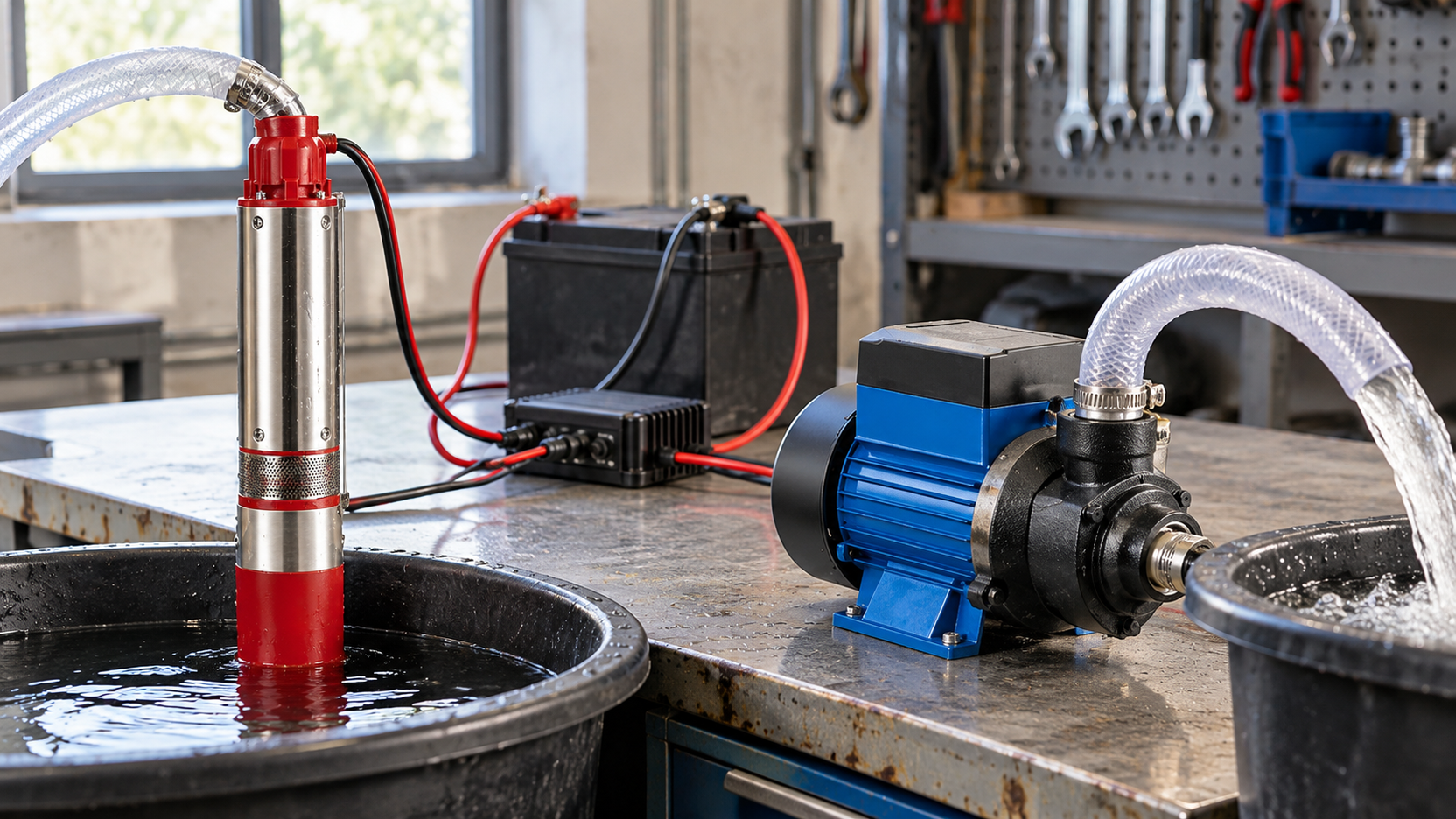
In a diaphragm pump, flexible diaphragms are actuated by a cam, and check valves control the flow. The centrifugal pump impeller moves the water and adds energy. In a submersible model, the motor and hydraulic portion are normally included in a sealed housing so that the pump can be submerged in the water source.
3. The Control Determines When the Pump Runs
Some pumps will run whenever they are powered. A 12V water pump with pressure switch will start when the pressure of the system drops and stop at its shut-off pressure. Other types may have a float switch, speed controller, or external on/off control. These functions have to be checked for each model.
IV. What Are the Main Types of 12V Water Pumps?
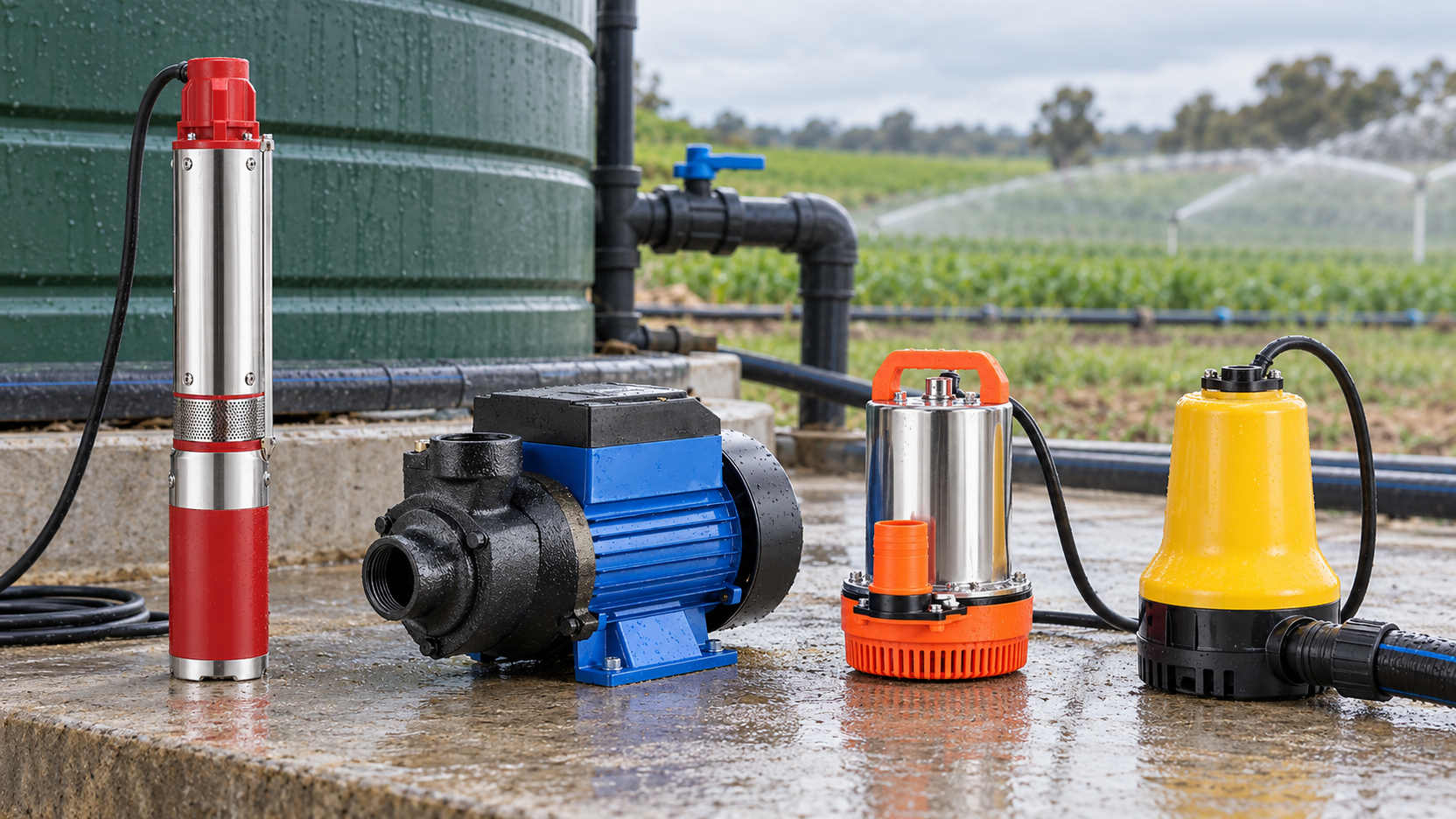
1. 12V Diaphragm Water Pump
A 12V diaphragm water pump provides pressure through positive displacement. It is popular for RV, caravan, marine fresh water, spraying, washdown, and portable water systems. Many models are self-priming and can be fitted with a pressure switch; however, the priming height, pressure, flow, noise, and duty cycle vary from model to model.
2. 12V Centrifugal or Inline Water Pump
A 12V centrifugal water pump employs an impeller to create flow. It is usually used for circulation, cooling, and water transfer. A flooded or primed intake is required by many models. A 12V inline water pump describes how the pump connects to the system; therefore, you still need to verify whether the internal mechanism is centrifugal, diaphragm or some other design.
3. 12V Submersible Water Pump
A 12V submersible water pump works inside the liquid and is widely sold for drainage, tanks, bilges, portable transfer, and small irrigation systems. The advertised maximum flow is usually measured at a low head; therefore, you must consult the head-flow curve to find out how much water it will deliver at the lift you need.
4. 12V Brushless Water Pump
A 12V brushless water pump uses electronic commutation instead of motor brushes. A lot of compact brushless models have a centrifugal impeller for circulation or cooling, but “brushless” refers to the motor, not the hydraulic design. Check the controller, allowed voltage range, speed control signal, temperature limit, and protection functions before comparing models.

V. Which 12V Water Pump Specifications Matter Most?
1. Flow, Head, and Pressure
Flow should be verified at the desired head or pressure. Maximum flow is measured with little resistance to discharge. Maximum head or shut-off pressure is measured with little or no flow. Use the pump curve instead of combining these two maximum values into an operating point that the pump cannot supply.
2. Input Voltage and Current
The specification shall indicate the nominal voltage, voltage range, rated current and, where applicable, the maximum or starting current. A battery system is not going to be exactly 12.0V all of the time, and voltage loss in long or undersized cables might impair pump performance. The fuse, relay, and wiring requirements must be specific to the pump data and not a single generic number for all 12V pumps.
3. Duty Cycle
Duty cycle tells you whether the pump may be used continuously or for short durations only. A 12V continuous duty water pump should have a rating specified under certain voltage, pressure, liquid temperature, and ambient temperature conditions. Thermal protection will not turn an intermittent duty pump into a continuous duty pump.
4. Priming and Dry-Run Capability
Self-priming, suction lift and dry-run tolerance are individual specifications. Diaphragm pumps are generally self-priming; however, most centrifugal pumps require flooded suction. A submersible pump does not require suction priming but can be damaged if the water level falls below the permitted limit.
5. Pressure Switch and Other Controls
Check the cut-in pressure, shut-off pressure, switch tolerance, bypass arrangement and maximum switching current for a 12V water pump with pressure switch. For float-switch or brushless-control models, check the switching level or input signal, standby current, restart behaviour and protection response.
6. Materials and Liquid Compatibility
Inspect all wetted materials, including the housing, diaphragm, valves, impeller, seals and metal parts. Different materials or certificates may be needed for fresh water, potable water, salt water, warm water, fertiliser and cleaning chemicals. The evidence must be for the precise model and material version you propose to sell.
7. Ports, Dimensions, and Supplied Parts
Verify the port size and standard, hose connection, inlet/outlet orientation, mounting holes, overall dimensions, cable length, connector, and supplied accessories. These parameters will determine replacement compatibility and whether you will need to order strainers, fittings, switches, relays, or mounting parts separately.
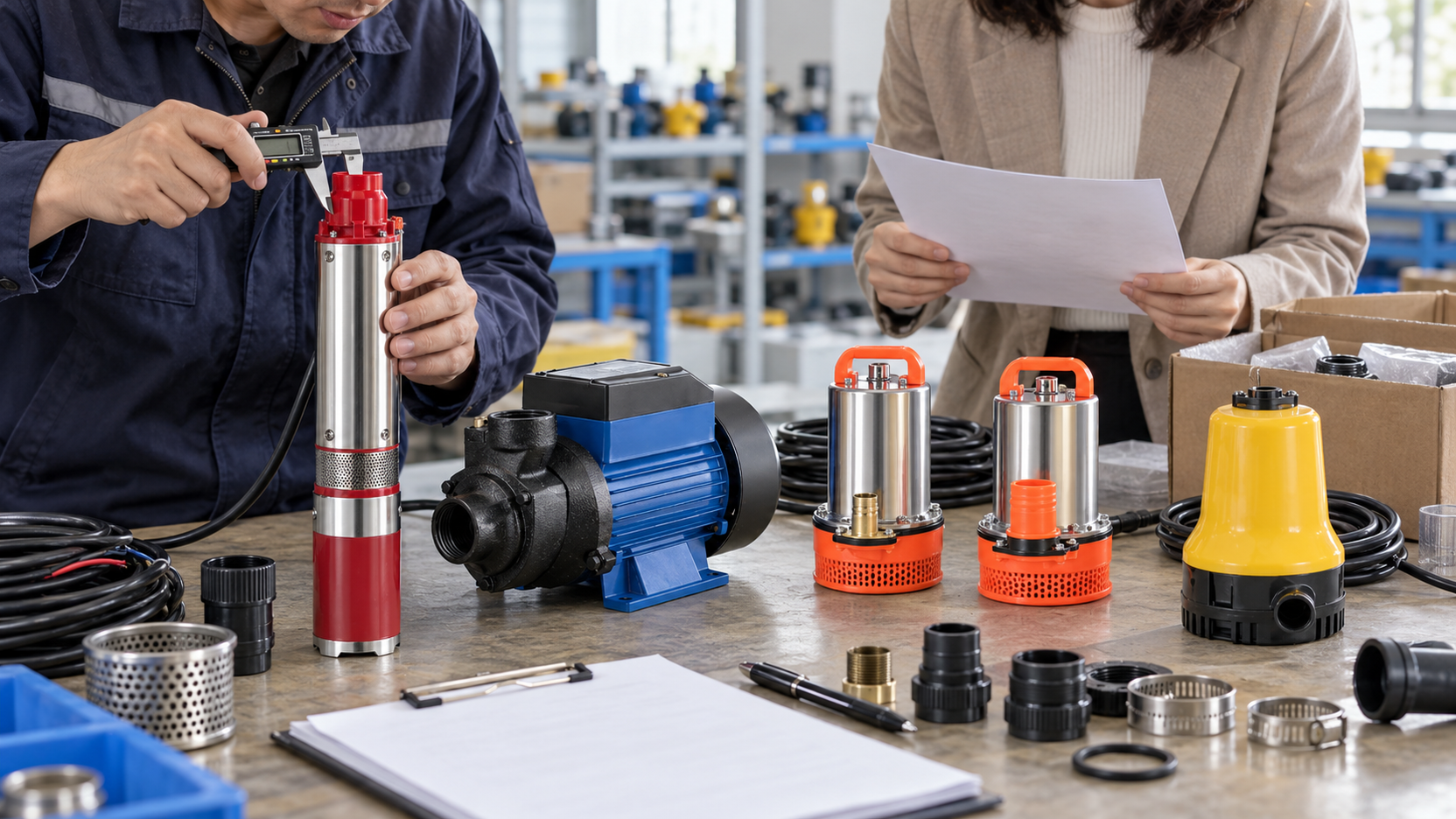
VI. How Should You Choose 12V Water Pump Models for Your Market?
1. Separate Models by Their Actual Function
You could divide your products into clear groups, like freshwater pressure pumps, high-pressure spray or washdown pumps, centrifugal circulation pumps, portable transfer pumps and submersible drainage pumps. Don’t put all 12V models in the same group just because they all use the same voltage.
2. Compare Models at the Same Operating Points
Customer inquiries will help you choose reference flow and pressure or flow and head points. Then, look at all the models at those points. Add power or current to the same table. This shows if there is a real change in performance between two models or if they are duplicate SKUs.
3. Match the Electrical Version to the Target Market
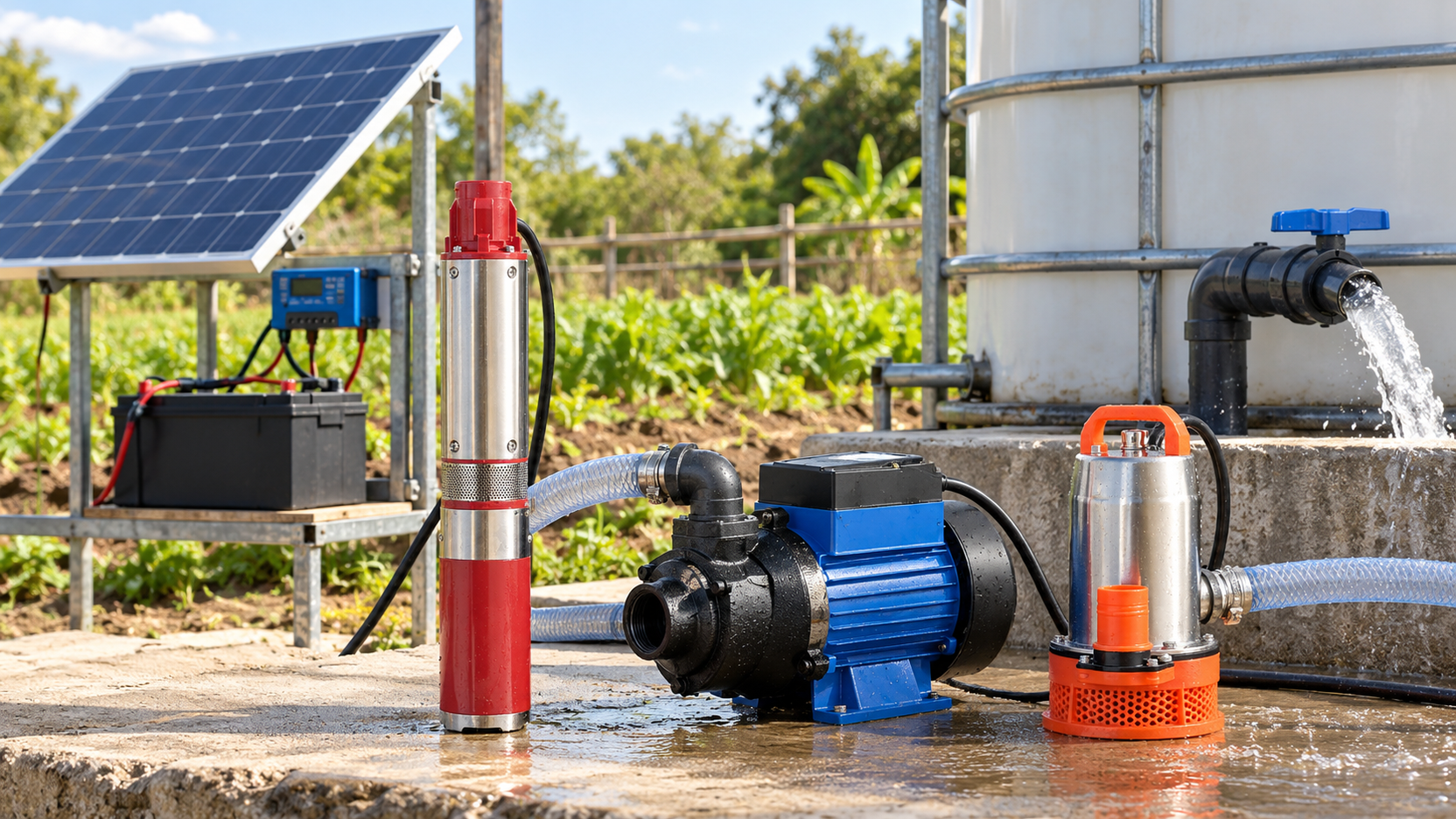
Make sure you know the voltage range, current, motor type, lead size, cable length, connector, polarity, switching configuration, and any approvals that are needed. Check whether the pump needs a battery or controller if you plan to use it with solar power. Even though it says it works with 12V, that doesn’t mean it will operate directly from a photovoltaic panel.
4. Verify the Complete Product Configuration
The motor, pump head, diaphragm or impeller, valves, seals, pressure switch or controller, cable, connector, fittings and labels must all be in the approved design. Any change to a component needs to be approved because an internal substitution can change the curve, current, noise, materials or control behaviour without changing the outer housing.
5. Test a Sample Before a Bulk Order
Check the curve, current, temperature, leakage, duty cycle, priming, controls, protection functions, dimensions, connections and supplied accessories against the quotation. For future orders, use the approved sample and test record as a guide.
6. Check Documents and Spare Parts
You will need a specification sheet, pump curve, dimensional drawing, wiring diagram, material list, certificates, parts diagram, and troubleshooting information for each model. Make sure you can get pressure switches, diaphragm kits, valves, pump heads, impellers, strainers, fittings, or controllers suitable for your type of pump.
VII. Conclusion
You should choose a 12V water pump based on its hydraulic design and how it needs to be used, not just its voltage. First, figure out whether you need a diaphragm, centrifugal, inline, submersible or brushless configuration. Then look at the electrical data, duty cycle, priming, controls, materials, connections, and support documents and compare them.
If you want to buy 12V water pumps for private label, distribution or OEM supply, you should let HunGerät know what kind of pump you need, the required flow, head or pressure, voltage range, duty cycle, liquid, ports, controls, certifications, target market and order quantity. We can talk about a configuration that will work for your product range.
VIII. FAQ
1. Is Every 12V Water Pump a Diaphragm Pump?
No. A 12V water pump could have a diaphragm, a centrifugal impeller or some other kind of pumping mechanism. The 12V label only shows the nominal input voltage.
2. Is Every 12V Water Pump Self-Priming?
No. A lot of diaphragm pumps can prime themselves, but a lot of centrifugal pumps need an intake that is flooded or already full. Check the priming requirements for the exact model.
3. How Many Amps Does a 12V Water Pump Use?
Current varies by motor, flow, pressure, voltage and operating point. You should use the maximum and rated currents given for that model and test situation.
4. Can a 12V Water Pump Run Continuously?
If it is rated for continuous duty at the voltage, pressure, liquid temperature, ambient temperature and installation conditions given, then it can be used.
5. What Does a Pressure Switch Do?
When the system pressure drops, it turns on the pump. When the pressure reaches the set point, it turns off the pump.
6. Can a 12V Water Pump Run Directly From a Solar Panel?
Only if the pump or controller can handle the panel’s changing voltage and current. Many 12V pumps need a battery or a controller that keeps the voltage steady.
7. Can a 12V Water Pump Run Dry?
Whether a pump can run without water depends on its design. Some diaphragm pumps can work without water for a while, but many centrifugal and submersible pumps can’t.
8. What Is the Difference Between an Inline and Submersible Pump?
An inline pump is put in a pipe or hose outside the water source. A submersible pump is one that works below the water.
9. How Should You Compare Two 12V Water Pumps?
Compare the flow, head or pressure, current and input power when the voltage and operating points are the same. Don’t just look at the highest flow or pressure.
10. What Should You Test Before Ordering in Bulk?
Use the approved sample to check the hydraulic performance, current, temperature, leakage, duty cycle, controls, protection functions, dimensions, connections and supplied accessories.
11. What Documents Should the Supplier Provide?
Ask for the pump curve, electrical data, dimensional drawing, wiring diagram, material list, installation limits, certificates, parts diagram and troubleshooting guide.
12. Can a 12V Water Pump Handle Potable Water?
Only if the wetted materials and finished product meet the potable water standards for the target market.
13. Can a 12V Water Pump Be Used for Saltwater?
It can be used if the housing, impeller or diaphragm, valves, seals, fasteners and other wetted parts are compatible with saltwater.
14. What Is the Difference Between a 12V and 24V Water Pump?
They work with different nominal supply voltages. Even if two pumps have the same hydraulic performance, their current, motor windings, controllers, connections and ability to work with other systems may be different.
15. Is a High-Flow 12V Water Pump Also a High-Pressure Pump?
Not necessarily. It’s important to look at the pump curve for both flow and pressure. A high free-flow rating doesn’t always mean a high flow at working pressure.
16. What Is the Difference Between Brushed and Brushless 12V Pumps?
A brushed motor has brushes and a commutator, while electronic commutation is used in a brushless motor. Don’t just look at the type of motor; also look at how well the pump works overall, the controller, the duty rating and customer service.
17. Does a 12V Pressure Pump Need an Accumulator Tank?
Not all the time. An accumulator can help slow down cycling and changes in pressure. The pump, control system and water system will determine whether you need an accumulator and its correct pre-charge setting.
18. Why Does a 12V Water Pump Have Low Pressure?
Low supply voltage, limited inlet flow, air leakage, worn valves, an unsuitable pump curve or too much system resistance are all things that could be to blame.
19. Which Spare Parts Should You Stock?
Keep parts like pressure switches, diaphragm and valve kits, pump heads, strainers, fittings, impellers, seals and controllers in stock based on the pump type and likely failure modes.
20. What Information Should You Send HunGerät for Selection?
Send the application, required flow, head or pressure, voltage range, duty cycle, liquid, ports, controls, approvals, target market, and expected order quantity.