I. Introduction
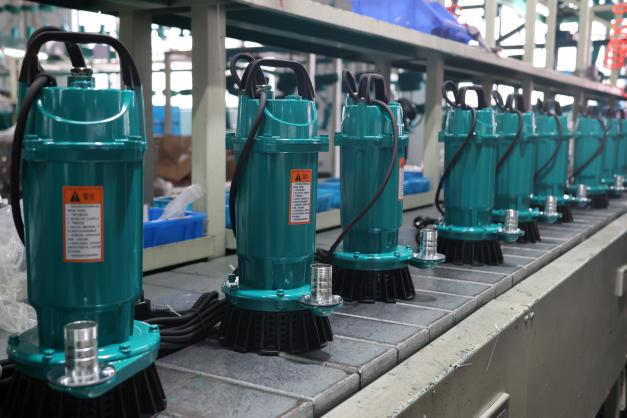
Intelligent Pumps can be sold with various control systems. Some types merely have automatic start and stop, while others change engine speed to maintain pressure. If you merely compare power, maximum head, or appearance, you can end up grouping items with quite different uses and pricing. This handbook describes how an Intelligent Pump operates, its main parts, control types, applications, and critical selection criteria. It also shows you what details are essential when comparing models for your market.
II. What Is an Intelligent Pump?
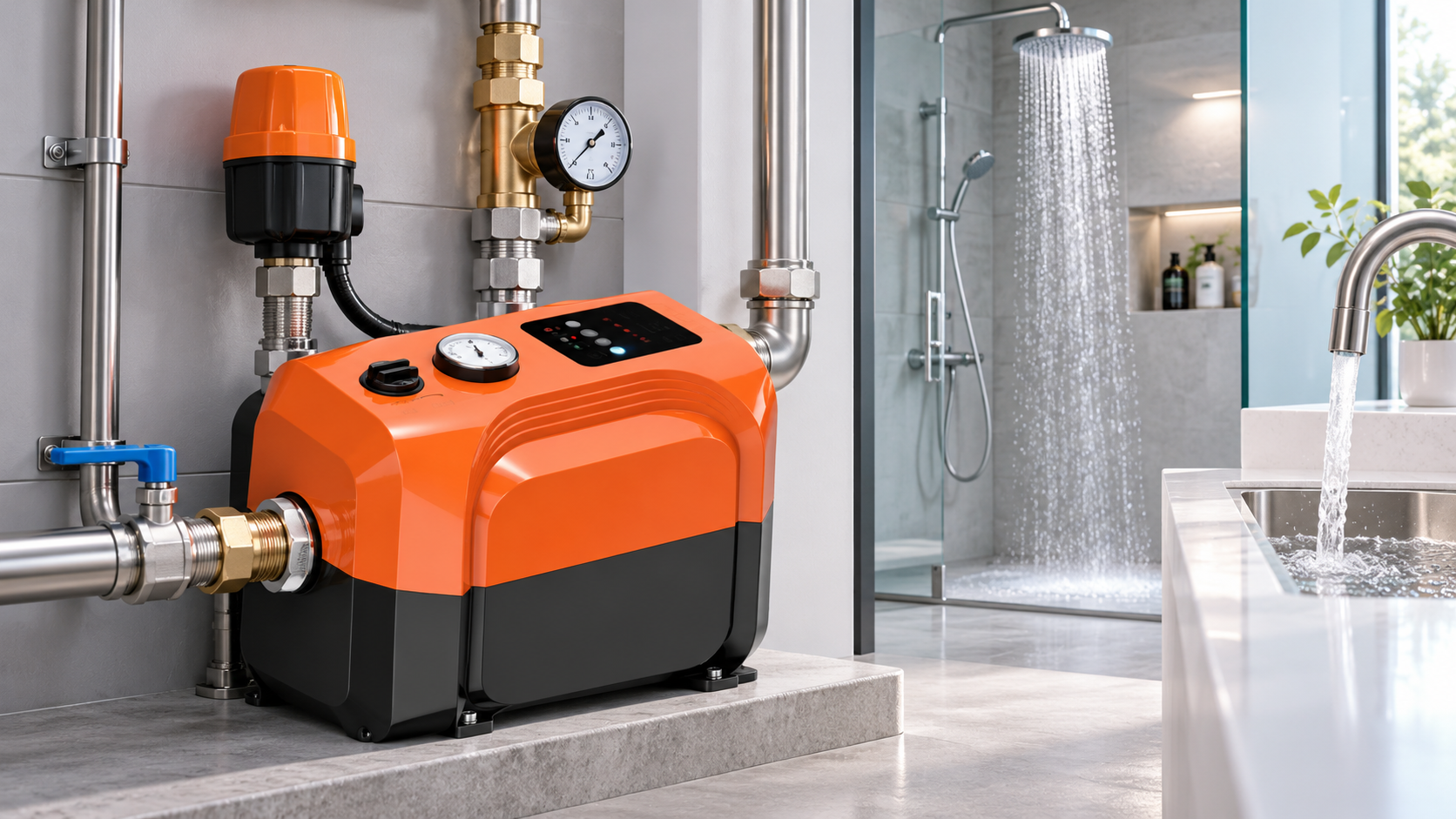
An Intelligent Pump is a combination of a water pump, motor, sensors, and an electronic controller. It senses variations in pressure, flow, or water level and automatically operates the pump, eliminating the need for repetitive manual operation.
Depending on your market, the same product may be called a smart water pump, intelligent water pump, smart booster pump, intelligent booster pump, or automatic water pump. Such designations do not indicate the actual control mechanism. A simple model may be able to start and stop automatically, while a more sophisticated model may be able to change speed, keep constant pressure, show operational statistics, and offer many protection functions.
Not all Intelligent Pumps have variable frequency control, pressure and flow sensors or the same protection functions. You must check the actual configuration in the product specifications.
III. How Does an Intelligent Water Pump Work?
1. Standby and Pressure Detection
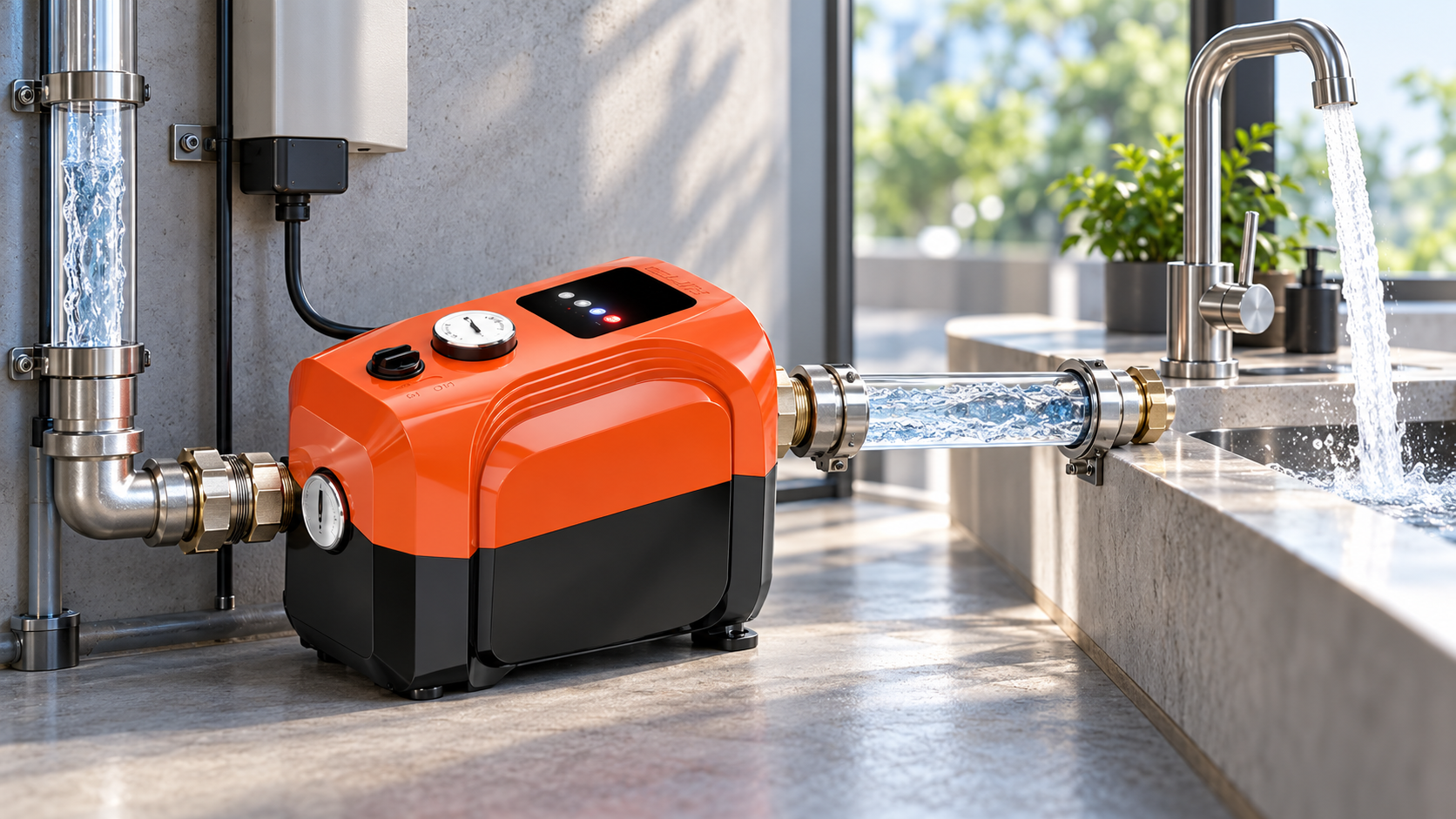
When there is no water demand, the Intelligent Pump stays in standby mode. Inside the supply pipe, there is a pressure sensor that measures the pressure.
As the tap or valve, or other exit, is opened, the pressure in the system begins to decline. The controller knows that water is required when the pressure attains the beginning condition.
2. Automatic Pump Start
The electrical controller delivers a start signal to the motor. The fixed-speed Intelligent Pump will start at its typical operating speed, whereas the variable-speed Intelligent Pump is capable of progressively increasing speed.
The water pump then increases the system pressure and supplies water to the open outputs. The specification of the controller should be checked since automatic booster pumps or automatic water pressure pumps might be controlled at constant speed or variable speed.
3. Pressure and Flow Control
During the operation, the pressure sensor transmits pressure data to the controller continuously. Some Intelligent Pump systems include a flow sensor to validate that water is going through the pipe.
The variable speed Intelligent Pump matches the real pressure to the programmed pressure and alters the motor speed. As the demand for water goes up, the motor speeds up. If demand goes down, the controller slows down.
An Intelligent Pump fixed speed cannot vary its operating speed. It functions at full speed until the stop requirements are satisfied.
4. Automatic Pump Stop
When the outlets are closed, the water flow decreases, and the pressure in the system increases. The controller detects the end of water demand and stops the pump.
The stopping method depends on the design of the control. Some types just use pressure. An Intelligent Pump with pressure and flow sensors can check both values before stopping.
5. Protection Response
The controller can stop the pump when it senses a dangerous operating situation. The available features may include dry-run protection, overcurrent protection, overvoltage protection, undervoltage protection, overheating protection, or frequent-start protection depending on the model.
Some problems can be corrected by hand; others allow the pump to check the water supply and restart automatically after a delay. You need to examine the exact response before choosing the goods.
IV. Main Parts of an Intelligent Pump
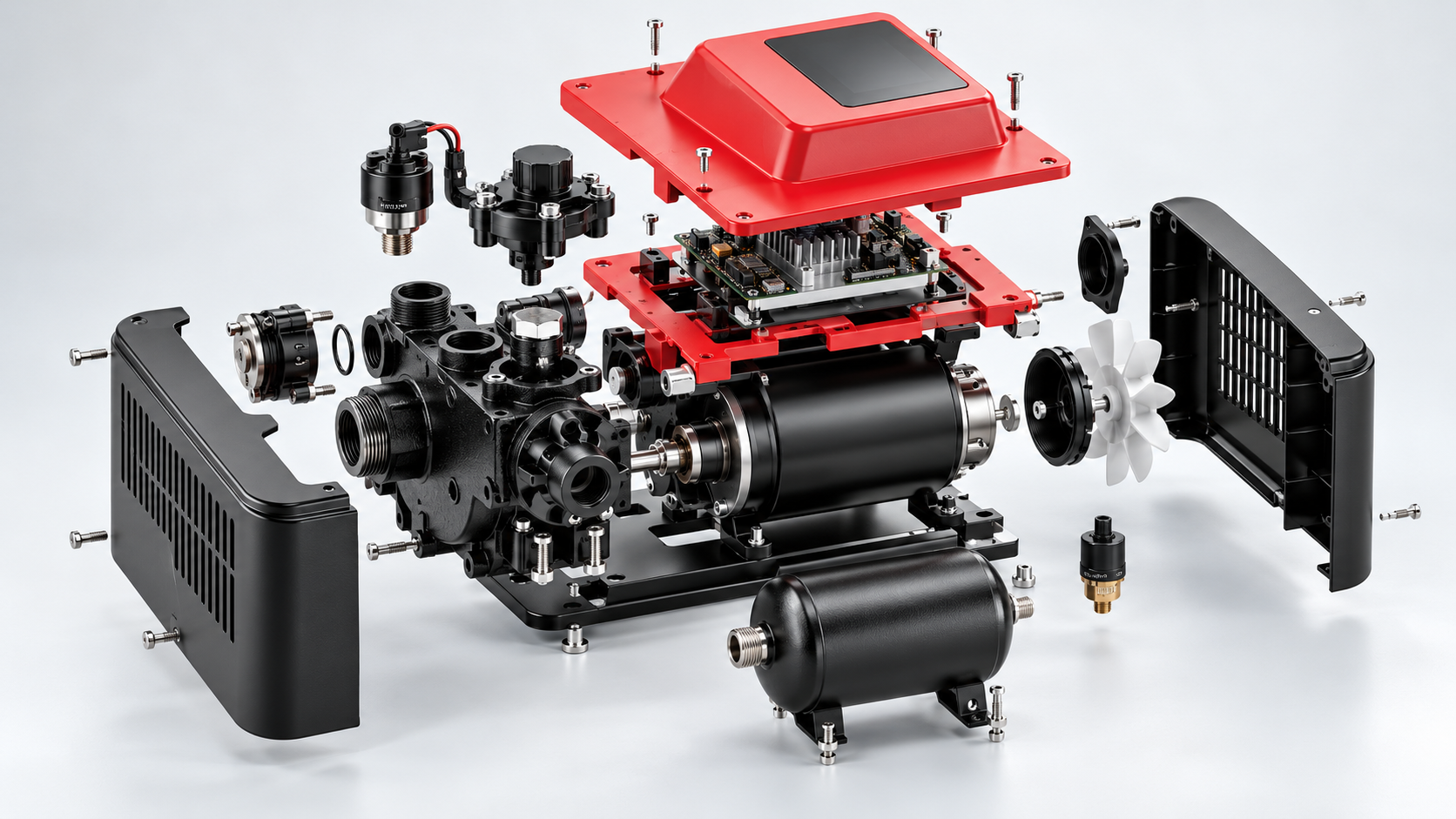
1. Pump and Motor
The flow and head are created by the pump body, impeller, and motor. Intelligent control modifies the way a pump begins, stops, or varies its output, but it cannot enhance the maximum hydraulic performance beyond what the pump was designed for.
You must select an Intelligent Pump from its pump curve just like you would a regular water pump. If the pump is too small for the operating point in question, the control system cannot remedy this.
Some variable-speed Intelligent Pumps have permanent magnet motors. Others use ordinary induction motors. Motor type affects speed range, efficiency, size, control technique, and cost.
2. Pressure Sensor
The pressure sensor measures the pressure inside the pipe and sends this information to the controller. Its readings can be used to start the pump, stop the pump, or adjust motor speed.
Sensor accuracy and stability affect how closely the pump follows the pressure setting. An unstable or incorrectly installed sensor may cause pressure changes, repeated speed adjustments, or incorrect fault signals.
3. Flow Sensor
The flow sensor detects if water is flowing through the pump or pipe. It can help the controller confirm an open outlet, recognise when water demand has finished, and identify various low-flow or dry-running scenarios.
Not all smart water pumps have a flow sensor. Some models work just with pressure data, but others integrate pressure and flow sensors for more detailed control.
4. Electronic Controller and Variable-Frequency Drive
The sensors send indications to the electronic controller, which selects whether to start or stop the pump or modify its speed. It has the ability to save pressure settings, adjust restart times, and show problem codes.
A variable-speed Intelligent Pump controller has or works with a variable frequency drive. The drive varies the power frequency provided to the motor so that the motor speed can follow the water demand.
The controller, motor, sensors, and control programme must be built as a matched system. You can not choose a controller only by comparing the declared kilowatt rating with the motor power.
5. Display and Control Panel
The control panel lets you set the operating pressure or other parameters. Depending on the model, it may display pressure, motor speed, operating status, power statistics, or failure codes.
Simple automatic water pumps might not have a digital screen but will have indicator lights or preset values. The larger display does not mean that the pump is equipped with more advanced control functions.
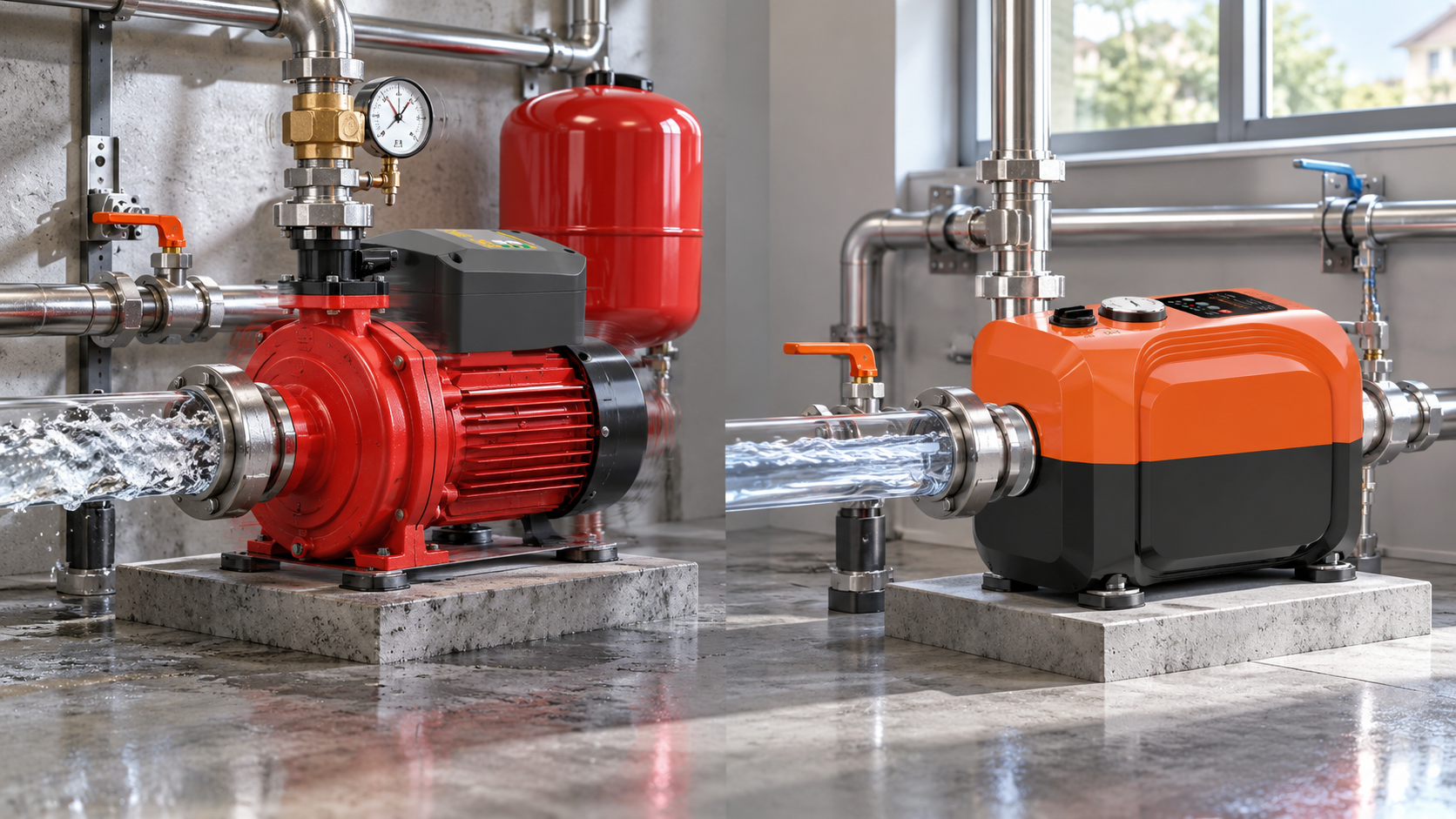
V. Fixed-Speed vs. Variable-Speed Intelligent Pumps
1. Fixed-Speed Intelligent Pumps
An Intelligent Pump with set speed automatically begins and stops based on pressure, flow, or both. Once started, the motor operates at a fixed operational speed. This control is usually used in an automatic pressure booster pump or an automatic booster pump for residential use.
This type is easier to control and is usually more cost-effective than a variable-speed model. It is suited where automatic operation is the major need and variations of water demand are limited.
The motor has no speed adjustment; thus, pressure may vary when outlets are opened and closed. The pump runs at full speed throughout the time it is running, even when the required flow is low.
2. Variable-Speed Intelligent Pumps
The booster pump is variable speed, and the motor speed is controlled to the real water demand. The controller uses the pressure feedback to maintain the supply pressure near to the set value. This is the reason this kind is also marketed as a constant pressure booster pump.
As more outlets open, the pump accelerates. When demand goes down, it slows down instead of continuing at maximum output.
This makes a variable-speed intelligent water pump useful in systems with a dynamic demand for water. It can also be called an inverter booster pump, VFD booster pump, or variable speed constant pressure water pump depending on your market. You still need to cross-reference these names with the actual motor and control system.
A variable speed concept could reduce power consumption in partial load operation. But it’s not a constant percentage of savings. Depends on pump selection, pressure setting, time of use, system resistance and how often the system operates at less than maximum demand.
| Comparison | Fixed-Speed Intelligent Pump | Variable-Speed Intelligent Pump |
| Motor speed | Fixed during operation | Changes with water demand |
| Main control | Automatic start and stop | Automatic start, stop, and speed adjustment |
| Pressure | Changes within the control range | Remains closer to the set pressure |
| Partial-load operation | Runs at full speed | Can operate at a lower speed |
| Control structure | Simpler | More advanced |
| Initial cost | Usually lower | Usually higher |
| Suitable application | Basic automatic water supply | Changing demand and constant-pressure supply |
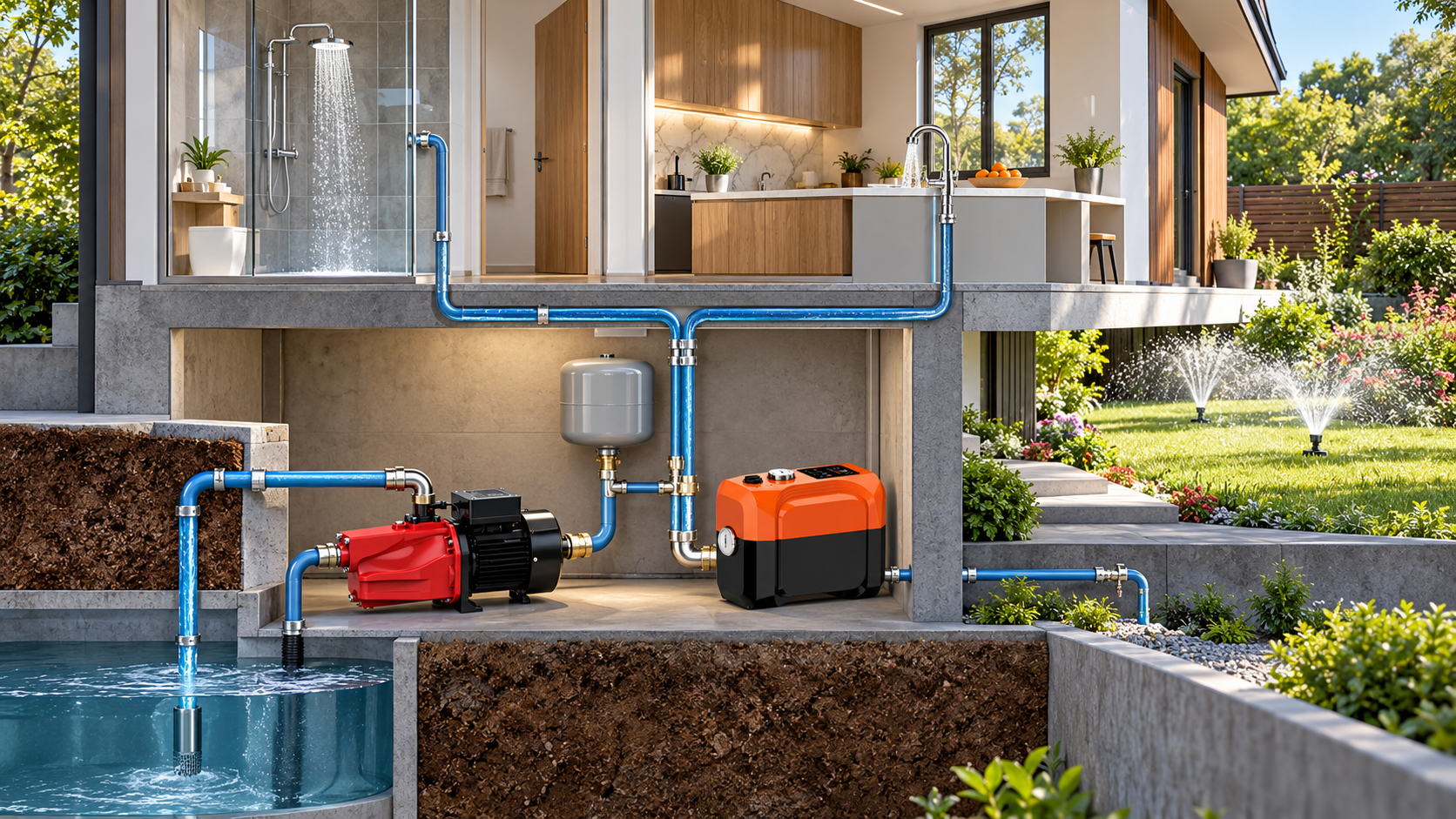
VI. Common Intelligent Pump Applications
1. Building Water Pressure Boosting
An Intelligent Pump can start up automatically when the system pressure declines and turn off when there is no longer a demand for water. It is suitable as a water pressure booster pump for domestic use and for pressure boosting in flats, offices, stores, and other buildings.
A fixed-speed home booster pump can handle basic pressure boosting. If a number of outlets are likely to open at different times and the needed flow varies often, a variable-speed intelligent booster pump is more suitable.
2. Water Tank Supply Systems
An intelligent water booster pump for residential use can transfer water from a ground-level or roof storage tank into a pressurised supply line. The pump must supply the appropriate flow after adding vertical lift, pipe loss, and required outlet pressure.
The controller can automate operation, but it cannot make up for a pump that is too tiny. You also need to examine the water level in the tank and the manner of dry-run protection.
3. Shallow-Well Water Supply
This type of pump is excellent for drawing water from a suitable shallow well or subterranean tank. The suction pipe must be airtight, suitably dimensioned, and within the real suction capability of the pump.
A normal centrifugal Intelligent Pump that does not have self-priming capability requires water to come to the input itself. Intelligent control will not enable a non-self-priming pump to draw air out of the suction line.
4. Apartments and Small Commercial Buildings
Water use can vary greatly during the day in apartments, offices, restaurants, and small commercial facilities. A domestic water pressure booster pump with constant-pressure control can modify its output as the number of outlets in use changes.
You should choose the pump from the predicted simultaneous flow, not from the total number of outlets. Look at peak demand, inlet pressure availability, needed output pressure, and the pump curve all together.
5. Irrigation and General Water Supply
An Intelligent Pump can adjust pressure for small irrigation, tank filling, cleaning, and general water-supply systems. The automatic start and stop can decrease the requirement for manual switching.
You still need to choose the pump for the irrigation flow, operating pressure, water source, daily running time, and control technique. An Intelligent Pump that is designed for brief building-water cycles may not be appropriate for several hours of continuous watering if its duty rating does not allow it.
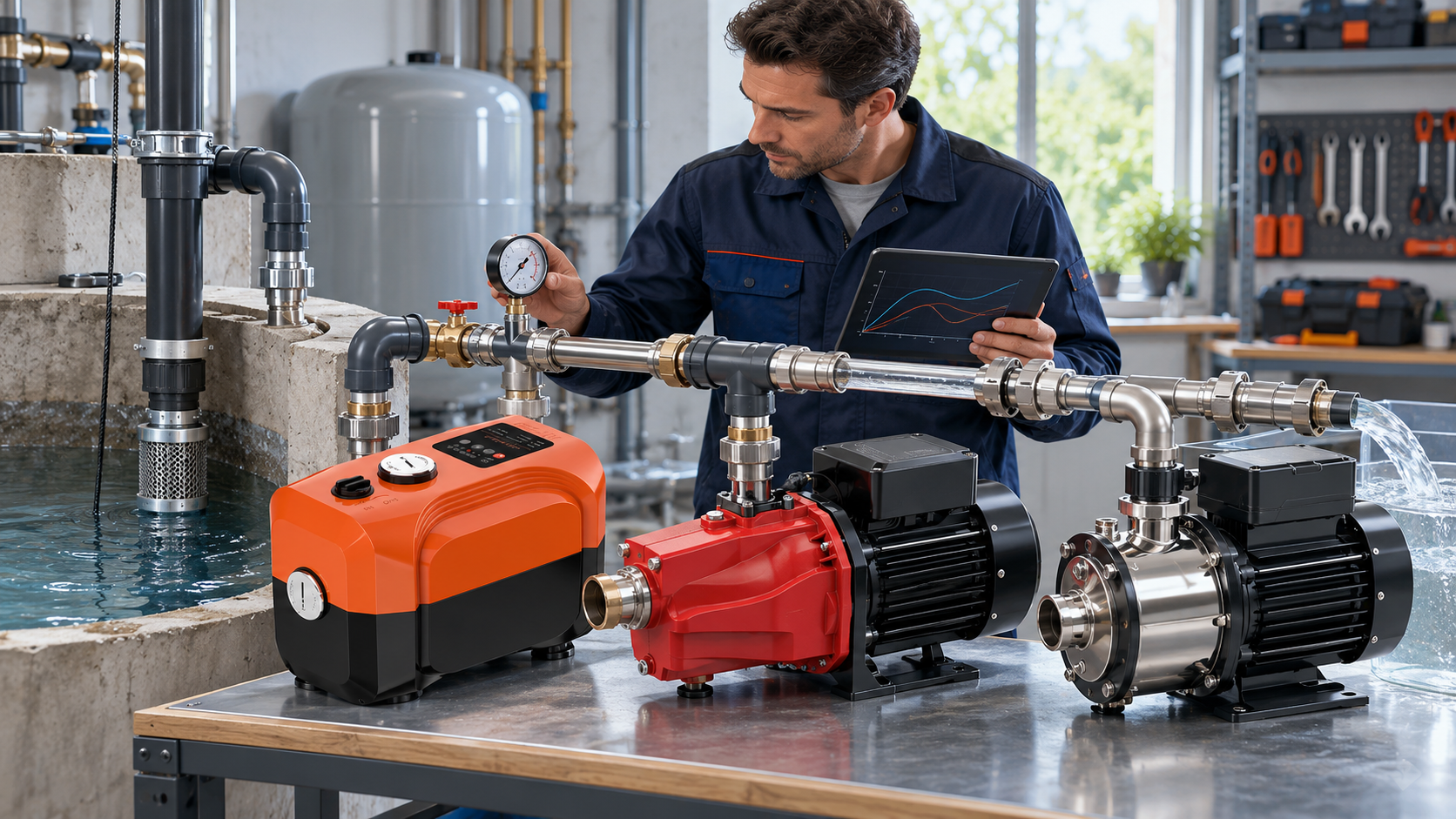
VII. How to Choose the Right Intelligent Pump
1. Match the Required Flow and Total Head
Begin with the required flow and total head, not motor power. Total head includes vertical lift, friction loss, and the pressure required at the final outlet.
A simple guide is:
Total head = vertical lift + pipe and fitting loss + required outlet pressure
Approximately 10 metres of water head equals 1 bar of pressure. If the system requires 3 bar at the outlet, this represents about 30 metres of pressure head before you add vertical lift and pipe loss.
After calculating the operating point, check whether the pump curve provides the required flow at that head. Maximum flow and maximum head cannot occur at the same time.
This allows you to compare Intelligent Pump models by useful performance instead of choosing several products with similar power but unsuitable pump curves.
2. Choose Fixed-Speed or Variable-Speed Control
If the major requirement is automatic start and stop and the predicted water demand is reasonably consistent, choose a fixed-speed Intelligent Pump. A simpler design can offer a more economical alternative for basic pressure boosting.
Choose a variable-speed Intelligent Pump for systems with varying demand that require more stable pressure. It is more appropriate when many outlets can open and close in operation.
This provides a clear distinction between entry-level and higher-level models. It’s not in the looks, in the size of the display, or even in the usage of the phrase “smart”, but in how well they control.
3. Confirm the Water Source and Inlet Conditions
Check whether the water originates from a storage tank, municipal pipe, shallow well or other source. The requirement for the pump’s self-priming ability and the available inlet pressure are determined by the inlet situation.
If the pump is above the water level, check the actual suction lift and the layout of the suction pipe. Air leaks, small pipes, too many bends, and a broken foot valve can all hinder a self-priming Intelligent Pump from drawing water properly.
If you are choosing a mains water booster pump, check that local regulations allow direct boosting. Some systems require a break tank, instead of a direct connection from the pump to the public supply.
4. Check the Pressure Setting Range
The Intelligent Pump selected must be able to deliver the target pressure at the appropriate flow. Turning the controller setting up does not increase the hydraulic capability of the pump.
If the desired pressure is over the pump curve, the controller may run the motor at full speed without achieving the preset. This might result in continual running, increased temperatures, and unstable operation.
You should compare the needed pressure to the full variable speed operating range, not just the maximum head of the pump.
5. Match Voltage, Frequency, and Electrical Load
Check your target market’s voltage, frequency, phase, rated current, plug and cable requirements. The electrical supply must be adequate for the entire pump system, including motor and controller.
The large range of input voltages shown for the electronic controller does not mean that all motors attached to it can use the same range. You have to check the tested controller/motor combo.
For bulk orders, unambiguous electrical model numbers will prevent physically similar pumps with differing internal configurations from being combined in stock.
6. Check the Sensors and Control Logic
Verify whether the Intelligent Pump has a pressure sensor, a flow sensor, or both. You may also want to see how the controller chooses when to start and stop.
For systems with very little or fluctuating flow the minimum observable flow can affect operation. When the flow is lower than the detection range of the sensor, the pump may stop, but a little exit may still be open.
Also examine the restart latency, the pressure recovery, leak response and frequent-start protection. These options allow you to control how the pump will operate in case of a tiny leak in the pipeline or rapidly changing water demand.
7. Confirm the Protection Functions
Common Intelligent Pump protection functions may include:
- Dry-run protection
- Overcurrent protection
- Overvoltage protection
- Undervoltage protection
- Motor overheating protection
- Locked-rotor protection
- Frequent-start protection
- Automatic restart after water recovery
The function name does not tell how the protection is implemented. A water pump with dry run protection can be developed using current, pressure, flow, or an external water level sensor.
Please confirm the trigger condition, stopping time, fault display, reset mechanism, and automatic restart logic before ordering. This is a better comparison than just counting the number of protection icons in a catalogue.
8. Confirm Materials and Liquid Conditions
Verify the construction materials for the pump body, impeller, shaft, mechanical seal, and internal water channel. The materials must be compatible with the water quality and operating temperature.
In the right situations, stainless steel offers higher corrosion resistance, although engineering plastics can cut weight and resist some water conditions. The final choice should be made on the entire material arrangement, rather than the pump-body material alone.
An improper liquid will cause corrosion, scale formation, seal damage, or impeller wear that cannot be prevented by intelligent control.
9. Check Installation and Noise Requirements
Check the installation place, available space, inlet and outlet direction, pipe support, waterproof protection, and the allowable noise level.
An integrated smart water pump can reduce the number of external control elements, but it still requires suitable pipe sizing and stable installation. Pump connections should not carry the whole weight of rigid pipes.
If you require a quiet booster pump, compare at the real operating point. Noise might be caused by the motor, excessive speed, vibration, air in the suction pipe, cavitation, or poor installation.
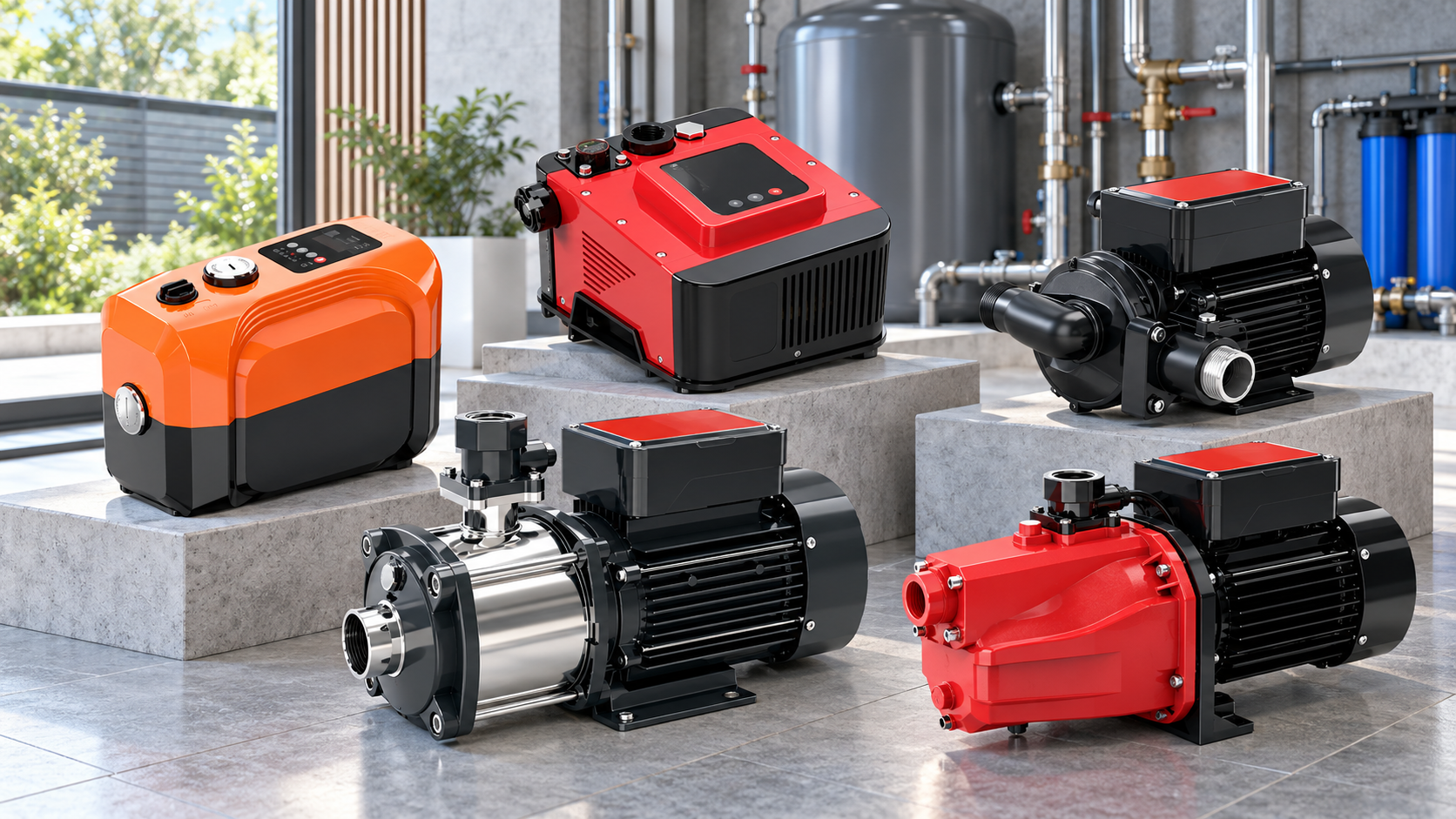
VIII. Building a Practical Intelligent Pump Range
1. Separate Basic Automatic and Variable-Speed Models
Use fixed-speed Intelligent Pumps for customers who just need automatic start and stop at a reduced price. For applications that require more constant pressure and varied output, use variable-speed intelligent booster pumps.
This gives each series a distinct place. It also precludes fixed-speed and variable-speed items from being viewed as interchangeable just because they feature electronic controls.
2. Compare Models at Real Operating Points
Sort Intelligent Pump models by the flow they provide at common pressure or head locations. Don’t judge your range purely on motor power, maximum flow, and maximum head.
For example, two models with varying motor power may create identical flow at the pressure you usually need in your market. Carrying both could be an additional SKU without an additional valuable app.
You can look at pump curves at real operating locations to determine if you need higher flow, higher pressure, a quieter unit, or a more compact type.
3. Keep the Motor and Controller Matched
The motor, controller, pressure sensor, and control programme must be tested as one unit. A controller rated for a specific power will not always work for all motors of the same kilowatt rating.
Compatibility can be affected by motor type, rated current, starting current, speed range, cooling and control mode. Therefore, for each Intelligent Pump series, you need an approved motor-and-controller list.
This stops untested combinations from being included in large orders and reduces failures due to electrical parts not matching.
4. Test Functions Before Bulk Ordering
If you are building a water pump for an OEM, then run the sample through full operational cycles instead of powering it up for a few seconds. The test should include beginning, pressure management, low-flow operation, pausing, restarting, dry-run reaction, and recovery after water returns.
For a constant pressure Intelligent Pump, measure the pressure with one outlet open, and then with numerous outlets operating. This will indicate if the controller is ramping speed smoothly and if the pump curve can sustain the pressure setpoint.
You should also verify the fault display and how to reset it. When you compare one booster pump manufacturer with another, clear test results and defect information tell you more than the number of function icons in a catalogue.
5. Match Electrical Versions to the Target Market
Before you confirm the product range, think about the voltage, frequency, plug, cable length, display language, and pressure unit. These differences should appear in explicit model codes and packing information.
In case of a common housing utilised for different electrical versions, the nameplate, carton, manual and internal product code shall be identical. This decreases the likelihood of offering the incorrect version in mixed or repeat orders.
IX. Conclusion
An Intelligent Pump uses sensors and electrical control to start, stop, regulate or protect the water pump depending on the system conditions. Auto operation is generally provided by fixed-speed types. Variable-speed Intelligent Pumps can vary motor speed and keep pressure closer to the specified setting.
You still have to check flow, total head, water source, suction, pressure setting, electrical supply, sensors, protective logic, materials, and installation to select the suitable model. Intelligent control will not solve a wrong pump curve or a wrong installation.
If you are planning to design an Intelligent Pump range for distribution, wholesale or OEM supply, please provide your target application, needed flow and head, pressure setting, water source, voltage, frequency and required control features to HunGerät. We can help you compare fixed-speed and variable-speed applications and prepare appropriate Intelligent Pump models for your market.
X. FAQ
1. What Is an Intelligent Pump?
Intelligent Pump is a combination of a water pump, motor, sensors, and electronic control. It can start, stop, regulate, or protect the pump on the basis of pressure, flow, or water level conditions.
2. How Does an Intelligent Pump Detect Water Demand?
Most models show that the pressure in the pipe will drop when an outlet is opened. An intelligent pump with pressure and flow sensors can also use the flow information to verify water usage.
3. Does Every Intelligent Pump Use Variable-Speed Control?
No. Some Intelligent Pumps run at a set speed and only offer automatic start and stop. Variable-speed types can vary motor speed to meet demand.
4. What Is the Difference Between a Fixed-Speed and Variable-Speed Intelligent Pump?
A fixed-speed model runs at one pace all the time it runs. A variable-speed intelligent pump will alter the speed to maintain pressure closer to the specified value as water demand fluctuates.
5. Can an Intelligent Pump Maintain Constant Pressure?
An Intelligent Pump with variable speed can keep the pressure within its control accuracy and hydraulic range. If the needed flow is more than the available pump performance, it can not hold the specified pressure.
6. Does an Intelligent Pump Need a Pressure Tank?
Some integrated Intelligent Pumps can run without a separate big pressure tank. A small tank still helps with reducing starts, absorbing slight pressure fluctuations, and providing very small volumes of water.
7. Can an Intelligent Pump Work Without a Flow Sensor?
Yes. Some types use simply a pressure sensor, and the logic for starting, stopping, low-flow, and dry-running can differ from a dual-sensor Intelligent Pump.
8. How Does Dry-Run Protection Work in an Intelligent Pump?
The controller can detect dry running using current, pressure, flow, temperature, or an external water-level indication. Check the detection method, reaction time, reset mechanism, and the restart logic for each model.
9. Can Intelligent Pump Pressure Be Adjusted?
Most models have a control panel, button, or knob to set the intended pressure. The set point has to be within the pump curve and the safe pressure limitations of the pipeline.
10. What Happens If the Pressure Setting Is Too High?
The pump may run at the highest speed without delivering the required pressure. This can lead to continued running, higher temperatures, increased power usage, and inconsistent pressure management.
11. Can an Intelligent Pump Draw Water from a Shallow Well?
As long as the suction pipe is airtight and the lift is within its rated capacity, a self-priming Intelligent Pump will pull water from an appropriate shallow source. A non-self-priming unit requires flooded suction.
12. Can an Intelligent Pump Be Connected Directly to a Water Tank?
Yes. Before selecting the pump, check the available inlet pressure, tank water level, pipe size, and dry-run protection.
13. Can an Intelligent Pump Boost Municipal Water Pressure?
It can be, where direct boosting is allowed, and the inlet conditions match the pump needs. Some local systems require an intermediate storage tank, so you’ll want to check local water-supply restrictions.
14. Does a Variable-Speed Intelligent Pump Always Save Energy?
No. Energy savings depend on how often you run below full demand, the pressure setting, the size of the pump, and overall run time.
15. Can One Intelligent Pump Supply Several Outlets?
Yes, if the pump is delivering the total flow at the specified pressure. Add the predicted simultaneous demand instead of the maximum flow of each outlet.
16. How Do You Calculate the Required Flow for an Intelligent Pump?
Estimate the number of outlets that may be in use simultaneously. Determine the combined demand. Then confirm that the pump can deliver this flow at the total head, which is the lift, friction loss, and outlet pressure.
17. Can a Single-Phase Intelligent Pump Be Used in a Commercial Building?
Yes, if the flow, head, electrical rating, duty, and allowed starts/hour are the same as the application. Bigger or more important systems may require three-phase pumps or booster sets with more than one pump.
18. Can the Controller Be Replaced With a Different Model?
Only if the replacement is compatible with the motor, sensors, current, voltage, speed range, and control programme. Matching the kilowatt rating isn’t enough.
19. What Tests Should Be Checked Before a Bulk Order?
Check the start, pressure control, low flow operation, stop, dry-run protection, automatic restart, fault display, current, noise, and temperature. You should also test a variable speed model at multiple flow demands.
20. What Information Should You Provide When Ordering an Intelligent Pump?
Specify the required flow, total head, desired pressure, water supply, suction condition, voltage, frequency, application, control type, protection needs, order quantity. This information allows the supplier to supply the pump, motor, sensors and controller as a system.