I. Introduction
A circulation pump moves water or another liquid that works with it through a closed loop, also known as a return circuit. Some types may look the same, but they may have different rotor designs, control modes, materials, temperature ranges, and hydraulic capacities. Before you compare prices if you’re a pump seller, you need to separate heating circulators from models for cooling, hot water for homes, and factories. This guide explains how a Circulation Pump works, the main types of products, the important specs, and how to pick models that are right for your business.
II. What Is a Circulation Pump?
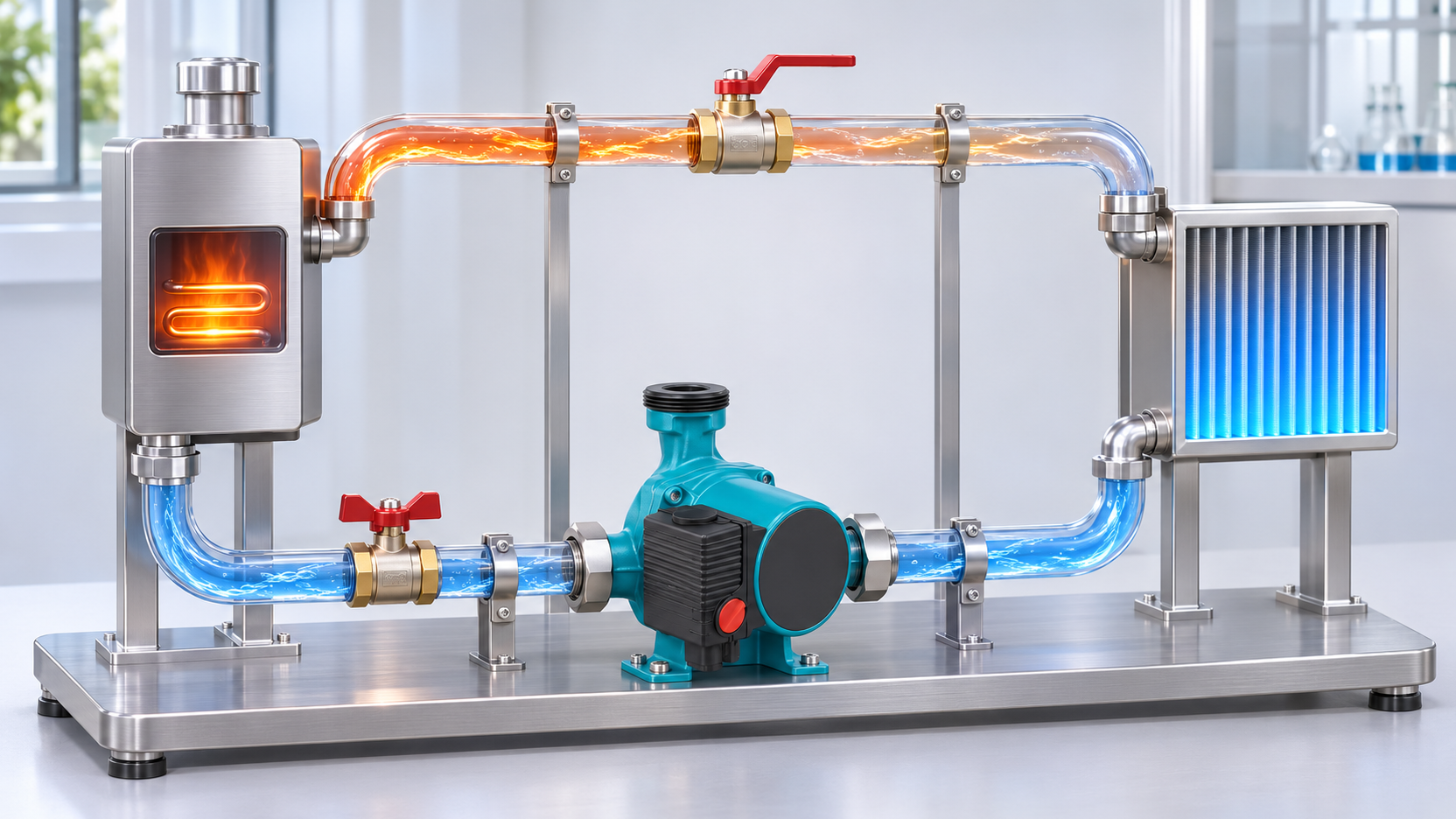
If you want to move liquid continuously or over and over again through a closed loop or return line, you need a circulation pump. A centrifugal impeller is used by most circulators, and they provide enough differential head to get past the system’s pipes, valves, heat exchangers, and other parts that are resistant to flow.
III. How Does a Circulation Pump Work?
1. The Motor Turns the Impeller
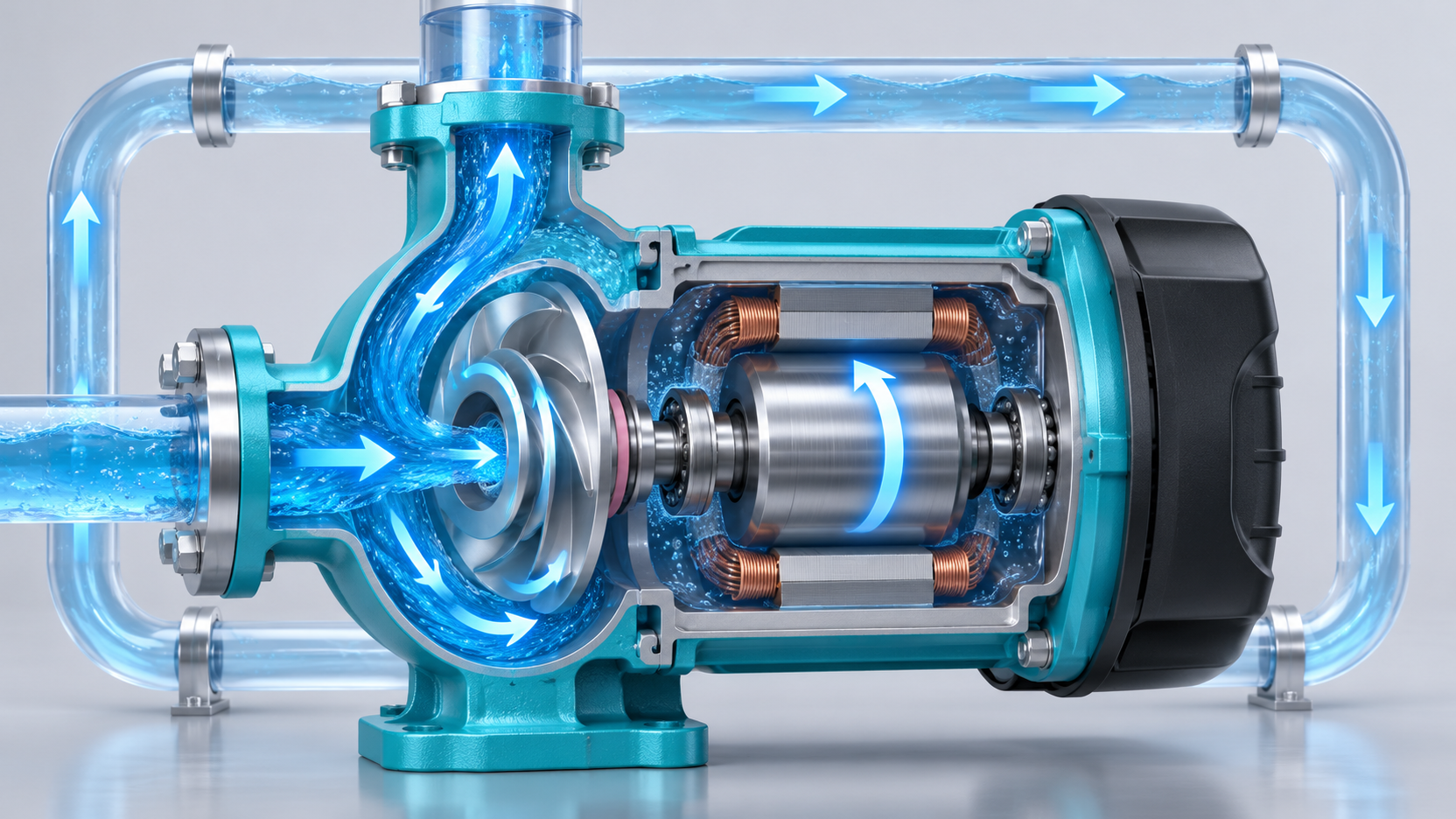
Inside the pump case, the motor turns an impeller. The liquid goes into the eye of the impeller, speeds up as it moves outward, and then leaves the casing with enough energy to keep going through the circuit.
2. The Pump Overcomes Circuit Resistance
In a filled closed loop, the Circulation Pump mostly fights against friction losses in the heat exchangers, pipes, valves, fittings, and connections. Where the pump curve and the system curve meet is where the real flow is. highest flow and highest head are not the same thing.
3. The Control Adjusts Pump Output
The fixed speed model can only be used on one curve. The multi-speed model, on the other hand, gives you more than one fixed curve. You can use constant-pressure, proportional-pressure, constant-speed, temperature-based, or external control to change the speed of the variable-speed circulation pump. The modes are different for each model, so you should make sure you know what modes are out there before you advertise them.
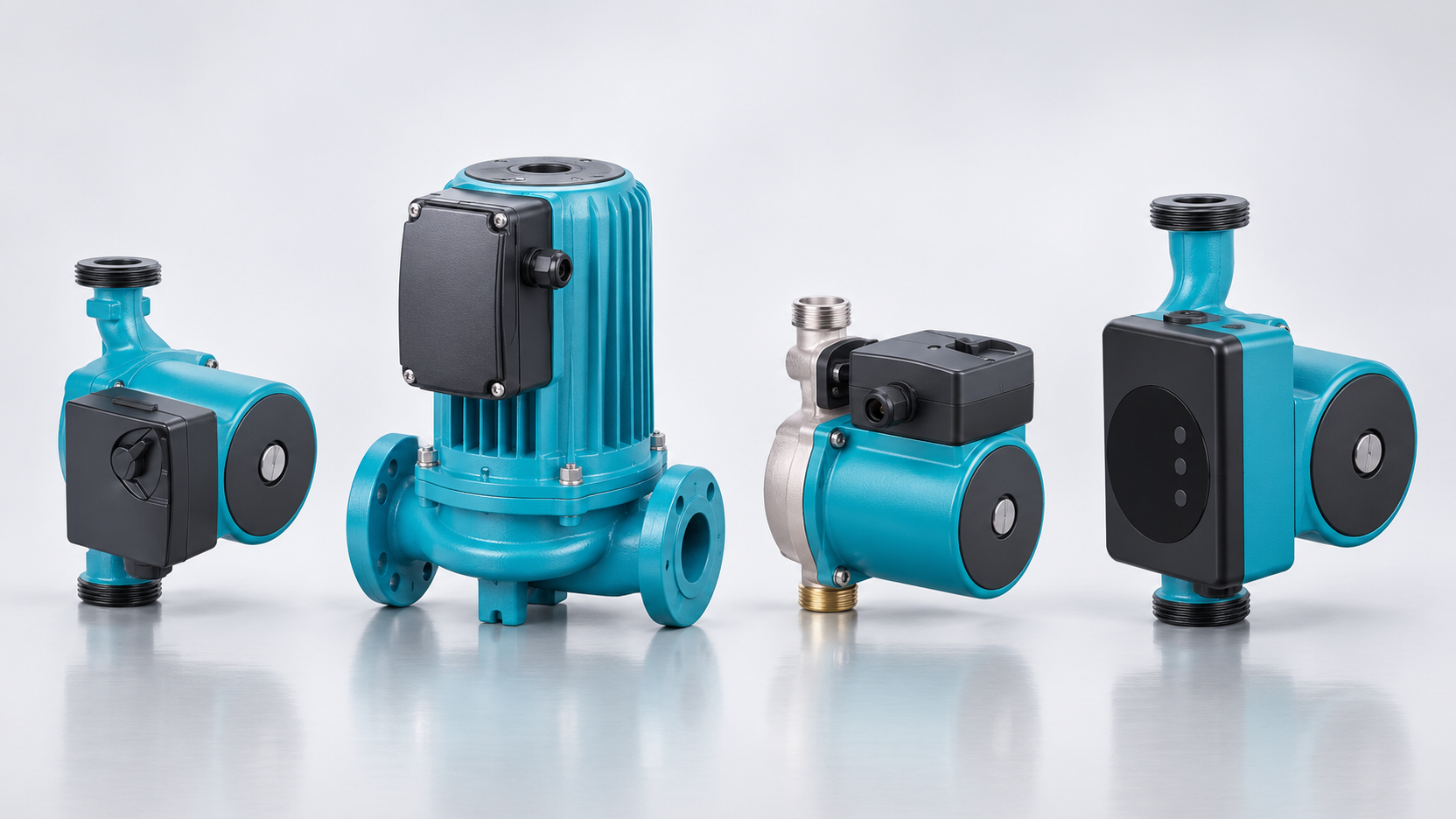
IV. What Are the Main Types of Circulation Pumps?
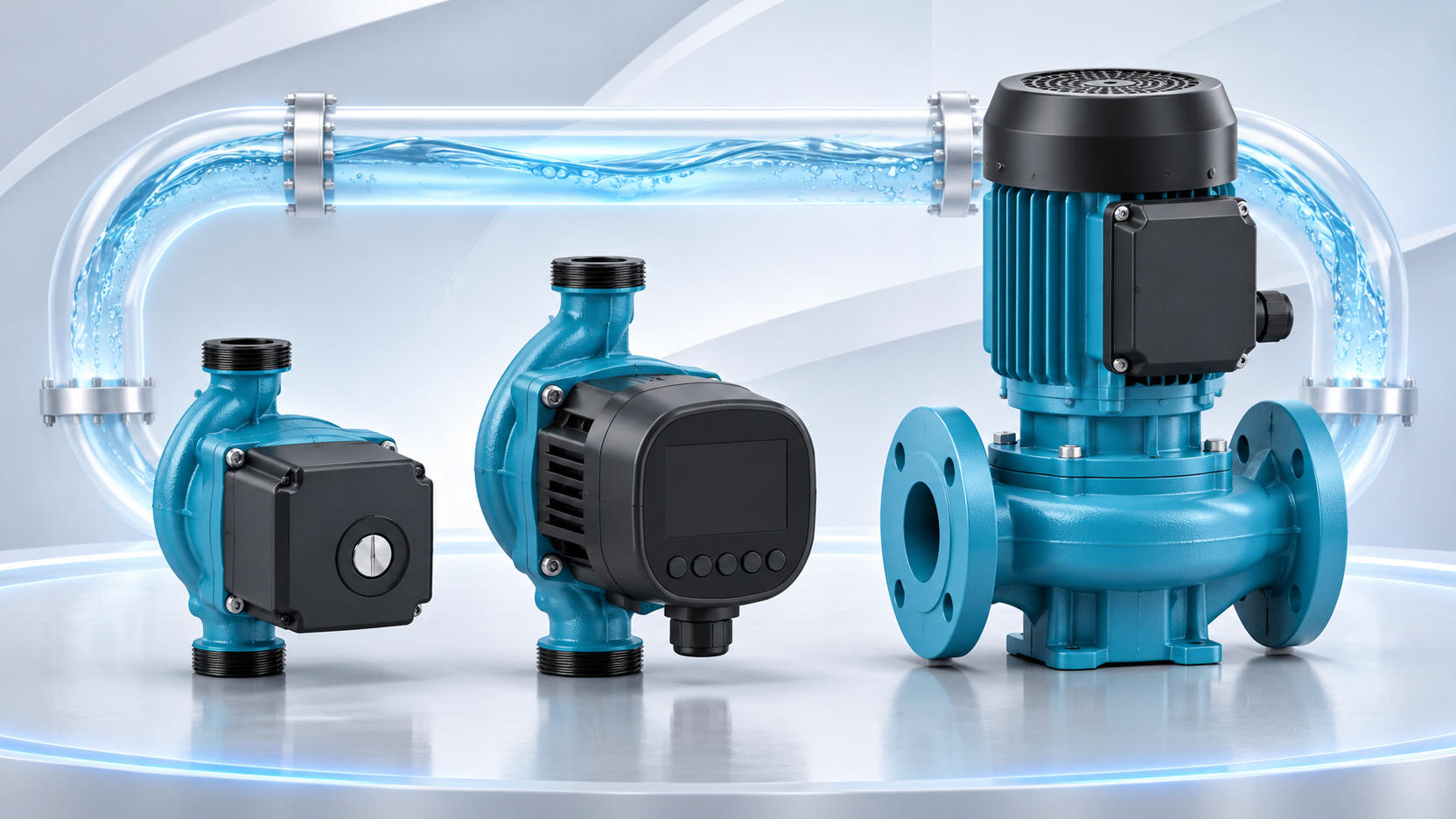
1. Wet-Rotor Circulation Pump
The circulation liquid cools and lubricates the rotor and bearings in a wet-rotor Circulation Pump. There is no standard shaft seal in the design. Small in size, these circulators are often used for heating or hot water needs in homes and small businesses. The fluid is part of the environment in which the motor works. Check the temperature, fluid quality, mounting location, material, and dry run limits.
2. Dry-Rotor Circulation Pump
A mechanical seal keeps the liquid being pumped away from the motor in a dry-rotor circulation pump. The motor is usually cooled by air, and seals, bearings, and other parts of the pump can be changed to fix it. Dry-rotor versions are usually used for heavier jobs, but you should check out how noisy they are, how easy they are to maintain, what materials they use for seals, and how well they support extra parts before adding them to your range.
3. Fixed-Speed and Multi-Speed Circulation Pump
A fixed-speed circulation pump has a motor speed that doesn’t change. A multi-speed circulation pump, on the other hand, has different settings that can be changed by hand or from outside the pump. The designs are easy to show and defend, but you need to have a curve written down for every speed that is possible to be sure that the model does its job.
4. Variable-Speed and Smart Circulation Pump
Smart circulation pumps or pumps with variable speeds change the motor speed automatically based on the control mode you choose or an outside signal. This can stop pumps from making extra work when the system’s needs change. The value is based on the curves that are provided, the control logic, the interface, the fault information, and proof of energy performance. Instead of relying on the word “smart,” these differences have been shown to be the difference between standard and higher-level products.
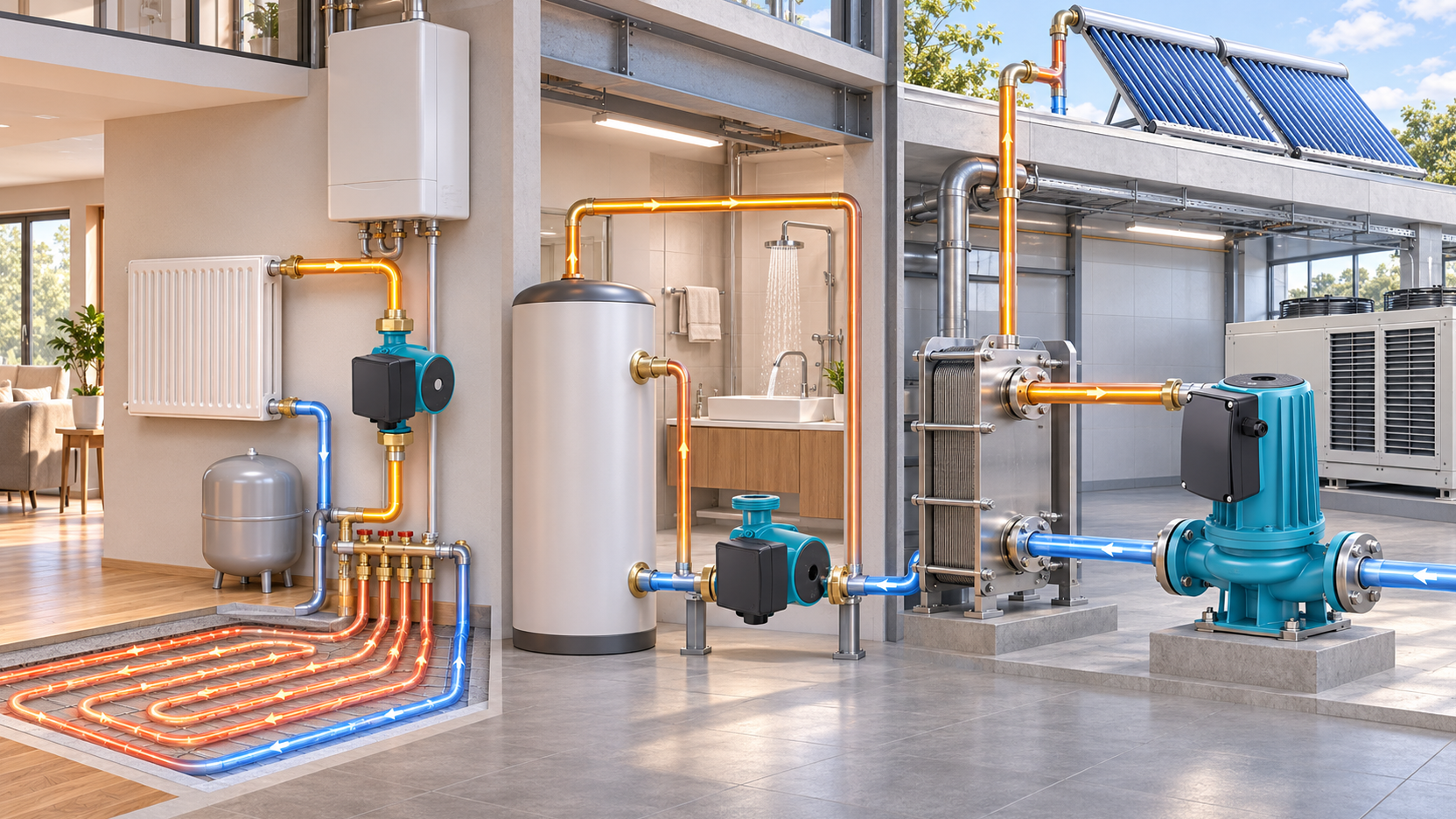
V. Where Are Circulation Pumps Used?
1. Heating and Hydronic Systems
Pumps that move heated water or a water-glycol mixture that works with the system around the loop are used in boiler, radiator, underfloor heating, and hydronic systems. Find out the required flow, friction head, liquid temperature, glycol concentration, control valve arrangement, and housing material before suggesting a heating circulator.
2. Domestic Hot-Water Recirculation
A supply-and-return loop moves water through a hot water recirculation pump, which sends cooler water back to the heater. This circuit might carry drinkable water and might need to be made of bronze, brass, stainless steel, or another approved material that doesn’t rust. Instead of selling a cast-iron water heater for the home, make sure the material and certification are right for the market.
3. Cooling, Solar, and Industrial Loops
When working at low temperatures, cooling, solar thermal, heat recovery, and industrial circuits may need a high liquid temperature, the ability to work with glycol, continuous duty, or control from outside the circuit. A basic water-circulation label won’t guarantee a thermal loop that works for all types of fluids, so ask about the full range of fluids and temperatures.
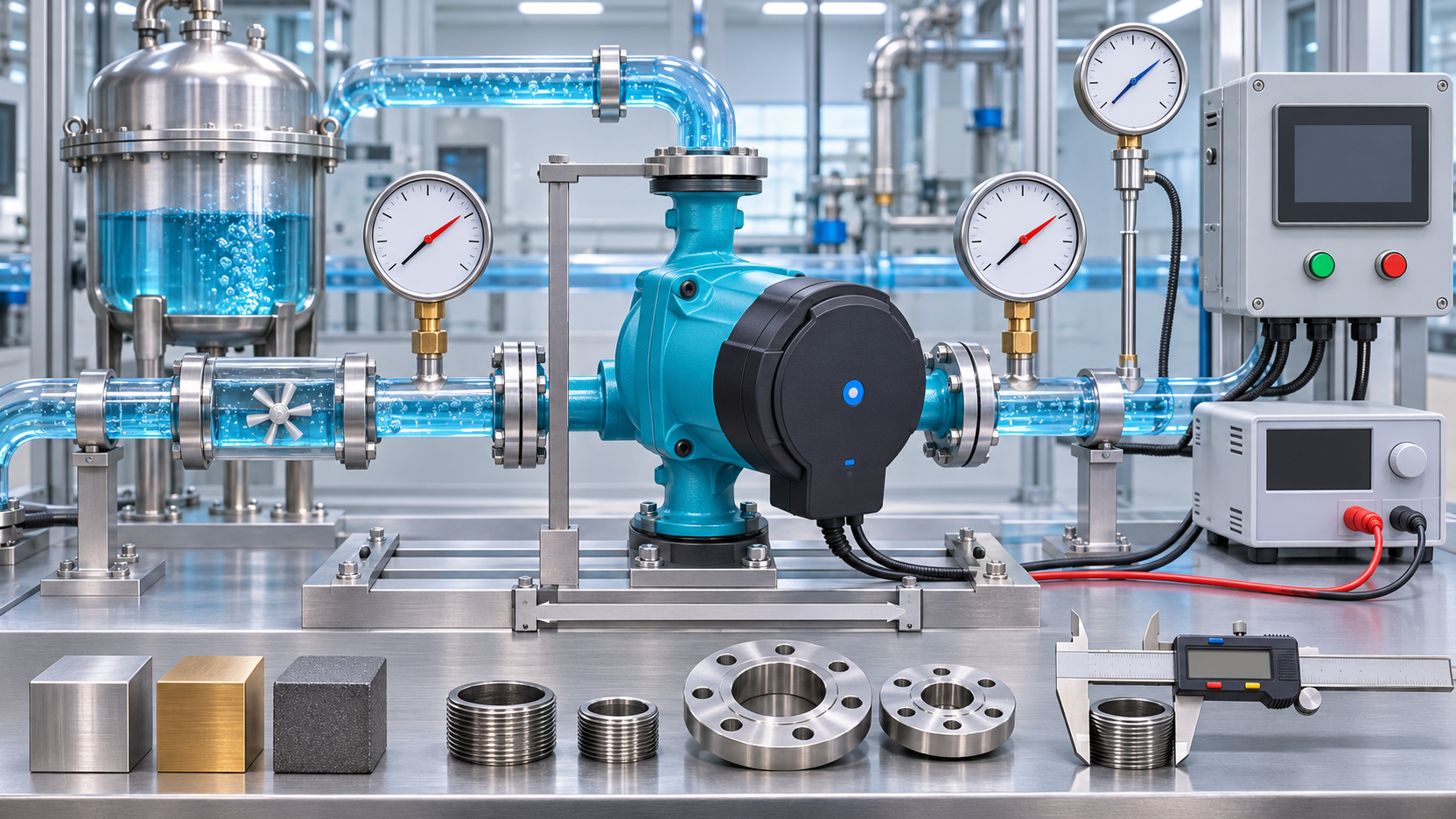
VI. Which Circulation Pump Specifications Matter Most?
1. Flow, Head, and Pump Curve
The flow rate and overall resistance of the circuit will help you choose the right pump. Check out the curve at the real duty point, not just the maximum flow, maximum head, or connection size.
2. Liquid, Temperature, and System Pressure
Check the liquid, the glycol concentration, the working temperature range, the room temperature, and the highest pressure that the system can handle. Also, look at the cavitation boundaries or minimum inlet pressure when the liquid is very hot. Because of the type of pump, these rules must be followed.
3. Motor, Control, and Electrical Data
The voltage, frequency, phase, input power, current, motor technology, speed range, control modes, signal sources, communication, standby power use, and safety features are all things that matter. When selling an energy-efficient Circulation Pump, don’t just say that it is efficient; back it up with test results and the right geographical efficiency rating.
4. Housing and Wetted Materials
Cast iron is used in closed heating circuits. Bronze, brass, stainless steel, or other similar materials can be used for applications that involve hot water and corrosion in the home. Check out the bearings, seals, gaskets, shaft, case, and impeller. If you change one wetted part, it could affect other parts that are certified or compatible.
5. Connections, Dimensions, and Installation Limits
Make sure you check the thread or flange standard, the nominal connection size, the length from port to port, the motor position, the mounting orientation, the cable entrance, the protection of the enclosure, the insulation shell, and the service clearance. This is especially important for replacement sales, since a good curve doesn’t always mean the parts will work together.
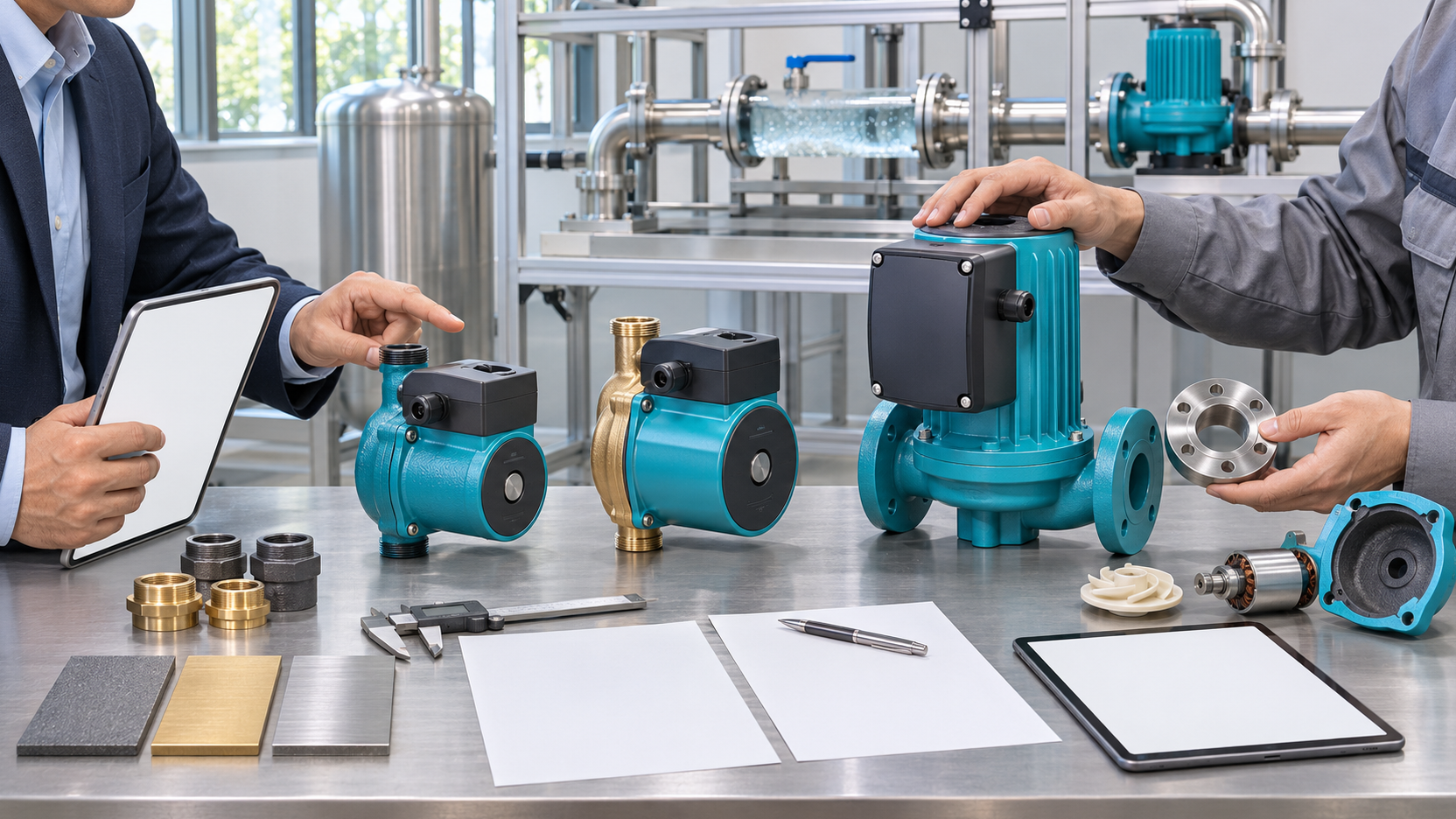
VII. How Should You Choose Circulation Pump Models for Your Market?
1. Define the Application Before Comparing Models
Ask for quotes on separate circulators for heating, hot water for homes, cooling, solar, and commercial use. This way, you won’t match pumps with similar curves but different materials, temperature limits, or approvals.
2. Compare Models at the Same Duty Points
Choose flow and head points that are common to the applications you’re testing and check the performance, input power, current, and noise at those points. We can tell from this if the next model has useful hydraulic range or is the same SKU as the last one.
3. Separate Material and Control Versions Clearly
For designs made of cast iron, bronze, or stainless steel, as well as for controllers with a set speed, multiple speeds, or variable speeds, use different model numbers. The nameplate, manual, carton, barcode, and certificate must all have the same layout so that different versions don’t get mixed up in stock.
4. Verify Samples, Documents, and Spare Parts
Before placing a large order, you should check the curve, the input power, the current, the temperature, the noise level, the control modes, the alerts, the leakage, and the restart behaviour. Get size drawings, instructions on how to wire and control the device, a list of materials, certificates, fault information, part diagrams, and a list of the replacement assemblies that are compatible with the approved model.
VIII. Conclusion
It is important for a circulation pump to be compatible with the circuit’s hydraulic duty, liquid, temperature, materials, control method, connectors, and market needs. Different types of wet-rotor, dry-rotor, fixed-speed, and variable-speed models are used for different types of products, so you should look at the whole setup instead of just the connection size or maximum head.
If you want to buy Circulation Pumps for private label, distribution, or OEM, you need to tell HunGerät about your needs. You should include information about the liquid, temperature, system pressure, connections, voltage, control mode, materials, certifications, your target market, and the number of pumps you want to buy. We can talk about how to set up the pumps so that they work with your range.
IX. FAQ
1. What Is a Circulation Pump?
Circulation Pump – A Circulation Pump circulates water or other appropriate liquid in a closed loop or return circuit.
2. How Does a Circulation Pump Work?
Its motor drives a centrifugal impeller that generates flow and sufficient differential head to overcome resistance in the circuit.
3. What Is the Difference Between a Circulation Pump and a Recirculation Pump?
The terms often overlap. “Circulation Pump” applies also to heating, cooling and other closed loops. “Recirculation pump” is often used for home hot-water return systems.
4. Is a Circulation Pump a Centrifugal Pump?
Most water circulators use a centrifugal impeller, although “circulation” refers to the overall function of the pump rather than a full hydraulic categorisation.
5. What Is the Difference Between a Circulation Pump and a Booster Pump?
Circulation Pump – A pump that circulates liquid around a loop. Mostly overcomes circuit resistance. A booster pump enhances the delivery pressure to outputs or downstream equipment.
6. What Is a Wet-Rotor Circulation Pump?
It is a circulator that cools and lubricates the rotor and bearings with the fluid being pumped, taking the place of the traditional motor shaft seal.
7. What Is a Dry-Rotor Circulation Pump?
It is a circulator with a mechanical seal separating the motor from the liquid. The motor is air cooled and typically maintainable.
8. How Do You Size a Circulation Pump?
Determine the total circuit resistance and the required flow and select a pump that has a curve that goes through that duty point in an appropriate operating range.
9. Can a Circulation Pump Be Too Large?
Yes. Oversizing a pump can cause increased power consumption, flow velocity, valve noise, control issues and wear and tear on the components.
10. Can a Circulation Pump Run Continuously?
Yes, assuming the model is rated for continuous service and is running within its liquid, temperature, pressure, cooling and installation limits.
11. What Is an ECM Circulation Pump?
It employs an electronically commutated permanent-magnet motor, often with variable-speed control and various pressure-control modes.
12. What Does a Variable-Speed Circulation Pump Do?
It varies the motor speed to track a specified curve, pressure mode, temperature condition or an external control signal.
13. Which Circulation Pump Is Used for Central Heating?
Select a heating circulator with the suitable curve, temperature range, material, control mode and electrical version for the hydronic circuit.
14. Which Circulation Pump Is Used for Domestic Hot Water?
Select a model with corrosion-resistant wetted materials and the potable-water approvals required in the target market.
15. Can a Circulation Pump Handle Glycol?
Only in the fluid type, concentration, temperature and performance modifications approved by the manufacturer.
16. Why Is a Circulation Pump Noisy?
It can be the result of air, too high speed, cavitation, wrong flow, worn bearings, wrong mounting or vibration in the system.
17. Why Does a Circulation Pump Become Hot?
The pump can be running at system-fluid temperature. Other causes of anomalous heat include obstructed flow, dry running, wrong voltage, overload or motor fault.
18. Why Is a Circulation Pump Running but Not Moving Water?
Possible causes include: trapped air, closed valves, a clogged impeller, improper rotation, insufficient inlet pressure or a pump curve that can not overcome circuit resistance.
19. What Should You Test Before Ordering in Bulk?
Test flow, head, input power, current, temperature, noise conditions, control modes, protection response, leakage, dimensions and restart behaviour.
20. What Information Should You Send HunGerät for Selection?
Send application, needed flow and head, liquid, temperature, system pressure, connections, voltage, controls, materials, certifications, target market and projected order quantity.