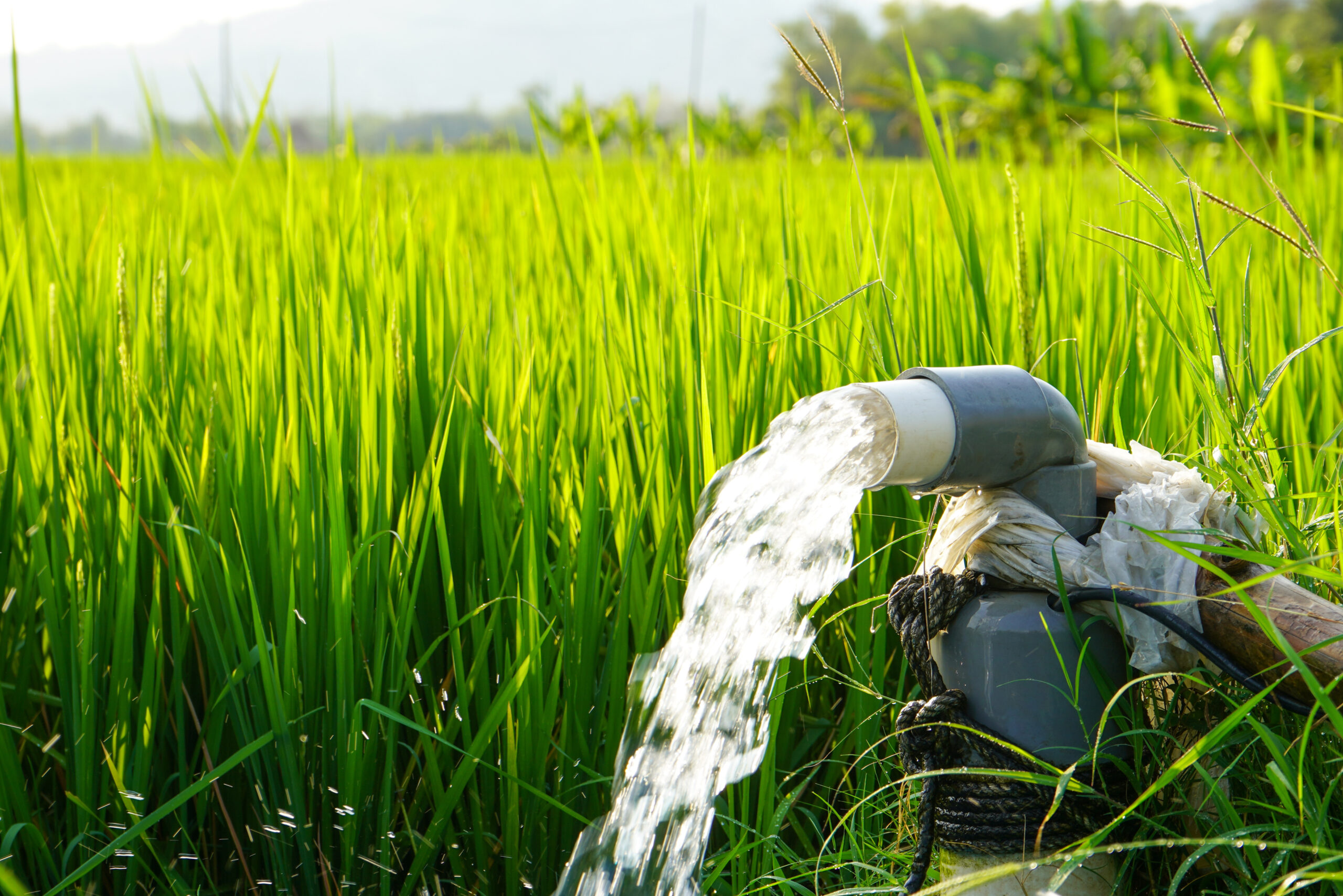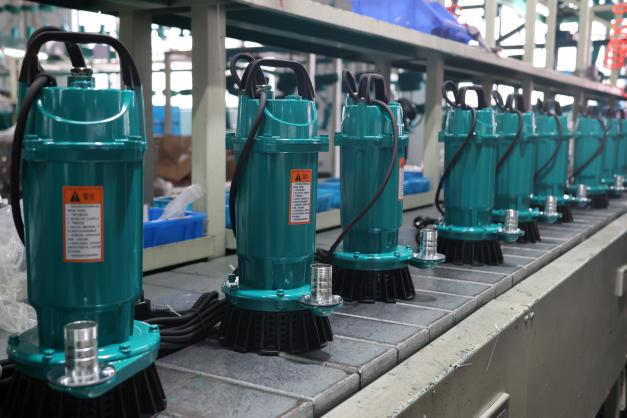
Borehole pump catalogues often combine hydraulic design, motor location, power supply and casing diameter as if they were all the same type of classification. This makes similar models appear different, and truly different pumps appear interchangeable. If you sell borehole submersible pumps, you need a more defined structure. This article covers the various types of borehole pumps, how they work, where each type fits and what you should check before putting together a product range or making a bulk order.
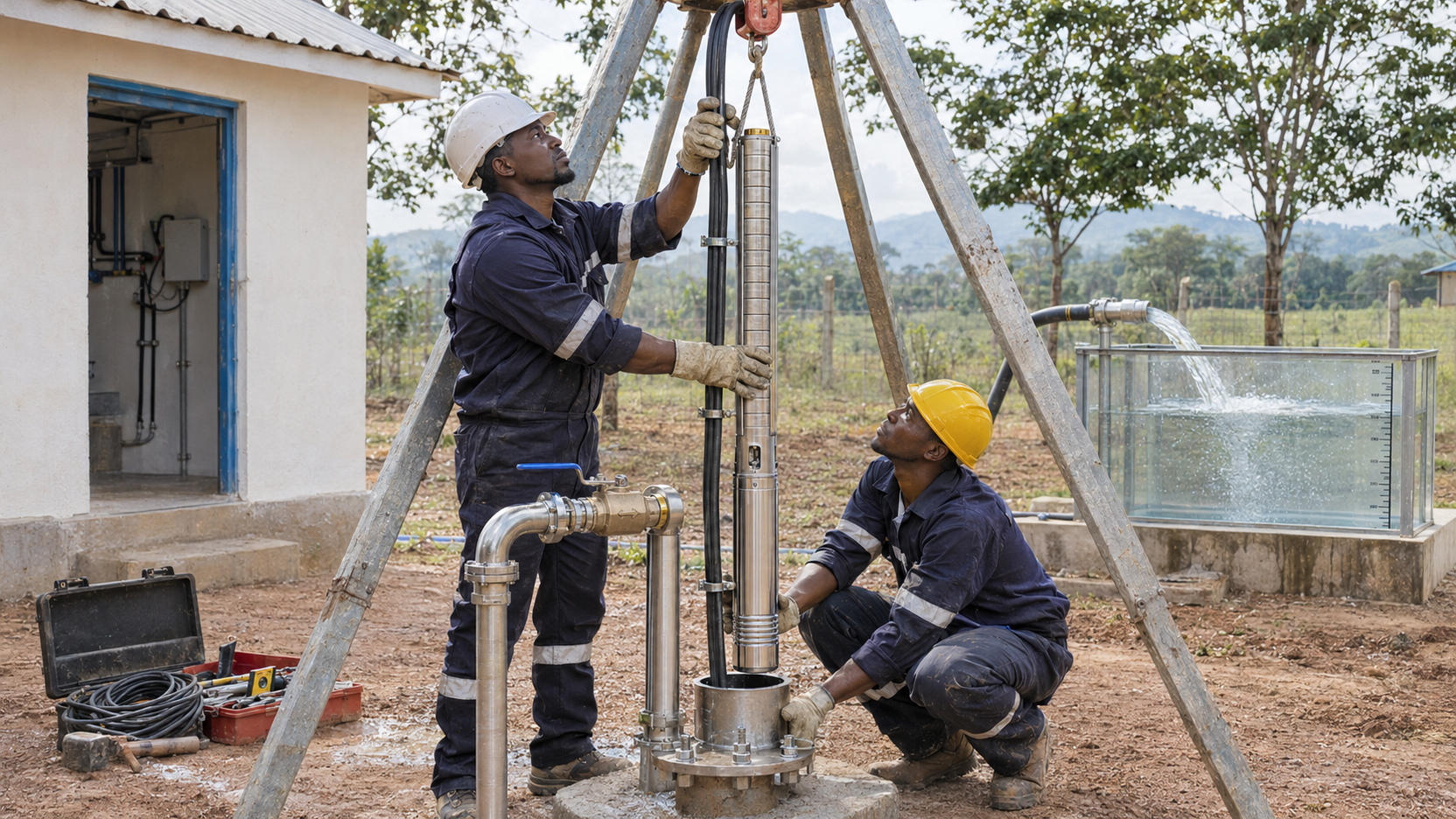
I. What Is a Borehole Submersible Pump?
A borehole submersible pump is a thin vertical pump that is submerged below the water level of a drilled borehole or well. The pump end and sealed submersible motor operate under water, pumping water through a rising main to the surface. Most clean-water models have numerous centrifugal stages, each generating head in a relatively small pump diameter.
The terms borehole pump, deep well submersible pump and submersible well pump are often used to designate the same general product category. However, full specification has to include hydraulic design, pump diameter, motor, power supply, controller, materials and anticipated water quality.

II. How Does a Borehole Submersible Pump Work?
1. Water Enters the Pump
The water-bearing formation or well screen feeds the groundwater into the borehole towards the pump inlet. The pump should be located below the lowest projected pumping water level to keep the inlet submerged. Its location must also consider the well screen, the sediment zone, the bottom clearance and the motor cooling needs.
2. The Pump Builds Head
In a multistage centrifugal borehole pump each revolving impeller adds energy to the water and each diffuser guides it into the next stage. Adding stages improves the head the pump can develop. Maximum flow and maximum head, are not one operational point. The actual flow at that head has to be read off the pump curve.
3. The Motor and Controller Supply Power
The pump is driven by a submersible motor using a short coupling. Depending on the version, the model might employ single-phase AC, three-phase AC, solar DC or AC/DC hybrid controller. Motor protection, cable size, starting technique and controller settings must be matched to the motor and not merely the pump power provided in the catalogue.
4. Water Moves to the Surface
The pump propels water through the rising main to a tank, irrigation system, pressure vessel or distribution line. A check valve limits backwards flow when the pump stops. Thus, the needed pump head is the vertical lift from the water level in the pumping well plus pipe and fitting losses and the pressure required at the discharge.
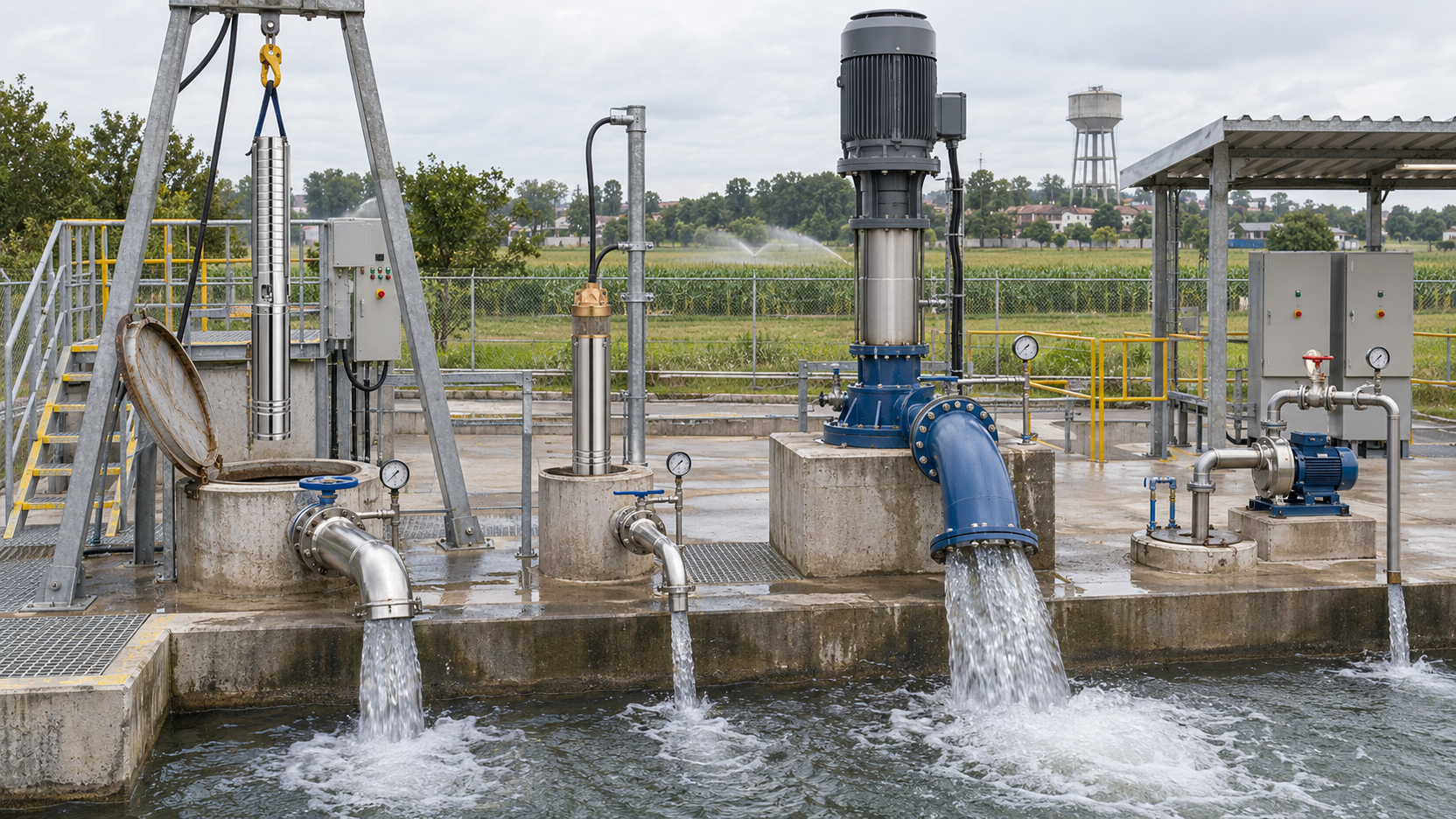
III. Main Types of Borehole Pumps by Hydraulic and Motor Design
1. Multistage Centrifugal Submersible Pumps
This is the most prevalent form of borehole submersible pump for clean groundwater supplies, irrigation, watering of livestock,k and municipal or industrial abstraction. Its slim multistage pump end may create high head while staying within the borehole casing. When comparing models, look at the full curve, recommended operating range, number of stages, pump diameter, sand limit, motor rating and material specification.
2. Helical Rotor Borehole Pumps
A helical rotor pump uses a revolving metal rotor inside an elastomer stator to pump a near fixed volume of water. This positive displacement design can be suitable for low-flow, high-head applications and some solar borehole pump systems. The rotor-stator pair is a wear set. Performance can be influenced by dry running, abrasive sand, water chemistry and stator temperature. Keep the pump model with the precise replacement set.
3. Lineshaft Deep-Well Turbine Pumps
A lineshaft deep-well turbine pump has the motor above ground with the pump bowls submerged in the water. The column transmits power through a long, vertical shaft. This design is capable of substantial water-supply or irrigation jobs and provides access to the dry motor, although the shaft, intermediate bearings, column alignment, lubrication and installation length contribute to the service requirements. It is an independent product system from the tiny submersible motor pump.
4. Surface and Jet Pumps for Shallow Sources
Surface and jet pumps are utilised for shallow wells or certain well designs, but not borehole submersible pumps. Their suctioning power is restricted by air pressure, altitude, loss in the pipe, air leaks and water temperature. If your aims include deep-borehole work, keep these goods in a different category so customers don’t compare them with submersible models based purely on motor power.
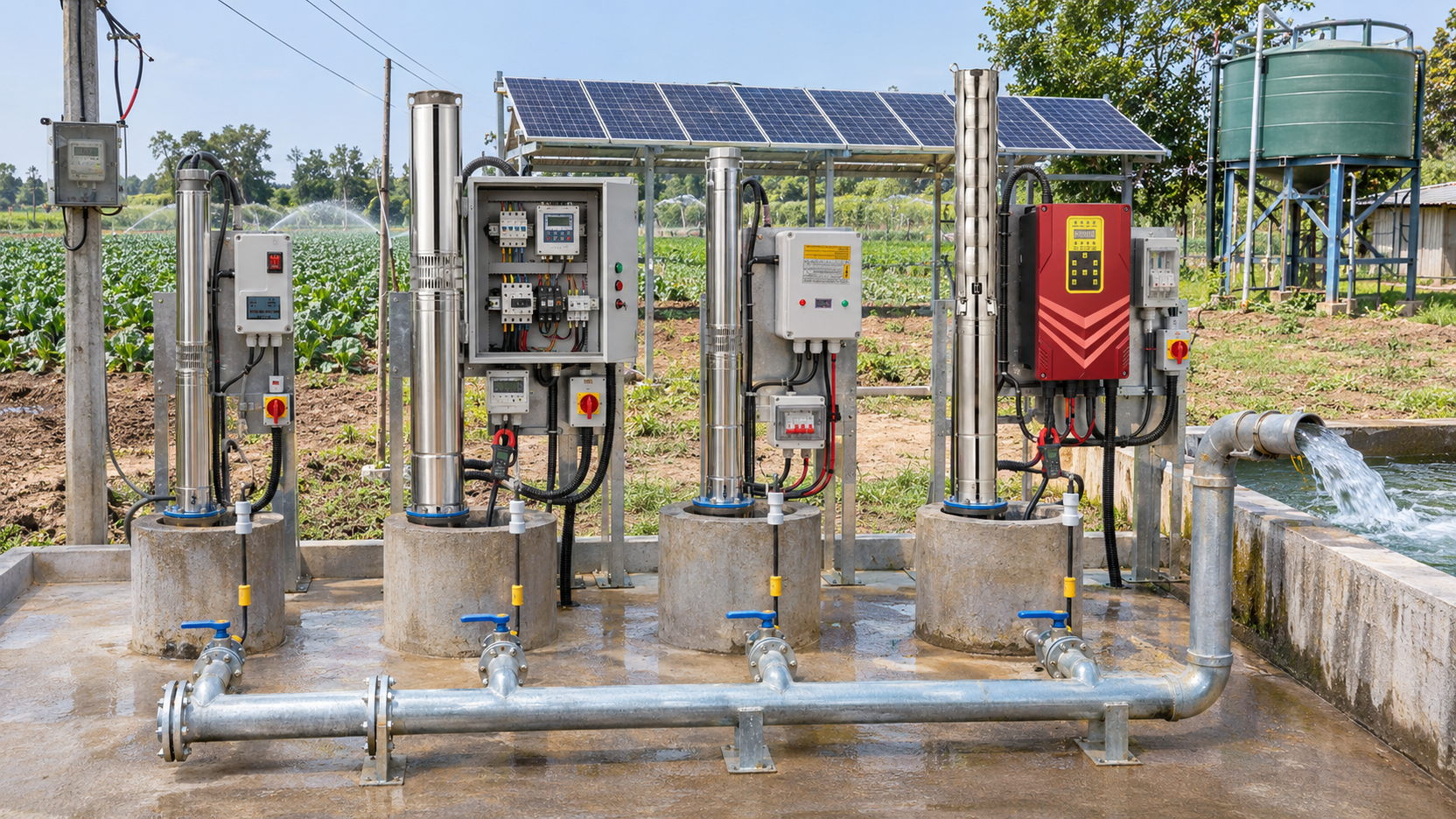
IV. Types of Borehole Submersible Pumps by Power Supply
1. Single-Phase AC Borehole Pumps
Single-phase borehole pumps are suitable for markets without three-phase electricity, and if the needed motor size is within the allowed range of the provider. The starting components may be incorporated or in an external control box depending on the motor. Your model record should show voltage, frequency, running current, starting arrangement, capacitor or control-box required and allowable cable length.
2. Three-Phase AC Borehole Pumps
Three phase borehole pumps are utilised in a wide range of applications within the agricultural, commercial, municipal and higher power duty sectors. They need accurate phase sequence and protection from overload, phase failure, voltage imbalance and wrong supply circumstances. If you stock multiple electrical markets, clearly identify voltage and frequency variants even if they use the same hydraulic pump end.
3. DC Solar Borehole Pumps
A solar DC borehole pump is driven by a PV array through a compatible solar pump controller. Most are brushless DC motors but you will have to confirm per model. Whether the full set will operate depends on the operating voltage of the controller, the maximum open-circuit voltage, the current limit, the motor output, the sensor inputs and the rules for the solar arrayy. If a motor needs its controller to operate, a quotation for just the pump is not a complete quotation.
4. AC/DC Hybrid Borehole Pumps
AC/DC borehole pump can be powered by solar DC and compatible AC source with a hybrid controller or conversion system. It’s for markets where solar should be the dominant source, but grid or generator backup is useful. Determine whether the system changes over sources, fills up solar with AC, or requires a dedicated AC unit. Do not assume that the source logic will work automatically and without interruption until it has been validated.
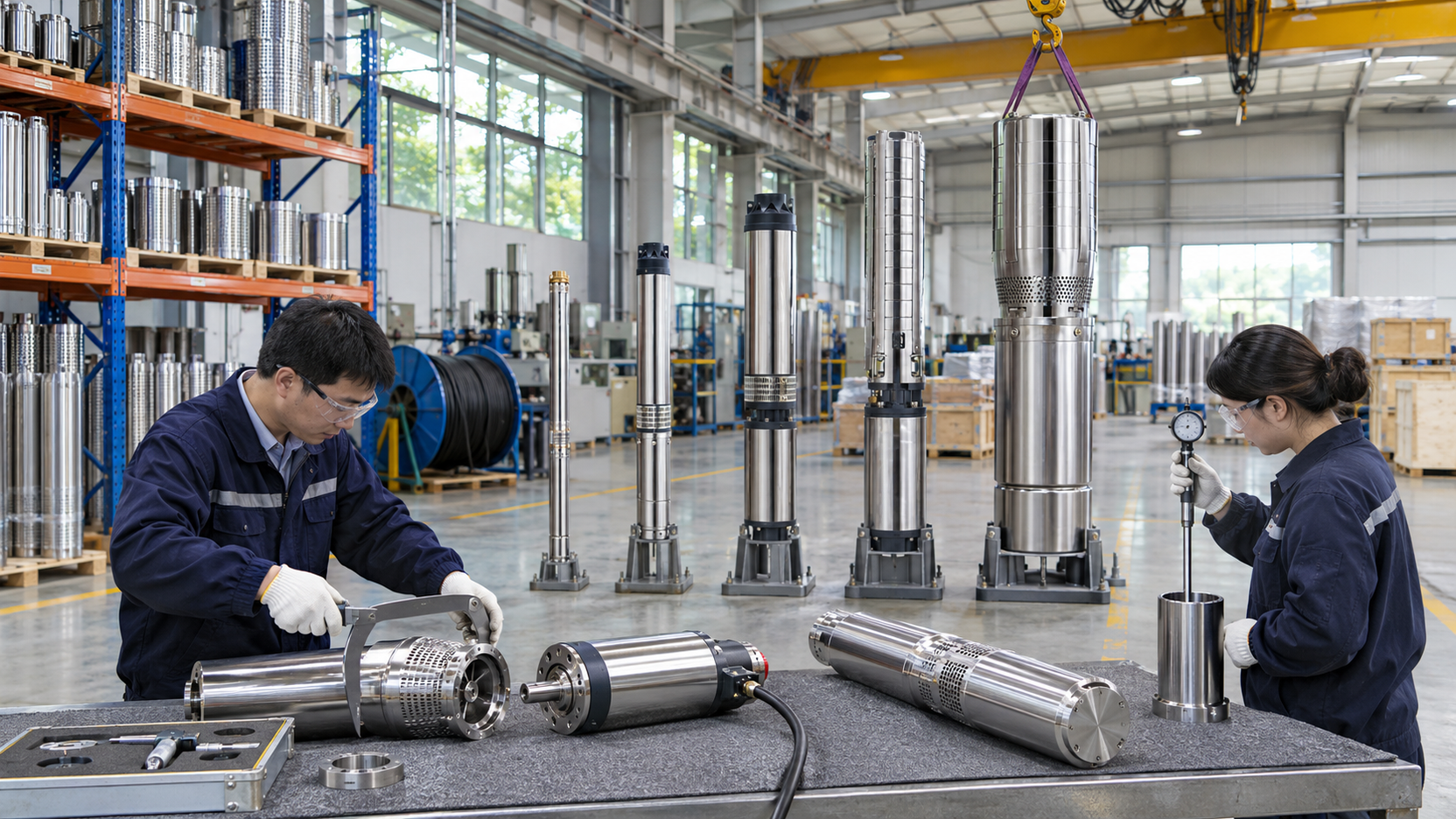
V. Borehole Pump Types by Diameter and Construction
1. Three-Inch Borehole Pumps
Three-inch borehole pumps can be fitted into small casings and also provide extra clearance in an irregular or constrained four-inch borehole. Because they are slim, there is limited space for impellers and motors, thus the hydraulic range must be examined, not assumed from power alone. They can be beneficial in places where a regular four-inch unit cannot pass through the enclosure safely.
2. Four-Inch Borehole Pumps
A large, popular range of four inch submersible borehole pumps for water delivery, agriculture, irrigation and light commercial duties. The name refers to the nominal product family and not to a guaranty that each unit has the same outside diameter. Verify the actual maximum diameter of the pump and cable guard vs the minimum internal diameter of the casing for the whole depth of the installation.
3. Six-Inch and Larger Borehole Pumps
Six-inch and larger pumps are employed where higher flow, higher motor horsepower, or larger water-supply duties are outside the feasible range of smaller pumps. They are more selective in terms of borehole yield, motor cooling, starting method, power quality, cable size, lifting equipment and riser-pipe load. These ranges should be arranged by actual duty zones and not simply by kilowatts.
4. Integrated and Separate Pump-Motor Sets
Some borehole pumps are complete devices, others are a combination of a pump end and a standardised or manufacturer-approved submersible motor. Separate pump-motor layout may facilitate set up and replacement, but the flange, shaft coupling, motor thrust capacity, power, speed and cooling needs must be matched. Record authorised combinations to avoid purchasing untested sets.
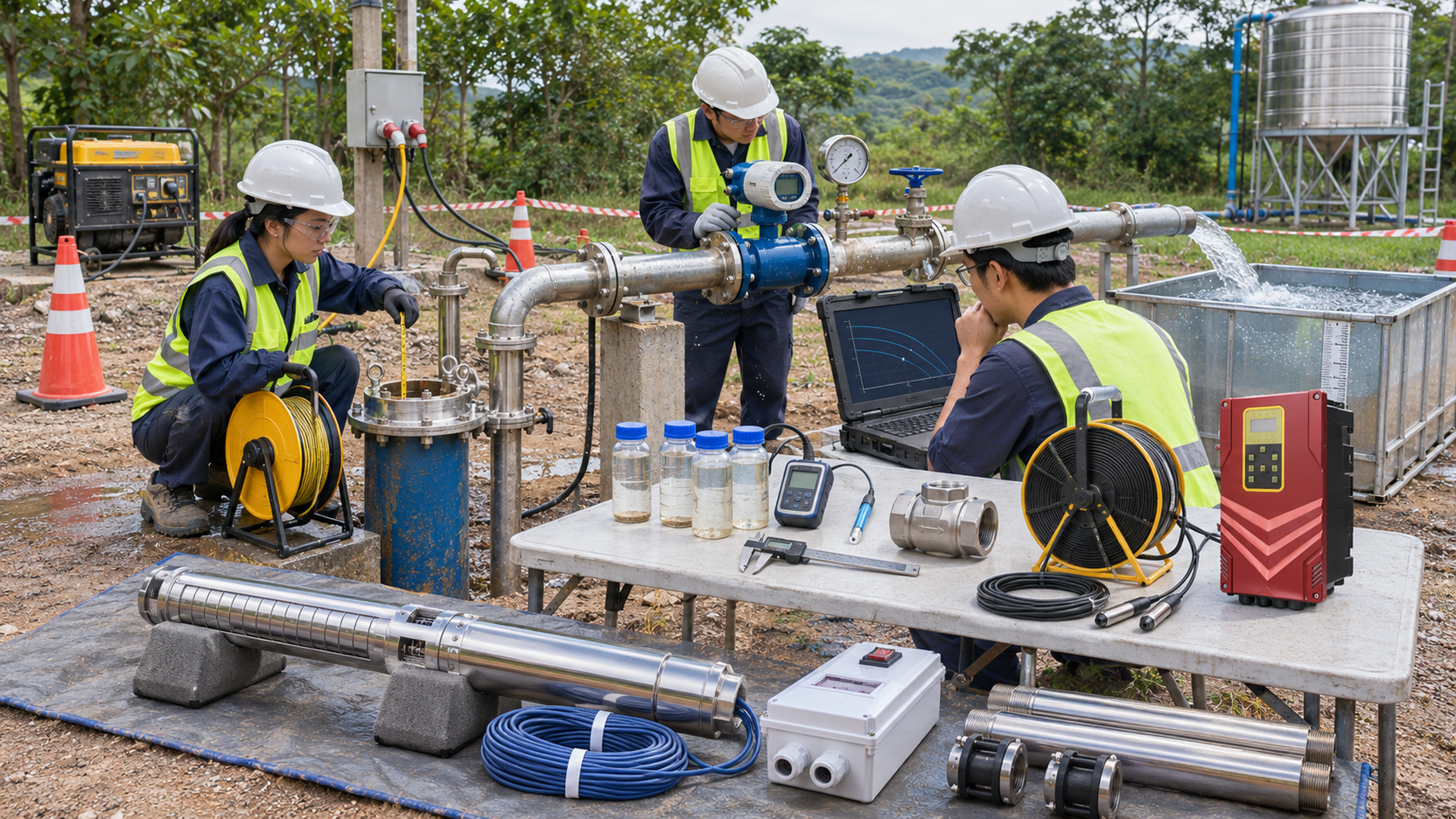
VI. How Do You Choose the Right Borehole Submersible Pump Type?
1. Start With Borehole Yield
Perform a pumping test to verify sustainable borehole production, static water level, pumping water level and drawdown. The pump should not take water any quicker than the borehole can replenish it. If the peak demand is higher than the sustainable yield, the normal choice is to provide more storage capacity rather than choosing an oversize pump that continually brings the water level down to the intake.
2. Calculate the Real Duty Point
Required flow should be a mirror of the application and storage approach. The total head should comprise the vertical distance from the dynamic pumping water level to the discharge, friction losses in the rising main and fittings, elevation after the wellhead, and the necessary outlet pressure. Read off the model at this combined flow and head from its curve. Not from maximum catalogue values.
3. Confirm the Borehole Diameter
Use smallest internal casing diameter not nominal drilled hole size. Provide clearance for power cable, cable guards, joints, centralizers and any imperfection or distortion in the casing. A pump that fits on paper but cannot be safely lowered or recovered is not a viable product option.
4. Check Pump Setting and Motor Cooling
The pump input should be located below the lowest anticipated dynamic water level, but not in sediment or contrary to well design. Water must also be flowing past the motor at the minimum velocity stipulated by the manufacturer. For an oversized casing, open tank, top-fed well, horizontal installation, or any place where the natural flow of cooling is not sufficient, a flow sleeve may be necessary.
5. Match the Water Quality
Record sand content, size, mineral composition, temperature, pH, chlorides, and other important chemicals. Standard borehole submersible pumps are usually designed for clean or slightly polluted ground water and the sand permitted varies with models. Material names alone do not establish appropriateness as water impacts impellers, diffusers, bearings, thrust components, seals and motor cooling.
6. Match the Electrical Supply
Verify voltage, phase, frequency, supply stability, starting technique, cable length, allowed voltage drop, motor protection, and controller type. Add PV array voltage and power for solar models Specify inputs and transition logic for AC/DC models. These details should be the same on the pump label, motor label, controller data, wiring diagram and quotation.
7. Define the Complete Installation Package
The functional borehole pumping system may consist of the pump end, motor, controller or starter, drop cable, cable junction, rising main, check valve, wellhead fittings, level probes, pressure controls, and dry-run protection. Specify what is supplied and what must be found locally. This avoids the situation where a low quote for pump only can be compared to a full ready to install system.
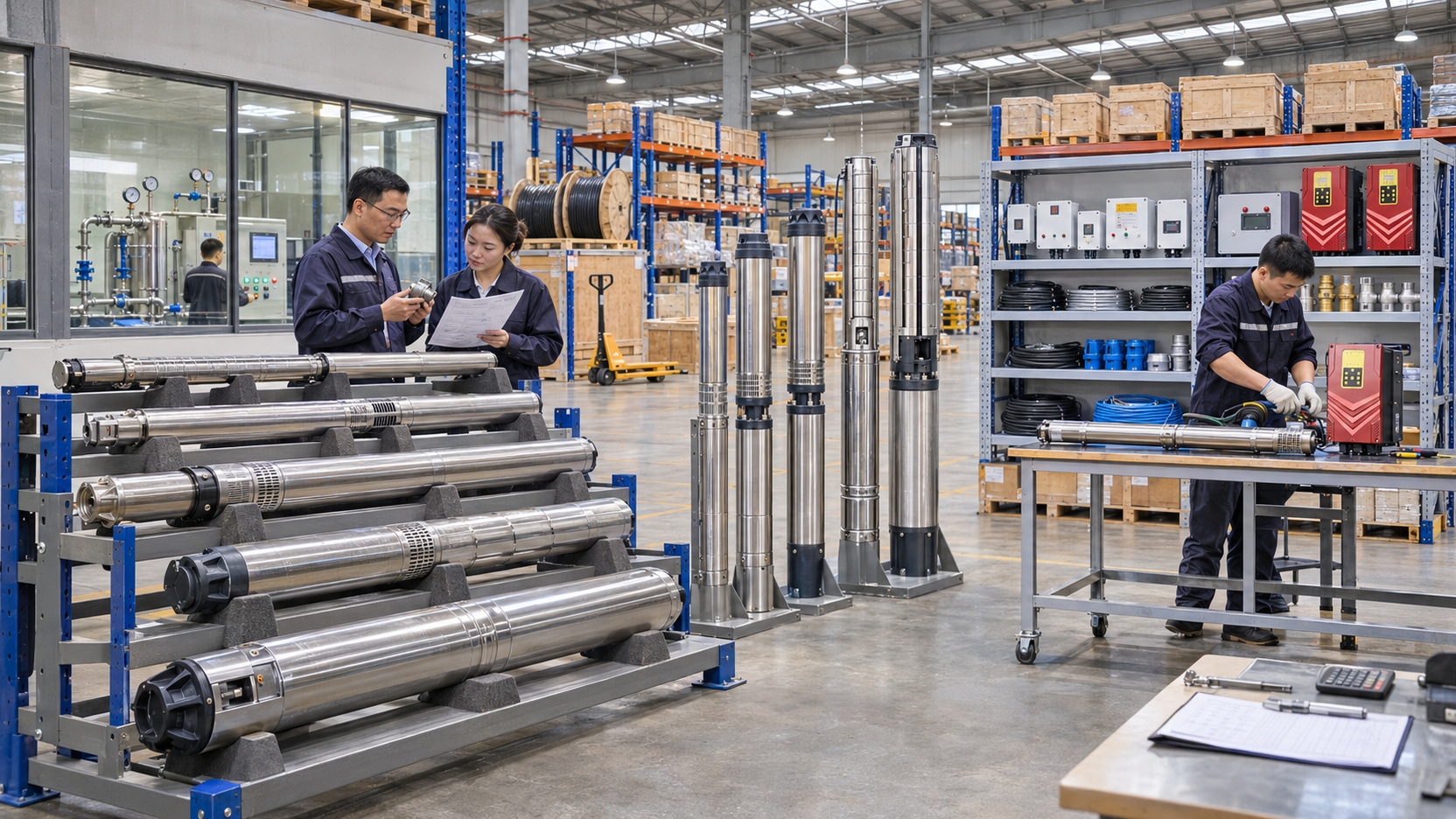
VII. How Should You Build a Practical Borehole Pump Range?
1. Organise the Range by Duty Zones
Group models by flow and head combination your market typically purchases. Decide between 3″, 4″, 6″ centrifugal or helical rotor options within each duty zone. This makes real performance steps obvious and avoids numerous different model numbers from being at the same working point.
2. Add Power Versions Without Duplicating the Hydraulic Range
Utilise the same hydraulic structure where permitted motor alternatives allow for single-phase, three-phase, solar DC or AC/DC packages. Each electrical version must be under a different item code and be associated with the relevant motor and controller. Don’t add another hydraulic level simply because the power source is different.
3. Prepare Complete Sales Data
Each model record must include the pump curve, recommended operating range, real outside diameter, motor rating, electrical version, cable data, materials, sand limit, temperature limit, cooling requirement, controller match and supplied components. A precise diagram of a borehole pump and wiring diagram will ensure your sales and technical teams quote the same setup.
4. Verify Samples Before Bulk Ordering
Test the pump, motor, controller, cable, and settings that you are trying to sell. Confirm flow and head at duty points as agreed, current, start, stop, check-valve behaviour, controller protections, sensor response and operating on the intended power source. Documented tested and authorised configuration should not have substitutes inserted during mass production.
VIII. Conclusion
Borehole pumps are mainly classified by their hydraulic principle, location of the motor, type of energy used, diameter and structure. Multi-stage centrifugal submersible pumps are used for most clean water well jobs, including helical rotor and lineshaft designs for particularly specific working situations. Then the pumping system is adapted to several electrical markets (single phase, three phase, solar DC, AC/DC).
For a sellable range, start with borehole yield, and genuine duty points, and then handle casing fit, water quality, motor cooling, electrical versions, whole package contents. Helps you reduce overlapping models and gives your clients clearer information up front before installation.
If you are designing a range of borehole submersible pumps, please provide HunGerät the desired flow and head zones, casing diameters, water conditions, power supply and planned order structure. We can use these findings to discuss a focused product range for your market.
IX. FAQ
1. What Is a Borehole Submersible Pump?
It is a thin vertical pump with a sealed motor that runs below the water level in a drilled borehole or well. It brings groundwater to the surface through a rising main.
2. How Does a Borehole Pump Work?
Water enters the pump intake and revolving impellers (or some other hydraulic device) increase the pressure. The pump will then pump the water up the rising main to the place of discharge.
3. Are Borehole Pumps, Deep Well Pumps, and Submersible Well Pumps the Same?
These words commonly overlap, especially when talking about multistage submersible groundwater pumps. The exact product should still be identified by the diameter, hydraulic design, motor, power supply and duty range.
4. What Are the Main Types of Borehole Pumps?
There are four major types: multistage centrifugal submersible pumps, helical rotor pumps, lineshaft deep-well turbine pumps, and shallow-well surface or jet pumps. Not all of these are submersibles.
5. What Is the Difference Between Centrifugal and Helical Rotor Borehole Pumps?
A centrifugal pump uses rotating impellers and its flow is determined by the system head. Helical rotor pumps are a positive displacement design and used extensively for lower flow, greater head jobs.
6. What Is the Difference Between a Submersible Pump and a Lineshaft Turbine Pump?
Submersible pumps have the motor located underwater adjacent to the pump end. Lineshaft turbine pump This design has a dry motor above ground connected to the submerged pump bowls by a lengthy shaft.
7. Should You Choose a Single-Phase or Three-Phase Borehole Pump?
Select from the available supply, motor power, starting requirements and local servicing capability. Three phase versions additionally require phase failure and voltage imbalance protection.
8. What Is a Solar Borehole Pump?
It is a borehole pump powered by a PV array and a corresponding solar pump controller. The pump, motor, controller and solar array have to be chosen as a system.
9. What Is an AC/DC Borehole Pump?
It is a hybrid pump that can be used with solar DC and suitable AC sources. The controller decides whether the sources are switched, augmented, or require separate conversion equipment.
10. How Do You Choose the Correct Borehole Pump Diameter?
Compare the real maximum outside diameter of the pump with the smallest internal casing diameter. Allow for clearance of power cable, cable guard, joints and casing flaws.
11. Can a Three-Inch Pump Be Installed in a Four-Inch Borehole?
Yes if the hydraulic duty, motor cooling, cable clearance and manufacturer’s installation requirements are met. The smaller pump can be handy with clearance in a tight or uneven casing.
12. How Does Borehole Yield Affect Pump Selection?
The pump should not be operated at a continuous flow rate over the sustainable tested yield of the borehole. Otherwise, the pumping water level may drop to the inlet, causing the pump to run dry or have erratic output.
13. How Is Borehole Pump Head Calculated?
Add the vertical lift from the dynamic pumping water level, pipe and fitting friction losses, elevation to the wellhead and the needed pressure at the exit.
14. Can Maximum Flow and Maximum Head Be Used as One Duty Point?
No. They are usually at the ends of the pump curve. Using the curve, find the available flow at the actual necessary head.
15. How Deep Should a Borehole Pump Be Installed?
It should be placed below the lowest expected pumping water level, taking into account the needed clearance from the bottom of the borehole, sediment and well screen configuration. It is contingent upon the design of the well and pump. The specific setting.
16. When Does a Borehole Motor Need a Flow Sleeve?
A flow sleeve may be necessary if the natural water velocity past the motor is not adequate, as in an oversized casing, an open tank, a top-fed well or a horizontal installation.
17. Can a Borehole Pump Handle Sand?
Only in the sand concentration and particle size range specified for the model. Excess sand can erode hydraulic stages, bearings, thrust components, and motor-cooling surfaces.
18. What Does a Borehole Pump Controller Do?
Depending on the model, it can handle starting, motor protection, level sensors, pressure control, dry-run response, variable speed, solar MPPT or hybrid power inputs.
19. What Information Should You Request Before a Bulk Order?
Request curve, duty range, real diameter, motor data, electrical limits, cable requirements, materials, water-quality limits, cooling needs, controller match, components supplied, and installation diagram.
20. How Should You Test a Borehole Pump Sample?
Test the full pump-motor-controller set at agreed duty points and verify flow, head, current, starting, stopping, protections, sensor response and operation on the planned power supply.